


Road Trip Planning: Emergency Water, Power and Communication
Table of Contents
- Step 1: Start road trip planning by mapping the gaps between services
- Step 2: Calculate emergency water from the route and the people
- Step 3: Check actual water capacity before buying
- Step 4: Give essential devices a charging plan
- Step 5: Match emergency communication equipment to the coverage gap
- Step 6: Leave a road trip emergency plan someone can act on
- Step 7: Run a road trip checklist with the car packed
- Buy road trip essentials to close a gap in your road trip planning
- FAQs
- Sources
A regional road trip might take you between well-serviced towns or onto roads where the next reliable stop is hours away. Good road trip planning asks how your particular journey would change if a refill point were unavailable, the car could not charge your phone or you lost mobile coverage.
Effective road trip planning covers water, power and communication together before packing. Each should support the people travelling and the longest stretch without dependable services. This guide provides a road trip planning framework for an Australian road trip. Remote and outback road trip routes require additional vehicle preparation, equipment and local advice.
Step 1: Start road trip planning by mapping the gaps between services
The first job in road trip planning is to divide the route into legs. For each one, record the next confirmed drinking-water supply, fuel stop, charging opportunity and place where you expect to make contact. Check opening hours directly where a stop is essential. A dot on a map is not confirmation that a service will be available when you arrive.
For remote travel, WA parks guidance recommends checking road access and conditions before departure, including contacting the local shire. It also warns that rain can leave unsealed roads impassable or washed out. Check weather and emergency warnings for the places you will actually travel through, and be prepared to change the trip. [1]
Use the following road trip planning worksheet as an organising tool. Complete one copy for each leg with a substantial gap between services. The entries should describe confirmed arrangements rather than assumptions.
| Planning question | Record before departure |
|---|---|
| Who is travelling | People, pets and individual supply or equipment needs. |
| Where can we refill | Confirmed drinking-water source and an alternative stop. |
| How long could we wait | Time to the next reliable supply plus a route-specific delay allowance. |
| How will devices recharge | Device, compatible cable, charger and independent backup. |
| How will we make contact | Normal method, coverage limitations and backup equipment. |
| Who knows the plan | Trusted contact, check-in schedule and agreed overdue action. |
Step 2: Calculate emergency water from the route and the people
WA Police’s outback travel guidance advises allowing three litres of water per person per day, plus extra water for car breakdowns. That is a source-specific planning reference, not a guarantee that three litres will cover every person, activity or weather condition. Seek advice appropriate to the route and allow for heat, exertion and individual needs. [2]
Write down drinking-water needs separately from water for cooking, hygiene and pets. Include the period until the next confirmed refill and a separate allowance for delay. Do not count a planned purchase as water already carried. If a stop cannot be confirmed, revise the plan before relying on it.
For a simple arithmetic illustration, two people using the WA Police reference over two days would calculate 12 litres before adding breakdown reserves or other water needs. This example explains the calculation only; it is not a recommended total for a particular journey.
WA Police also advises not storing all the water in one place in the vehicle, and distributing it in smaller amounts throughout the load. [2] Choose containers intended for drinking water, follow their cleaning and storage instructions, and check closures before departure. Plan the storage arrangement around the vehicle’s load and restraint instructions.
Step 3: Check actual water capacity before buying
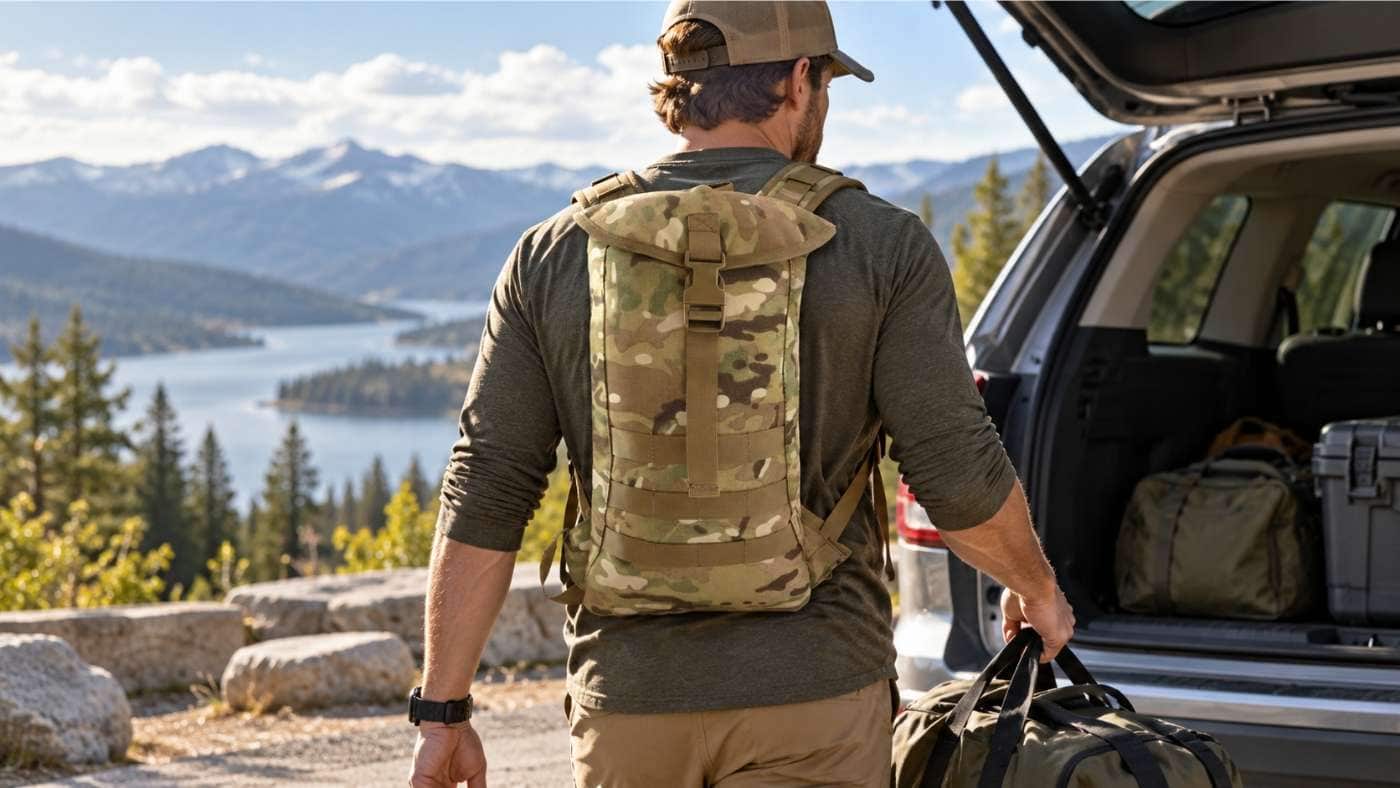
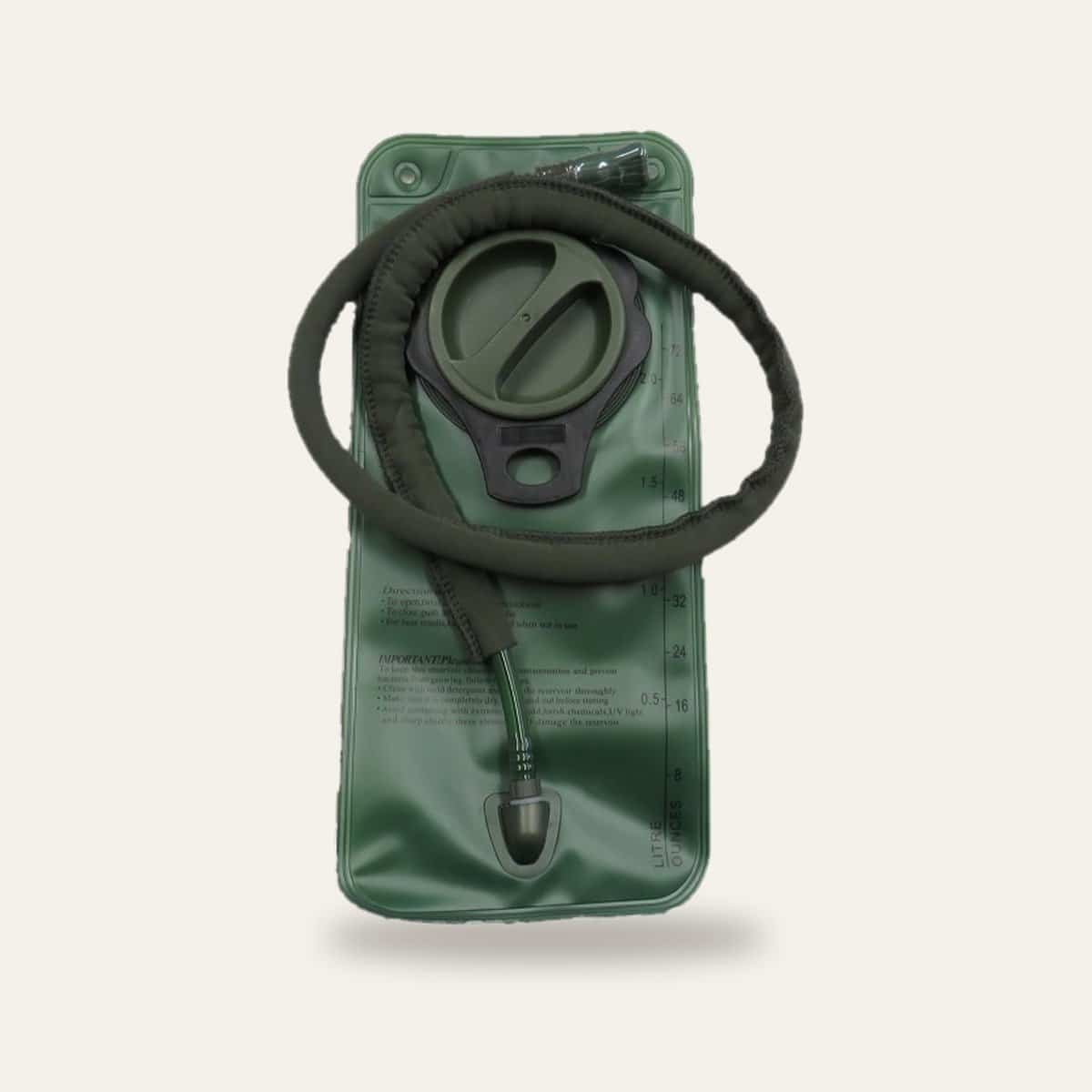
A hydration pack’s name does not necessarily state the volume of water supplied by its included reservoir. Military Shop’s 4+ Hydration Pack Multicam 3L (SKU BN11635) carries 3L in its product name, while its product description refers to a 2L Wide Mouth EVA Bladder. Confirm the current supplied reservoir and usable capacity with the supplier when ordering. [3]
For your water inventory, count the water actually carried in filled containers. A personal hydration pack can be one component of a car emergency kit, but its presence does not establish that the vehicle carries enough for everyone. Compare reservoir capacity, included components, cleaning access and storage instructions before choosing a product. Military Shop stocks hydration bladders and military water bottles, and our guide to hydration packs vs water bottles compares the two formats.
Step 4: Give essential devices a charging plan
List the phone, navigation device, torch and any separate communications equipment you intend to use. For each, record its charger and cable, the manufacturer’s charging requirements and the next dependable charging opportunity. Check that the exact combination works before departure. If you are choosing a torch for the trip, see our tactical flashlight buying guide or browse survival torches.
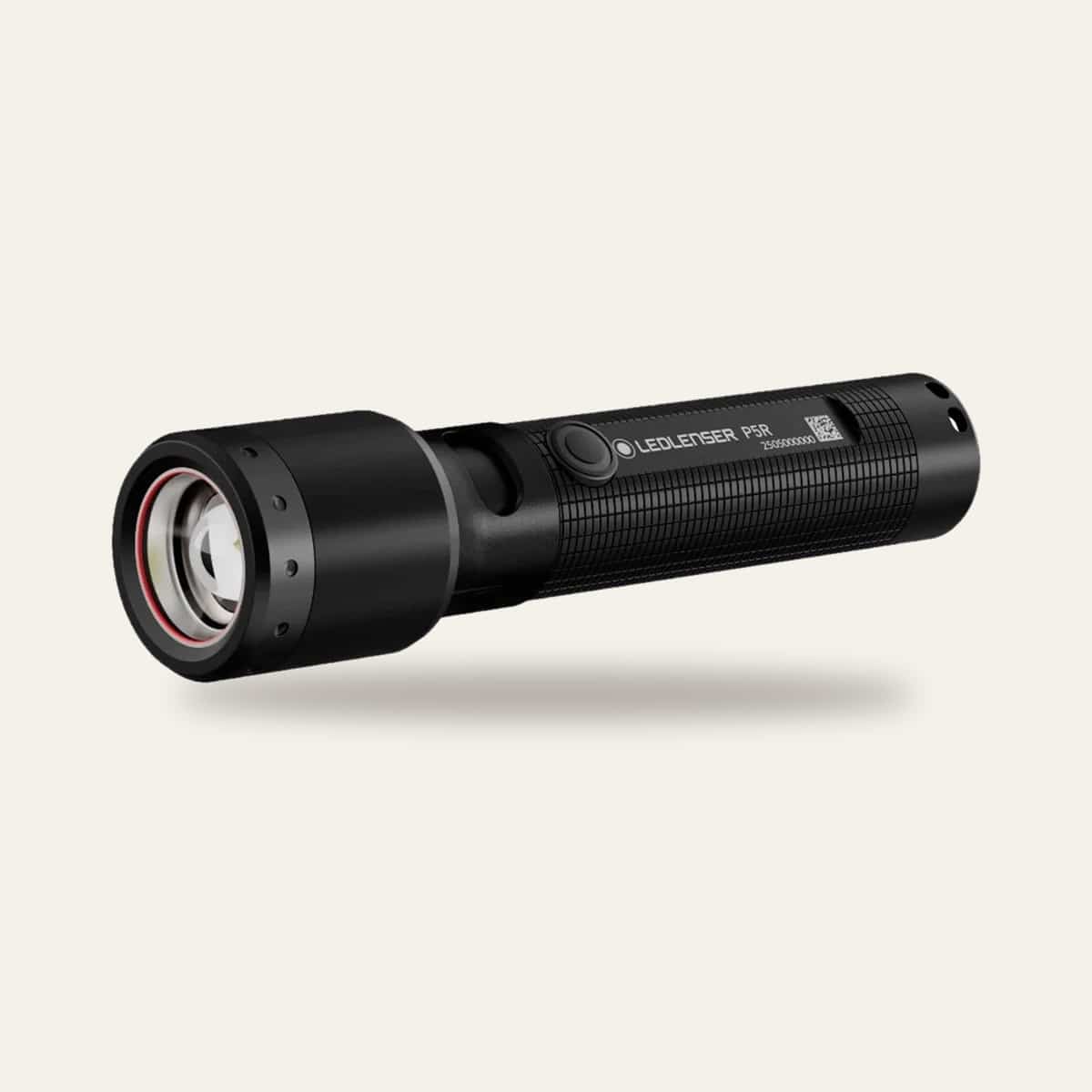
Then ask what happens if the vehicle is unavailable as a charging source. Select a backup suited to the devices and the planned time between charging opportunities. Ask the supplier about compatibility and usable capacity for your equipment; a headline battery-capacity figure alone does not establish how many charges your particular phone will receive.
The ACCC advises using the charger that came with your product, or a reputable brand recommended by the manufacturer. It also warns against leaving lithium-ion batteries or products in hot places such as parked vehicles. Bring charged equipment as part of the departure routine and follow its storage instructions throughout the trip. [4]
Step 5: Match emergency communication equipment to the coverage gap
A phone, a satellite phone and a personal locator beacon perform different jobs. Before a remote leg, decide how you will make routine contact and how you will seek help if normal communication is unavailable. WA Police notes that much of Western Australia is not serviced by standard mobile phone carriers and recommends considering buying or hiring a satellite phone. [2]
AMSA explains that two-way communication gives confirmation that emergency services have received your call and lets you provide updates and receive advice until help arrives. Its beacon guidance says a distress beacon should be activated in situations of grave and imminent danger when two-way communication is unavailable. It is an emergency alerting device, not a routine check-in method. How long a rescue takes varies with the situation. [5]
Personal locator beacon or EPIRB?
WA Police suggests considering a Personal Locator Beacon (PLB) or an Emergency Position Indicating Radio Beacon (EPIRB) that is registered and GPS enabled, and states that PLBs are the preferred devices for people engaged in remote travel. [2] Register the beacon and learn its operation before leaving.
AMSA notes that every beacon has a self-test switch, that you should follow the manufacturer’s guidance on how and how often to test, and that over-testing can drain the battery. Beacon batteries last approximately 5 to 10 years, and 406 MHz beacons show the battery expiry date on the label. [6] Use the self-test function only; keep activation for genuine distress.
For hired or purchased communications equipment, ask the provider to explain coverage, account or service requirements, emergency calling arrangements and battery care for the exact model. Have another adult practise the normal operating steps too. Keep operating instructions available without relying on an internet connection.
Step 6: Leave a road trip emergency plan someone can act on
WA parks guidance recommends giving someone your travel plans, return details and a schedule of progress reports for longer trips. Agree what they should do if you are overdue. [1] Write that arrangement down so both sides understand the expected contact time and the next action.
As a practical format, include the route, vehicle details, people travelling, planned overnight stops and relevant contact numbers. Tell your contact when plans change and when the trip is complete. Choose check-in arrangements that are realistic for the equipment and coverage you have planned.
Step 7: Run a road trip checklist with the car packed
- Count the actual water loaded and check the reserve remains available.
- Test normal charging with the exact cables and equipment you are taking.
- Confirm communications equipment is ready, with required registration or service arrangements checked.
- Keep route information and instructions available if the phone or internet is unavailable. Our guide to buying a compass covers navigation without GPS.
- Recheck road conditions, weather warnings and essential service stops.
- Confirm your trusted contact has the final itinerary and overdue arrangement.
Buy road trip essentials to close a gap in your road trip planning
Start with the worksheet, then compare equipment against what is missing. Use Military Shop’s published hydration specifications to check individual components and ask the supplier to clarify included capacity or storage requirements. [3] A useful purchase has a defined job in the plan, with someone who knows how to use it and enough supplies to support the journey. Browse the Military Shop survival gear range, and see 10 emergency thermal blanket uses for another item worth considering for a car emergency kit.