

Centenary of
the First Fleet
Seven ships. One young Navy. The morning Australia’s new Fleet steamed towards Sydney and a nation assumed greater responsibility for its own maritime defence.
Discover the people, events and research behind each commissioned work.
View the original commissioned artwork and, where available, enquire about acquisition.
Discover and purchase rare #1–#10 Archive Editions and historically significant retained pieces.
Explore related Limited Edition lapel pins, medallions and art.
The Birth of the Fleet
On the morning of 4 October 1913, seven warships of the new Royal Australian Navy approached Sydney Harbour in formation. At their head was the battlecruiser HMAS Australia, flying the flag of Rear Admiral Sir George Patey. With her came the cruisers Melbourne, Sydney and Encounter and the destroyers Parramatta, Yarra and Warrego.
Their arrival was far more than a ceremonial entrance. Australia had federated only twelve years earlier and had long relied heavily on Britain’s Royal Navy for maritime defence. The Commonwealth Naval Forces had been established in 1901, and King George V granted the title Royal Australian Navy in 1911. The arrival of a modern ocean-going Fleet Unit in 1913 gave the young nation a credible naval force of its own.
Sydney turned out in enormous numbers. Boats crowded the harbour and spectators filled the headlands to watch the fleet enter. On that same day, responsibility for the Australian Station passed from Royal Navy command to the Royal Australian Navy. The seven ships would soon face a very different test: within a year, the First World War had begun and the new fleet was on active service.
Read the history in more detail
The development of an Australian fleet had taken years of debate, planning and shipbuilding. The destroyers Parramatta and Yarra were launched in Britain in 1910, while the battlecruiser Australia and light cruisers Sydney and Melbourne formed the powerful core of the Fleet Unit. Encounter, already serving in Australian waters, became the RAN’s first cruiser when transferred from the Royal Navy in 1912.
The fleet entry of 4 October 1913 became a symbol of national maturity. The Australian War Memorial records Defence Minister Senator Edward Millen describing the fleet’s arrival as announcing Australia’s 'coming of age'. The RAN itself describes the occasion as the moment Australia assumed responsibility for command of the Australian Station and therefore a greater share of its own maritime defence.
The ships quickly justified the investment. In 1914 the fleet operated against German possessions in the Pacific; Sydney destroyed the German cruiser Emden near the Cocos Islands; and Australia became the dominant Allied capital ship in the region. A century later, the Royal Australian Navy commemorated the 1913 entry with the 2013 International Fleet Review in Sydney Harbour. Don Braben’s painting was commissioned for that centenary, returning the viewer to the quieter moment just before the original fleet entered the Heads.
Fleet Facts
- The Royal Australian Navy received its 'Royal' title in 1911.
- The Australian Fleet Unit entered Sydney Harbour on 4 October 1913.
- The fleet comprised HMA Ships Australia, Melbourne, Sydney, Encounter, Parramatta, Yarra and Warrego.
- HMAS Australia led the formation and flew the flag of Rear Admiral Sir George Patey.
- Large crowds watched from boats and headlands around Sydney Harbour.
- On the same day, command responsibility for the Australian Station transferred from the Royal Navy to the RAN.
- The Fleet Unit became the foundation of Australia’s naval force at the outbreak of the First World War.
- The centenary was commemorated by the Royal Australian Navy’s International Fleet Review in Sydney in October 2013.
Read more
The 1913 Fleet Unit was designed as an integrated force rather than a collection of unrelated ships. Australia provided heavy striking power; Sydney and Melbourne were fast light cruisers; the destroyers added screening and torpedo capability; and Encounter supported the growing Navy and its training needs. Together they represented a major step in Australia’s ability to protect its maritime interests.
The Ships as They Were
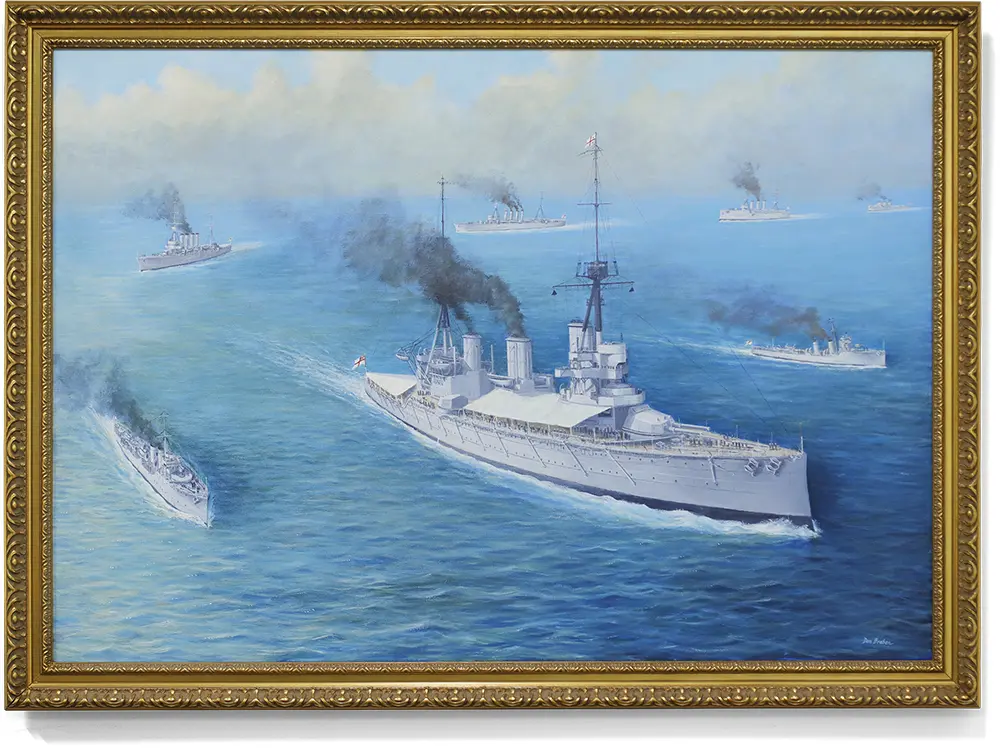
Don Braben’s painting depicts the seven ships at sea in the early morning of 4 October 1913, steaming towards Sydney. HMAS Australia leads, flying Rear Admiral Sir George Patey’s flag, followed in the main line by Melbourne, Sydney and Encounter, with Yarra astern.
Parramatta and Warrego are shown flanking Australia. Military Shop’s original historical notes explain that the destroyers would return to their position in the line for the formal entry into Sydney Harbour. The arrangement therefore captures the fleet while still at sea rather than attempting to reproduce the exact formation at a later instant inside the harbour.
Read more
The work is a maritime reconstruction of a documented event. Its seven vessels correspond with the RAN Fleet Unit recorded by the Royal Australian Navy and Australian War Memorial. The calm early-morning setting also serves an artistic purpose: Braben presents the ships before the public spectacle of the harbour entry, allowing the Fleet itself — its formation, scale and quiet confidence — to carry the story.
Centenary of the First Fleet - Don Braben
To mark the 100th anniversary of the Royal Australian Navy’s first Fleet Unit entry into Sydney, BrandNet commissioned renowned Australian maritime artist Don Braben to recreate the fleet on the morning of 4 October 1913.
Braben chose the approach to Sydney rather than the crowded harbour entry itself. Seven ships steam through calm water in formation, led by the imposing battlecruiser Australia. The moment is restrained and deliberate: the new Navy is not yet surrounded by cheering crowds, but the significance of what is about to happen is already present.
Read more
The commission was created for the 2013 centenary and became the centrepiece of a wider First Fleet collection. Limited-edition canvas and paper prints allowed the original painting to be collected in different formats, while other Centenary pieces carried the story into a broader commemorative range.

HMAS Australia
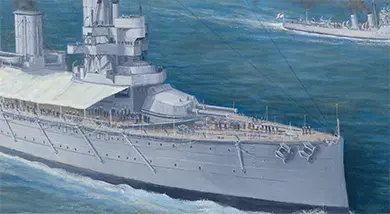
The battlecruiser HMAS Australia leads the formation, flying Rear Admiral Sir George Patey’s flag and visually dominating the fleet behind her.
Read more
Australia was the largest and most capable warship yet to enter Sydney. Her presence gave the young RAN a capital ship of genuine strategic weight in the Pacific and made her a powerful symbol of the Commonwealth’s growing independence in defence.
The Fleet Unit together
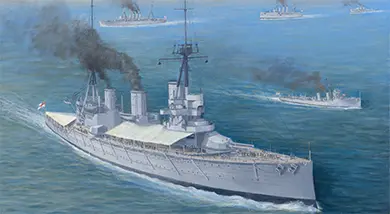
Melbourne, Sydney, Encounter, Parramatta, Yarra and Warrego accompany Australia, allowing the viewer to see the Fleet Unit as a complete force rather than as individual ship portraits.
Read more
The ships brought different capabilities together: a battlecruiser, cruisers and destroyers operating as a fleet. Their arrival demonstrated that Australia had moved beyond colonial naval forces toward an integrated ocean-going Navy.
The calm before Sydney Harbour
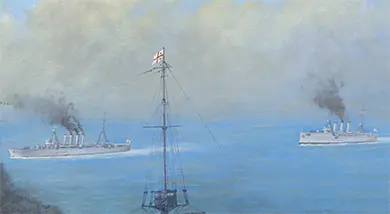
Braben places the ships at sea in early morning light, before the noise and crowds of the ceremonial harbour entry.
Read more
The choice gives the painting its atmosphere. Instead of making the crowds the subject, Braben lets the ships carry the historical meaning. The quiet formation suggests confidence, discipline and the significance of a Navy approaching its home port together for the first time.
Don Braben
Don Braben is an internationally recognised Australian maritime artist based in Queensland. His work is distinguished by a close understanding of ships, sea and light, combining technical observation with the atmosphere that gives maritime painting its sense of place.
For Centenary of the First Fleet, Braben faced a particular challenge: seven historically identifiable ships had to read as a coherent fleet while the sea, light and formation still needed to feel natural rather than diagrammatic.
Read more
The resulting painting uses the disciplined line of the ships to establish the historical narrative, while the morning light and open water prevent the work from becoming merely documentary. It is both a record of the Fleet Unit and a maritime painting in its own right.
In Don Braben's own words
The painting captures the Fleet Unit on its final approach to Sydney on 4 October 1913. Australia leads, Patey’s flag visible, while the cruisers and destroyers establish the scale and structure of the force behind her.
Read more
The arrangement of Parramatta and Warrego flanking the flagship gives the foreground breadth and helps the viewer read the Fleet as a coordinated unit. The subdued sea and sky allow the ships to remain the focus, while the early light locates the scene in the hours before the celebrated harbour entry.
The original Centenary of the First Fleet
The original commissioned painting by Don Braben is preserved within the BrandNet Archives. Created for the 2013 centenary, it is the unique source work from which the Centenary of the First Fleet limited-edition art collection was developed.
Read more
The original connects two anniversaries: the Fleet Unit’s historic approach to Sydney on 4 October 1913 and the Royal Australian Navy’s centenary commemoration of that event in 2013. At full scale, Braben’s treatment of the seven ships, sea and morning light can be appreciated as the artist intended.
Specialist delivery, insurance and installation requirements can be arranged directly with the purchaser.
Acquire the Original Enquire About the ArtworkThe First Numbers — Archive Editions
Selected early-numbered editions retained from the original Centenary release form part of the BrandNet Archives.
Read more
The principal art editions were deliberately finite: the full-size canvas was limited to 100, the framed paper print to 250 and the unframed paper print to 500. A verified early number therefore identifies exactly where the collector’s piece sits within the original centenary release.
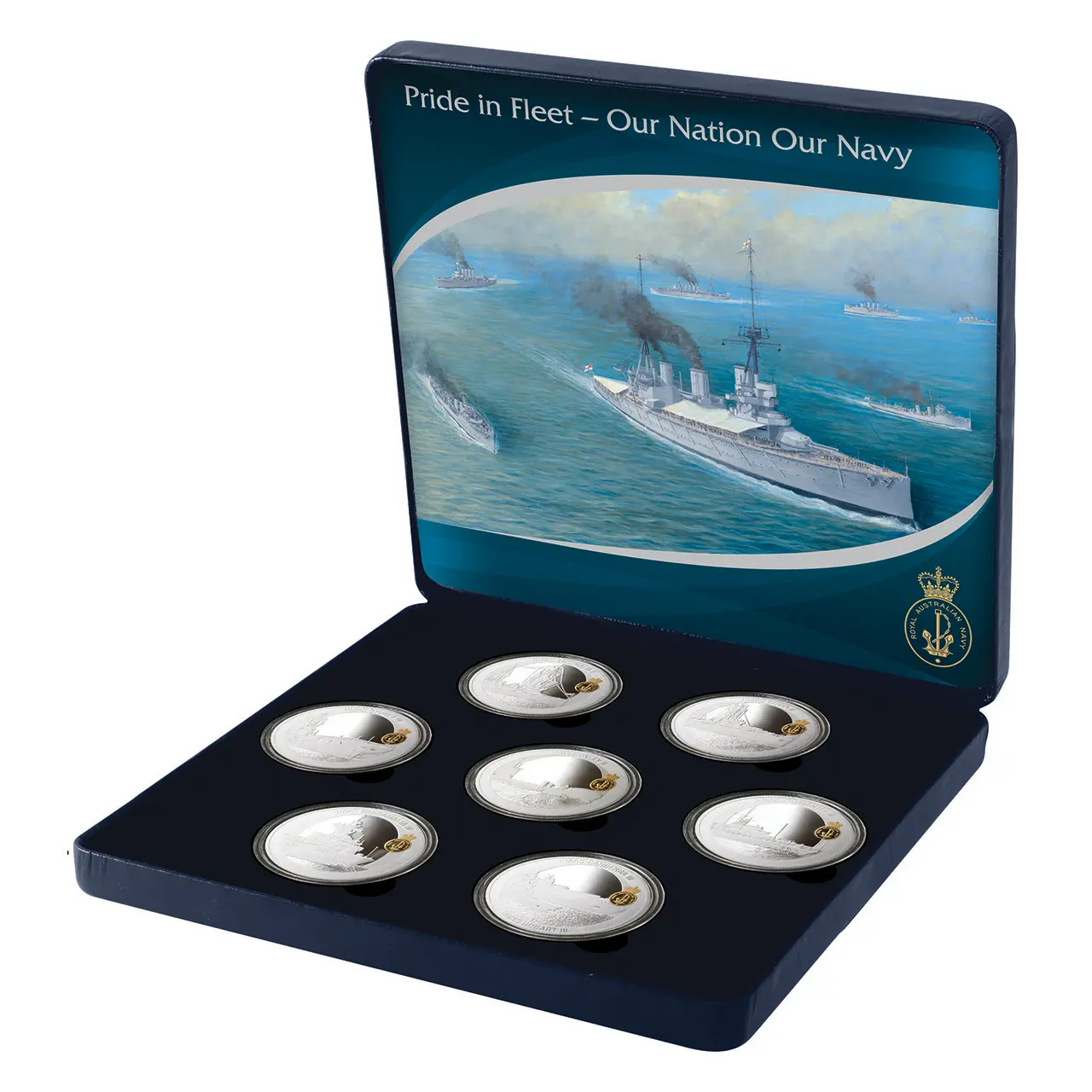
Pride in Fleet Medallion Set — Archive Editions #1–#10
Seven 50 mm brass-alloy medallion commemorating ships of the Royal Australian Navy, from HMAS Australia (I), through to the modern HMAS Hobart (III). BrandNet's retained examples carry certificate numbers #1 through #10.
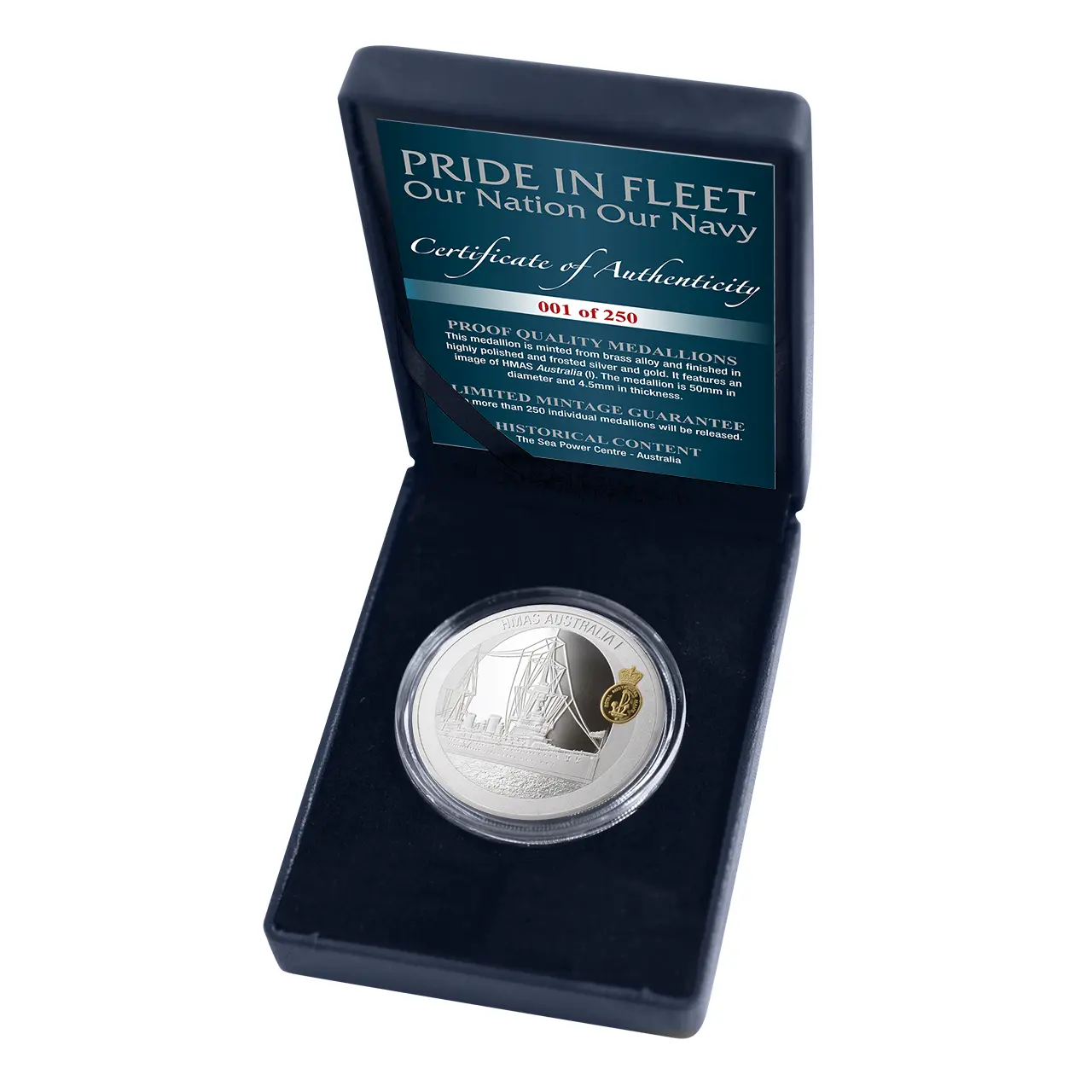
Pride in Fleet HMAS Australia I Medallion — Archive Editions #1–#10
A 50 mm brass-alloy medallion commemorating the Royal Australian Navy's first flagship, HMAS Australia (I), which made its historic entry into Sydney Harbour on 4 October 1913. BrandNet's retained examples carry certificate numbers #1 through #10.
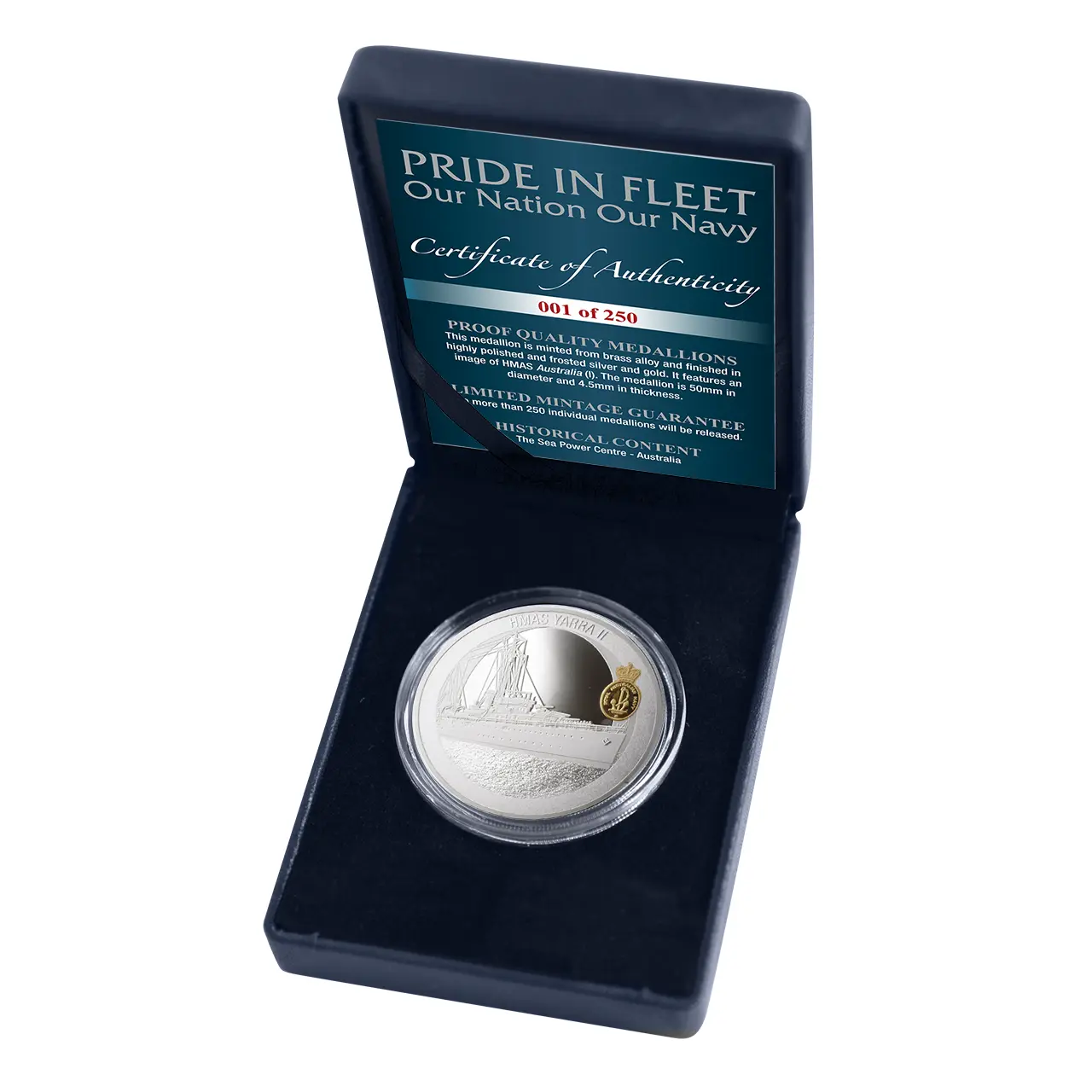
Pride in Fleet HMAS Yarra (II) Medallion — Archive Editions #1–#10
A 50 mm brass-alloy medallion paying tribute to HMAS Yarra (II), a Grimsby class sloop that played a significant role during World War II. BrandNet's retained examples carry certificate numbers #1 through #10.
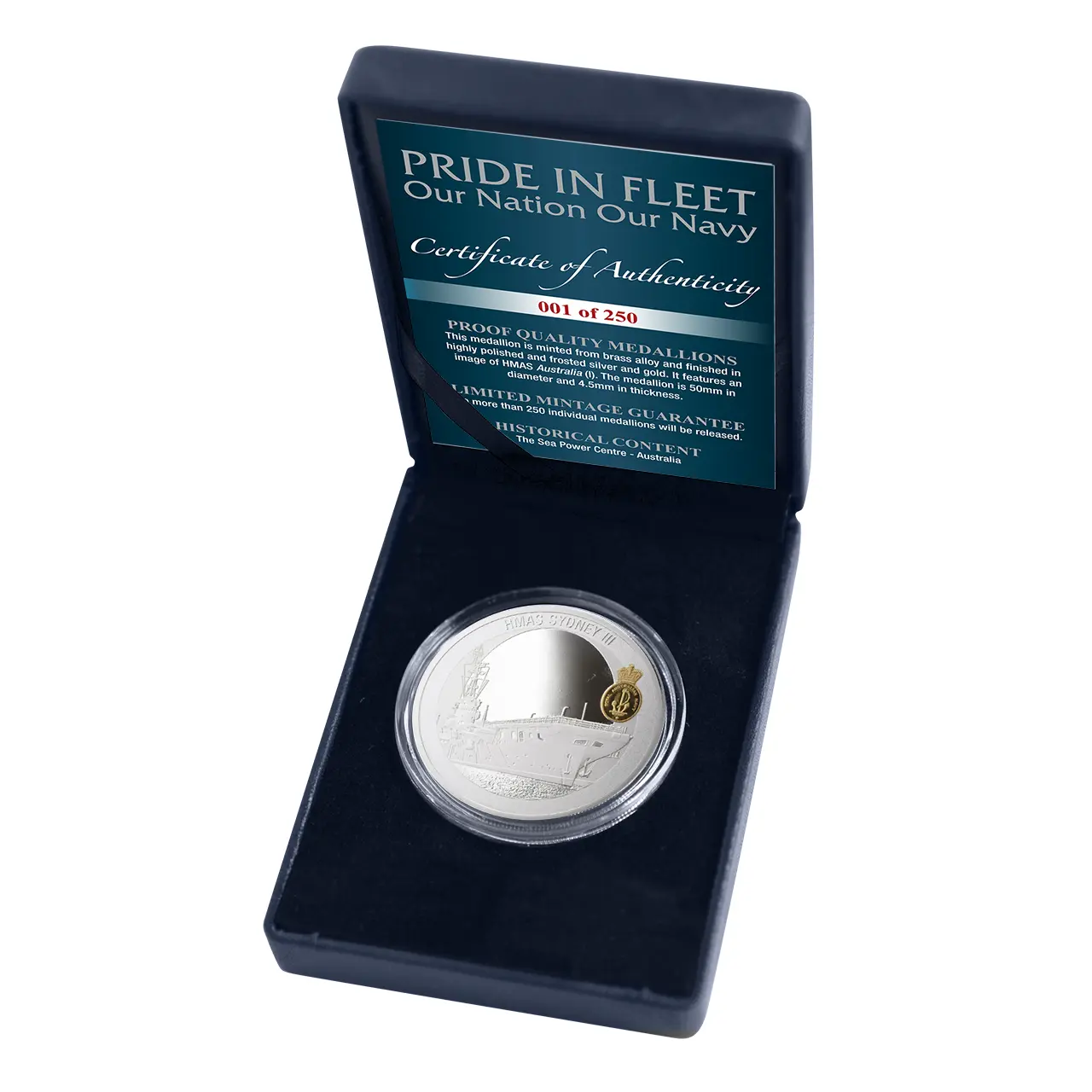
Pride in Fleet HMAS Sydney (III) Medallion — Archive Editions #1–#10
A 50 mm brass-alloy medallion featuring HMAS Sydney (III), the Royal Australian Navy's first purpose-built fixed-wing aircraft carrier. She distinguished herself in both the Korean War and later as a fast troop transport during the Vietnam War. BrandNet's retained examples carry certificate numbers #1 through #10.

Pride in Fleet HMAS Oxley (II) Medallion — Archive Editions #1–#10
A 50 mm brass-alloy medallion showcasing HMAS Oxley (II), one of the remarkable Oberon class submarines commissioned by the Royal Australian Navy in the 1960s and 1970s. BrandNet's retained examples carry certificate numbers #1 through #10.
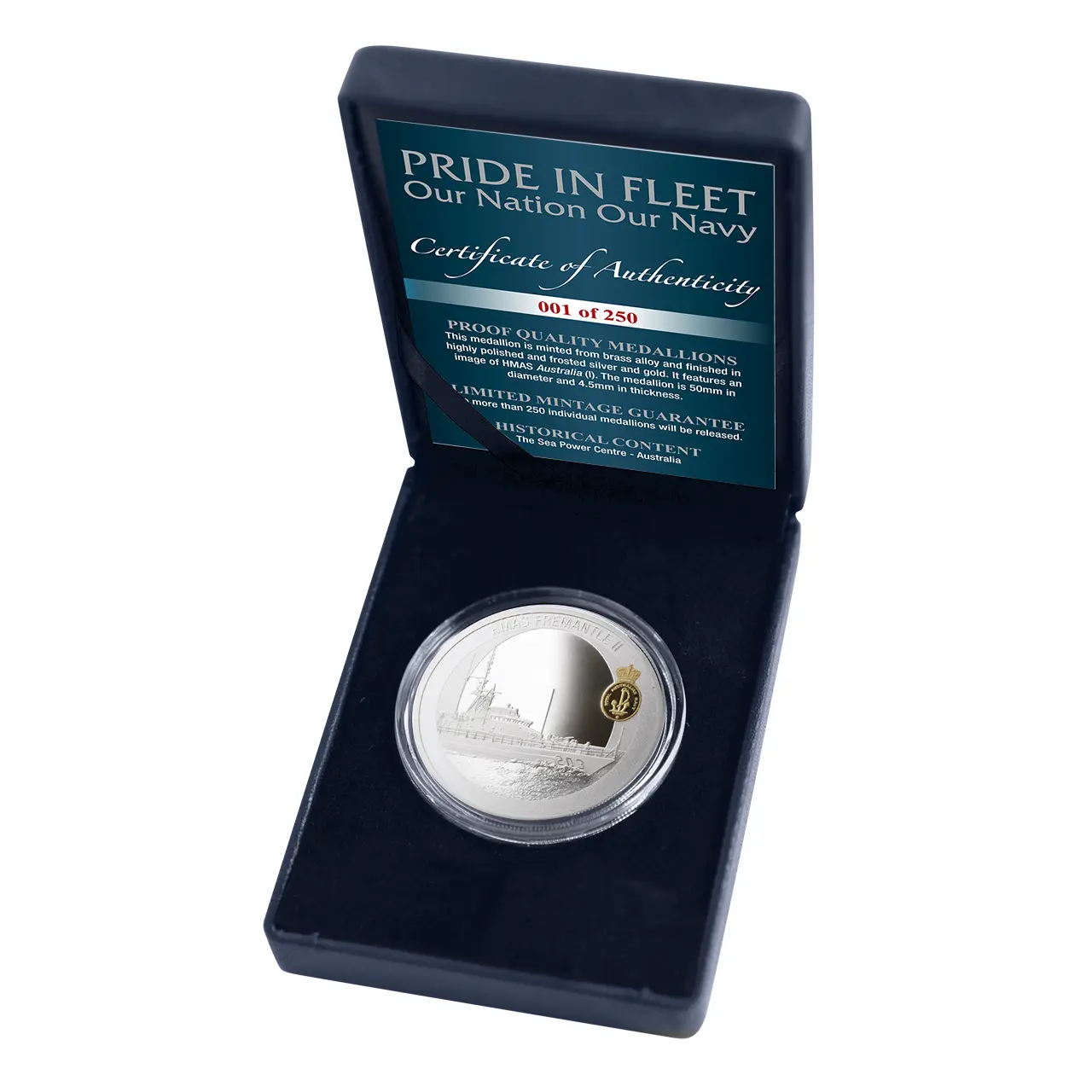
Pride in Fleet HMAS Fremantle (II) Medallion — Archive Editions #1–#10
A 50 mm brass-alloy medallion commemorating the lead vessel of the 15 Fremantle class patrol boats that served in the Royal Australian Navy between 1979 and 1984. BrandNet's retained examples carry certificate numbers #1 through #10.
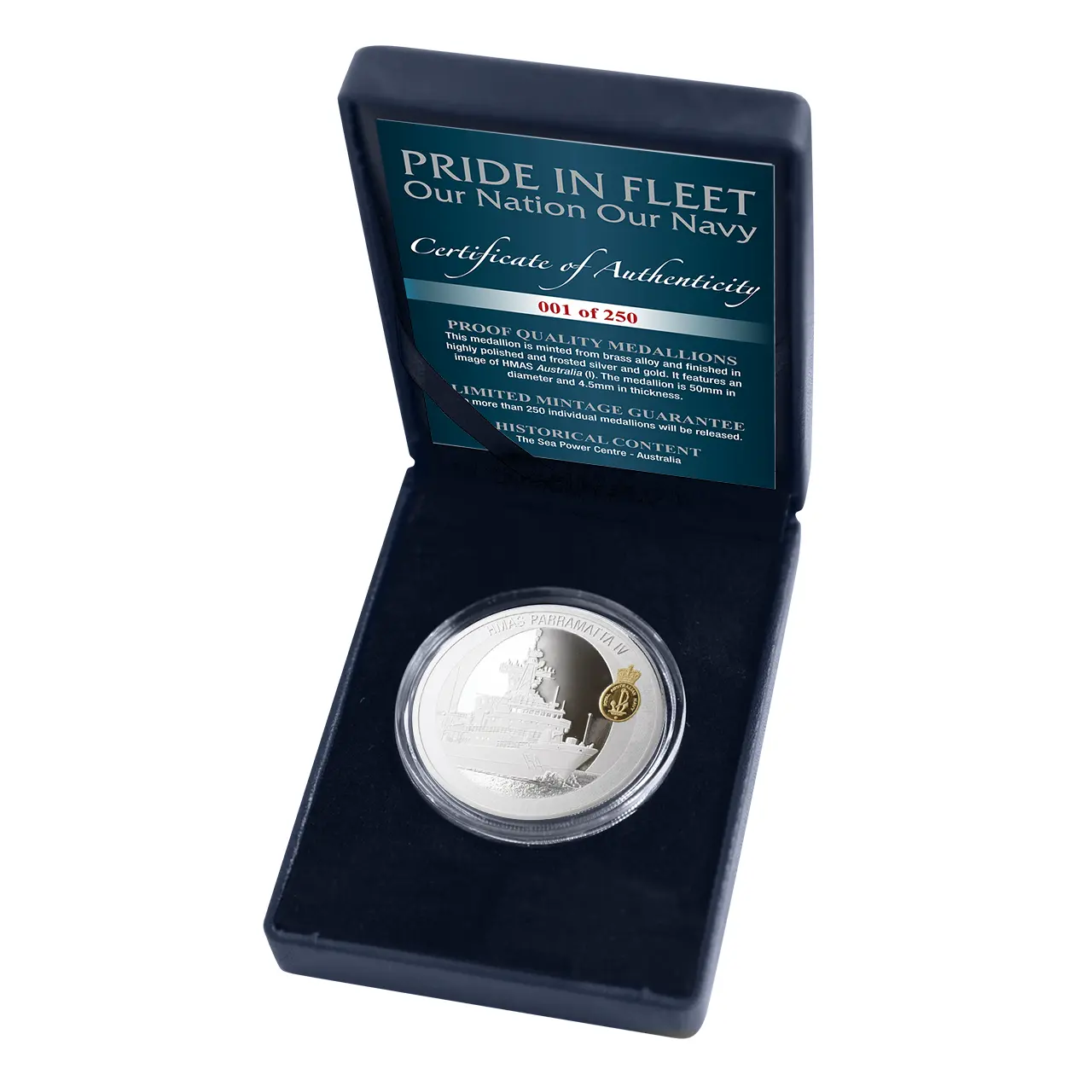
Pride in Fleet HMAS Parramatta (IV) Medallion — Archive Editions #1–#10
A 50 mm brass-alloy medallion featuring HMAS Parramatta (IV), the fifth of the Anzac Class frigates, and the fourth RAN ship to bear the Parramatta name. BrandNet's retained examples carry certificate numbers #1 through #10.
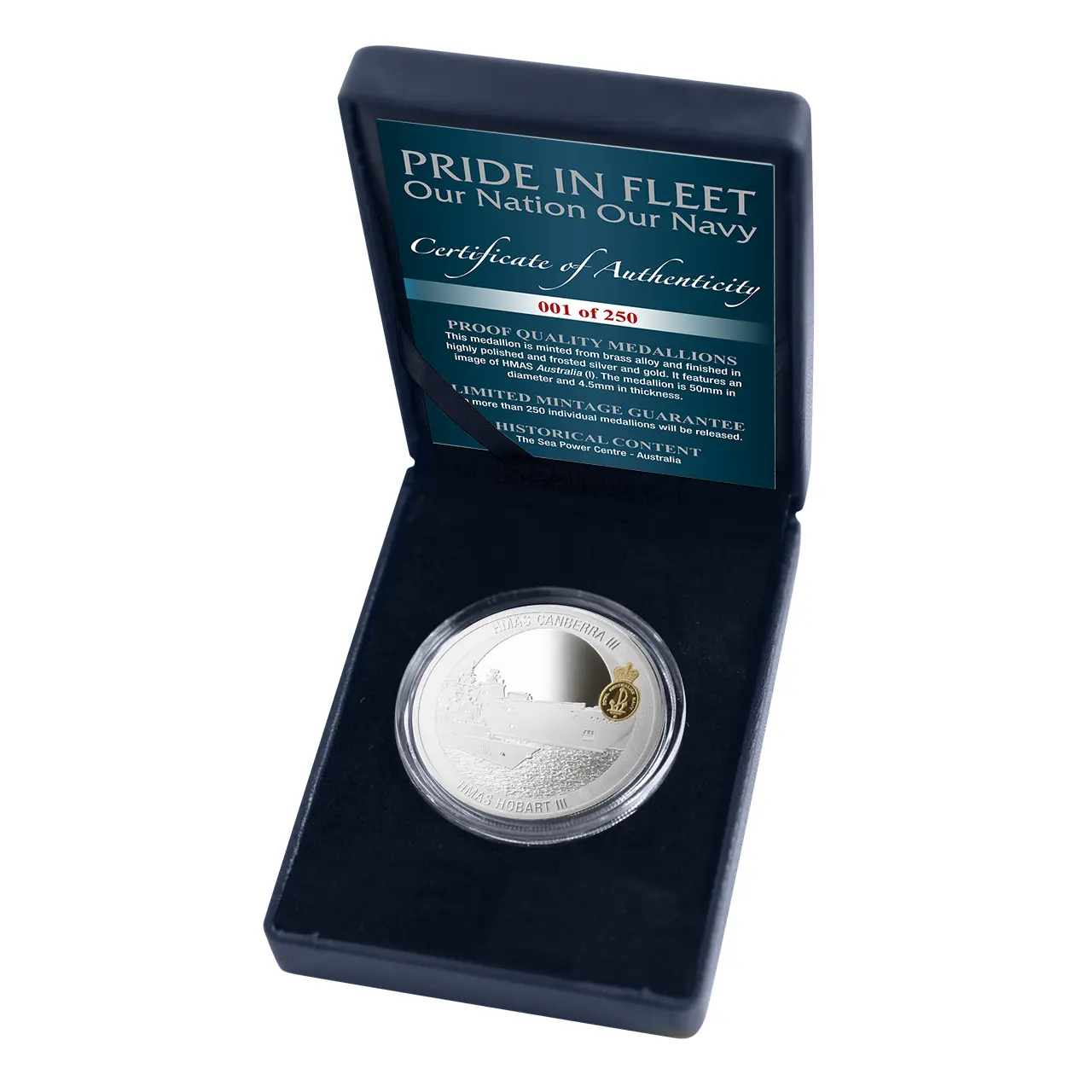
Pride in Fleet HMA Ships Canberra (III) and Hobart (III) Medallion — Archive Editions #1–#10
A 50 mm brass-alloy medallion created to highlight the then-planned HMA Ships Canberra (III) and Hobart (III), showcasing the future of the modern Royal Australian Navy. BrandNet's retained examples carry certificate numbers #1 through #10.
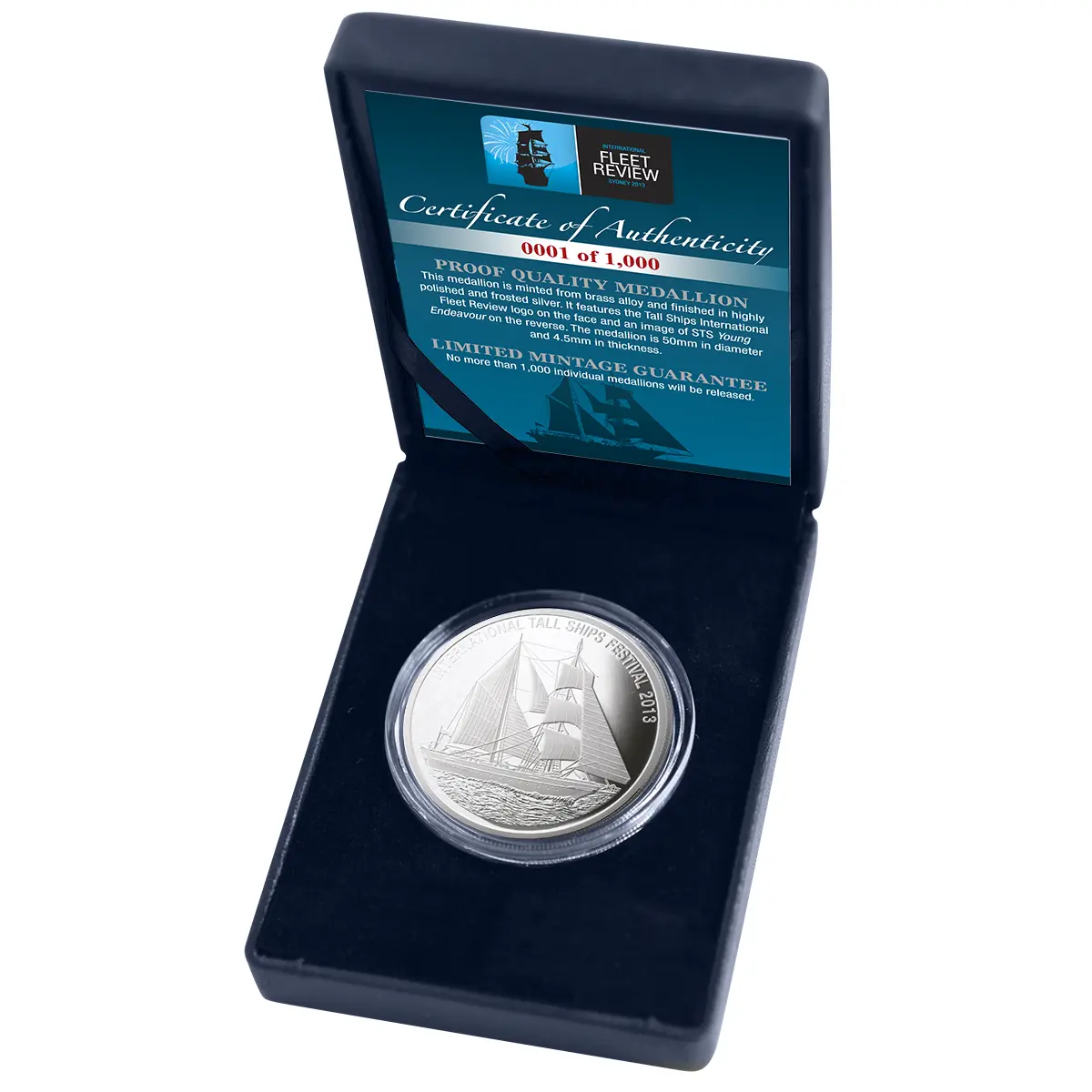
IFR Tall Ships Medallion — Archive Editions #1–#10
As part of the International Fleet Review 16 tall ships from 5 nations sailed into Sydney harbour. This medallion commemorates the visit. BrandNet's retained examples carry certificate numbers #1 through #10.
Own a part of the story
Braben’s original painting was released in three principal limited-edition artwork formats. All three are currently listed as available or available to order and are shown below at their normal retail price rather than temporary promotional pricing.
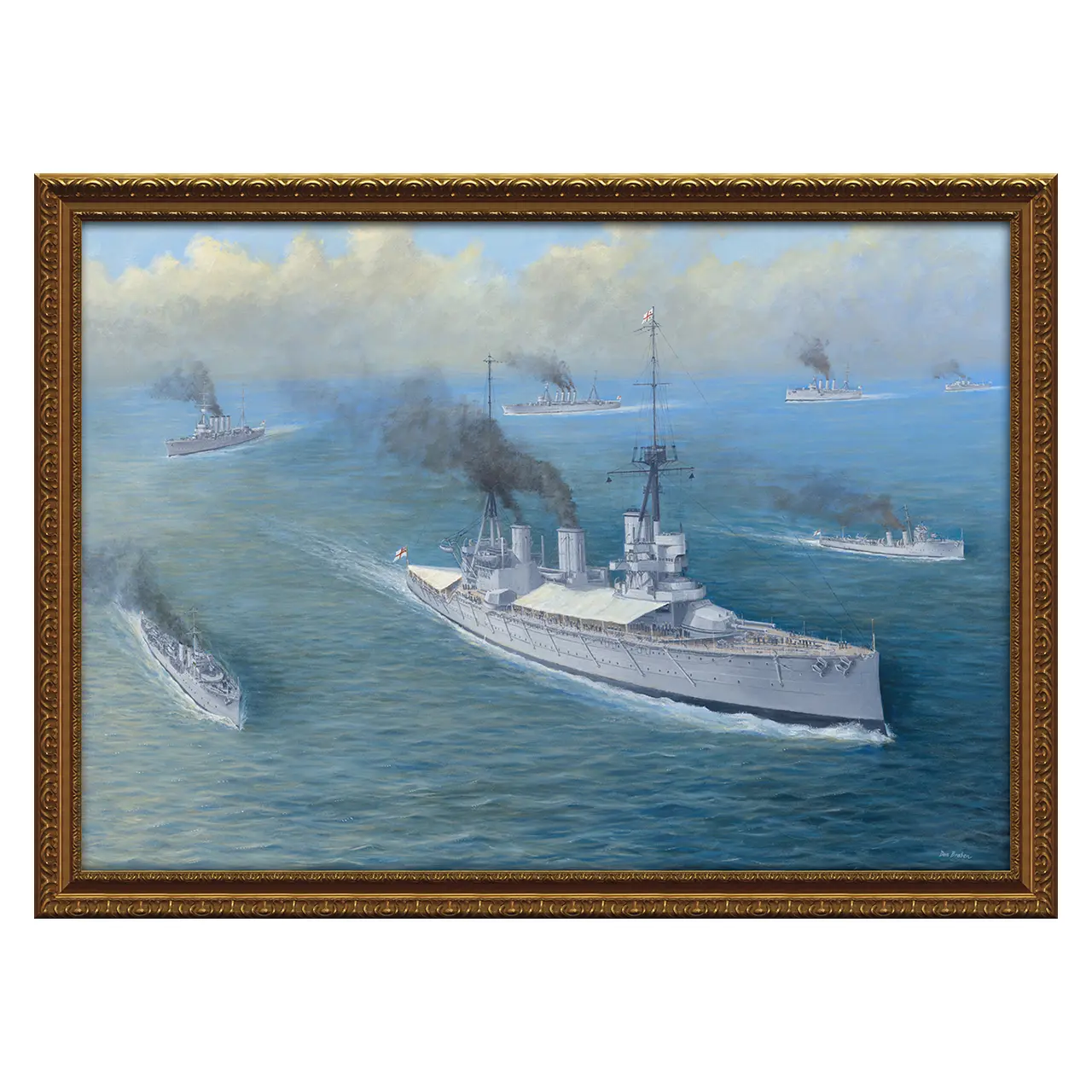 Click to enlarge
Centenary of First Fleet Full Size Framed Canvas Print
A full-size framed canvas reproduction of Don Braben’s complete First Fleet artwork. Limited Edition: 100.
Read more
The large canvas presentation is the closest reproduction format to the scale and visual presence of the original painting, allowing all seven ships and the depth of the formation to be appreciated together.
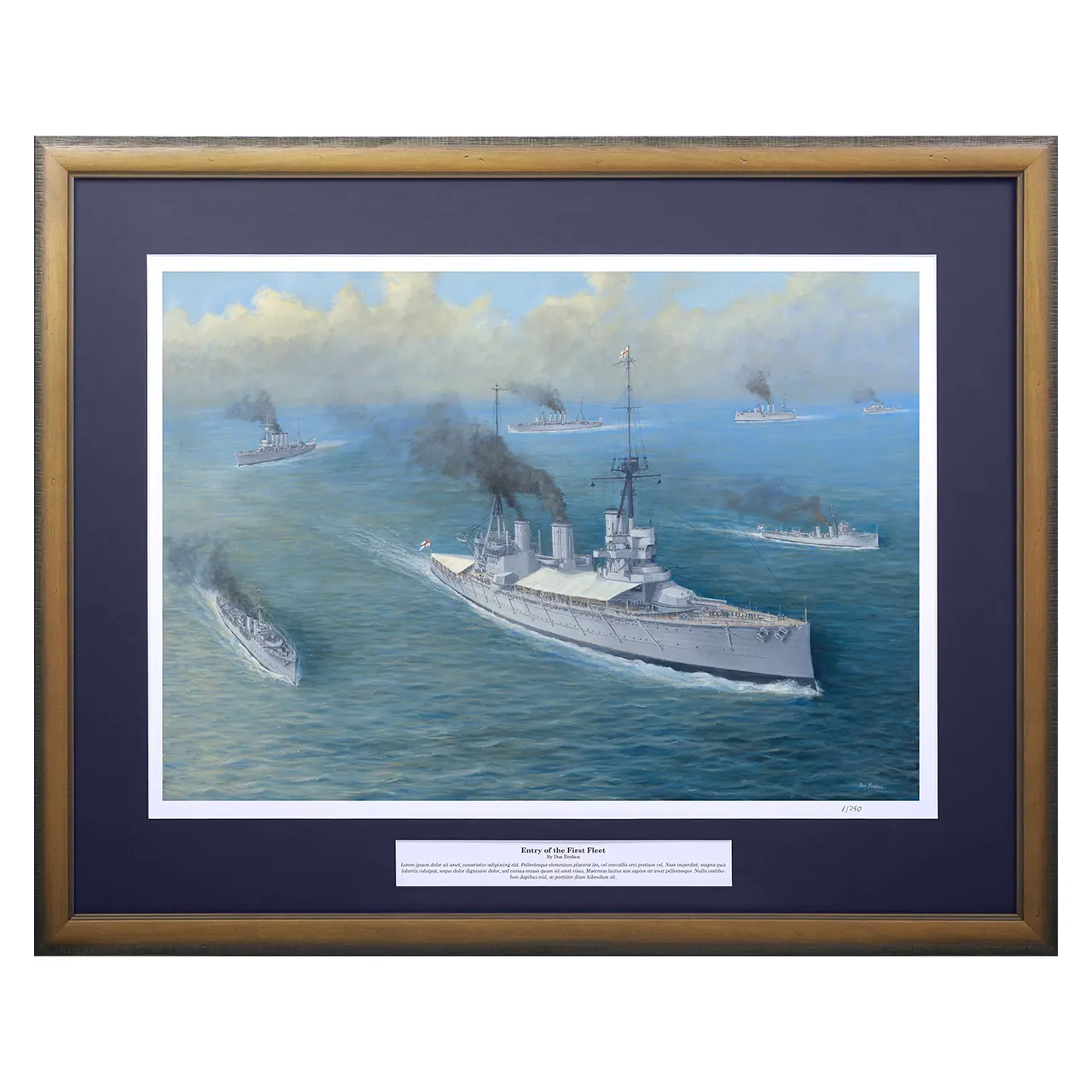 Click to enlarge
Centenary of First Fleet Framed Limited Edition Print
A framed fine-art paper edition of Braben’s complete artwork. Limited Edition: 250. Recorded print dimensions: 780 × 590 mm.
Read more
The framed edition presents the fleet in a traditional fine-art format and is prepared to order. Its finite edition of 250 places it between the very limited full-size canvas and the larger unframed edition.
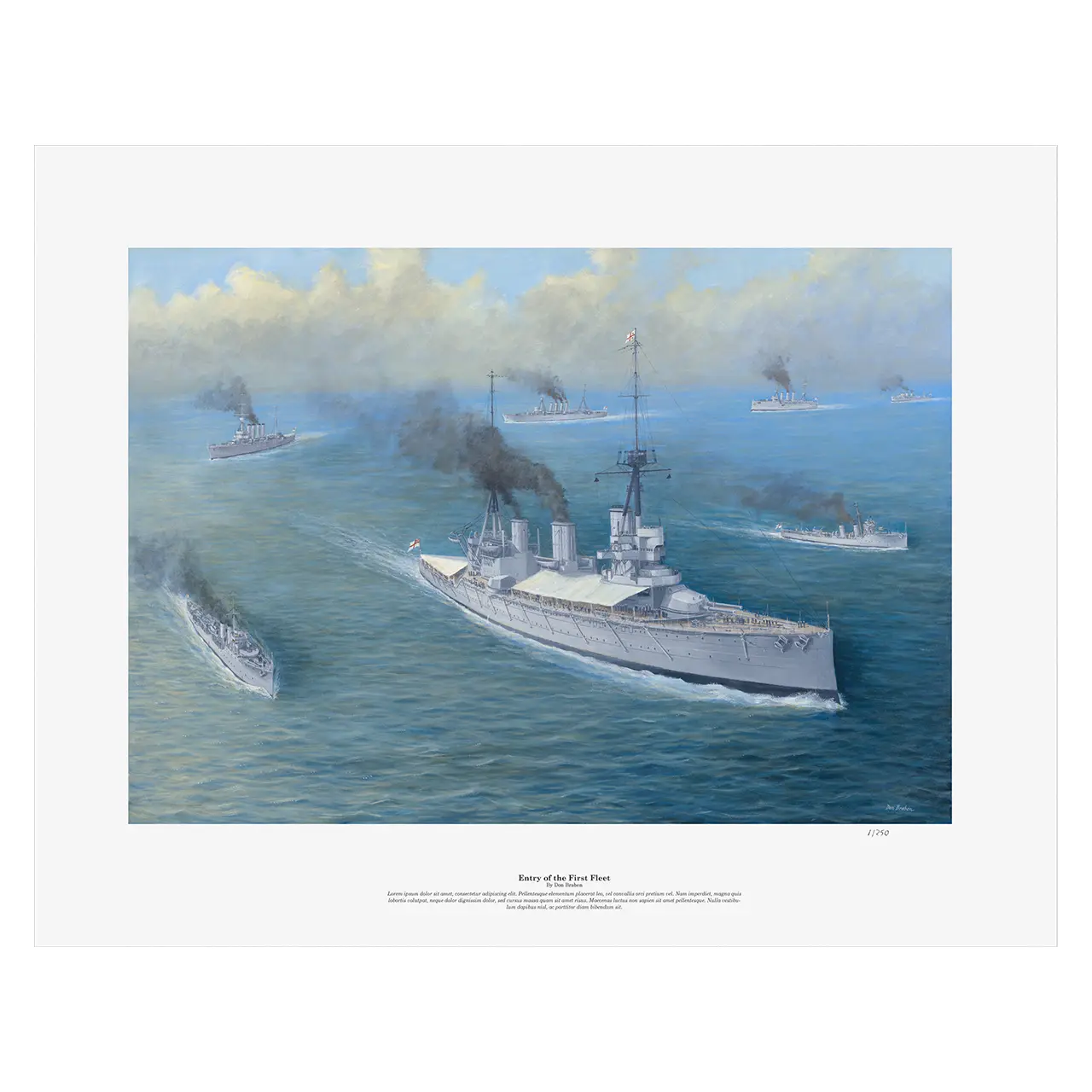 Click to enlarge
Centenary of First Fleet Unframed Limited Edition Print
A fine-art matte paper edition of the complete Centenary artwork. Limited Edition: 500. Recorded dimensions: 780 × 590 mm.
Read more
The unframed edition preserves the complete commissioned image while allowing the collector to choose their own framing and presentation.
History, artwork and collecting
Explore the Centenary of the First Fleet, its story, history, and prints.
The Fleet
Why was the 1913 Fleet Entry so important?
It marked the arrival of a credible Australian ocean-going fleet and a major step in Australia taking responsibility for its own maritime defence.
Read more
Before Federation and in the early Commonwealth years, Australia relied heavily on the Royal Navy. The new Fleet Unit gave the RAN an integrated force centred on the battlecruiser Australia. The RAN records that command of the Australian Station transferred from the Royal Navy on the same day as the Fleet Entry.
Which seven ships entered Sydney?
HMA Ships Australia, Melbourne, Sydney, Encounter, Parramatta, Yarra and Warrego.
Read more
Australia was the battlecruiser flagship. Melbourne and Sydney were light cruisers; Encounter was an older cruiser already transferred into Australian service; and Parramatta, Yarra and Warrego were destroyers. Together they formed the Fleet Unit welcomed into Sydney on 4 October 1913.
Was this the beginning of the Royal Australian Navy?
No. Australia’s Commonwealth Naval Forces dated from 1901 and the title Royal Australian Navy was granted in 1911.
Read more
The Fleet Entry was important because it made the new Navy tangible. Australia now possessed a modern group of ships capable of operating together at sea, rather than simply having a naval organisation in name.
What happened to the Fleet after 1913?
Within a year the ships were serving in the First World War.
Read more
The Fleet operated against German interests in the Pacific. Sydney famously destroyed the German cruiser Emden in November 1914, while Australia’s presence helped deny enemy capital ships freedom of action in the region. The new Navy moved quickly from national celebration to wartime service.
How was the centenary marked in 2013?
The RAN staged an International Fleet Review in Sydney Harbour in October 2013.
Read more
Warships and naval personnel from Australia and many overseas navies took part. The event deliberately echoed the 1913 Fleet Entry and gave the public another opportunity to see a major naval gathering in Sydney Harbour one hundred years later.
The Commission
What moment does Don Braben depict?
The seven ships steaming towards Sydney on the morning of 4 October 1913, before their formal harbour entry.
Read more
This is an important distinction. The painting is not a crowded view from inside Sydney Harbour. It places the viewer at sea with the Fleet Unit, allowing the ships and their formation to tell the story.
Why is HMAS Australia so prominent?
She was the Fleet Unit’s flagship and its most powerful ship.
Read more
Australia was a battlecruiser and a potent expression of sea power for the young Commonwealth. In Braben’s composition she leads the formation and flies Rear Admiral Sir George Patey’s flag, making her both the tactical and visual centre of the painting.
Why are Parramatta and Warrego beside the flagship?
The original artwork notes describe them flanking Australia during the approach to Sydney.
Read more
Military Shop’s historical notes explain that the destroyers would return to their place in the line for the entry into Sydney Harbour. Their flanking positions therefore help identify the painting as the fleet’s approach rather than the final ceremonial formation.
Why does the painting feel so calm?
Braben chose the quiet approach to Sydney rather than the spectacle of the harbour reception.
Read more
The calmness gives the painting much of its power. The viewer knows that huge crowds and ceremony await, but the artwork holds the Fleet in the moment immediately before that public celebration.
The Collection
What limited-edition artwork formats were produced?
A full-size framed canvas, framed paper print and unframed paper print.
Read more
The canvas was limited to 100, the framed print to 250 and the unframed print to 500. This created three levels of presentation while keeping each release finite.
How many Lone Pine medallion sets were produced?
The Set of Six was limited to 2,500 sets and the Set of Two to 5,000 sets. Both were issued with numbered certificates of authenticity.
Read more
Each medallion is approximately 50 mm in diameter and produced in brass alloy with proof-quality silver finishes and full-colour imagery from Harrison’s painting. The six-medallion set is presented in a timber box, while the two-medallion set is housed in a steel presentation case and sleeve.
What are the current artwork prices?
The normal listed prices are $2,490 for the full-size canvas, $595 for the framed print and $195 for the unframed print.
Were other Centenary products created?
Yes. The 2013 range extended beyond the artwork into medallions and other commemorative products.
Read more
Many historical items are now sold out and are therefore excluded from the active product section. The current lapel pin remains available and can be shown as a supporting Centenary collectable.
Archive Editions
What is a BrandNet Archive Edition?
A retained early-numbered piece from BrandNet’s original limited release with documented provenance.
Why can the first numbers be desirable?
They identify pieces from the beginning of a finite numbered release.
Read more
The image itself is unchanged, but a low edition number can add collecting interest, especially when the artwork remains complete with its certificate and direct BrandNet provenance.
What should remain with a Centenary print?
Keep the edition number, certificate and original presentation material with the artwork wherever possible.
Read more
These elements help establish authenticity and provenance. For an Archive Edition they also document the piece’s connection to the original 2013 Centenary release.

Centenary of the First Fleet — a Navy comes home
Don Braben’s Centenary of the First Fleet preserves one of the defining images in the Royal Australian Navy’s early history: seven ships approaching Sydney together on 4 October 1913. It was a moment when naval capability, national confidence and public pride converged.
Read more
The BrandNet Archives preserve the original commissioned painting alongside selected pieces from the collection created for the 2013 centenary. Together they connect the event itself, Braben’s interpretation of it and the limited editions through which the story was shared a century later.