


How to Set Up a Waterproof Map Case for Wet and Dusty Conditions
Table of Contents
- Step 1: Match the map case to the map area you will use
- Step 2: Choose the right map and give it some protection of its own
- Step 3: Fold the map so your route is on top
- Step 4: Seal the map case closure cleanly
- Step 5: Pack tools that work in the same conditions
- Step 6: Carry it where you will actually check it
- Step 7: Keep your compass readings honest
- Step 8: Protect the backup as well
- Set up your waterproof map case at home, not on the track
- Sources
- FAQs
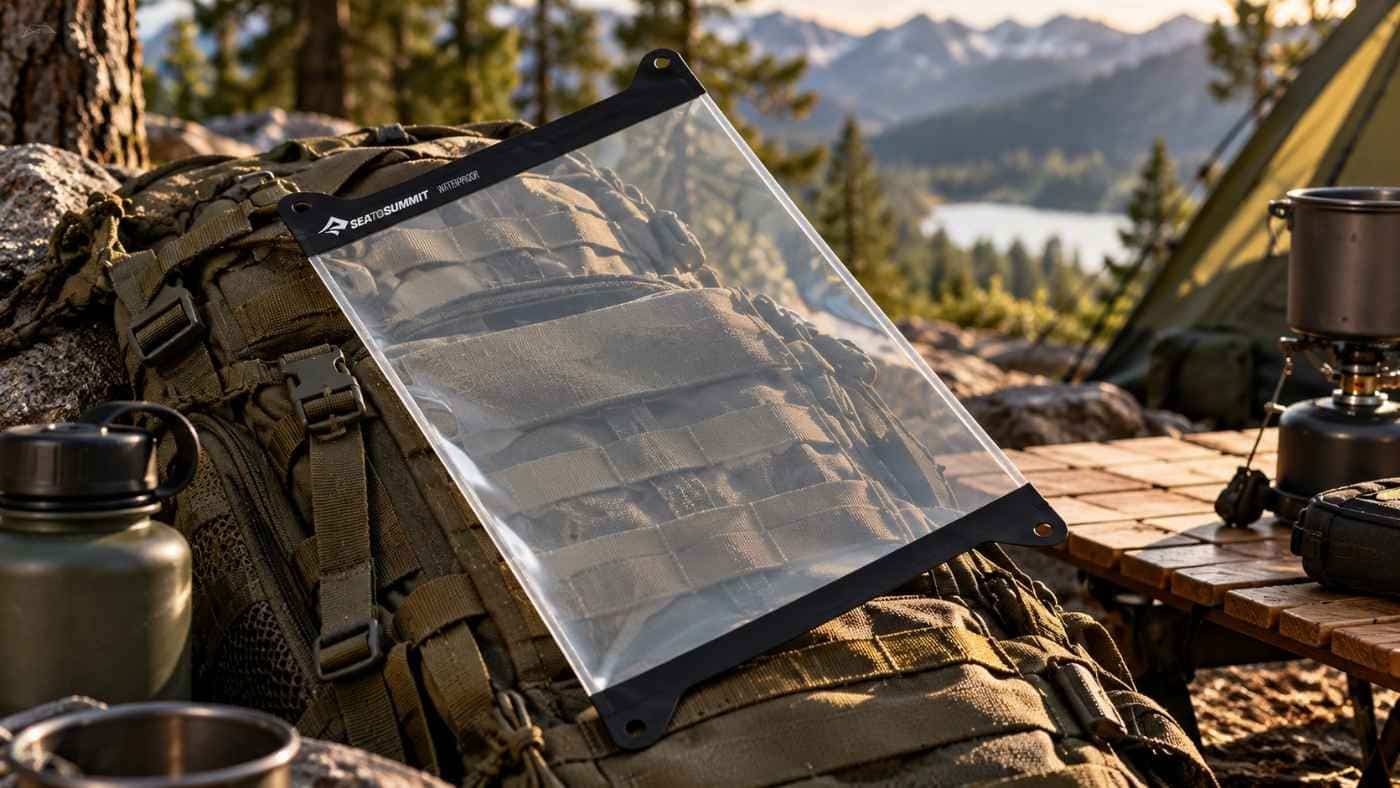
A waterproof map case only protects your navigation if it is set up before you need it. Choose a case that fits the part of the map you will actually use, prepare and fold the map so your route sits on top, seal the closure cleanly and carry the case where you can check it without unpacking. Bushwalking Victoria puts it simply: paper maps get wet unless you fold them correctly in a map case. [1]
This guide covers the practical setup of a waterproof map case for rain, river crossings, spray and dusty tracks. It is not a navigation course. Map and compass skills come from practice in the field, and a well protected map is only useful if you can read it and relate it to the ground. [2]
Step 1: Match the map case to the map area you will use
Start with the map, not the case. Decide which section of the sheet you need for the day and how large that section will be once folded. A case that is too small forces awkward folds; one that is far too large can be harder to manage in wind and when moving through scrub.
Listed dimensions give a useful starting point. The three options below come from current Military Shop listings, with the protection wording each listing uses. [3] [4] [5]
| Case | Listed size (W x H) | Material | How the listing describes protection |
|---|---|---|---|
| TPU Guide Map Case Large | 335 x 500 mm | TPU | "fully waterproof and dustproof performance" |
| TPU Guide Map Case Medium | 290 x 400 mm | TPU | "fully waterproof and dustproof performance" |
| TT Map Case Large (olive) | 600 x 400 mm | Cordura 700 Den | "water- and soil-resistant" |
These are the listings’ own descriptions. None of the three listings quotes a formal ingress protection (IP) rating, so treat even a waterproof map case as protection for a map, not as a submersible container. You can compare the full range in the map cases category.
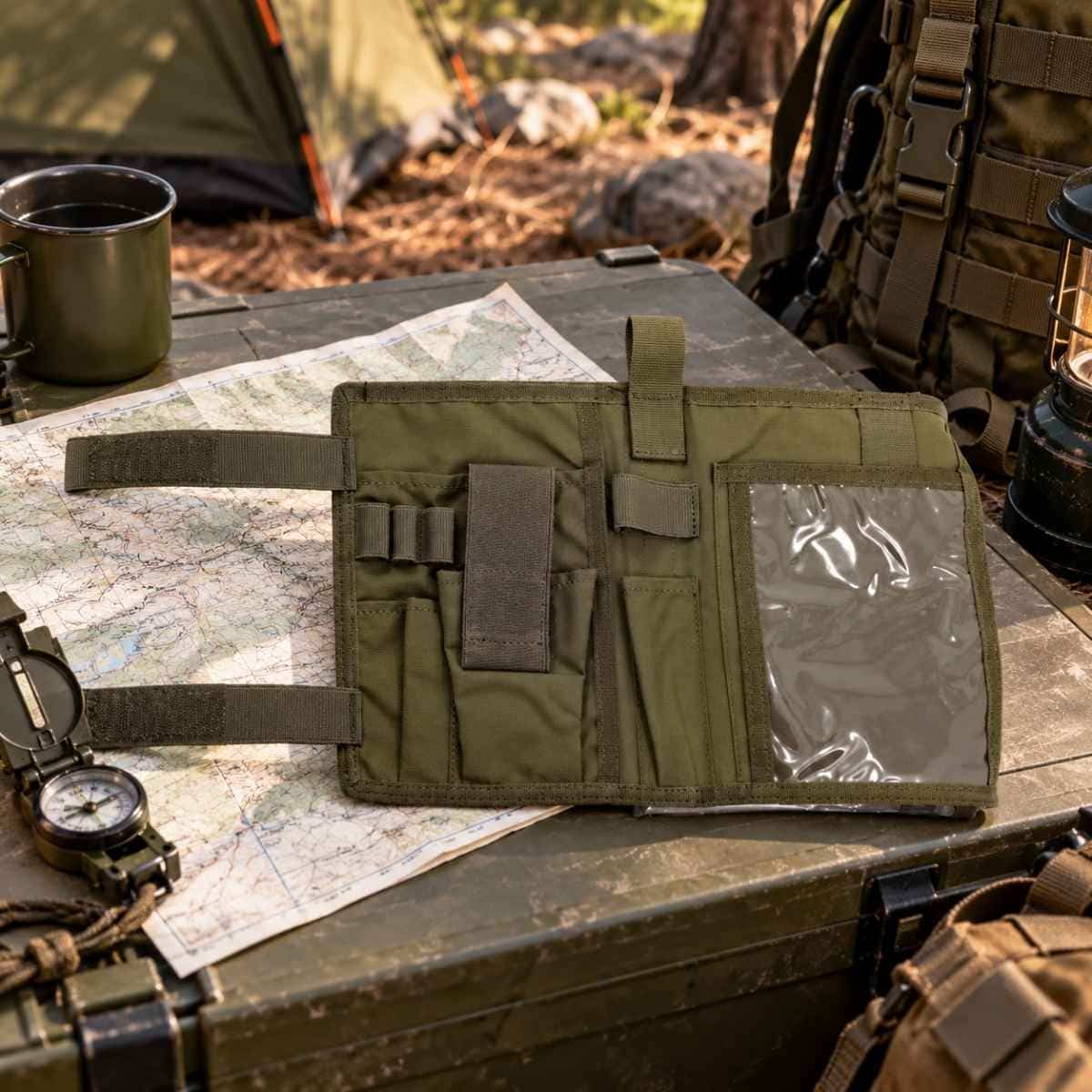
Step 2: Choose the right map and give it some protection of its own
The Bushwalking Manual, published by Bushwalking Victoria, notes that a bushwalker may choose a 1:50,000 or 1:25,000 map, and that a larger scale map such as 1:25,000 shows more detail. [6] It also notes that governments no longer print standard topographic maps; instead, government topographic maps can be bought online and printed, or ordered as large printed sheets from some map shops. [6]
That makes the printing step part of your weatherproofing. The same page suggests printing on high quality or waterproof paper, and laminating or spraying with a sealing agent to make a map more water resistant. [6] A waterproof map case then becomes a second layer rather than the only thing standing between your map and the weather.
Step 3: Fold the map so your route is on top
New Zealand’s Mountain Safety Council advises that it can be helpful to keep the map folded so that the area you are in is on top. [7] Do the folding at home, with the day’s route, likely bail out options and a margin of surrounding features visible through the front of the case.
Check the folds before you seal the case. Bushwalking Victoria warns that the feature you are looking for might be right on the map fold. [1] If a creek junction, saddle or track intersection sits on a crease, shift the fold. If your route will cross onto another section of the sheet, plan where you will stop to refold it, ideally somewhere sheltered.
Step 4: Seal the map case closure cleanly
The closure is where water and grit most often get into a waterproof map case, so give it attention every time you open the case. The TPU Guide listings describe a welded construction with no stitches and a "Super strong Ziploc® closure". [3] [4]
A sensible habit in dusty conditions is to wipe or brush grit off the closure before pressing it shut, then run your fingers along its full length to confirm it has engaged. In rain, open the case with your back to the weather, or under a jacket or tarp, and keep the opening pointed down while you refold. These are practical handling suggestions, not manufacturer instructions; follow the care guidance supplied with your case.
Step 5: Pack tools that work in the same conditions
A protected map is less useful if your pen will not write on a damp page. The Rite in the Rain all weather metal clicker pen listing describes a pressurised ink cartridge and permanent ink that is resistant to water, sweat, grease and mud. [8] If you mark routes or grid references on the case or map, test your pen on the material before the trip.
For plotting, the GTA 5212 Map Marking Protractor listing includes degrees and mils, 6 figure roamers for 1:25,000, 1:50,000 and 1:100,000 scales, and a range finding sector. [9] Match any roamer to the scale of the map in your case.
Step 6: Carry it where you will actually check it
The Bushwalking Manual recommends keeping the map handy in a map case and checking progress every 10 or 15 minutes, as well as at key features and track junctions. [2] A waterproof map case buried in a pack works against that.
The TPU Guide listings describe a detachable neck strap and corner anchor points for attachment. [3] [4] Whichever method you use, make sure the case cannot flap into your face in wind or snag on vegetation, and that you can read it without removing your pack. Practise the carry on a short local walk before relying on it.
Step 7: Keep your compass readings honest
Bushwalking Victoria lists sources of magnetic interference including nearby metal objects such as cars and fence posts, your phone, power poles or transmission lines, and some rock formations, and advises standing clear of such items where possible. [1] Think about this when you set up your carry: a phone in the same chest pocket as your compass, or a case with metal fittings, can affect a reading.
When taking a bearing, hold the compass clear of anything that may interfere, then return to the map. If you are choosing a compass, the compasses range is a place to compare options, and our guide to buying a compass in the GPS era covers what to look for.
Step 8: Protect the backup as well
Carry a spare copy of the map, or the next sheet along, somewhere dry. The Bushwalking Manual describes pack liners with a draw cord or roll top seal being used to keep gear dry inside a pack. [10] A small dry bag from the dry sacks range can do the same job for spare maps and notes.
A waterproof map case is one part of a safe trip. NSW National Parks lists a topographic map and compass, and knowing how to use them, among the things to bring on a bushwalk. It also advises telling family or friends where you are going and when you expect to return, checking weather forecasts and park alerts, and, if you are really heading bush, carrying a personal locator beacon to use as a last resort. [11]
Set up your waterproof map case at home, not on the track
The best time to set up a waterproof map case is the evening before a trip: fold the map, test the closure, check your pen and try the carry. Then the case does its job when the weather turns and you can concentrate on navigating.
If you are choosing a case, start with the size of map you normally carry and compare the listed dimensions and protection wording in the map cases range. If a listing does not answer a question about protection or fit, ask before you buy.
Sources
1 Bushwalking Victoria | Navigation (Leader Resources) | Published 25 October 2022, modified 3 April 2025 | https://bushwalkingvictoria.org.au/leader-resources/navigation/
2 Bushwalking Manual (Bushwalking Victoria) | Map and compass basics | Modified 8 April 2026 | https://bushwalkingmanual.org.au/the-trip/practical-navigation/map-and-compass-basics/
3 Military Shop | TPU Guide Map Case Large | SKU BN2734 | https://militaryshop.com.au/products/tpu-guide-map-case-large.html
4 Military Shop | TPU Guide Map Case Medium | SKU BN2735 | https://militaryshop.com.au/products/tpu-guide-map-case-medium.html
5 Military Shop | TT Map Case Large (olive) | SKU BN37142 | https://militaryshop.com.au/products/tt-map-case-large-olive.html
6 Bushwalking Manual (Bushwalking Victoria) | Paper maps | Modified 20 April 2026 | https://bushwalkingmanual.org.au/trip-planning/paper-maps/
7 Mountain Safety Council (New Zealand) | Navigation: Outdoor Safety Info Sheet | 2023 | https://mountainsafety.org.nz/assets/230419.MSC.One-pager-infosheets-navigation.pdf
8 Military Shop | Ritr All Weather Metal Clicker Pen Flat Dark Earth Black Ink | SKU BN13692 | https://militaryshop.com.au/products/ritr-all-weather-metal-clicker-pen-flat-dark-earth-black-ink.html
9 Military Shop | GTA 5212 Map Marking Protractor | SKU BN11748 | https://militaryshop.com.au/products/gta-5212-map-marking-protractor.html
10 Bushwalking Manual (Bushwalking Victoria) | Packs | Modified 18 June 2026 | https://bushwalkingmanual.org.au/equipment-and-clothing/packs/
11 NSW National Parks and Wildlife Service | Bushwalking safety | No date shown | https://www.nationalparks.nsw.gov.au/safety/bushwalking-safety