


Buying a Compass: Do You Still Need One in the GPS Era?
Table of Contents
GPS has changed the way people navigate, but buying a compass is still worth considering for anyone travelling beyond reliable roads and mobile coverage. Smartphones, satellite messengers, GPS watches and handheld navigation units can provide coordinates, record routes and show your position with impressive accuracy.
So, is buying a compass still necessary?
For anyone spending time in remote areas, the answer is still yes. GPS has made navigation faster and more convenient, but it has not eliminated the need for a reliable direction-finding tool. A compass does not depend on batteries, mobile coverage, software or a satellite connection. It can also serve as an independent backup when electronic navigation is unavailable.
The better question is not GPS or compass. It is how the two can work together.
Why a Compass Still Matters
Digital navigation is extremely useful, but every electronic device introduces potential points of failure.
A phone can run out of battery. A GPS unit can be damaged. A navigation app can malfunction or lose access to downloaded maps. Terrain can also affect satellite reception and make positioning less reliable.
A physical compass has none of these limitations.
Once you understand how to use a compass, you can establish direction, follow a bearing and work with a paper map without relying on electronic equipment.
This makes a compass particularly valuable for:
Bushwalking and hiking
Camping and remote expeditions
Hunting
Orienteering
Military and field activities
Search and emergency operations
Navigation in areas with limited mobile coverage
A compass also provides an important backup. If your GPS stops working halfway through a trip, you still have a way to determine direction and continue navigating.
GPS vs Compass: What Does Each Tool Do Best?
GPS and a compass perform different jobs.
A GPS device can tell you where you are using satellite positioning. It can display coordinates, track your route and help you navigate towards a destination.
A compass tells you direction.
A paper topographic map tells you what is around you, including terrain, tracks, waterways and other landmarks.
Used together, these tools provide a much stronger navigation system than relying on any single device.
Electronic navigation is generally the most convenient option for everyday route planning. A compass and map provide an independent method when technology fails or when you need to navigate without relying on a screen.
That is why learning traditional navigation skills remains worthwhile, even for people who normally use GPS.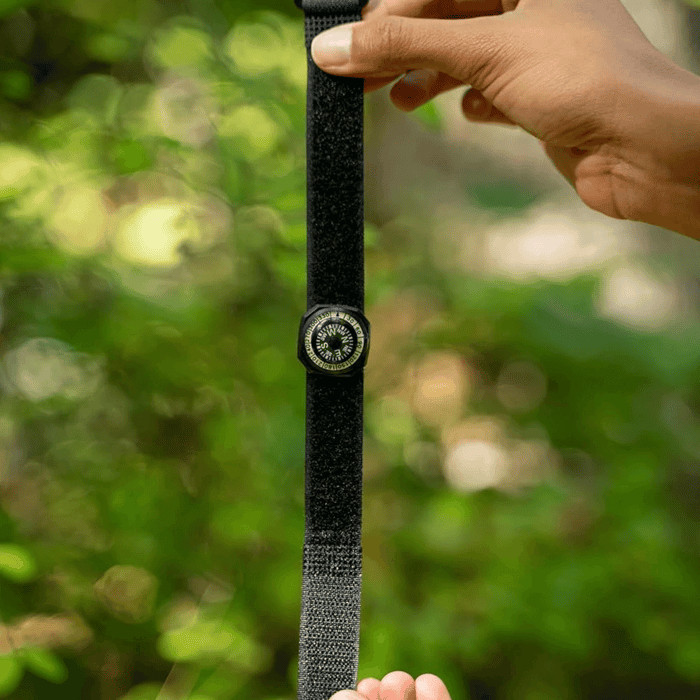
Types of Compasses
There are several types of compasses, and the right choice depends on how you intend to use one. If you're buying a compass for outdoor navigation, understanding the differences between these designs can help you choose the right model.
Hiking and Orienteering Compasses
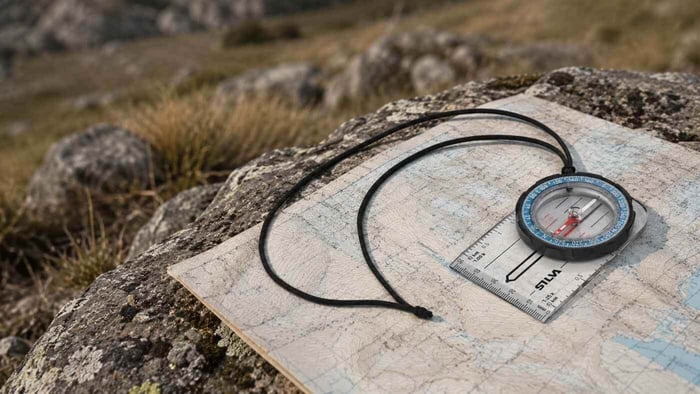
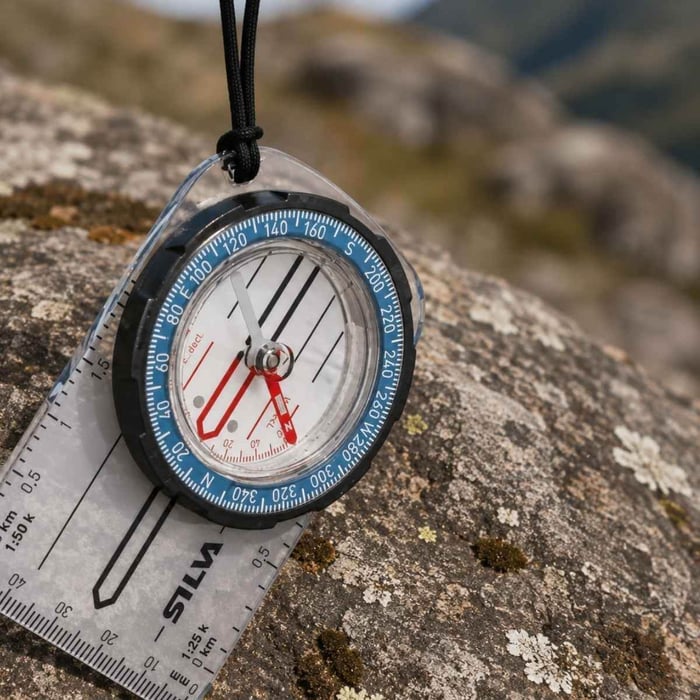
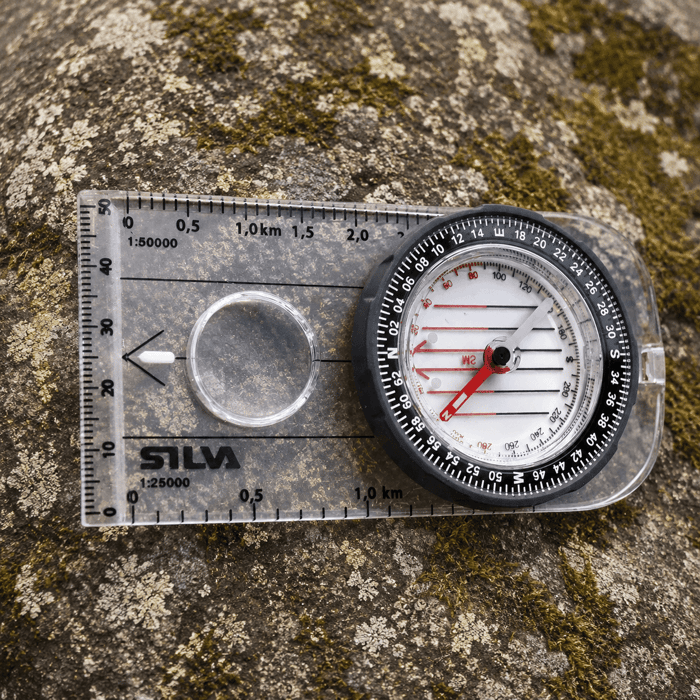
A hiking compass is generally designed for straightforward outdoor navigation and map reading. Most have a transparent baseplate, directional markings and a rotating bezel.
An orienteering compass is built around the same basic principle but is designed for quick and efficient navigation. The transparent base makes it easy to work directly from a topographic map while taking bearings.
For bushwalking, hiking and general outdoor use, this type of compass is often the most practical choice.
Lensatic Compasses
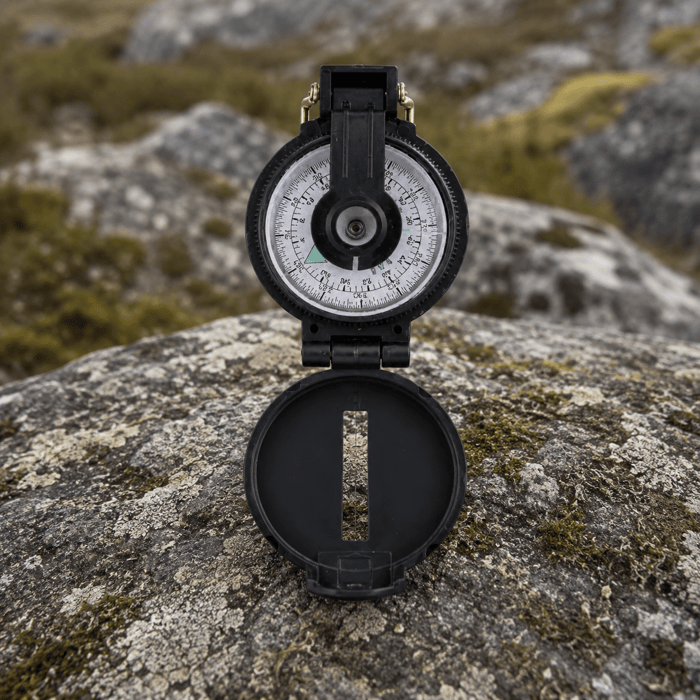
A lensatic compass uses a folding design with a sighting system that allows the user to take a bearing towards a distant landmark.
The sighting arrangement can make it easier to obtain a precise direction compared with simply looking down at a baseplate compass.
Lensatic models are commonly associated with military-style navigation and field use, making them suitable for users who need a rugged compass with more advanced sighting capabilities.
Tactical Compasses
A tactical compass is generally designed for demanding field environments where durability and practical operation are priorities.
Depending on the model, features can include a robust housing, luminous markings, a sighting system and other features intended for use in low-light or challenging conditions.
For military-style activities, field training or outdoor users who want a particularly durable navigation tool, tactical models are worth considering.
Thumb Compasses
Thumb compasses are designed to attach directly to the user's hand, usually around the thumb.
They are particularly popular in competitive orienteering because they allow the user to keep the map and compass together while moving quickly.
For general hiking, a conventional baseplate design is usually more versatile.
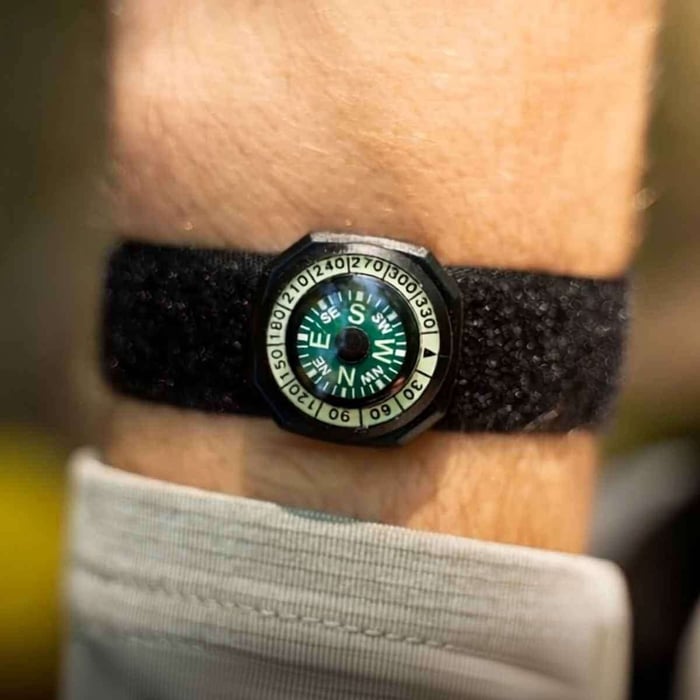
Other Compass Types
There are also specialised designs for specific applications.
A nautical compass is designed for marine navigation, while a solar compass uses the sun rather than the Earth's magnetic field to establish direction. A compact carabiner compass can be clipped to equipment for quick directional checks, although its small size generally makes it less suitable for detailed map navigation.
A hunting compass may be designed around the needs of hunters travelling through unfamiliar terrain, where maintaining a bearing and returning along a known route can be important.
Understanding the different types helps you avoid buying a compass model with features you do not actually need.
How to Use a Compass
Learning how to use a compass is more important than buying the most sophisticated model available.
Start by holding the compass level and away from objects that could interfere with the magnetic needle, such as large metal equipment. Allow the needle to settle before taking a reading.
The basic principle is simple: the magnetic needle provides a reference for magnetic north, allowing you to establish a bearing and maintain a direction of travel.
For more advanced navigation, you can combine the compass with a topographic map.
That is where understanding magnetic north, true north and grid north becomes important. These references do not always point in exactly the same direction, and the difference varies according to location. Maps provide information about the relevant magnetic declination so you can make the necessary adjustment.
How to Use a Compass and Map
Knowing how to use a compass and map gives you a much more complete navigation system.
A typical process involves:
Identify your position and destination on the map. Establish where you are and where you want to go.
Set your bearing. Place the edge of the compass along the line between your position and destination, then adjust the bezel according to the map and local magnetic declination.
Orient the compass. Hold it level and rotate yourself until the magnetic needle aligns correctly with the compass markings.
Choose a landmark. Identify a visible feature along your intended direction of travel.
Move and check regularly. Walk towards the landmark, then take another reading and repeat the process.
The advantage of using a map is that the compass gives you direction while the map provides context. You can identify ridgelines, tracks, rivers and other terrain features before setting out rather than discovering obstacles after you encounter them.
How to Use a Compass Without a Map
A compass can still help if you do not have a map, but its capabilities are more limited.
If you know the direction you need to travel, you can establish a bearing and use visible landmarks to maintain it. Pick a recognisable feature in the distance along your intended direction, walk towards it and then take another bearing.
This technique can help prevent gradual changes in direction, which can become surprisingly significant over long distances.
However, a compass cannot tell you where you are or what is ahead.
That is an important distinction. If you are navigating without a map, you have much less information about terrain, obstacles and your position. A compass should therefore be treated as a directional tool rather than a complete navigation system.
What to Look for When Buying a Compass
When buying a compass, focus on the features that match your intended use and the conditions where you expect to navigate.
Accuracy and readability
The markings should be clear enough to read quickly in the conditions where you expect to use the compass. A transparent baseplate is particularly useful for map navigation.
Needle design
If you regularly travel internationally, consider a compass with a global needle that can operate across different parts of the world. Magnetic needles are affected by the Earth's magnetic field, so some compasses are designed for particular regions.
Sighting capability
If you need to take bearings towards distant landmarks, a sighting system can improve accuracy. This is particularly relevant when choosing a lensatic or tactical compass.
Durability
A compass carried into the bush needs to withstand more abuse than one kept in an emergency kit. Consider the housing, construction and resistance to water and general outdoor use.
Luminous markings
If you expect to navigate in darkness or low-light conditions, luminous markings can make directional readings easier.
Size and weight
A larger compass may provide better readability and additional features, but a compact model can be easier to carry as part of a lightweight kit.
Which Compass Is Right for You?
The best compasses are not necessarily the most expensive. The best choice depends on what you need the compass to do.
For hiking and bushwalking, a clear baseplate or quality hiking compass with straightforward map-reading features is usually a sensible option. If you're buying a compass for hiking, look for a model that is easy to read and simple to use with a topographic map.
For military-style navigation and field use, a lensatic or tactical compass may be more appropriate.
For competitive orienteering, a thumb compass offers speed and convenience.
For anyone simply wanting an emergency backup for electronic navigation, a compact hand held compass can provide basic directional capability without taking up much room.
The important thing is to buy a compass you understand how to use. A sophisticated instrument is of limited value if it stays at the bottom of your pack.
GPS and Compass Work Better Together
GPS has not made the compass obsolete. It has changed its role.
For everyday navigation, electronic devices offer speed, convenience and detailed positioning information. A physical compass provides an independent method of establishing direction when batteries, electronics or satellite positioning are no longer available.
For anyone regularly travelling beyond established roads and reliable infrastructure, carrying both makes practical sense.
Buying a compass is inexpensive insurance, but the equipment is only part of the equation. Take the time to learn how to use it, practise taking bearings and understand how it works with a map before you need those skills in the field.
If you are looking for dependable navigation, field and outdoor equipment, browse Military Shop's range of products to find equipment suited to your next expedition or field activity.
FAQs
Do I really need a compass if I have GPS?
For well-marked trails, GPS and offline maps can handle most routine navigation. A physical compass is still valuable as a backup, particularly in remote areas with limited reception.
A compass does not rely on batteries, software or mobile coverage, and takes up very little space. However, it is only useful if you know how to use it, so basic navigation skills are worth learning before heading into unfamiliar terrain.
Is a compass better than GPS for hiking?
Neither is universally better because they serve different purposes.
GPS provides your location, route information and tracking, while a compass provides an independent way to establish direction. For remote hiking, carrying both is often the most practical approach. Use GPS for convenience and keep a compass and map available as a backup.
What is the best compass for hiking?
For most hikers, a baseplate or orienteering compass is a practical choice. Its transparent base can be used with a topographic map, while the rotating bezel allows you to set and follow a bearing.
A lensatic or tactical compass may be better suited to military-style navigation, field work or situations where a sighting system and greater durability are priorities.
The best compass is ultimately one that suits your activity and that you know how to use. Extra features are of little value if you are unfamiliar with them when you need them.
How difficult is it to learn how to use a compass and map?
The basic principles are straightforward, but navigation takes practice.
Start by identifying your position and destination on a map, setting a bearing, orienting the compass and following that bearing towards a recognisable landmark. Practising on short, familiar hikes can help build confidence before navigating unfamiliar terrain.
Learning these skills before you need them is far better than trying to work out a compass while already lost.
Can I use a compass without a map?
Yes, but its usefulness is limited.
A compass can help you establish a direction and maintain a bearing towards a landmark, particularly when visibility is poor or you need to maintain a general heading.
However, it cannot tell you your location or what lies between you and your destination. A topographic map provides the terrain information needed to plan a route and confirm your position.
For this reason, a compass and map are far more useful together than either tool alone. A compass is a reliable backup navigation tool, but it does not replace knowing where you are.