


A Tactical Pack's Care Instructions: Check the Fabric and Coating Before Reproofing
Table of Contents
- Check the Exact Pack Model Before You Choose a Cleaning or Reproofing Method
- CORDURA Describes the Fabric, but the Pack May Still Have a Separate Finish, Coating or Laminate
- Some Coated Backpacks Do Not Need Additional Reproofing at All
- Clean Dirt Off the Pack Before You Decide Whether Water Resistance Has Changed
- A Simple Cleaning Sequence Keeps the Risk Low
- Do Not Treat Surface Wetting, Leaks and Coating Damage as the Same Problem
- Inspect the Pack After Cleaning Before You Apply Anything New
- Only Reproof a Pack When the Manufacturer Says the Treatment Is Compatible
- Dry the Pack Completely Before Storage to Protect the Coating and Reduce Mould Risk
- A Five-Minute Care Check Can Prevent Unnecessary Reproofing
- Sources and Further Reading
- FAQs
A practical guide to cleaning, drying and assessing a tactical backpack before applying any water-repellent treatment.
| The short answer: do not reproof a tactical pack just because water has stopped beading on the outside. First identify the pack material, find out whether it is coated or laminated, and check the manufacturer’s care instructions. Some coated backpacks are specifically designed to be cleaned without additional impregnation. |
A tactical pack can look simple from the outside, but its fabric may include several layers or treatments. Two packs that both say “CORDURA” can still use different coatings, laminates or water-repellent finishes. That matters because the wrong cleaner, washing method or proofing product can affect the coating that already provides part of the pack’s weather resistance. [1]
That is why pack care should start with identification, not with a spray can. If you know the exact model, fabric and coating, you can clean it more safely and decide whether reproofing is even appropriate.
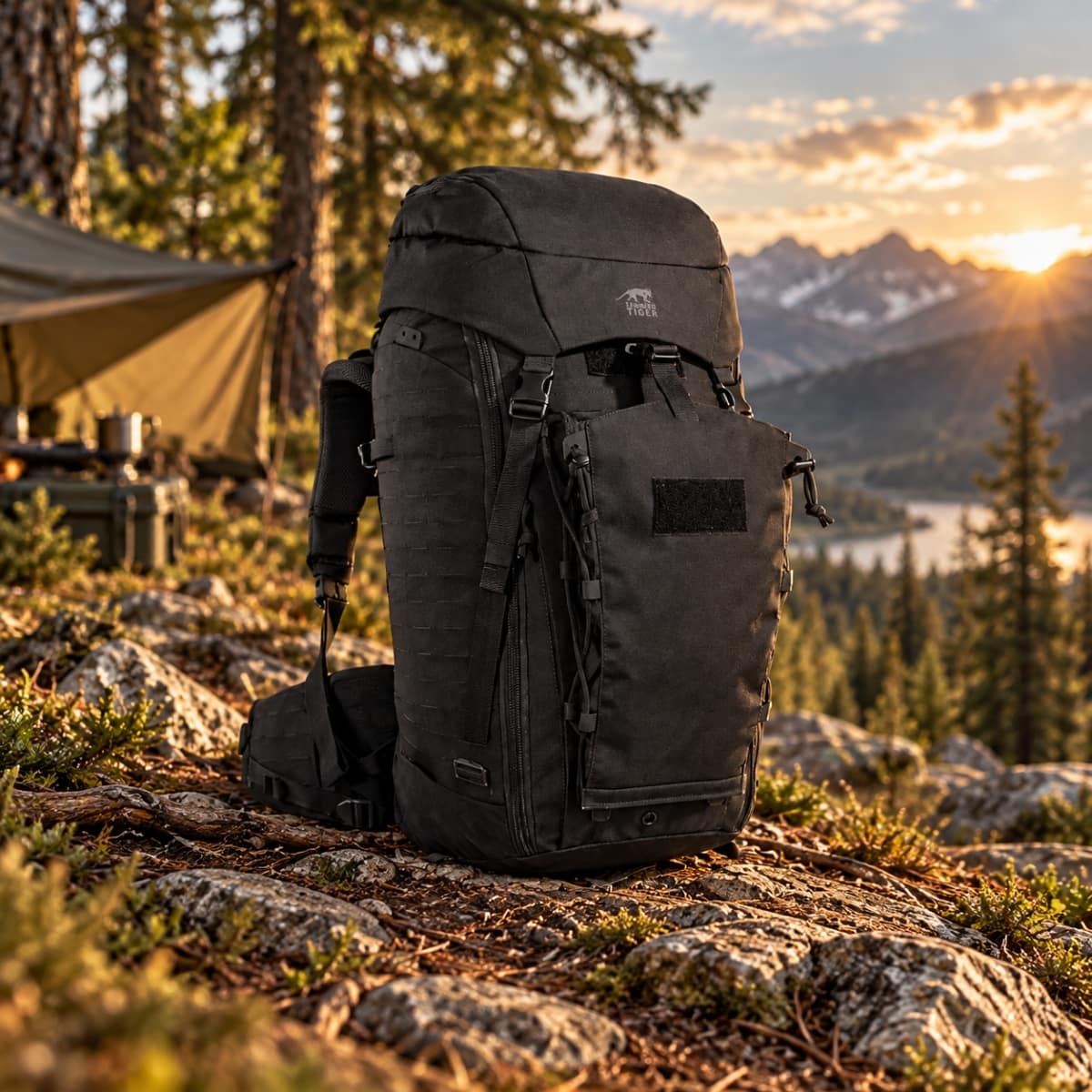
Check the Exact Pack Model Before You Choose a Cleaning or Reproofing Method
Start with the label, product page or manufacturer information for your exact pack. Look for the fabric name, denier, coating, laminate and any care instructions. Do not assume that every military-style backpack has the same construction.
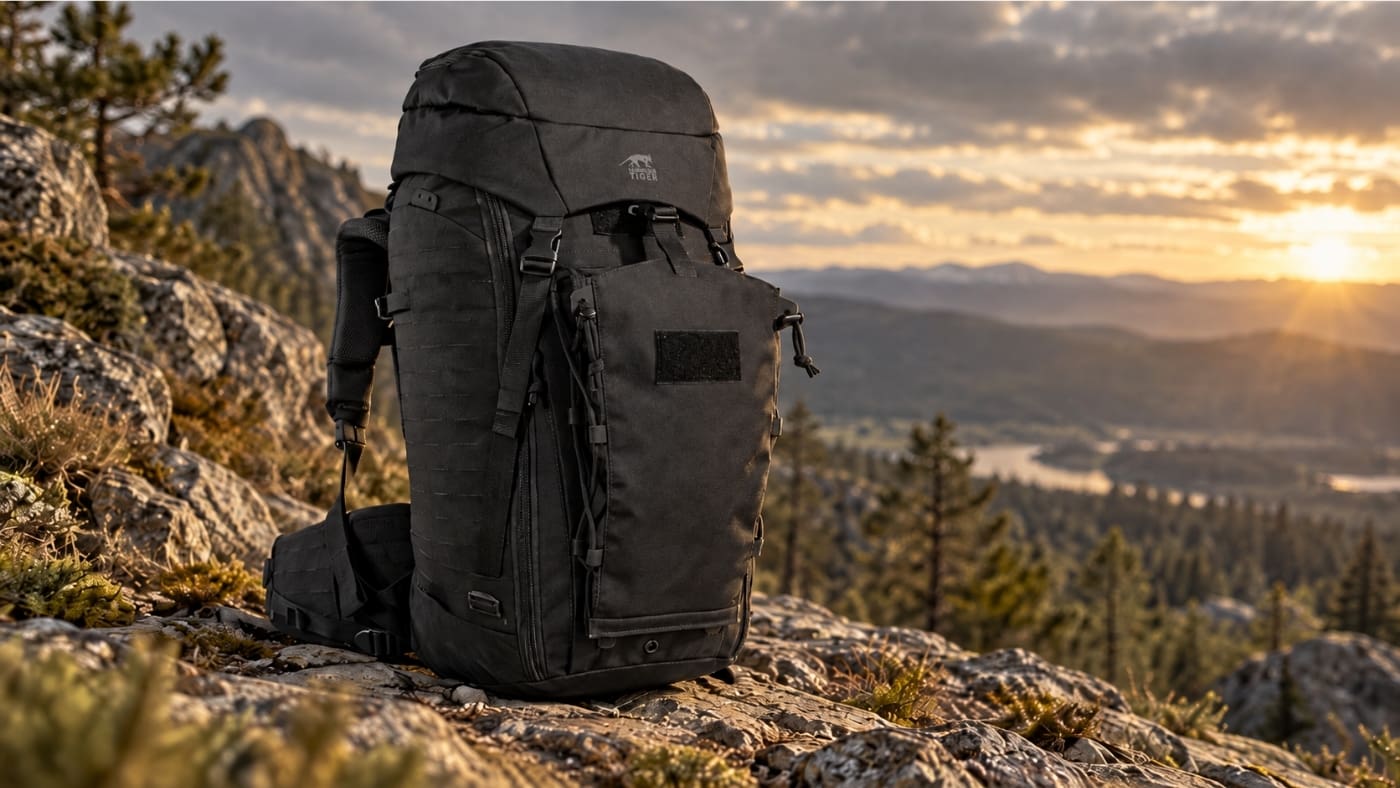
For example, Military Shop currently lists Tasmanian Tiger packs made from CORDURA 700 den. That tells you something important about the face fabric, but it still does not tell you the full care system by itself. [2]
CORDURA Describes the Fabric, but the Pack May Still Have a Separate Finish, Coating or Laminate
CORDURA Classic Fabric is made from high-tenacity nylon 6,6 and is widely used in bags, backpacks and military equipment. CORDURA also states that the fabric can be supplied as finished, coated or laminated material. In other words, seeing “CORDURA” on the specification is not enough to tell you exactly how the pack handles water or which treatment is suitable. [1]
This is the key reason to check the full product specification. A water-repellent surface treatment, an internal polyurethane coating and a laminate are different things. A product intended for an outer fabric finish may not be the right choice for a coated pack.
Some Coated Backpacks Do Not Need Additional Reproofing at All
A good example comes from Tatonka’s published backpack care guidance. Tatonka advises cleaning a backpack by hand with a damp cloth, using a mild soap solution for heavier dirt, and allowing the pack to dry completely. It also states that its coated backpack material does not need additional impregnation. [3]
That does not mean the same rule applies to every backpack from every manufacturer. It means the safe question is not “Which reproofing spray should I buy?” The safer first question is “Does the maker of this exact pack recommend reproofing at all?”
Clean Dirt Off the Pack Before You Decide Whether Water Resistance Has Changed
Dust, mud, body oils and dried dirt can change the way water behaves on the surface. Before deciding that a pack has “lost its waterproofing”, clean it according to the manufacturer’s directions and reassess it after it has dried.
For coated Tatonka backpacks, the published guidance is straightforward: brush or wipe away dirt, use a damp cloth or sponge, use mild soap for stronger soiling, and avoid aggressive detergents. Tatonka also advises against putting the backpack in a washing machine or tumble dryer because the material or coating can be damaged. [4]
A Simple Cleaning Sequence Keeps the Risk Low
| Step | What to do | Why it matters |
| 1. Empty the pack | Remove all contents and open pockets. | Hidden dirt and dampness are easier to find. |
| 2. Remove loose dirt | Brush out sand, dust and dried mud. | This reduces rubbing and unnecessary wet cleaning. |
| 3. Spot clean | Use the maker-approved method. For Tatonka guidance, use a damp cloth or sponge and mild soap if needed. | Gentle cleaning helps protect coatings and hardware. |
| 4. Rinse or wipe as directed | Remove any soap residue without soaking the pack unless the manufacturer specifically permits it. | Residue can attract dirt and affect the surface. |
| 5. Dry completely | Air-dry the pack fully before storage. | Moist storage can contribute to mould and can affect coatings. |
Do Not Treat Surface Wetting, Leaks and Coating Damage as the Same Problem
A pack can behave differently in rain for several reasons. The outer face fabric may stop shedding droplets as cleanly as before. Water may enter through a zip, seam or opening. Or an internal coating may be damaged. Those problems do not necessarily have the same solution.
- If the outer fabric simply wets out, check the manufacturer’s instructions before applying a treatment.
- If water is entering through a zip, opening or seam, a surface spray may not address the actual entry point.
- If an internal coating is peeling, cracking, sticky or separating, stop and seek product-specific advice. A generic reproofing product should not be assumed to repair structural coating damage.
This distinction is especially important because some technical fabrics are already coated. CORDURA’s own material information confirms that backpack and military-equipment fabrics can be supplied with water-repellent, coated or laminated constructions. [1]
Inspect the Pack After Cleaning Before You Apply Anything New
Once the pack is clean and fully dry, inspect it in good light. You do not need specialist equipment. You are simply looking for obvious changes that affect the next decision.
| What you notice | What it may tell you | What to do next |
| Pack is dirty but otherwise sound | Dirt may have changed surface behaviour. | Clean and dry it before deciding anything else. |
| Water no longer beads strongly on the face fabric | The surface finish may have changed, but that alone does not prove the pack needs reproofing. | Check the exact manufacturer guidance. |
| Inside coating is peeling, tacky or visibly separating | The coating may be deteriorating. | Do not experiment with a generic spray. Ask the retailer or manufacturer. |
| Water enters at a zip, seam or opening | The issue may be construction-specific rather than the whole fabric. | Identify the entry point before selecting any treatment. |
| Buckles, webbing or stitching are damaged | The problem is mechanical rather than waterproofing. | Repair or replace the damaged component as appropriate. |
Only Reproof a Pack When the Manufacturer Says the Treatment Is Compatible
If the manufacturer does recommend renewing a water-repellent treatment, match the treatment to the exact fabric and finish. Do not choose a product only because the pack is nylon or because it is marketed for outdoor gear.
- Confirm whether the pack has a DWR-style surface finish, an internal PU coating, a laminate, or another system.
- Check whether the maker recommends spray-on treatment, wash-in treatment, no treatment, or professional repair.
- Follow any temperature and drying limits. Heat that is acceptable for a garment may not be acceptable for a backpack with foam, plastic hardware, adhesives or coated panels.
- Test any maker-approved treatment on a small, inconspicuous area first if the instructions recommend a test.
The reason for this caution is simple: care advice for technical clothing cannot automatically be transferred to backpacks. Tatonka, for example, discusses renewing impregnation on hardshell clothing, while separately stating that its coated backpack material does not require impregnation. Product category matters. [4]
Dry the Pack Completely Before Storage to Protect the Coating and Reduce Mould Risk
After cleaning or wet use, let the pack dry fully before putting it into a cupboard, gear box or vehicle. Tatonka specifically warns that storing a backpack while damp can affect the coating and contribute to mildew or mould spotting. [4]
Store the pack in a dry place with enough air movement. Avoid leaving it compressed while wet. If the pack has been used near salt water, mud or fine dust, clean it before long-term storage rather than allowing contaminants to remain on the fabric and hardware.
A Five-Minute Care Check Can Prevent Unnecessary Reproofing
- Read the label or product page for the exact pack model.
- Identify the face fabric and any listed coating or laminate.
- Clean the pack using the maker’s approved method.
- Let it dry completely and inspect the inside and outside.
- Only apply a reproofing treatment if the manufacturer says it is suitable for that construction.
If you cannot identify the coating, or the material is visibly deteriorating, the safest next step is to ask before applying anything. Military Shop stocks packs from several manufacturers and material systems, so care instructions should be matched to the actual product rather than treated as universal advice.
Looking after a tactical pack? Check the exact product specifications and manufacturer instructions first. You can also browse Military Shop’s current range of military backpacks and tactical bags. |
Sources and Further Reading
1. CORDURA, CORDURA Classic Fabric: https://cordura.com/classicfabric
2. Military Shop, TT Modular Pack 45 Plus: https://militaryshop.com.au/products/tt-modular-pack-45-plus-black.html
3. Tatonka, Frequently Asked Questions: How to Clean Your Backpack: https://blog.tatonka.com/en/tatonka-faq/
4. Tatonka, Outdoor Equipment: Maintenance and Storage: https://blog.tatonka.com/en/outdoor-equipment-maintenance-storage/
5. Military Shop, Military Backpacks: https://militaryshop.com.au/tactical-gear/bags-cases/backpacks/
FAQs
Should you automatically reproof a tactical pack when water stops beading on the outside?
No, you should not reproof a pack just because water has stopped beading. Instead, you should first identify the pack material, determine if it is coated or laminated, and check the manufacturer's care instructions.
Does seeing "CORDURA" on a backpack's specification tell you how it handles water?
No, because CORDURA fabric can be supplied as finished, coated, or laminated material. Seeing "CORDURA" alone is not enough to determine its water-handling characteristics or suitability for a specific treatment.
Do all coated backpacks require additional impregnation or reproofing?
No, some coated backpacks do not need additional impregnation at all. For example, Tatonka's published guidance states that its coated backpack materials do not require additional impregnation.
Why should you clean a tactical pack before deciding its waterproofing has changed?
Dust, mud, body oils, and dried dirt can alter how water behaves on the surface. Cleaning the pack according to the manufacturer's directions allows you to accurately reassess it once it is dry.
What methods should be avoided when cleaning a Tatonka backpack?
You should avoid putting the backpack in a washing machine or a tumble dryer, as these can damage the material or its coating.
How should you handle an internal coating that is peeling, tacky, or visibly separating?
You should stop and seek product-specific advice from the retailer or manufacturer, rather than experimenting with a generic spray.
Why is it important to dry a tactical pack completely before storage?
Storing a backpack while damp can negatively affect the coating and contribute to mildew or mould spotting.