


What Is Ripstop Fabric? A Practical Guide to Ripstop Clothing and Gear
Table of Contents
In military, tactical, and outdoor environments, clothing and equipment can take plenty of punishment. Sleeves catch on branches, trousers snag on rough surfaces and bags get dragged across hard ground. With a conventional woven fabric, a small puncture or tear can sometimes spread quickly. Ripstop fabric is designed to limit that damage.
Recognisable by its subtle square or crosshatch pattern, ripstop uses reinforcement yarns woven through the main fabric at regular intervals. These stronger threads help prevent a tear from travelling too far, giving the material a useful balance of durability, weight and flexibility.
Ripstop is now widely used in military clothing, tactical apparel, outdoor equipment and workwear. But not all ripstop fabrics are the same. The fibre used, fabric weight, and any additional coatings all affect how the finished material performs.
What Is Ripstop Fabric?
So, what is ripstop?
Ripstop is a fabric construction designed to improve tear resistance. It is not a specific type of fibre. Ripstop can be manufactured using nylon, polyester, cotton, or blends of different fibres.
The characteristic grid forms when stronger reinforcement yarns are woven through the main fabric at regular intervals. These yarns are usually thicker than the surrounding threads, producing the visible pattern.
The purpose is straightforward. If the fabric is punctured or torn, the reinforcement yarns help stop the tear and reduce the chance it spreads across a large section of the material.
Ripstop is not tear-proof. A sharp object can still puncture it, and sufficiently heavy force can still cause significant damage. Its advantage is that a small failure is less likely to turn into a much larger one.
How Does Ripstop Work?
A conventional woven fabric distributes tension through its interwoven threads. Once enough threads are damaged, a tear can continue through the material.
Ripstop introduces stronger reinforcement yarns into this structure.
The main fabric provides flexibility, weight, and overall comfort. The heavier yarns form the reinforcement grid, creating stronger points throughout the cloth. When a tear reaches one of these reinforced sections, the added strength makes it harder for the damage to spread.
This construction lets manufacturers produce relatively lightweight fabrics that can handle demanding use without making the entire material extremely heavy.
The exact performance still depends on the fabric itself. A lightweight ripstop shirt and a heavy-duty tactical pack may both use ripstop construction, but they are designed for very different jobs.
What Is Ripstop Fabric Made From?
Because ripstop describes the weave rather than the fibre, there are several different types available.
Ripstop Nylon Fabric
Ripstop nylon fabric is widely used where low weight, strength and abrasion resistance are important.
Nylon suits tactical clothing and equipment because it provides strength without the bulk of heavier fabrics. Ripstop nylon is common in bags, packs, jackets, lightweight clothing, and outdoor equipment.
Fabric weight also matters. Lightweight nylon can prioritise mobility and packability, while heavier nylon constructions can provide greater resistance to abrasion and physical wear.
Ripstop Cotton and Poly-Cotton
Ripstop cotton feels different from synthetic nylon. Cotton can offer good breathability and a more traditional clothing feel, which can be useful in garments designed for warm conditions.
Poly-cotton blends combine cotton with synthetic fibres to balance comfort and durability. This type of ripstop is commonly used in military and tactical clothing, where garments need to cope with regular use while remaining practical to wear.
Ripstop Canvas
Ripstop canvas takes the reinforced construction into heavier-duty applications.
Canvas is already a substantial woven material, and adding reinforcement yarns can make it suitable for equipment and applications where resistance to wear and tearing is particularly important. Depending on the construction, heavier ripstop canvas is used in outdoor equipment, covers, and other hard-wearing products.
What Is Ripstop Fabric Used For?
Ripstop's versatility makes it useful across military, tactical, outdoor, and workwear applications.
One of its most familiar uses is clothing. Ripstop pants, ripstop cargo pants, and ripstop work pants offer durability without adding excessive weight.
Other common applications include:
Ripstop shirts and tactical shirts
Ripstop jackets and ponchos
Ripstop cargo shorts
Military uniforms
Outdoor equipment
Covers and shelters
Workwear
Animal and equine equipment, including ripstop horse rugs
The material is particularly useful in situations where clothing or equipment is likely to encounter repeated snagging, abrasion, or contact with rough surfaces.
Ripstop Pants and Cargo Pants
Trousers are a natural application for ripstop because the material can withstand the everyday wear clothing receives around vehicles, equipment, and rough terrain.
Ripstop cargo pants also provide practical storage while retaining the benefits of a reinforced fabric construction. For people working or operating outdoors, the combination of mobility and durability can be more useful than simply choosing the heaviest material available.
Ripstop Shirts and Jackets
A ripstop shirt can provide a lightweight option for warmer conditions, while a ripstop jacket can offer additional protection in cooler or more exposed environments.
The right choice depends on the complete garment. Fabric weight, ventilation, construction, and additional treatments all contribute to how comfortable and protective the clothing will be.
Ripstop Ponchos
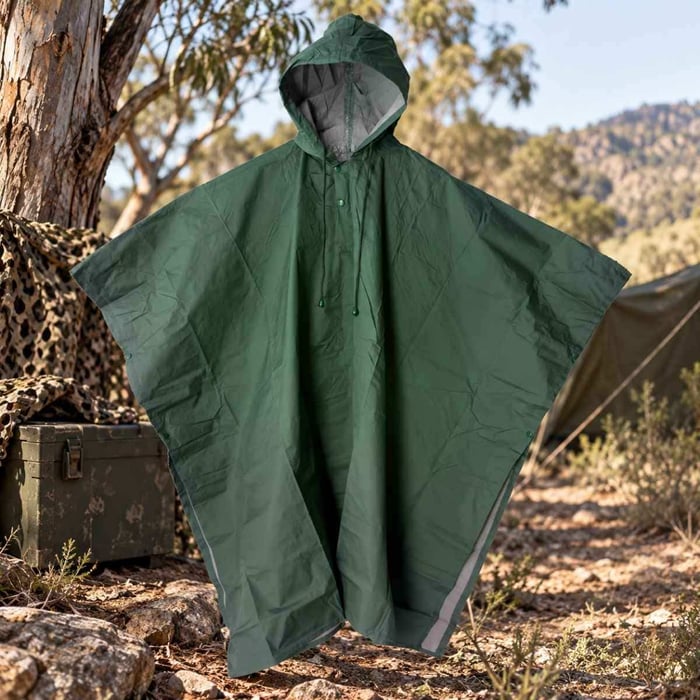
A ripstop poncho is a practical example of the fabric being used for lightweight outdoor and field equipment. Its loose-fitting design provides coverage over the wearer and, depending on the material and any waterproof coating, can help protect clothing and equipment from wet weather.
The reinforced ripstop construction can also be useful when the poncho is exposed to repeated movement, snagging, or contact with rough outdoor environments. Its relatively lightweight design makes it easier to carry and store when not being worn.
For military, camping, hiking, and other outdoor applications, a ripstop poncho can provide simple weather protection without the bulk of heavier outerwear. As with other ripstop products, the actual level of water resistance and durability depends on the specific fabric, construction, and treatments used.
Is Ripstop Nylon Waterproof?
One of the most common questions about ripstop nylon is whether it is waterproof.
Is ripstop nylon waterproof? Not necessarily.
Ripstop describes how the material is woven. It does not automatically make the fabric waterproof.
Ripstop nylon fabric can be treated or coated to improve its water resistance. Some products use coatings or membranes designed for wet conditions, while others offer only limited water resistance.
This distinction matters when choosing tactical clothing or outdoor equipment. If you need protection from heavy rain, check the product specifications for waterproofing or water resistance rather than relying on the word "ripstop."
A waterproof nylon fabric can use a ripstop construction, but not every ripstop nylon product is waterproof.
How Durable Is Ripstop Fabric?
Ripstop is valued for its balance of tear resistance, weight, and flexibility.
However, durability depends on more than the grid. Consider:
Fibre: Nylon, cotton, polyester, and blends behave differently.
Fabric weight: Heavier fabrics generally provide more material for demanding applications.
Weave: The construction affects tear and abrasion performance.
Garment construction: Seams, pockets, zips, and reinforced panels can matter as much as the fabric.
Coatings: Waterproofing and other treatments can change how the material performs.
Lightweight ripstop fabric isn't automatically less useful than heavy canvas. It may simply be designed for a different job.
How to Repair a Ripstop Nylon Jacket
Even good-quality ripstop can be punctured or torn. The reinforcement grid helps contain the damage, making small repairs easier.
If you need to repair a ripstop nylon jacket, start by cleaning and drying the damaged area. Remove loose or heavily frayed threads without unnecessarily cutting into the surrounding fabric.
For a small tear or puncture, a suitable fabric repair patch or repair tape can often provide a practical solution. Apply the patch over a clean, dry surface and follow the instructions supplied with the repair product.
Larger tears or damage around seams may require stitching or professional repair. If the jacket has a waterproof coating or membrane, remember that repairing the physical tear does not necessarily restore the garment's original weather resistance.
For valuable technical clothing, follow the manufacturer's repair and care recommendations.
How Should You Care for Ripstop Clothing?
Good care can help extend the useful life of ripstop garments.
Always follow the manufacturer's washing instructions, particularly for clothing with waterproof coatings, specialist finishes or other technical treatments.
In general, avoid harsh chemicals and unnecessary high heat. Allow wet garments to dry properly before storing them, and inspect high-wear areas regularly for small cuts or loose stitching.
Finding minor damage early is usually easier than dealing with a larger tear later.
Choosing the Right Ripstop Gear
Ripstop has earned its place in military, tactical, and outdoor gear because it solves a practical problem: small tears don't have to become major failures.
Look beyond the grid pattern. Consider the fibre, fabric weight, garment construction, weather resistance and intended use before choosing a product. A lightweight ripstop shirt, durable ripstop cargo pants and heavier ripstop equipment can all offer different advantages.
For clothing and equipment intended for demanding conditions, browse Military Shop's range of military and tactical products to find gear suited to your next field, outdoor or operational requirement.
FAQs
Is ripstop fabric completely tear-proof?
No. Ripstop is tear-resistant, not tear-proof. Its reinforced construction is designed to limit the spread of damage after the fabric has been punctured or torn.
Is ripstop nylon stronger than normal nylon?
Ripstop nylon uses reinforcement yarns to improve tear resistance compared with a comparable conventional woven construction. The actual strength still depends on the fabric's weight, fibre, and construction.
Can ripstop fabric be used in hot weather?
Yes. Lightweight ripstop fabrics can be well suited to warm conditions. Ripstop cotton and poly-cotton fabrics can also provide a comfortable option where breathability is important.
What is ripstop fabric used for in the military?
Ripstop is commonly used in military and tactical clothing and equipment because it can provide a useful combination of durability, relatively low weight, and resistance to tear propagation.
What is the difference between ripstop nylon and ripstop cotton?
Ripstop nylon is lightweight, abrasion-resistant and quick-drying, while ripstop cotton is generally more breathable and comfortable in warm conditions. The best option depends on the intended use, climate, and required durability.