


Best Tactical Boots for Australian Conditions: Choosing the Right Boot for the Terrain
Table of Contents
- Why Australian Conditions Matter When Choosing Tactical Boots
- Hot and Dry Conditions: Prioritise Weight and Breathability
- Wet and Tropical Conditions: When Waterproofing Makes Sense
- Rough Terrain: Look Closely at Grip and Durability
- Long Hours on Foot: Fit Matters as Much as Features
- What Does "Military Grade" Actually Tell You?
- Matching Tactical Boots to the Environment
- How to Make Tactical Boots Last Longer
- ADF Combat Boots: What the Defence Says
- Choosing the Right Boot Starts With the Conditions
- FAQs
Australia's operating environments can change dramatically from one location to another, making tactical boots an important consideration for anyone working across different terrains and conditions. A day spent walking across hot pavement in a city can place very different demands on footwear than a patrol through wet tropical scrub or a long trek across loose red dirt.
That is why choosing the best tactical boots is not simply about finding the toughest-looking pair. The right footwear must suit the terrain, climate, and time you spend on your feet.
For anyone comparing tactical boots, the most useful approach is to look at how different boot features perform in the conditions where they will actually be used.
Why Australian Conditions Matter When Choosing Tactical Boots
Australian environments can be particularly demanding on footwear. Heat, moisture, dust, uneven terrain, and abrasive surfaces can all contribute to wear over time.
A boot designed primarily for wet conditions, for example, may protect well from rain but feel unnecessarily warm during extended use in a hot, dry environment. A lightweight boot may be more comfortable over long distances but may not provide the level of structure needed for particularly rough terrain.
The goal is not to find one boot that does everything. It is to find a design that provides the right balance of protection, comfort, traction, and durability for the job.
Hot and Dry Conditions: Prioritise Weight and Breathability
For hot-weather use, boot weight and breathability matter.
Heavy footwear can become tiring during long periods on foot, particularly when combined with a pack or other equipment. Lightweight tactical boots can reduce some of that burden while allowing greater freedom of movement.
Breathability is equally important. In hot conditions, feet naturally produce more moisture, and footwear that does not allow heat and moisture to escape can become uncomfortable over an extended shift.
This does not mean choosing the lightest boot available. A suitable design still needs enough support and protection for the terrain. Instead, look for a sensible balance between lightweight construction, durability, and stability.
The socks worn with the boots also matter. Breathable, moisture-managing socks can complement the boot and help improve comfort in hot weather.
Wet and Tropical Conditions: When Waterproofing Makes Sense
Wet conditions present a different set of challenges.
Rain, mud, wet grass and shallow water can leave feet uncomfortable and increase the risk of blisters during long periods of activity. Waterproof tactical boots can be useful in environments where regular water exposure is expected.
However, waterproofing should not automatically be treated as an essential feature for every Australian environment.
Waterproof construction can reduce breathability compared with some unlined or more ventilated designs. In hot conditions, that difference may become noticeable over several hours.
For consistently wet environments, waterproofing can be a worthwhile priority. In hot, dry conditions, breathability and lower weight may offer greater practical benefits.
The decision should come down to the conditions, not the label. Tactical boots' waterproof construction is useful when keeping external moisture out is a genuine requirement, but it may be unnecessary for someone primarily working in dry environments.
Rough Terrain: Look Closely at Grip and Durability
Australian bushland, gravel tracks and uneven ground can put considerable stress on footwear.
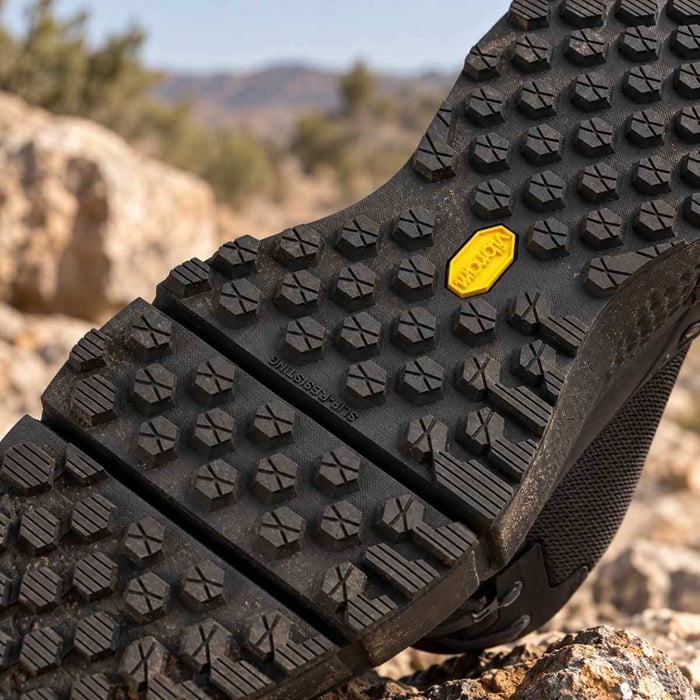
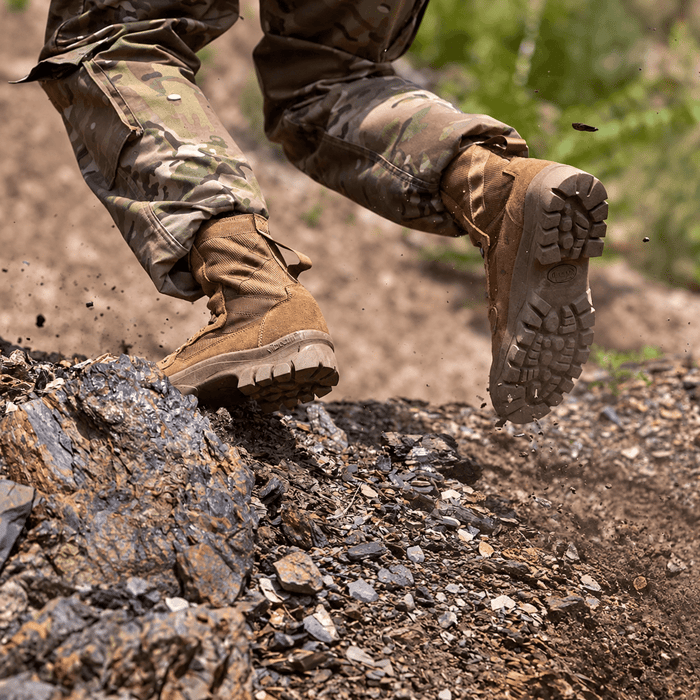
A durable upper helps protect against abrasion, while a well-designed outsole provides traction across different surfaces. Look for tread that suits the terrain rather than assuming the deepest or most aggressive pattern will always perform best.
A boot used mainly on hard urban surfaces has different traction requirements from one used regularly on loose dirt, mud, or rocky ground.
The construction around high-wear areas is also worth examining. Reinforced toe areas and durable panels can help a boot withstand repeated contact with rough surfaces.
Good traction should provide confidence without making the boot excessively stiff. A sole that flexes appropriately can make walking more natural, particularly when boots are worn for long periods.
Long Hours on Foot: Fit Matters as Much as Features
Tactical footwear is often worn for extended periods, making fit one of the most important considerations.
A well-fitting boot should hold the heel securely while providing sufficient room around the toes. Excess movement inside the boot can create friction, while a cramped fit can become uncomfortable as feet swell during a long day.
Cushioning also plays a role. A suitable midsole can help absorb some of the impact associated with repeated movement across hard surfaces.
Consider weight alongside cushioning and support. Lightweight tactical boots can be particularly useful for users who spend much of the day walking, but reducing weight should not come at the expense of stability or durability.
The best tactical boots are ultimately the ones that suit the user's feet, workload, and environment, not the ones with the longest list of features.
What Does "Military Grade" Actually Tell You?
The term military-grade boots often describes footwear intended for demanding environments, but the phrase alone doesn't tell you exactly how a particular boot will perform.
Instead of relying on the label, examine the construction and intended use. Consider the materials, outsole, ankle support, weight, waterproofing, and overall design.
For users who need footwear for a specific defence, security or work requirement, any relevant organisational specifications should take priority over general marketing terminology.
The same applies to searches for ADF approved boots. If footwear needs to meet a particular Australian Defence Force requirement, check the current requirements for the relevant role or procurement arrangement rather than assuming a commercially available tactical boot is officially approved.
For general outdoor or tactical use, the footwear's practical characteristics remain the most useful comparison points.
Matching Tactical Boots to the Environment
A simple way to narrow down your options is to start with the environment where the boots will spend most of their time.
Hot and dry conditions: Look for lightweight construction, good breathability and a comfortable fit for extended wear.
Wet and tropical environments: Consider waterproofing, reliable traction and materials suited to repeated exposure to moisture.
Rough bush and uneven terrain: Prioritise outsole grip, durability and sufficient support.
Urban and hard-surface work: Look for comfortable cushioning, dependable traction and a construction that can handle repeated contact with concrete and other hard surfaces.
Long-distance movement: Weight, fit, cushioning and moisture management become particularly important.
For people working across several environments, a versatile boot that balances these characteristics may be more practical than buying footwear designed around one extreme condition.
How to Make Tactical Boots Last Longer
Even well-built footwear requires basic maintenance.
Remove mud, dirt, and grit after heavy use, particularly from the outsole and around seams. Let wet boots dry naturally in a well-ventilated area, and avoid exposing them to excessive direct heat.
Follow the manufacturer's care instructions, particularly when the boot uses leather, waterproof membranes or specialised synthetic materials. Applying the wrong cleaning or conditioning product can affect the materials or their performance.
Also check the outsole regularly. Excessive tread wear can reduce traction, while damaged stitching, eyelets or soles can indicate that the boots are approaching the end of their useful life.
Regular maintenance will not prevent normal wear, but it can help preserve the footwear's performance and comfort for longer.
ADF Combat Boots: What the Defence Says
The Australian Defence Force has introduced purpose-designed combat boots as part of its Fit to Perform project, which aims to improve equipment for individual ADF personnel.
According to Defence, the new footwear includes women's and unisex combat boots, designed with an improved shape and better weight distribution to help reduce the potential for injuries during training and operations.
The project's approach was based on feedback from serving personnel, with prototypes:
Trialled and tested across Army, Navy and Air Force
Evaluated through field and laboratory testing
Developed with input from Defence partners, including the Defence Science and Technology Group and Australian industry
This provides useful context when comparing tactical boots with military footwear. A boot designed for demanding service use needs to consider more than durability alone. Fit, weight distribution, comfort and performance under realistic conditions can all influence how well footwear works over extended periods.
Choosing the Right Boot Starts With the Conditions
No single tactical boot is ideal for every part of Australia.
Hot, dry environments may make lightweight, breathable construction a priority. Wet and tropical conditions may call for waterproofing, while rough terrain demands more traction and durability. For long periods on foot, fit, cushioning, and overall weight can significantly affect comfort.
The most useful question, then, is not simply which boot is the toughest. It is which combination of features makes sense for the environment and workload.
This approach makes it easier to compare tactical boots based on real operational needs rather than marketing claims.
For those preparing for demanding outdoor, work, or tactical conditions, browse Military Shop's range of tactical footwear and other military equipment to find options suited to your requirements.
FAQs
What boots are approved by the Australian Army?
The Australian Army has issued combat boots and has also allowed approved commercial alternatives. The exact approved footwear can change, so personnel should check the current Army dress instructions or their unit's requirements before purchasing. Defence has also introduced updated combat footwear as part of its equipment programs.
Recent Australian military discussions also show that approved options can include brands such as Garmont, Lowa and others, but an individual model should not be assumed to be approved simply because the brand has previously appeared on an approved list.
What are the best Australian boots?
There is no single best boot for every Australian environment. The right choice depends on where and how you'll use the boots. Lightweight, breathable tactical boots can suit hot conditions and long periods on foot, while waterproof boots may be preferable for consistently wet environments. For rough terrain, prioritise durable construction, ankle support and reliable outsole traction.
For workplace use, make sure the footwear also meets any applicable safety requirements rather than choosing based solely on comfort or brand reputation.
What is the Australian standard for safety boots?
The current Australian standard for general-purpose safety footwear is AS 2210.3:2019, titled Personal protective equipment, Part 3: Safety footwear. It covers basic and additional requirements, including mechanical risks, slip resistance, thermal risks, and ergonomic performance. It superseded the older AS/NZS 2210.3:2009 standard.
The right footwear still depends on the hazards in the workplace, so workers should check their employer's requirements and the specific protections the boot provides.
Which Aussie boot brand is most durable?
There is no objective answer because durability depends on the specific boot, materials, workload, and conditions. A boot used every day on concrete will wear differently from one used on bush tracks or in wet environments.
When comparing durability, look at the upper construction, stitching, outsole, sole-to-upper bond, and materials used in high-wear areas. A good fit and regular maintenance also significantly affect how long boots remain usable.
What boots do Australian Defence personnel recommend?
Personal preferences vary, but Australian military personnel often mention boots such as Garmont T8 and Lowa models, alongside issued footwear. In a 2025 discussion about Australian Army boots, several users specifically mentioned T8 models, while others discussed Redbacks and Lowa options.