


Tactical Flashlight Buying Guide: What Brightness Do You Need?
Table of Contents
Choosing the right tactical flashlight can feel surprisingly complicated. Walk into any outdoor store or browse gear forums, and you will be inundated with technical jargon—lumens, candela, throw distance, and beam angles. When you need a reliable light for night navigation, property patrols, or personal security, buying purely on the highest numbers can lead to a costly mistake.
Whether you are looking for a compact camping flashlight for weekend trips, a robust security torch for professional duty, or an everyday carry light, understanding brightness is key. This buying guide cuts through the marketing hype to help you determine exactly how many lumens you need for your specific use case.
What Are Flashlight Lumens? (And Why They Aren't Everything)
When evaluating any modern LED light flashlight, the first specification you will encounter is flashlight lumens, which are measured following the official ANSI/NEMA FL1 performance standards used across the lighting industry.
Simply put, a lumen is a unit of measurement that quantifies the total amount of visible light emitted by a light source in all directions. Think of lumens as the raw "volume" of light coming out of the lens. The higher the lumen rating, the brighter the light will appear at its source.
However, raw lumens only tell half the story. To choose the best tactical flashlight, you also need to understand how that light is focused:
Lumens: Total light volume produced by the LED.
Candela (Beam Intensity): Peak intensity of the beam in a single direction. High candela creates a focused "spot" or throw that reaches long distances.
Beam Profile (Flood vs Throw): A flood beam spreads lumens over a wide area (ideal for close-up tasks), while a throw beam concentrates lumens into a tight spotlight (ideal for long-range target identification).
A very high lumen flashlight with low candela will illuminate an entire backyard at close range, but it won't shine down a long rural driveway. Conversely, a lower-lumen light with high candela can throw a tight beam hundreds of metres into the dark.
How Many Lumens Do I Need?
To answer the core question 'How many lumens do I need?' it helps to break brightness levels down into practical tiers.
| Brightness Level | Best For / Primary Use Case |
| 100 – 300 Lumens | Close-Up Tasks & Household Use |
| 300 – 1,000 Lumens | Everyday Carry & Outdoor Camping |
| 1,000 – 2,000 Lumens | Self-Defence & Security Patrols |
| 2,000+ Lumens | Heavy-Duty, Search & Rescue |
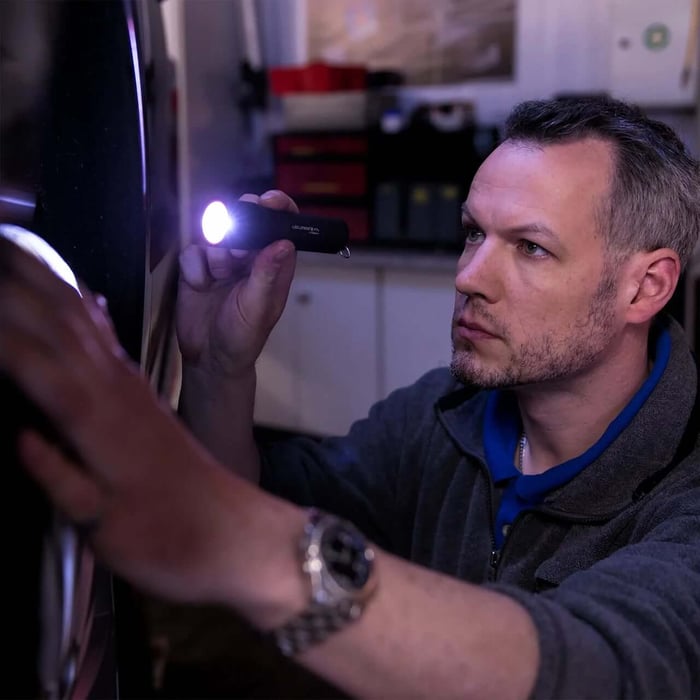
1. Close-Up Tasks & Everyday Utility (100 to 300 Lumens)
For simple tasks like reading a map in a tent, inspecting an engine bay, or navigating a hallway during a power outage, a massive light beam is actually counterproductive. Excessive brightness reflects off close surfaces, creating harsh glare that ruins your night vision.
Best used for: Household emergencies, close-up trade work, reading, walking the dog.
Key benefit: Long battery life and compact size.
2. General Outdoor Use & Camping (300 to 1,000 Lumens)
This range is the sweet spot for a versatile rechargeable led flashlight or dedicated camping flashlight. At 500 to 800 lumens, a torch easily illuminates walking tracks, identifies obstacles 50 to 100 metres away, and provides plenty of floodlight around a campsite.
Best used for: Hiking, bushcraft, general outdoor recreation, glovebox backup.
Key benefit: Excellent balance between brightness, thermal management, and runtime.
3. Personal Security & Tactical Operations (1,000 to 2,000 Lumens)
If your primary concern is personal protection, property management, or professional duty, this is where true tactical performance begins.
A quality tactical flashlight self defense tool operating between 1,000 and 2,000 lumens serves two vital functions:
Identification: It allows you to clearly identify potential threats from a safe distance through dark yards, alleyways, or large structures.
Disorientation: When applied directly, a high beam flashlight delivering 1,000+ lumens temporarily disrupts an adversary's night-adapted vision, buying you critical seconds to react or withdraw.
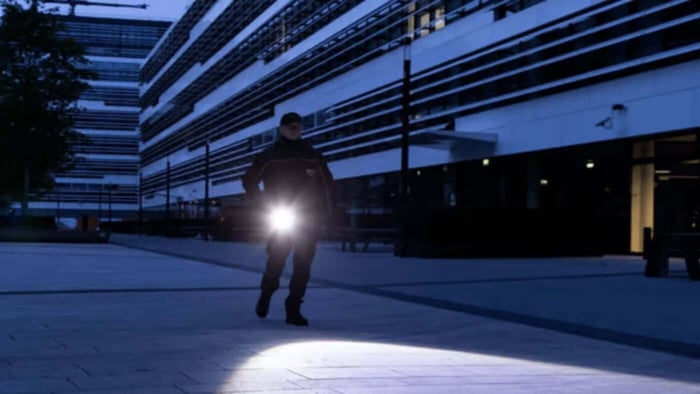
For law enforcement or security personnel, a dedicated security flashlight in this range provides the beam intensity needed to overpower ambient city lighting or look through tinted vehicle windows.
4. Search, Rescue & Open Terrain (2,000+ Lumens)
Heavy-duty torches, such as a military flashlight 2000 lumen unit or higher, are designed for extreme situations. Operating a high power flashlight at this output generates significant heat, meaning most compact bodies can only sustain maximum output for short bursts before stepping down to protect the internal circuitry.
Best used for: Search and rescue operations, large property inspections, maritime use, remote off-road travel.
Key benefit: Unrivalled distance and massive area coverage.
Important Features to Look For in a Tactical Torch
Brightness alone does not make a torch "tactical". When comparing options across retailers, ensure your chosen model includes these critical design elements:
| Feature | Why It Matters |
| Rechargeable Battery | A modern rechargeable tactical flashlight using 18650 or 21700 lithium-ion batteries offers higher voltage, better sustained output, and lower operating costs than disposable AAs. |
| Instant Turbo / Strobe Access | In high-stress situations, you cannot afford to cycle through low and medium modes. Dedicated tail-cap switches allow instant activation of maximum brightness or disorienting strobe. |
| Durable Build Quality | Look for aircraft-grade anodised aluminium bodies with IPX8 waterproof ratings and impact resistance to survive drops on concrete. |
| Thermal Management | Powerful tactical torches generate heat quickly. Quality circuitry manages temperature automatically without shutting off completely. |
Summary: Matching Lumens to Your Needs
To recap, picking the right brightness comes down to real-world application rather than chasing the biggest number on the box:
Under 300 Lumens: Ideal for close-range household tasks and reading.
300–1,000 Lumens: Perfect for camping, hiking, and general outdoor utility.
1,000–2,000 Lumens: The ideal standard for self-defence, security patrols, and duty use.
2,000+ Lumens: Reserved for specialized search-and-rescue or open-country demands.
Invest in a reliable rechargeable torch with a balanced beam profile, intuitive controls, and a rugged build—because when you need light most, usability matters just as much as raw power.
Ready to find your ideal beam setup? Explore Military Shop's range of tactical flashlights for high-performance duty lights, compact EDC torches, and field-tested lighting gear built to withstand the toughest conditions.
FAQs
How many lumens do I need for a tactical flashlight?
It depends on your primary use case. For basic household tasks or camping, 300 to 1,000 lumens is usually ideal. For personal protection, security patrols, or law enforcement duty, look for 1,000 to 2,000 lumens to ensure adequate range and target identification. Specialised search-and-rescue operations often require 2,000+ lumens.
Can a tactical flashlight be too bright?
Yes. If you use a high-lumen torch (such as 1,000+ lumens) for close-up tasks like reading a map in a tent or inspecting an engine bay, the light will reflect off close surfaces. This creates harsh glare that can ruin your night vision and make detail work difficult.
Are higher lumens better for self-defence?
Yes, up to a point. A tactical flashlight producing between 1,000 and 2,000 lumens allows you to identify potential threats from a safe distance in dark yards or alleyways. When aimed directly at an adversary, a high-beam output or strobe function can temporarily disrupt their night-adapted vision, buying you critical seconds to react or withdraw.
What is the difference between lumens and candela?
Lumens measure the total volume of visible light emitted by a torch in all directions. Candela measures peak beam intensity in a single direction. High lumens with low candela provide a wide "flood" beam for close-up tasks, while high candela focuses lumens into a tight "throw" or spotlight to illuminate targets at long distances.
Why do high-lumen tactical flashlights step down in brightness?
Operating a high-power flashlight above 2,000 lumens generates significant heat. Because compact torch bodies cannot dissipate heat indefinitely, modern thermal management circuitry automatically steps down the light output after short bursts to protect internal electronics and battery life.