


Defence Support to Civil Authorities: Reading DACC Without Overstating the Role
Table of Contents
- States and territories lead the response
- How a request for Defence assistance is made
- The six DACC categories
- What DACC does not include
- Why "last resort" appears in official documents
- What the Royal Commission changed
- Reading a news report without overstating the role
- Recognising the people who help
- Sources
- FAQs
When floods, fires or cyclones hit, Australian Defence Force (ADF) personnel may appear in the coverage, but they are not in charge of the emergency. States and territories lead emergency response in their own jurisdictions, and Defence assistance is requested, agreed and approved through a set process. Defence describes its support to the community as the Defence Assistance to the Civil Community initiative, known as DACC. [1] [2]
This beginner's guide explains who leads, how a request reaches Defence, what the six DACC categories cover and why official documents describe the ADF as a capability of last resort for domestic disasters. It is general public information, not emergency advice. In an emergency, follow the directions of your state or territory emergency services.
States and territories lead the response
The Royal Commission into National Natural Disaster Arrangements, whose report was delivered to the Governor-General on 28 October 2020, stated that state and territory governments have "primary responsibility for the protection of life, property and the environment" within their jurisdictions. [3] [4] Defence's own DACC policy uses similar language, noting that states and territories have primary responsibility for domestic disaster response within their jurisdiction. [5]
The Australian Government Crisis Management Framework describes states and territories as "the first responders to incidents that occur within their jurisdictions". It adds that the Australian Government does not seek to replicate their capabilities or responsibilities, and that it may support a state or territory where "the nature of a crisis has or is expected to exceed the sovereign capacities of that state or territory". [6] The National Emergency Management Agency (NEMA) describes itself as the Australian Government's Coordinating Agency for natural hazards, and its crisis management page says the Australian Government helps reduce harm to communities by coordinating national resources during a crisis. [7]
How a request for Defence assistance is made
Defence states that DACC is available "when local resources are not sufficient", have been overwhelmed or no alternative is available, and in some non-emergency cases where there is a mutually beneficial outcome for Defence. [1] Its brochure is direct: "Before DACC is provided, assistance is to be requested, agreed to, and approval notified in accordance with the procedures defined in the DACC Manual." [2]
Emergency requests
There are two main emergency routes. For local, time-sensitive emergencies where life, persons, animals or property is threatened, requests can be made directly to a local Commander. For large-scale or long-term emergencies, authorised State or Territory officials request Australian Government non-financial assistance through NEMA. [1]
Non-emergency requests
Non-emergency requests go to the nearest Defence office. [1]
The six DACC categories
DACC is divided into two classes, emergency and non-emergency, and comprises six categories. [2] The table uses Defence's own short descriptions. [1]
| DACC category | Defence description |
|---|---|
| 1 | Localised, short-term emergency responses |
| 2 | Significant crisis response or relief assistance |
| 3 | Significant recovery assistance |
| 4 | Local, small-scale non-emergency support |
| 5 | General, significant non-emergency support |
| 6 | Support to law enforcement (no use of force) |
Defence names bushfire, cyclone, flood and pandemic among emergency scenarios. Its list of emergency support includes planning, transportation, general engineering, logistics, air lift, road clearance, evacuations, clean up, sandbagging, door knocking and assistance with search and rescue. Non-emergency assistance includes short-term support to community or local organisations and high-profile public events. [1]
What DACC does not include
The category labels matter. Defence's policy states that DACC support "is not to involve the use, or potential use, of force". [5] Defence Force Aid to the Civil Authority (DFACA) is a separate arrangement, initiated under Part IIIAAA of the Defence Act 1903, and the policy states that DFACA "is not considered DACC". [5]
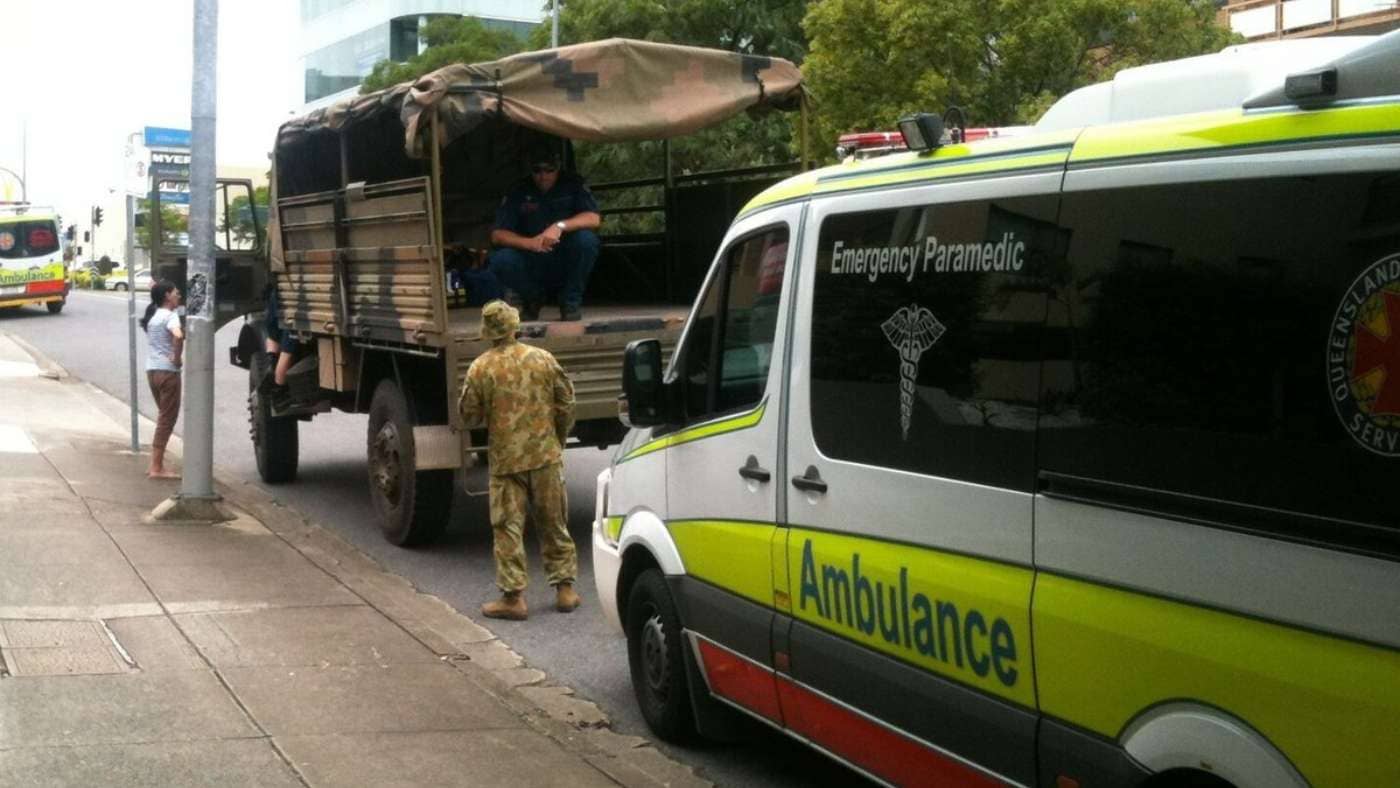
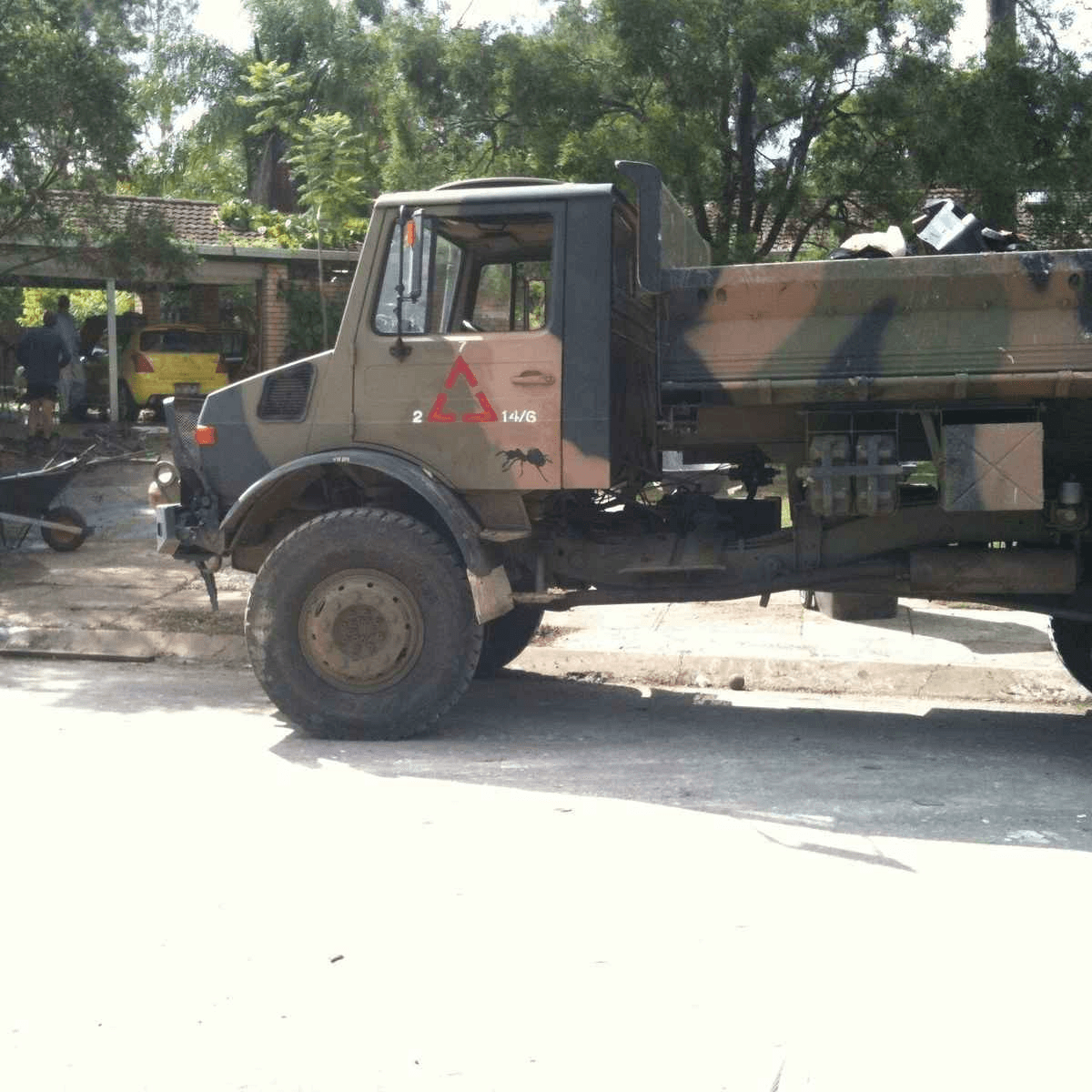
So when a report describes ADF members filling sandbags or moving supplies, it is describing assistance, not a law enforcement deployment. A reference to DACC 6 should not be read as Defence using force. Keep the arrangement named in the source.
Why "last resort" appears in official documents
The phrase is linked to the 2023 Defence Strategic Review and the Government's response to it. A Home Affairs and NEMA discussion paper dated August 2023 records the Review's finding that the ADF is "not structured or appropriately equipped to act as a domestic disaster recovery agency". It also records that the Government "agreed in-principle that Defence should be the force of last resort for domestic aid to the civil community", except in extreme circumstances. The same paper notes that the ADF "will continue to have a role to play as the Commonwealth's capability of last resort" in times of extreme emergency. [8] The Government's December 2024 response to a Senate committee on disaster resilience repeats the aim: developing alternative capabilities for crisis response and recovery "so that the ADF is only used as a force of last resort". [15]
A ministerial release from Murray Watt dated 12 February 2024 noted that the ADF "is frequently relied upon to support domestic disaster relief efforts". It also said the Government was considering how to enhance the Commonwealth's capabilities and national capacity. [9]
"Last resort" describes when Defence should be called on. It does not mean the ADF is never involved, and it does not mean other agencies are failing when it is. The 2026 National Defence Strategy was announced on 16 April 2026. [10] Check its full text before treating the 2023 position as the final word.
What the Royal Commission changed
The Royal Commission found that states and territories can request help from the Australian Government and the ADF, but that the thresholds for requesting it were unclear. [4] Recommendation 7.1 asked state and territory governments to ensure better interaction, planning and ongoing understanding of ADF capabilities and processes by state and territory fire and emergency service agencies and local governments. Recommendation 7.2 asked the Australian Government to review the content of the Defence Assistance to the Civil Community manual to ensure consistency of language and application with a revised COMDISPLAN, the Australian Government Disaster Response Plan. [4]
NEMA's implementation report records an updated DACC manual published on 22 September 2021. It also records that emergency management ministers endorsed a Protocol for Requesting Non-financial Defence Assistance on 9 December 2022. [11] Those dates show the arrangements are reviewed over time, so always check current documents rather than older reporting.
Reading a news report without overstating the role
A few habits keep the picture accurate. First, identify the lead agency named in the report; it is usually a state or territory service. Second, look for the type of help described, such as transport, logistics or clean-up, and do not assume a broader role. Third, check whether the report names a DACC category or a separate legal arrangement. Finally, note the date. Policies and protocols have changed since 2020.
This is not a criticism of anyone involved. The Army lists "Support the states and territories in crisis and disasters" among its published tasks, alongside its core role as the integrated force's experts in land combat. [12] Our guide to the Australian Army land role within an integrated force explains that core role in more detail. Defence's mission statement likewise includes support for the Australian community and civilian authorities "in accordance with Government direction". [13] Support to communities is a real part of the mission, carried out within limits set by government.
Recognising the people who help
Accurate language is a form of respect. It credits emergency services for leading, and credits ADF members for the specific tasks they were asked to do. If someone in your family has served on a domestic support task, ask them how they would like it described before you write a tribute.
For a gift that recognises Defence service more broadly, the Australian Defence Force collectables range includes presentation pieces such as the ADF Plaque, which the listing describes as an enamel crest on a timber finish shield. [14] Families with an Army connection can browse Australian Army gifts and apparel. And if the next storm season has you thinking about your own preparation, start with our guide to building a compact car emergency kit and our road trip planning guide for emergency water, power and communication, then check your state or territory emergency service for local advice.
Sources
1 Department of Defence | Defence Assistance to the Civil Community Initiative | date not shown | https://defence.gov.au/programs-initiatives/support-australian-community
2 Department of Defence | Defence Assistance to the Civil Community (brochure) | Commonwealth of Australia 2022 | https://defence.gov.au/sites/default/files/2023-08/defence_assistance_to_the_civil_community_brochure_wcag.pdf
3 Royal Commission into National Natural Disaster Arrangements | Report | delivered 28 October 2020, tabled 30 October 2020 | https://www.royalcommission.gov.au/natural-disasters/report
4 Royal Commission into National Natural Disaster Arrangements | Report (accessible PDF, hosted by the Department of the Prime Minister and Cabinet) | 28 October 2020 | https://oia.pmc.gov.au/sites/default/files/posts/2022/11/Royal%20Commission%20into%20National%20Natural%20Disaster%20Arrangements%20-%20Report%20%20%5Baccessible%5D.pdf
5 Department of Defence | Defence Assistance to the Civil Community Policy, Edition 2 | document title metadata gives 31 August 2021 (not stated in the body) | https://defence.gov.au/sites/default/files/2020-12/DACC-Policy.pdf
6 Department of the Prime Minister and Cabinet | Australian Government Crisis Management Framework: Australian, state and territory governments | page release date shown as 8 September 2026 | https://www.pmc.gov.au/resources/australian-government-crisis-management-framework-agcmf/introduction/australian-state-and-territory-governments
7 National Emergency Management Agency | Crisis management arrangements | date not shown | https://www.nema.gov.au/our-work/emergency-response/australian-government-crisis-management-arrangements
8 Department of Home Affairs and National Emergency Management Agency | Alternative Commonwealth Capabilities for Crisis Response: Discussion Paper | August 2023 | https://www.homeaffairs.gov.au/reports-and-pubs/files/alternative-clth-capabilities-crisis-response.pdf
9 Minister for Emergency Management | Planning for the future of Australia's disaster response | 12 February 2024 | https://minister.homeaffairs.gov.au/MurrayWatt/Pages/planning-future-australias-disaster-response.aspx
10 Department of Defence | Preparing Australia for future strategic challenges (news) | 17 April 2026 | https://www.defence.gov.au/news-events/news/2026-04-17/preparing-australia-future-strategic-challenges
11 National Emergency Management Agency | National Report: Royal Commission into National Natural Disaster Arrangements recommendations implementation status | date not shown | https://nema.gov.au/sites/default/files/2024-08/Royal%20Commission%20into%20National%20Natural%20Disaster%20Arrangements%20recommendations%20implementation%20status.pdf
12 Australian Army | Our Mission | date not shown | https://army.gov.au/about-us/who-we-are/our-mission
13 Department of Defence | Mission and purpose | date not shown | https://defence.gov.au/about/who-we-are/defence-mission
14 Military Shop | ADF Plaque | https://militaryshop.com.au/products/adf-plaque.html
15 Australian Government | Australian Government response to the Senate Select Committee on Disaster Resilience reports: Boots on the Ground: Raising Resilience; and Interim Report | December 2024 | https://www.homeaffairs.gov.au/reports-and-pubs/PDFs/senate-select-committee-australias-disaster-resilience.pdf