


How to Build a Compact Car Emergency Kit
Table of Contents
- Step 1: Plan for your passengers and route
- Step 2: What to put in a car emergency kit
- Step 3: Keep vehicle equipment suited to your car
- Step 4: Plan heat-sensitive items into your departure routine
- Step 5: Choose the first aid kit for your car by its contents, not the pouch
- Step 6: Secure the kit where adults can find it
- Step 7: Check the kit before trips and after use
- A compact car emergency kit can use more than one bag
- Remote travel needs a separate communications plan
- If you break down, put people before equipment
- Ask specific questions before buying
- Sources
- FAQs
A good car emergency kit starts with the people travelling, the journey and the items you can actually use. For everyday driving in Australia, focus on communication, drinking water, light, first aid and protection from the weather, then add supplies for the particular trip. Squeezing everything into the smallest pouch can leave out the things you need most.
This guide covers a compact vehicle emergency kit for ordinary car travel. Remote-area journeys and emergency evacuation need additional planning and supplies. A kit supports preparation; it does not make a closed road safe or replace vehicle maintenance, official warnings or roadside assistance.
Step 1: Plan for your passengers and route
Before buying a bag, write down who normally travels in the car, any essential personal supplies, the route and the likely distance from help. Include children, pets and anyone who needs medication, mobility equipment or communication support. NSW SES advises choosing emergency kit items that meet the needs of your household, and lists items to add just before leaving. [1]
Separate the everyday kit from a trip-specific checklist. A short drive across town and a long journey between regional centres may involve very different waiting times and communication options. If your route includes remote areas, obtain local travel advice and plan water, fuel, communications and vehicle preparation for that route.
Step 2: What to put in a car emergency kit
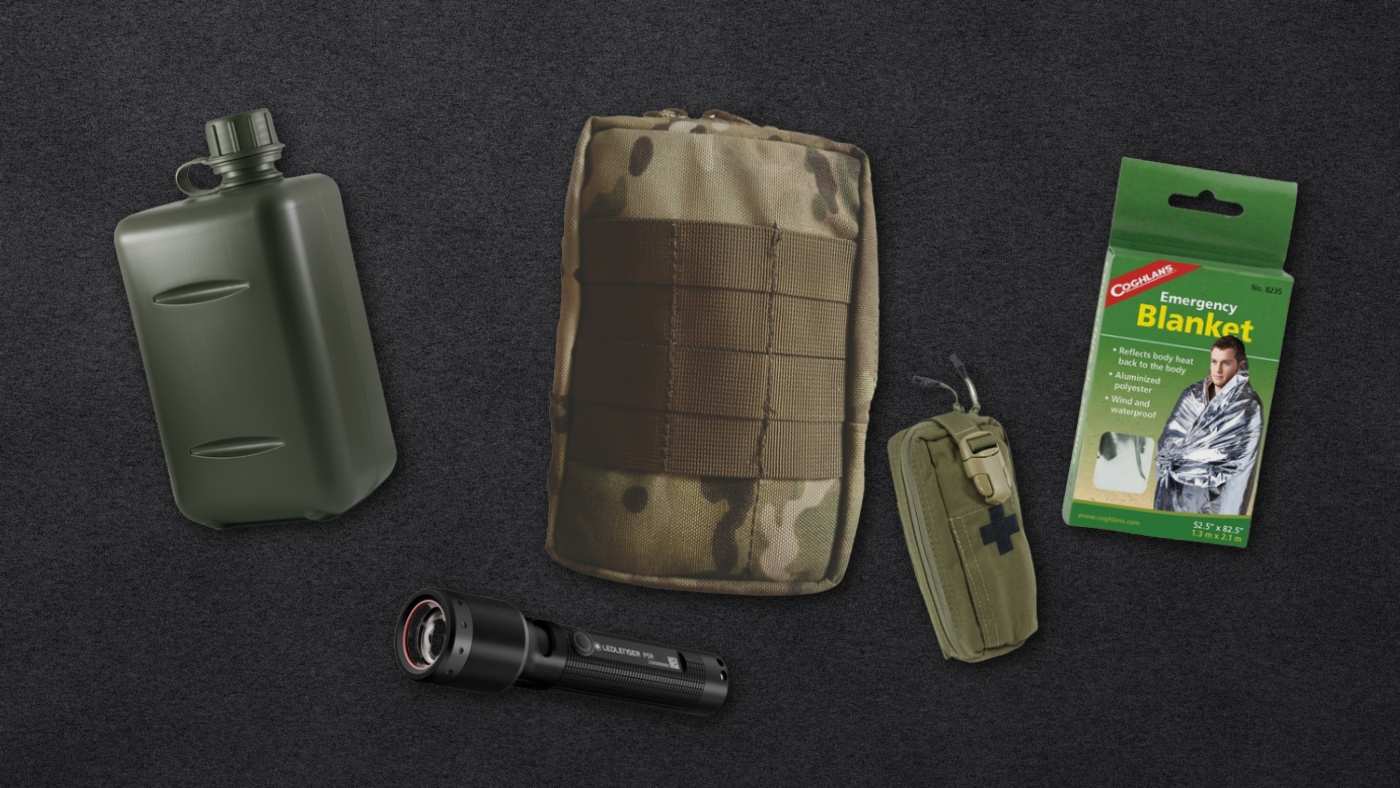
The table below combines motoring guidance with a practical packing approach. Quantities depend on your passengers and journey. Keep the bag compact by organising it well, rather than cutting essential supplies to make them fit.
| Group | Car kit essentials |
|---|---|
| Communication | Charged phone, a compatible charger and a fully charged power bank brought for the journey. [2] |
| Water and food | Drinking water for everyone (RACV suggests a few litres) and non-perishable food such as muesli bars or dried fruit. Increase supplies for longer or more isolated journeys. [2] |
| Lighting | A separate torch, so you are not draining your phone, plus spare batteries or the charging method its manufacturer specifies. [2] |
| First aid | A clearly marked, stocked first aid kit matched to your needs. RACV suggests gloves, antiseptic wipes and band-aids as a minimum. [2, 3] |
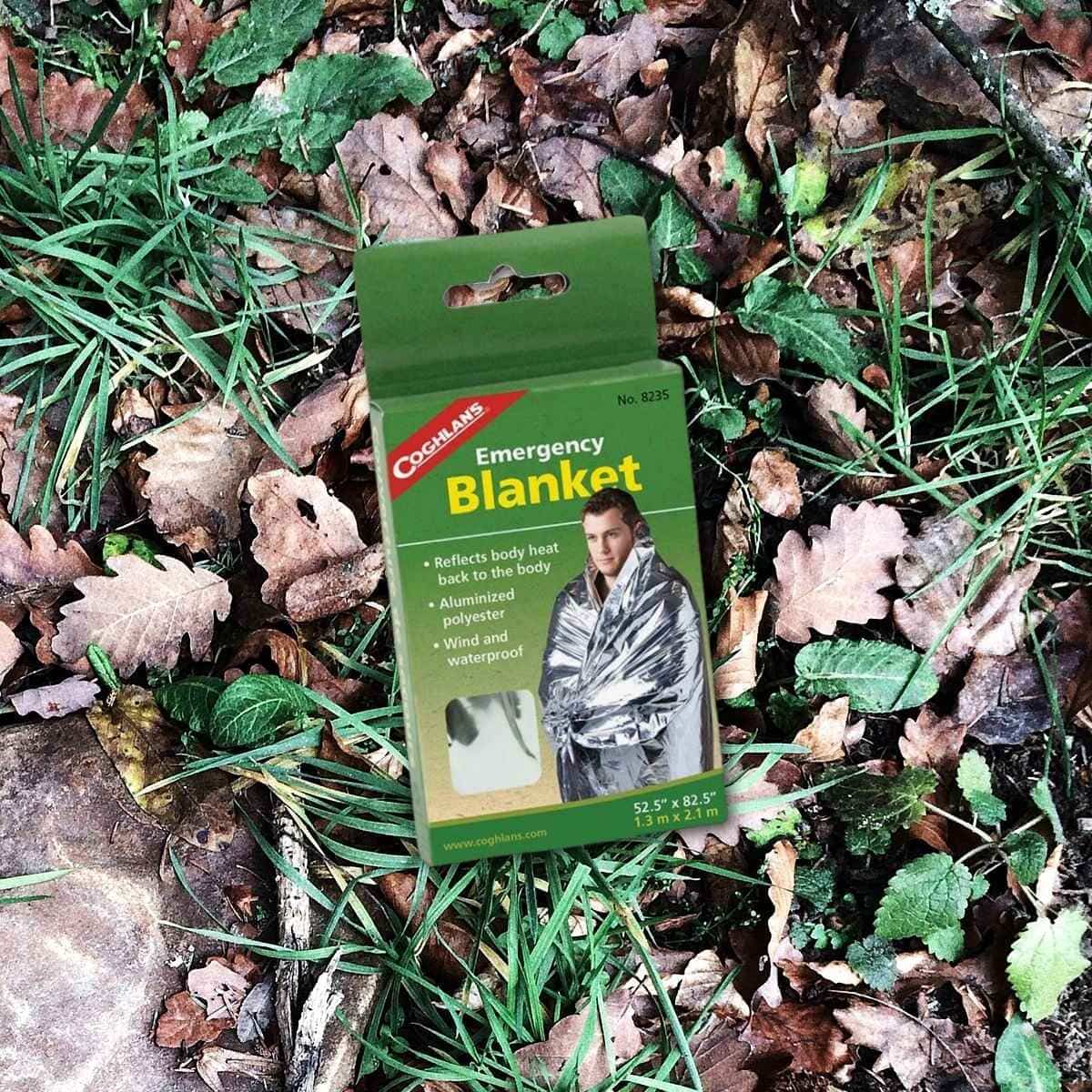
| Weather and personal needs | A picnic rug or blanket, suitable clothing, essential personal supplies and passenger-specific items. [1, 2] |
| Information | Roadside assistance contact details, emergency contacts, your route information and the owner's manual. [2] |
Step 3: Keep vehicle equipment suited to your car
Check what the car already carries and what its manual specifies. RACV lists the owner's manual, a spare wheel and tyre, jumper leads, a hi-vis safety vest and a reflective triangle among the items to consider, and advises checking the spare is properly inflated at least every six months. [2]
RACV also advises reading your car manual's instructions before jump-starting, as doing it incorrectly can cause costly damage. [2] Do not assume every driver should attempt a roadside repair. A tyre kit or jump-start device must suit the vehicle, and the roadside situation must be safe. Ask your roadside assistance provider what to carry for your car and what your cover includes. This article does not provide repair or warning triangle placement instructions.
Step 4: Plan heat-sensitive items into your departure routine
A parked car is not a suitable permanent store for every item on an emergency checklist. The ACCC advises against leaving lithium-ion batteries or products in hot places such as parked vehicles, and against using any battery, product or charger that shows damage. [4] RACV also advises against leaving water in plastic bottles in the heat. [2]
Make a short "add before leaving" list for the phone, power bank and other heat-sensitive equipment. Bring drinking water and suitable food for the journey, follow their storage directions and replace them as needed. Keep medicines under their labelled storage conditions; ask a pharmacist how to transport any that need special temperature control.
NSW SES similarly separates items that can be packed ahead from items to add just before leaving, including devices and power banks, medications, medical equipment and baby supplies. That distinction is useful for organising a car kit, although its full checklist is written for household emergencies rather than motoring. [1]
Step 5: Choose the first aid kit for your car by its contents, not the pouch
Choose supplies before choosing the smallest container. Healthdirect recommends a bag or box large enough to hold all the items, identifiable as a first aid kit and made of material that protects the contents from dust, moisture and contamination. Taking a first aid course will teach you how to use the items, and pharmacy staff can give advice on your kit. [3]
One listing shows why the details matter. Military Shop lists the SORD IFAK Olive (SKU BN1751) in 500D Cordura, with product dimensions of 85 mm wide, 180 mm high and 70 mm deep. The description identifies a tear-away design and an externally accessible glove pouch, but does not provide an itemised list of medical contents. Confirm whether any supplies are included before ordering. [5]
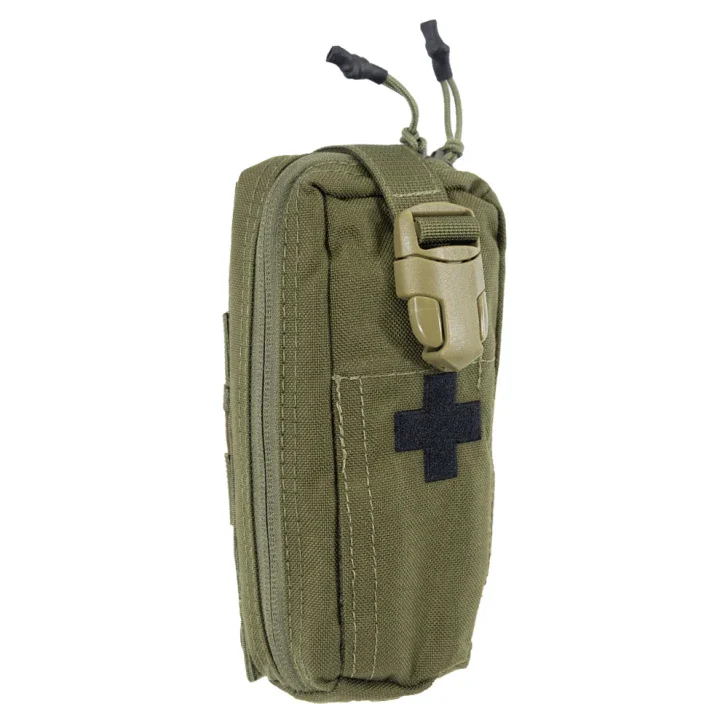
Those measurements help assess physical fit. They do not establish that the product is a complete car first aid kit, waterproof, insulated or suitable for prolonged storage in a hot vehicle. Compare options in our medical packs range by their actual contents, dimensions and storage instructions, rather than by the words "tactical" or "emergency" alone.
Step 6: Secure the kit where adults can find it
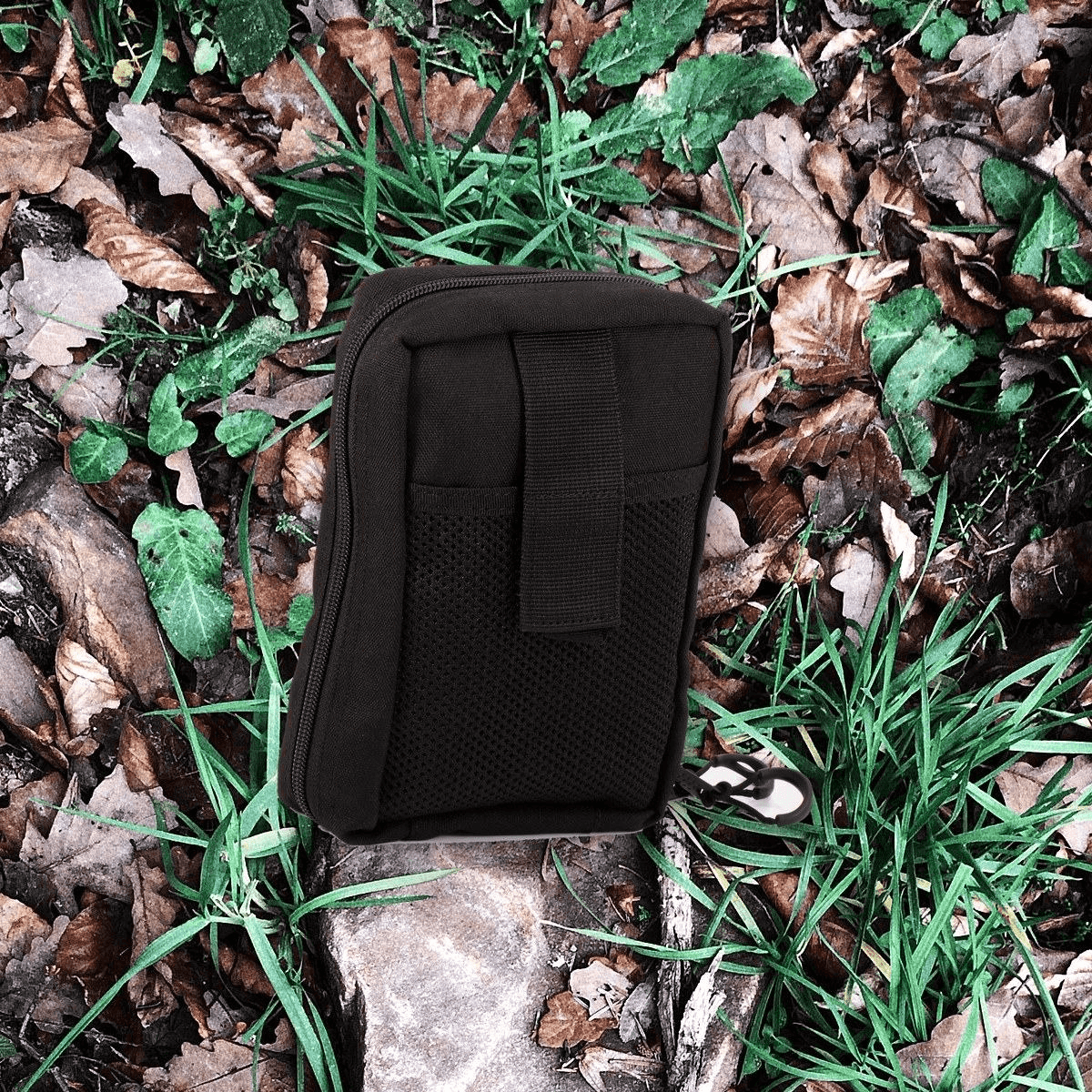
Healthdirect advises that first aid kits kept in a car should be secured so they don't become projectiles, and that everyone should know where the kit is and adults should be able to reach it easily. [3] Choose a storage location using the vehicle's instructions. Keep supplies clear of pedals, controls and airbag areas, and do not leave a loose box on a seat.
Pack related items together in labelled pouches. Tell the other adults who use the car where the kit is stored, and check you can reach it with your normal luggage loaded while the car is safely parked at home.
Step 7: Check the kit before trips and after use
A packed bag still needs attention. Healthdirect recommends checking a first aid kit after each use or at least once every 12 months, including expiry dates and whether sterile items are still sealed. [3] For the wider car emergency kit, add a quick pre-trip check to your routine, especially when passengers, seasons or routes change.
- Test the torch and confirm the correct spare batteries or charging method.
- Charge devices at home and add the correct phone cable before departure.
- Pack fresh journey supplies and check food packaging and storage instructions.
- Confirm essential medicines and passenger-specific items are ready to bring.
- Restock used first aid supplies and replace damaged or expired items.
- Check the kit is secured and roadside assistance details are available.
A compact car emergency kit can use more than one bag
As a packing example, an everyday driver could keep a secured organiser for durable supplies and a separate departure bag for water, food, charged devices and personal items. The first aid kit can stay clearly marked within the system. This is an organisational suggestion, not a tested product bundle or a guarantee of suitability for every car.
Water and a blanket may need separate space. There is no benefit in forcing them into a small pouch if that makes them awkward to carry or causes you to leave them behind. Let the contents decide the storage arrangement.
Remote travel needs a separate communications plan
A charged mobile phone cannot create mobile coverage. RACV's breakdown guide suggests that motorists travelling into remote areas should ideally carry a satellite phone, and that people who often travel where mobile service may be unavailable consider a satellite phone or personal locator beacon (PLB). [6] These devices do different jobs: get advice on suitability, registration where applicable, coverage and correct use before you travel.
A roadside assistance membership also needs checking against your route and vehicle. Do not assume the compact kit described here carries enough water, equipment or communications for an isolated journey. Add route-specific preparation before setting out.
If you break down, put people before equipment
Do not step into traffic to retrieve your roadside emergency kit or use its contents. RACV warns that breakdowns can be dangerous and advises finding a safe place to stop, turning on your hazard lights and calling your roadside assistance provider once you are safe. [6] If you need urgent medical help, call Triple Zero (000). [3]
Ask specific questions before buying
Tell the supplier what you need to store and the space available. Ask for the exact included contents, external dimensions, storage temperature guidance and any claimed water resistance rating. If a listing does not answer a safety or suitability question, have it clarified before purchase.
Use Military Shop's product specifications to compare components, from water bottles to survival kits. Then build your car emergency kit around your passengers and journey, with suitable supplies and a clear departure checklist.
Sources
- NSW SES: Put together an emergency kit
- RACV: What essentials to pack in your car emergency kit
- Healthdirect: First aid kits
- ACCC Product Safety: Lithium-ion batteries guide
- Military Shop: SORD IFAK Olive (SKU BN1751)
- RACV: Car breakdown guide