


How Naval Diplomacy Differs from Maritime Law Enforcement
Table of Contents
- Navy describes three broad categories of maritime tasks
- Compare the purpose of the activity
- Naval diplomacy can make relationships visible
- Maritime law enforcement sits within a wider security effort
- The two functions can support some of the same goals
- A naval platform does not identify the task by itself
- Check these four details when reading a maritime story
- 1. Identify the stated purpose
- 2. Identify the participants and their roles
- 3. Separate the activity from its reported outcome
- 4. Keep the date and source with your notes
- Use the distinction carefully in service histories
- Match commemorative wording to the verified service connection
- Sources
- FAQs
A Navy ship can host an official reception during an overseas visit or contribute to a maritime security operation. Both activities serve national interests, but they have different purposes. Naval diplomacy uses naval activity to support international relationships and influence. Maritime law enforcement concerns compliance with applicable law and responding to unlawful activity at sea.
The useful question is what the activity is intended to achieve. A warship’s presence does not, by itself, establish whether a particular task is diplomatic, constabulary or combat-related. This guide explains those categories and uses separately verified Australian examples to show the distinction.
Navy describes three broad categories of maritime tasks
The Royal Australian Navy’s 2022 publication Why Australia has a Navy presents military, diplomatic and constabulary tasks as three broad parts of naval activity. Its maritime tasks diagram places diplomatic activity and good order at sea alongside military functions. The categories help explain purpose; they are not three separate fleets. [1]
In this context, “constabulary” refers to policing-related functions. Maritime law enforcement fits within that discussion, but the broader idea of civil maritime security includes prevention, coordination and protection as well as enforcement. Home Affairs describes civil maritime security as a whole-of-government undertaking addressing non-military risks. [2]
Compare the purpose of the activity
| Question | Naval diplomacy | Maritime law enforcement |
| What is the focus | Relationships, communication and influence in support of national interests. | Compliance with applicable law and action addressing unlawful activity. |
| What might readers see | An official visit, engagement with another navy or a relationship-building activity. | Surveillance or an enforcement response described in an official account. |
| What evidence matters | The stated engagement purpose and the participants. | The stated task, responsible agencies and confirmed action. |
| What should not be assumed | Every overseas visit proves a new alliance or agreement. | A naval vessel has unrestricted authority to act wherever it sails. |
This is a reading guide rather than a legal classification of every maritime activity. The exact task and circumstances still need to be checked against the relevant official account.
Naval diplomacy can make relationships visible
A ship visit provides a setting for official meetings and contact between people from different countries. The significance comes from the purpose and activities described, rather than simply the fact that a ship has entered a port. Diplomacy should not be reduced to ceremonial hospitality alone: Navy’s 2022 diagram also includes coercive diplomacy within its wider diplomatic category. [1]
A cooperative example appears in Defence’s report of 3 October 2024 about HMAS Perth visiting Sattahip, Thailand, during Indo-Pacific Endeavour 2024. The visit included an official reception and calls to Thai naval headquarters. Defence described the engagement in terms of strengthening relationships and reaffirming Australia and Thailand’s partnership. [3]
Those reported activities illustrate the relationship-building side of naval diplomacy. They do not establish that the visit created a new treaty, changed either country’s legal obligations or involved a law-enforcement action. Retain the date when using the example; it is a documented 2024 visit, not a statement about the ship’s present location.
Maritime law enforcement sits within a wider security effort
The practical focus changes when the stated task concerns unlawful activity. In Australia’s civil maritime security arrangements, the work can involve multiple agencies and different kinds of assets. The word “civil” describes the security function and does not mean military personnel are absent.
Defence’s current Operation Resolute page explains that the ADF contributes forces to Maritime Border Command, a multi-agency taskforce within the Australian Border Force. The page identifies threats including illegal exploitation of natural resources, prohibited imports and exports, marine pollution, and piracy, robbery and violence at sea. It also describes ADF personnel working alongside ABF and other agencies. [4]
Operation Resolute therefore provides an example of military support to civil maritime security. It should not be summarised as Navy acting alone. Nor should every surveillance activity be described as an arrest or seizure: an official account needs to confirm what actually occurred.
The two functions can support some of the same goals
Diplomacy and civil maritime security are not sealed compartments. Home Affairs’ Civil Maritime Security Strategy includes strengthening regional relationships among its objectives, alongside protecting maritime resources, infrastructure and users. Cooperation with partners can consequently matter to security work as well as to diplomatic engagement. [2]
For a simplified hypothetical example, two countries might share experience on responding to illegal fishing. The meeting could strengthen their working relationship while improving their ability to address a security problem. That does not mean an enforcement action occurred during the meeting.
Describe each element at the level the evidence supports. “Officials exchanged information” is different from “authorities intercepted a vessel”. One activity may support another without being the same activity.
A naval platform does not identify the task by itself
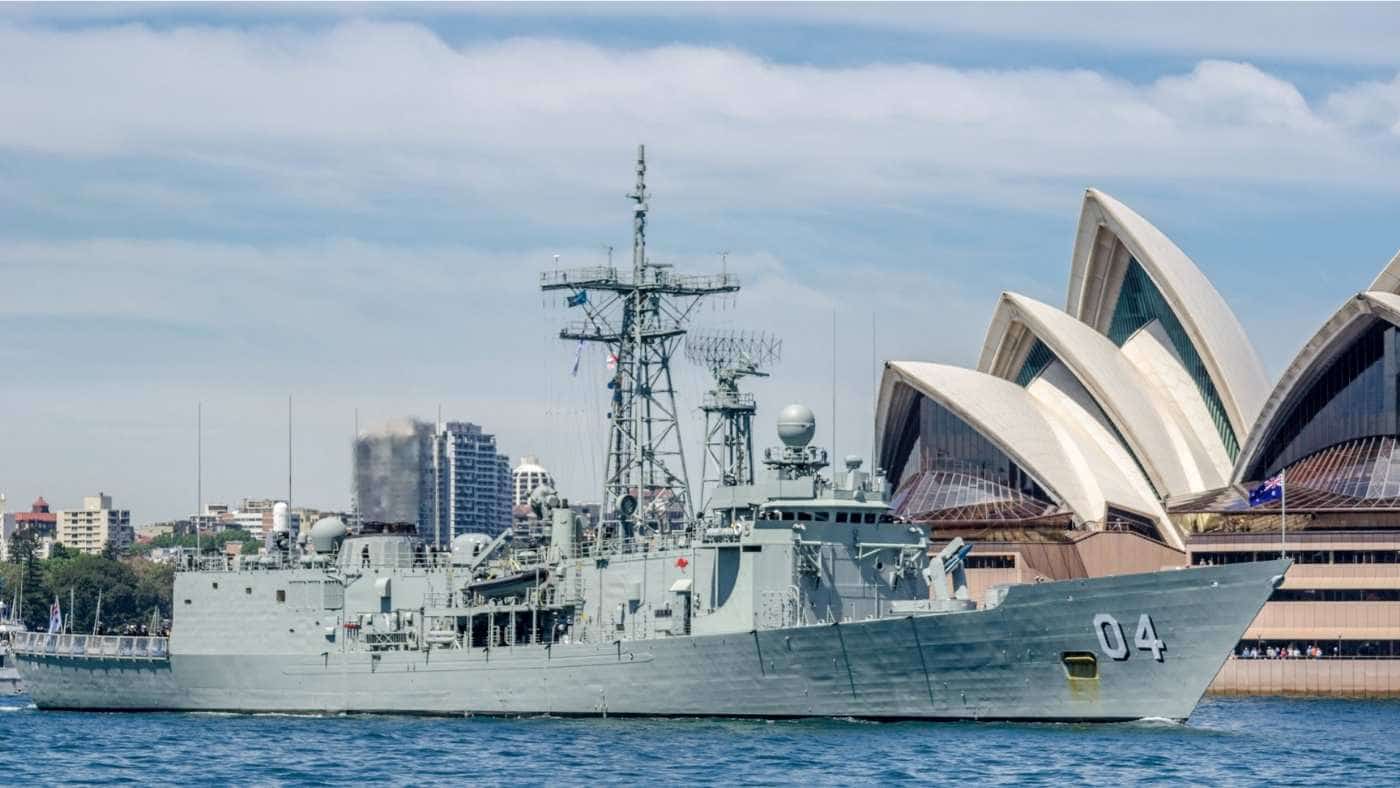
A photograph can show the ship, people and setting, but often leaves the purpose unexplained. The same image might accompany a story about a reception, training, a patrol or a broader deployment. Start with the caption and official report before deciding what the photograph demonstrates.
Navy’s three-part framework is helpful because it directs attention to the task rather than only to the equipment. A vessel remains a naval vessel when undertaking a diplomatic engagement. Its participation in civil maritime security does not make every activity on that deployment a combat action. [1]
Check these four details when reading a maritime story
1. Identify the stated purpose
Look for what the report says the activity was intended to achieve. Building relationships, exchanging expertise, conducting surveillance and responding to suspected unlawful activity are distinct descriptions. Avoid replacing them with a broader label that loses the original meaning.
2. Identify the participants and their roles
Record the named service, command or agency. If the story describes a joint effort, preserve that detail. Do not assume that the organisation supplying a vessel is the only organisation responsible for the activity.
3. Separate the activity from its reported outcome
A meeting is not automatically an agreement. A patrol is not automatically an interception. Where an account describes suspected unlawful conduct, retain that qualification rather than presenting a final legal finding.
4. Keep the date and source with your notes
A historical visit can illustrate diplomacy without describing present-day deployments. A current operation page can explain an operation’s general purpose without confirming a particular person’s participation. Use sources that match the claim you intend to make.
Use the distinction carefully in service histories
For a family history or commemorative message, begin with the service and deployment details you can verify. A port visit does not prove that every crew member attended an official reception. A ship’s involvement in an operation does not, by itself, establish a particular person’s duties or award entitlement.
A useful record contains the ship or unit name, the relevant period, the documented activity and its source. Add personal experiences only when they are supported by the person’s account or other appropriate records. This keeps the wider explanation connected to the individual story.
Match commemorative wording to the verified service connection
If you are choosing an item to accompany that story, check its stated ship, service or commemorative design against the connection you want to recognise. Explore Military Shop’s collectables and gifts, and use a short factual message to explain why the item is meaningful. [5]
Understanding the difference between a diplomatic engagement and an enforcement task helps you describe the contribution accurately, without adding a claim the records cannot support.
Sources
1 Royal Australian Navy | Why Australia has a Navy | 2022
2 Home Affairs | Australian Government Civil Maritime Security Strategy
3 Defence | Committed to deepening regional partnerships | 3 October 2024
4 Defence | Operation Resolute
5 Military Shop | Collectables and gifts
FAQs
What is the main focus of naval diplomacy?
Naval diplomacy focuses on relationships, communication, and influence to support national interests.
What does maritime law enforcement focus on?
Maritime law enforcement focuses on compliance with applicable law and taking action to address unlawful activity at sea.
What are the three broad categories of naval tasks identified in the Royal Australian Navy's 2022 publication?
The three broad categories are military, diplomatic, and constabulary tasks.
What does the term "constabulary" refer to in the context of naval tasks?
Constabulary refers to policing-related functions, which include enforcement, prevention, coordination, and protection under civil maritime security.
How does Operation Resolute involve the Australian Defence Force (ADF)?
Operation Resolute is an example of military support to civil maritime security, where ADF personnel contribute forces and work alongside the Australian Border Force (ABF) and other agencies within Maritime Border Command.