


The Difference Between Military Services Commands and Domains
Table of Contents
- Services commands and domains answer different questions
- Myth 1: Five domains means five military services
- Myth 2: A command is another name for a service
- Myth 3: Each service operates within only one domain
- Myth 4: A command and its domain are interchangeable
- Myth 5: An old organisation chart always explains the present
- Check the organisation the responsibility and the date
- 1. Identify the exact name
- 2. Read the official role description
- 3. Verify any claimed reporting relationship
- 4. Match the explanation to the period
- Use precise names when recognising someone’s service
- Sources
- FAQs
A Defence story mentions Army, Space Command and the cyber domain. Are these three equivalent parts of the Australian Defence Force? They describe different things, and understanding the distinction makes military news and service histories much easier to follow.
A military service is an institution such as the Australian Army. A named command is an organisation with assigned responsibilities. A domain describes an operational environment. These are practical reading distinctions, rather than a complete glossary of military doctrine. This guide uses Australian public sources to explain five common misunderstandings and show how to check the terminology for yourself.
Services commands and domains answer different questions
| Term | What it identifies | Australian example |
| Service | One of the ADF’s three military services | Royal Australian Navy, Australian Army or Royal Australian Air Force |
| Named command | An organisation with a stated role and responsibilities | Joint Operations Command |
| Domain | An environment in which military power is applied | Maritime, land, air, space or cyber |
The examples belong to different categories. Counting the names in a news report will not tell you how many services Australia has, or establish who commands whom.
Myth 1: Five domains means five military services
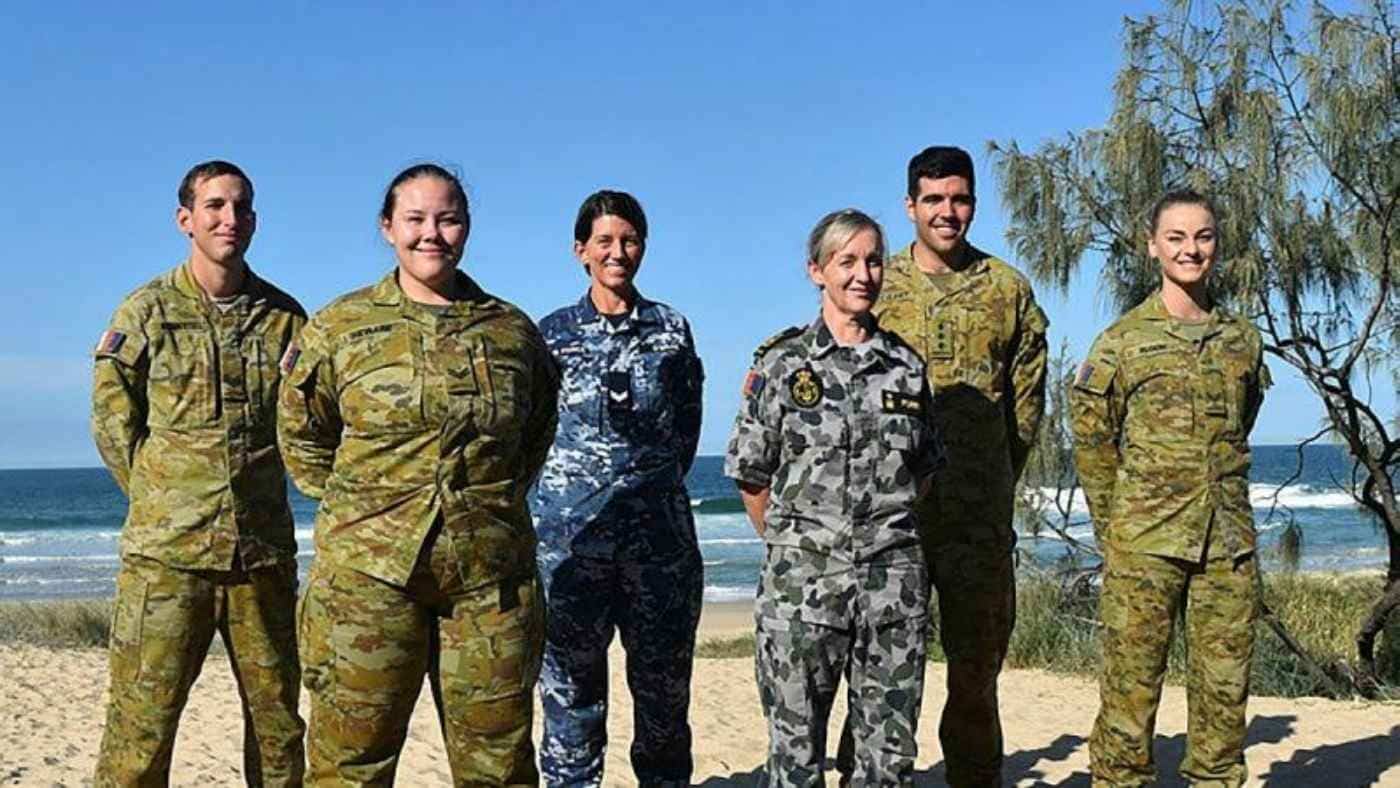
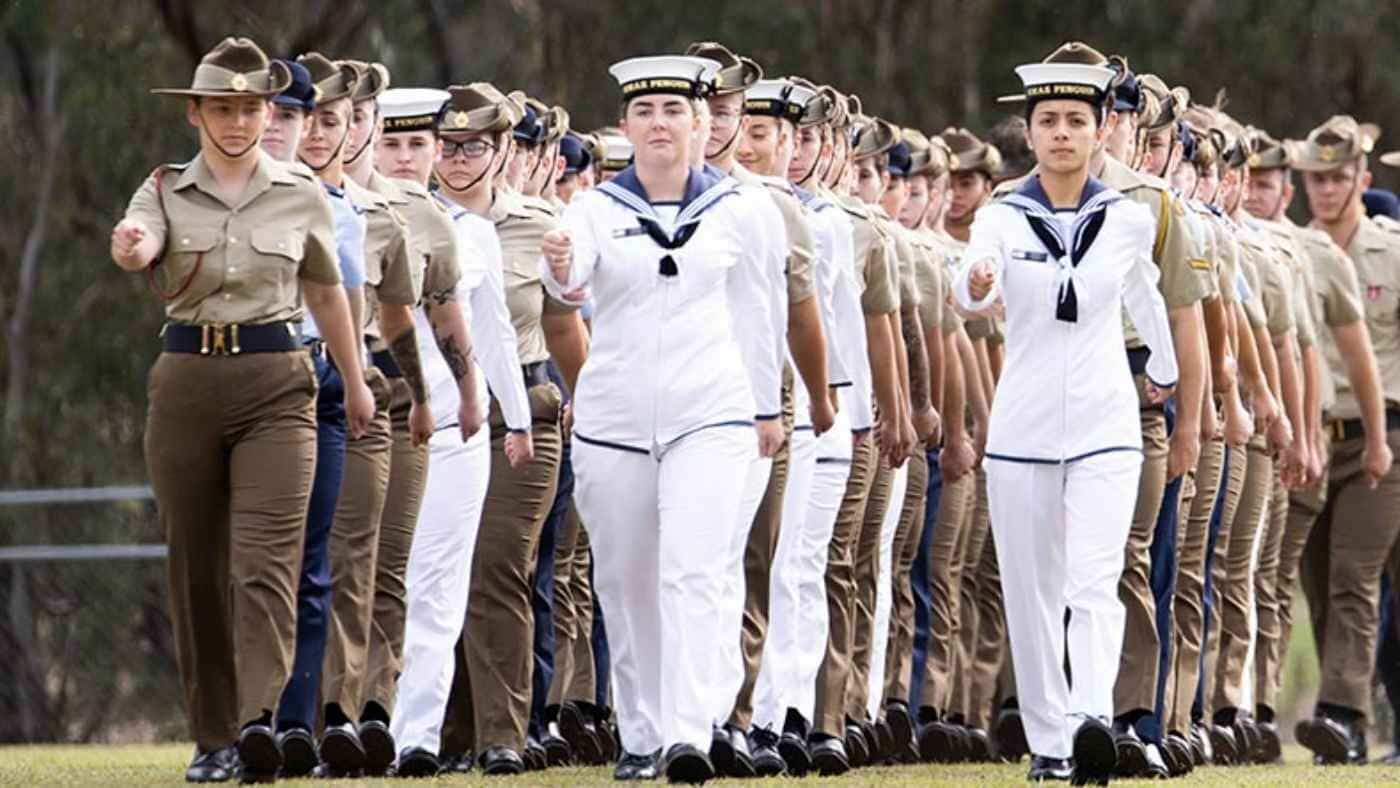
Defence’s current organisation page identifies three services: the Royal Australian Navy, Australian Army and Royal Australian Air Force. It also lists organisations including Joint Capabilities Group and Joint Operations Command within the ADF. A place in the ADF’s structure does not automatically make an organisation another service. [1]
Separately, Defence describes maritime, land, air, space and cyber as five warfighting domains. The list concerns the application of military power across operational environments. It is not a list of five service branches. [3]
When reading an article, ask what is being counted. “Three services” and “five domains” can both be correct because they refer to different categories. Keep those labels in a summary instead of shortening both to “branches”.
Myth 2: A command is another name for a service
The word “Command” in an organisation’s name does not give it service status. For example, Defence describes Joint Operations Command as planning, controlling and conducting directed operations, activities and actions to meet Australia’s strategic objectives. That is an organisational responsibility, not the creation of another military service. [2]
Nor do all commands have the same role. Defence’s Joint Capabilities Group page describes Space Command as leading the space domain and preparing space power for the integrated force. It describes Cyber Command as leading the cyber domain and generating cyber warfighting and information operations capability. Read the stated function of each organisation rather than assuming every command does the same work. [4]
This article uses “command” to discuss named organisations. In other contexts, the word can describe the exercise of authority. If a report says an officer “takes command”, that phrase alone does not tell you that a new organisation or service has been established.
Myth 3: Each service operates within only one domain
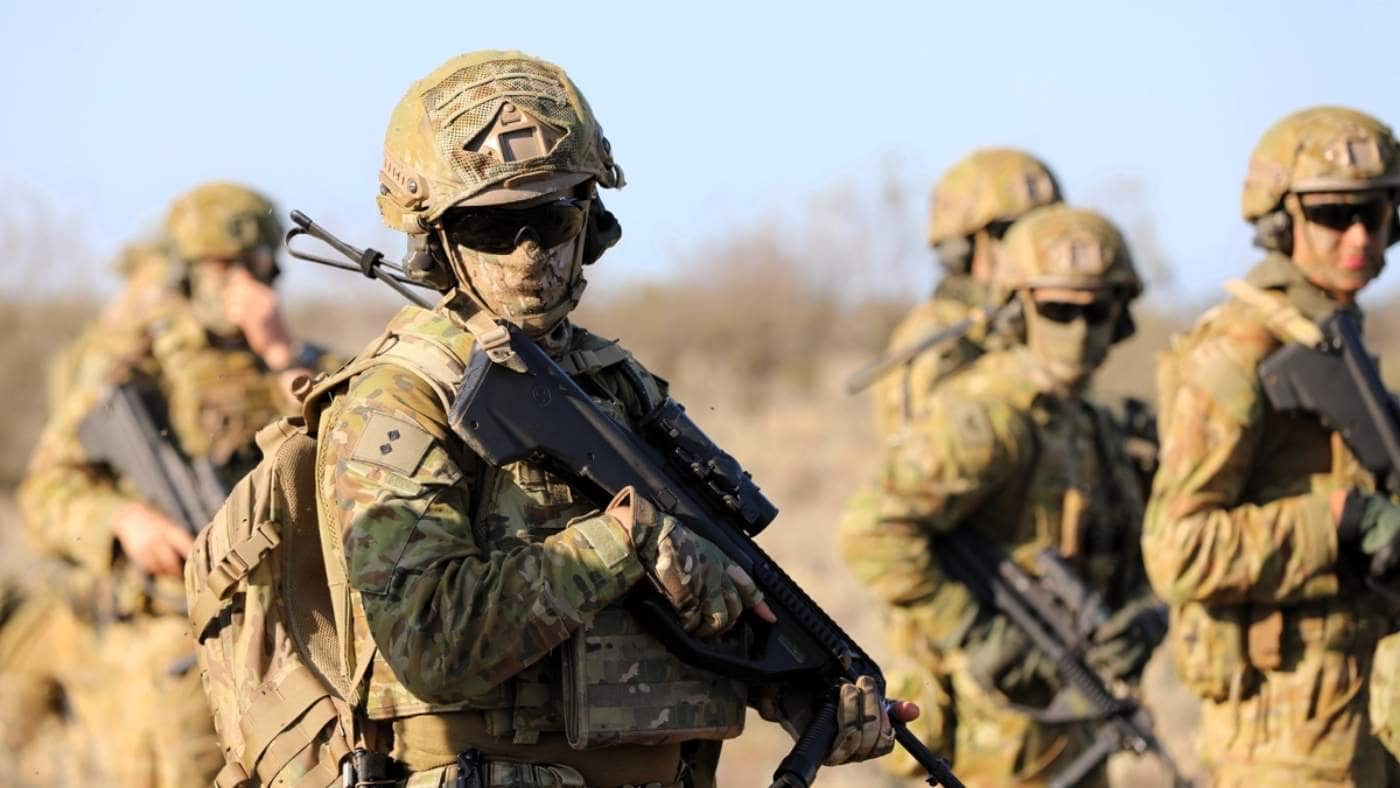
Army’s public mission page identifies its role as the integrated force’s land combat experts. That describes its principal expertise within a wider force. It does not mean every activity involving Army is isolated from the other domains. [5]
Defence’s space guidance provides a useful example of these connections. Much of the force relies on space-based services, including communications, weather information, positioning, navigation and timing. A space-based service can therefore matter to people operating on land as well as elsewhere. [6]
Cyber also crosses geographic boundaries. Defence describes it as connecting platforms, people and systems across domains. Its cyber environment includes interconnected networks, information systems and the electromagnetic spectrum, with roles in communications, logistics and military decision-making. [7]
Consider a simplified reading example, rather than a description of a specific operation: a soldier using satellite navigation has an Army service identity while using a space-enabled function. Those two descriptions can apply at the same time. Neither establishes the command arrangements for that soldier’s task.
Myth 4: A command and its domain are interchangeable
Space Command names an organisation. The space domain identifies the environment to which its responsibilities relate. Substituting one term for the other can change the meaning of a sentence, even when both appear in the same story. [4, 6]
The same distinction applies to Cyber Command and the cyber domain. A report about a command’s workforce is discussing an organisation. A report about dependence on networks may be discussing the operational environment more broadly. First identify the subject of the sentence, then retain the term the source actually uses.
Myth 5: An old organisation chart always explains the present
Organisation names and responsibilities need a date. Defence’s current Joint Capabilities Group page lists both Space Command and Cyber Command within the group. That is the appropriate starting point for describing their current organisational location, checked for this article on 5 October 2026. [4]
A historical announcement can still be accurate about its own period. The problem arises when its wording is copied into a present-day explanation without checking whether the structure has changed. Conversely, a current chart should not be used to rewrite a veteran’s earlier posting or a historical unit description.
For a family history, preserve the organisation’s name as it appears in the dated record. If you add a present-day explanation, separate it clearly from the original details. Avoid inserting a modern command name merely because its role sounds similar.
Check the organisation the responsibility and the date
You do not need to memorise the full Defence structure to read a story carefully. These four checks are a practical editorial method for keeping a summary accurate.
1. Identify the exact name
Write down the full term before shortening it. Distinguish the Australian Army from a particular Army unit, and a named command from a domain.
2. Read the official role description
Look for what the organisation is responsible for. Words such as prepares, generates, supports and conducts describe different tasks. Retain those distinctions instead of replacing them all with “controls”.
3. Verify any claimed reporting relationship
Only state that one organisation reports to another when a relevant official source supports it. A shared topic, uniform, location or acronym is not enough evidence to draw a command relationship.
4. Match the explanation to the period
Use current official pages for current structures and dated records for historical claims. Record the source and date beside your notes so someone else can check the statement.
Use precise names when recognising someone’s service
These distinctions also help when preparing a retirement message, a family display or a commemorative gift. Start with the person’s verified service, unit or posting and the period you intend to recognise. Do not infer their service identity from a domain mentioned in an article, or assume a product’s design proves a particular posting.
For example, if a family record identifies an Army unit but does not confirm a later posting, keep the wording to the documented details. A short, accurate description is more useful than an impressive-sounding title that the record does not support.
Explore Military Shop’s collectables and gifts for service-themed options, and check each item’s stated design and description against the service connection you want to recognise. Keep the historical wording tied to the person’s records. [8]
Sources
1 Defence | Organisation structure
2 Defence | Headquarters Joint Operations Command
3 Defence | A new era for the cyber domain | 9 August 2024
4 Defence | Joint Capabilities Group
5 Australian Army | Our mission
8 Military Shop | Collectables and gifts
FAQs
What are the three military services that make up the Australian Defence Force (ADF)?
The three military services are the Royal Australian Navy, the Australian Army, and the Royal Australian Air Force.
What are the five warfighting domains identified by Defence?
The five warfighting domains are maritime, land, air, space, and cyber.
Does having five warfighting domains mean there are five military services?
No. The list of five domains describes the application of military power across different operational environments, rather than a list of five service branches.
Does the word "Command" in an organisation's name mean it is a separate military service?
No. A named command is an organisation with assigned responsibilities, such as planning or leading a specific domain, which is an organisational responsibility rather than the creation of another military service.
Why is it important to include a date when looking at military organisation charts or historical records?
Organisation names and responsibilities change over time, so checking the date ensures you do not mistakenly apply a present-day structure to a historical unit description or vice versa.