


The Australian Army Land Role Within an Integrated Force
Table of Contents
- Land combat remains the centre of Army expertise
- An integrated force connects different kinds of military power
- Joint activity and land expertise belong in the same picture
- The littoral connects land and sea
- The 2026 direction links land combat with wider defence objectives
- A public example is the Littoral Manoeuvre Group
- A simple scenario shows why coordination matters
- Partnerships are part of the published role
- Read capability announcements with their dates attached
- Connect service history with an understanding of the present
- Sources and further reading
- FAQs
The Australian Army brings land combat expertise to a force that must operate across connected environments. Understanding that role means looking beyond soldiers and vehicles on the ground. Land positions, access from the sea, air support and the information connecting them can all matter to the same military objective.
Army’s current public mission page describes its role as “the integrated force’s experts in land combat”. [1] This beginner’s guide explains that description through the published roles of Army, Navy and Air Force, together with Defence’s 2026 reporting. It focuses on purpose and cooperation, rather than equipment inventories or predictions about future operations.
Land combat remains the centre of Army expertise
Army’s published tasks include readiness for war in the littoral, deterring and denying threats to Australia, enabling the projection of military force and developing regional security partnerships. It also identifies regional stability, defence against long-range attacks, support for the global rules-based order and assistance during domestic crises and disasters. [1]
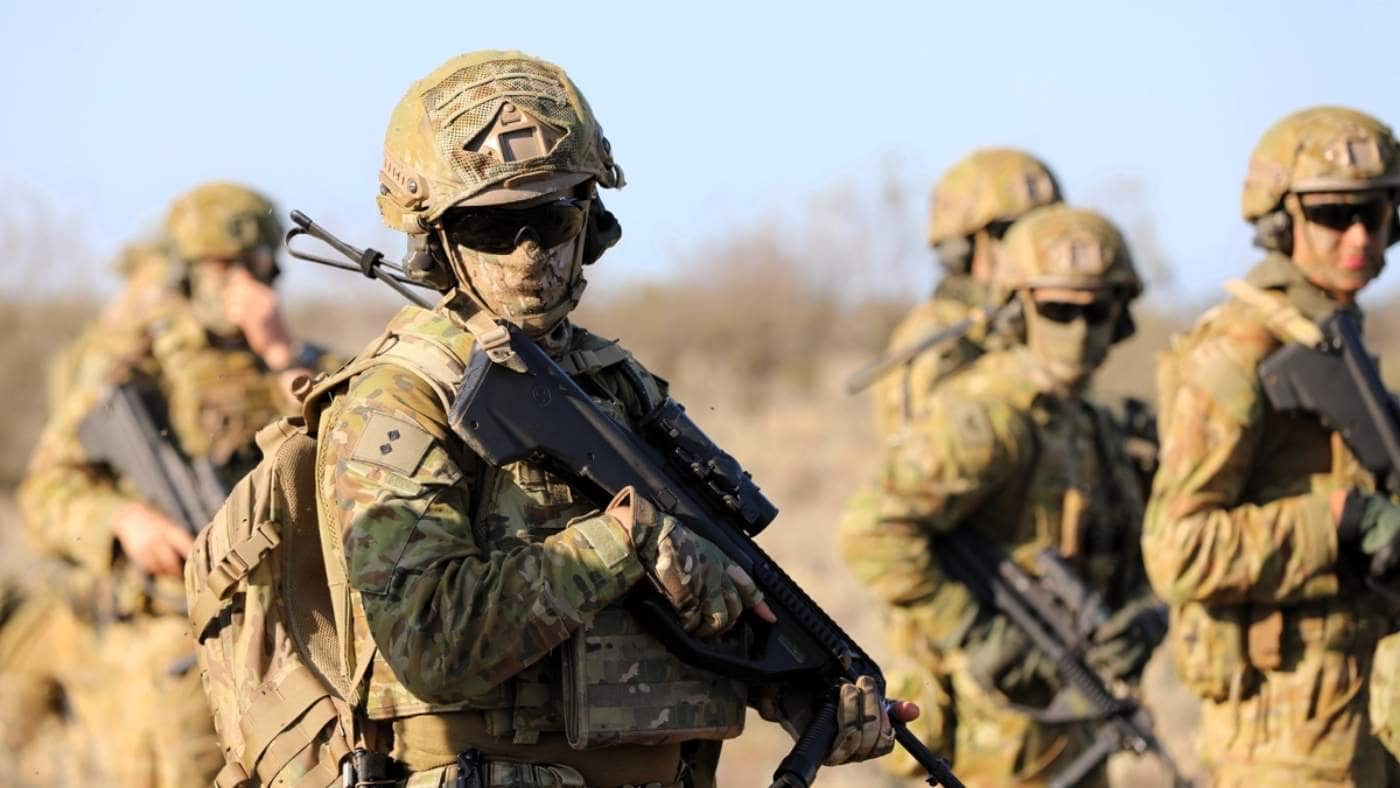
That range helps explain why a single image of Army can be incomplete. A photograph of soldiers helping after a disaster shows one kind of contribution. A training activity involving coastal movement shows another. Neither, by itself, describes the full purpose of the service.
For a reader new to Defence, the useful starting question is: what does land expertise contribute to the overall task? That question directs attention to the relationship between the people on the ground and the wider force, rather than treating each service as an isolated organisation.
An integrated force connects different kinds of military power
Navy states that its mission is to prepare naval power to enable the integrated force in competition and conflict. It links maritime security to Australia’s trade, prosperity and national security, and describes a contribution involving ships, submarines, aircraft and specialist teams. [2]
Air Force describes its mission in terms of air effects across maritime, land, air, space and cyber domains. Its principal air power roles include control of the air, precision strike, intelligence, surveillance and response, and air mobility supported by combat and operational support. [3]
Read together, these statements show why the services cannot be understood simply as three unrelated activities on land, at sea and in the air. Their specialist contributions can support a shared objective across more than one environment. That is the connection this article means when it discusses integration.
Joint activity and land expertise belong in the same picture
For this guide, joint activity means activity involving more than one of the ADF’s services. Integration asks the broader practical question of how their contributions fit together. These are plain-language explanations for new readers, rather than a substitute for formal Defence doctrine.
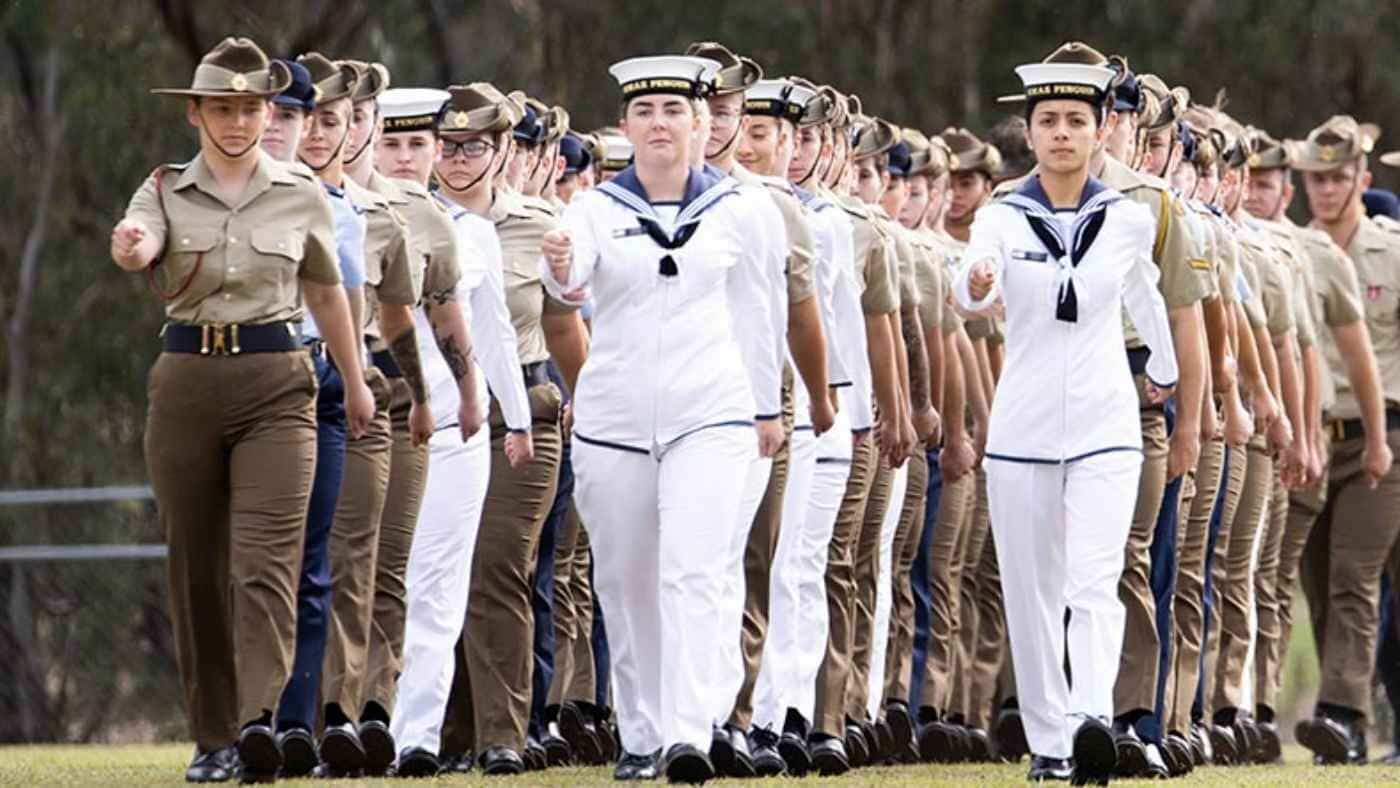
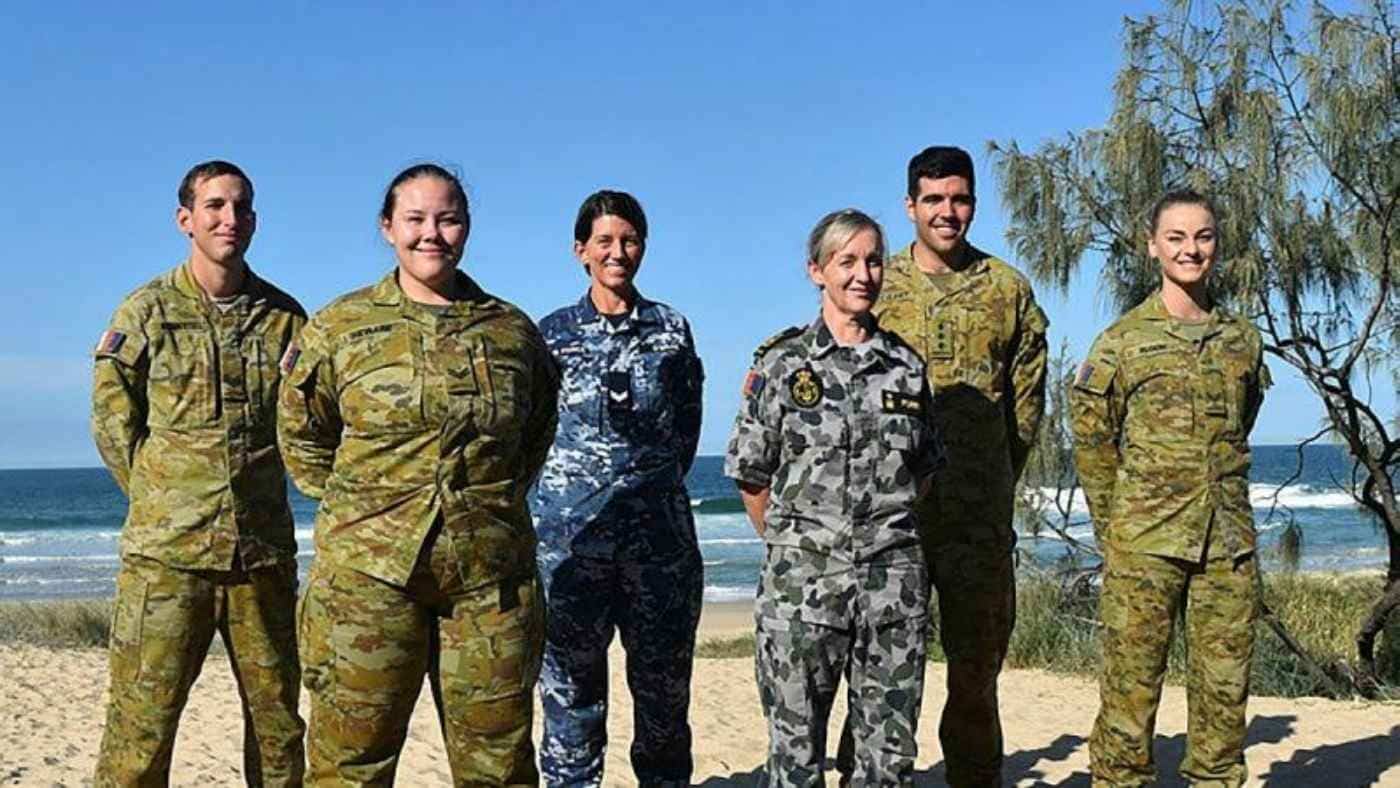
A useful way to read an exercise report is to identify the task, the participating services and the contribution described for each. Simply counting how many services appear in a photograph tells you less than understanding why they are working together.
The littoral connects land and sea
The term littoral is central to current explanations of Army’s role. Defence’s July 2026 account describes it as the land and sea areas that influence one another, including environments such as coasts, beaches, jungles and rivers. [4] It is therefore broader than a narrow strip of beach.
Army News reported in April 2026 that Army’s littoral focus includes operating along coastlines, islands and chokepoints in support of sea denial, joint force projection and sustained operations in contested environments. [5] This explains why a land force can have an important part in a maritime setting.
In everyday terms, movement between islands or between a ship and the shore links activity afloat with activity on land. Reaching a location and continuing to support the people there are connected problems. A report about water transport can therefore be directly relevant to Army’s land role.
The 2026 direction links land combat with wider defence objectives
Defence’s July 2026 explanation of Army’s contribution to the National Defence Strategy identifies four requirements: fighting in littoral environments, long-range strike, close combat on and across the land boundary, and integration with the ADF, partners and Australian industry. It also connects Army’s contribution with protecting important infrastructure and maritime routes, controlling key terrain and regional stability. [4]
These priorities are presented in support of a strategy of denial, which Defence explains as deterring and preventing adversaries from projecting power against Australia. [4] For a beginner, the important point is the relationship between the land contribution and that wider objective.
A strategic priority is not an inventory. A statement that Army is developing a capability does not establish how many systems are available, where they are deployed or what readiness level they have reached. Those are separate questions requiring specific, current evidence.
A public example is the Littoral Manoeuvre Group
On 30 March 2026, Defence announced that Army had marked the establishment of its Littoral Manoeuvre Group at a parade in Brisbane. The release described its purpose as improving the movement, deployment and support of land forces across coastal and island regions. [6]
The announcement identified the transition of existing water transport and riverine survey units into the group. It also discussed workforce development, training and collaboration with Navy and TAFE. [6] This is a concrete example of specialist land-force requirements being supported by skills that extend beyond conventional ground movement.
The same release described further landing craft battalions and vessel acquisitions as developments ahead. [6] Those statements should be read as plans reported at that time, not proof that every associated platform or formation was already fully operational.
For families reading about a new organisation, that distinction matters. Establishing a headquarters, bringing existing units together, training personnel and delivering new equipment are related developments, but they do not all mean the same thing.
A simple scenario shows why coordination matters
Imagine a training activity in which a land team must reach a coastal location and remain supported there. The team’s work ashore is only part of the overall task. The exercise planners would also need to consider movement, communications, supplies and how the participants share information.
Depending on the activity, maritime and air contributions could help meet some of those needs. The point of this hypothetical example is the relationship between functions. It is not a description of an actual deployment, a fixed command arrangement or a claim that every exercise uses all three services.
When reading a real account, look for the evidence that fills in those details. Who provided transport? What training objective was identified? Which organisation supplied the support? Those questions help turn a broad phrase such as integrated force into something understandable.
Partnerships are part of the published role
Army’s mission page includes building partnerships with regional security forces. [1] This provides a reason to read reports of cooperation as part of Army’s wider purpose, rather than assuming that only combat activity is relevant to its role.
However, a public announcement has limits. It can identify participants, explain an activity’s stated purpose and report a completed event. It does not automatically reveal every agreement, operational commitment or future decision involving the organisations concerned.
Keep the difference between a published fact and an interpretation visible. “The report describes training together” is narrower, and usually more defensible, than claiming that the activity guarantees a particular response in a future crisis.
Read capability announcements with their dates attached
A beginner does not need to memorise every platform name to understand Army’s direction. Start with three questions: what problem is being addressed, how does land expertise contribute, and what other capabilities or organisations are involved?
Then check the status of the information. Words such as planned, ordered, delivered, trialled and operational describe different stages. A concept image can illustrate an intended capability without showing a vessel or vehicle already in service. Retain the date and context when sharing the story.
The official sources linked below provide different levels of detail. Mission pages explain purpose; dated announcements describe particular developments. Reading them together gives a more useful understanding than treating either as a complete picture of current capability.
Connect service history with an understanding of the present
For service families and military-history readers, Army’s land role provides context for the units, occupations and experiences they encounter in personal stories. It also explains why an Army story may involve a ship, an aircraft, a coastal environment or a regional partner.
Military Shop’s service-history stories and commemorative range offer ways to explore and acknowledge that service. When choosing a commemorative item, match its service, unit or historical theme to the person or event being remembered. A historical design represents its own subject and period; it should not be treated as a description of today’s force structure.
Explore Military Shop’s collectables and gifts alongside the official sources below to build a clearer connection between remembrance and the public explanation of Army’s role today.
Sources and further reading
1. Australian Army | Our Mission
2. Royal Australian Navy | Mission and values
3. Royal Australian Air Force | Mission and purpose
4. Defence | Army contribution to the National Defence Strategy | 6 July 2026
5. Army News | Deterrence and the Army littoral focus | 30 April 2026
6. Defence | New Littoral Manoeuvre Group established in Brisbane | 30 March 2026
Military Shop | Collectables and gifts
FAQs
What is the primary role of the Australian Army within the integrated force?
The Australian Army serves as the integrated force's experts in land combat, focusing on readiness for war in the littoral, deterring and denying threats to Australia, enabling military force projection, and developing regional security partnerships.
What does the term "littoral" mean in relation to the Army's role?
The littoral refers to the land and sea areas that influence one another, which includes environments such as coasts, beaches, jungles, and rivers.
How do the Navy and Air Force support the integrated force alongside the Army?
The Navy prepares naval power using ships, submarines, aircraft, and specialist teams to enable the integrated force, while the Air Force provides air effects across maritime, land, air, space, and cyber domains, including control of the air, precision strike, intelligence, and air mobility.
What was the purpose of establishing the Littoral Manoeuvre Group?
Announced by Defence in March 2026, the Littoral Manoeuvre Group was established in Brisbane to improve the movement, deployment, and support of land forces across coastal and island regions.
Does a strategic priority or capability announcement mean equipment is fully operational?
No. A strategic priority or capability announcement is a report of plans or developments at a given time and does not establish specific equipment inventories, deployment locations, or exact readiness levels.