



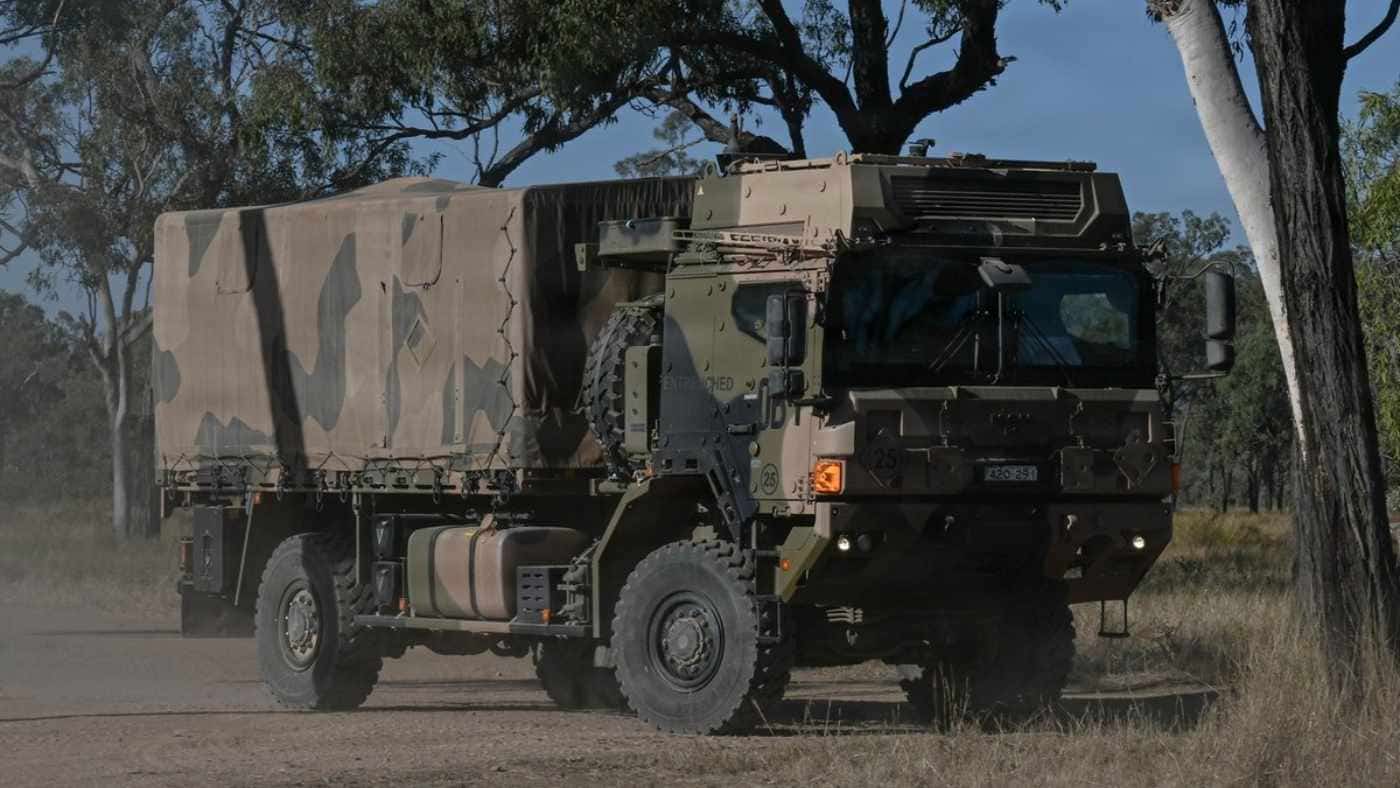
Why Army Logistics and Secure Communications Matter in the Cyber Domain
Table of Contents
- Army logistics is an information task as well as a transport task
- Communications carry the decisions that move a force
- Defence manages strategic communications as a secured capability
- Connection brings efficiency and exposure to Army logistics
- The supply chain includes software and suppliers
- What cyber supply chain risk management guidance asks organisations to do
- Reading army logistics and communications stories with a cyber lens
- Recognising the corps behind the networks and the deliveries
- Sources
- FAQs
Army logistics and communications matter in the cyber domain because both now run on networks and information systems. Moving people, stores and equipment depends on accurate information reaching the right place, and commanders rely on communications systems to control forces. When those systems are connected, protecting them becomes part of keeping supplies and orders moving. [1] [2] [4]
This article looks at that connection through public Australian Army, Defence and Australian Signals Directorate (ASD) sources. It does not describe classified systems or methods. It explains, in plain terms, why a story about a supply chain or a radio network can also be a story about cyber security. For background on the domain itself, see our explainer on what Defence means by the cyber domain.
Army logistics is an information task as well as a transport task
The Army describes the role of the Royal Australian Corps of Transport (RACT) as controlling and operating surface transport, providing movement, terminal and postal control, and managing aspects of air logistics support. It also says the corps plays a pivotal role within the Army's distribution network, delivering personnel, stores, equipment and combat service support. [1]
Every one of those Army logistics tasks needs information: what is required, where it is, where it must go and when. An article in the Australian Army Journal's cyber warfare edition puts the scale plainly: "The scale of logistics required in modern warfare is vast." The same article argues that the planning, management and delivery of military logistics and supply chain functions requires a secure and connected logistics information system. [4]
That is the core of the link. Trucks, ships and aircraft move the goods, but the information that directs Army logistics increasingly travels across networks.
Communications carry the decisions that move a force
The Royal Australian Corps of Signals (RASigs) provides communications, information systems and electronic warfare support to the Army. The Army says the corps keeps its information services "available 24/7 anywhere in the world." [2]
On the battlefield, the Army describes RASigs giving commanders the means of controlling the battle through methods that include radio, fibre optic, microwave, information systems and satellite links. It also says this work enables highly dynamic command and control while disrupting that of any adversary. [2] Our introduction to the electromagnetic spectrum and the cyber domain explains more about the spectrum these links rely on.
If communications are interrupted or cannot be trusted, decisions slow down. That affects everything that depends on them, including Army logistics and the movement of supplies.
Defence manages strategic communications as a secured capability
Communications are not only a battlefield matter. The Australian Government directory entry for Cyber Operations Division, listed under the Department of Defence's Joint Capabilities Group, describes it as responsible for the integration, operation, management and security of Defence's global strategic communications capability that enables military operations and supports Defence business. [3]
The same entry says the division is responsible at the strategic level, to the Chief of the Defence Force and the Chief of Joint Operations, for advice and technical control for command, control, communications and cyber security in support of ADF operations. [3] Read together with the Army corps descriptions, it shows that communications are treated as something to be operated and secured, not simply switched on.
For a refresher on how commands, services and domains fit together, see our explainer on the difference between military services, commands and domains.
Connection brings efficiency and exposure to Army logistics
Networks make Army logistics faster and better informed. The Australian Army Journal article notes that cyber systems provide high levels of efficiency and enable the rapid exchange of data and information. It then adds a caution: "High levels of efficiency through cyberspace can also introduce vulnerabilities from a variety of sources." [4]
The article also observes that many supply chain systems were analogue at the time of writing, and that with the introduction of enterprise resource planning (ERP) systems and the push to automation they would become "increasingly connected and targetable." [4] This is the author's analysis of a trend, not an official statement about any current Defence system.
The supply chain includes software and suppliers
A supply chain is more than a warehouse. The Australian Army Journal article states that "Supply chain integrity can be compromised at many points" and that "Software can be compromised at any point in this value chain." [4]
ASD's Australian Cyber Security Centre (ACSC) makes a similar point for all organisations. Its guidance says that where a supplier, manufacturer, distributor or retailer is involved in the products or services an organisation uses, there will be a cyber supply chain risk originating from those businesses. It adds that an organisation will transfer any cyber supply chain risk it holds to its customers. [5] [6]
The ACSC lists sources of that risk, including foreign control or interference, poor security practices, a lack of transparency, enduring access and poor business practices. [5] Its guidance also covers the security risks of engaging and authorising network access for managed service providers. [6] These risks apply to businesses and government generally; the guidance is not specific to army logistics.
What cyber supply chain risk management guidance asks organisations to do
The ACSC sets out a practical sequence for cyber supply chain risk management. [5]
The five steps
- Identify the cyber supply chain: the suppliers, manufacturers, distributors and retailers behind the products and services you use.
- Understand the cyber supply chain risk each of those businesses poses.
- Set cyber security expectations, documented in contracts where possible.
- Audit for compliance through routine audits or other forms of technical assessment.
- Monitor and improve cyber supply chain security practices, including partnerships strengthened through common cyber security goals.
Priorities from the Annual Cyber Threat Report 2024-25
ASD's announcement of its Annual Cyber Threat Report 2024-25 described state-sponsored cyber actors as a serious and growing threat, and said they had targeted networks operated by Australian governments, critical infrastructure and businesses. It urged network owners to focus on four areas: best-practice logging, replacing legacy technology, managing third-party risk and preparing for post-quantum cryptography. [7]
Managing third-party risk sits squarely in the supply chain. It is a reminder that a network is only as trustworthy as the organisations connected to it.
Reading army logistics and communications stories with a cyber lens
When a Defence or industry story mentions a supply contract, a new communications system or a network upgrade, it may also involve cyber security even if the word does not appear. Useful questions include what information the system carries, who supplies and maintains it, and whether the story describes a delivered capability or a future plan.
Keep conclusions within what the source states. A report that a system is being introduced does not reveal how it is protected, and a general warning about supply chain risk is not evidence that any particular Defence system has been compromised. Our overview of the ADF's multiple domains gives wider context on how the five domains relate.
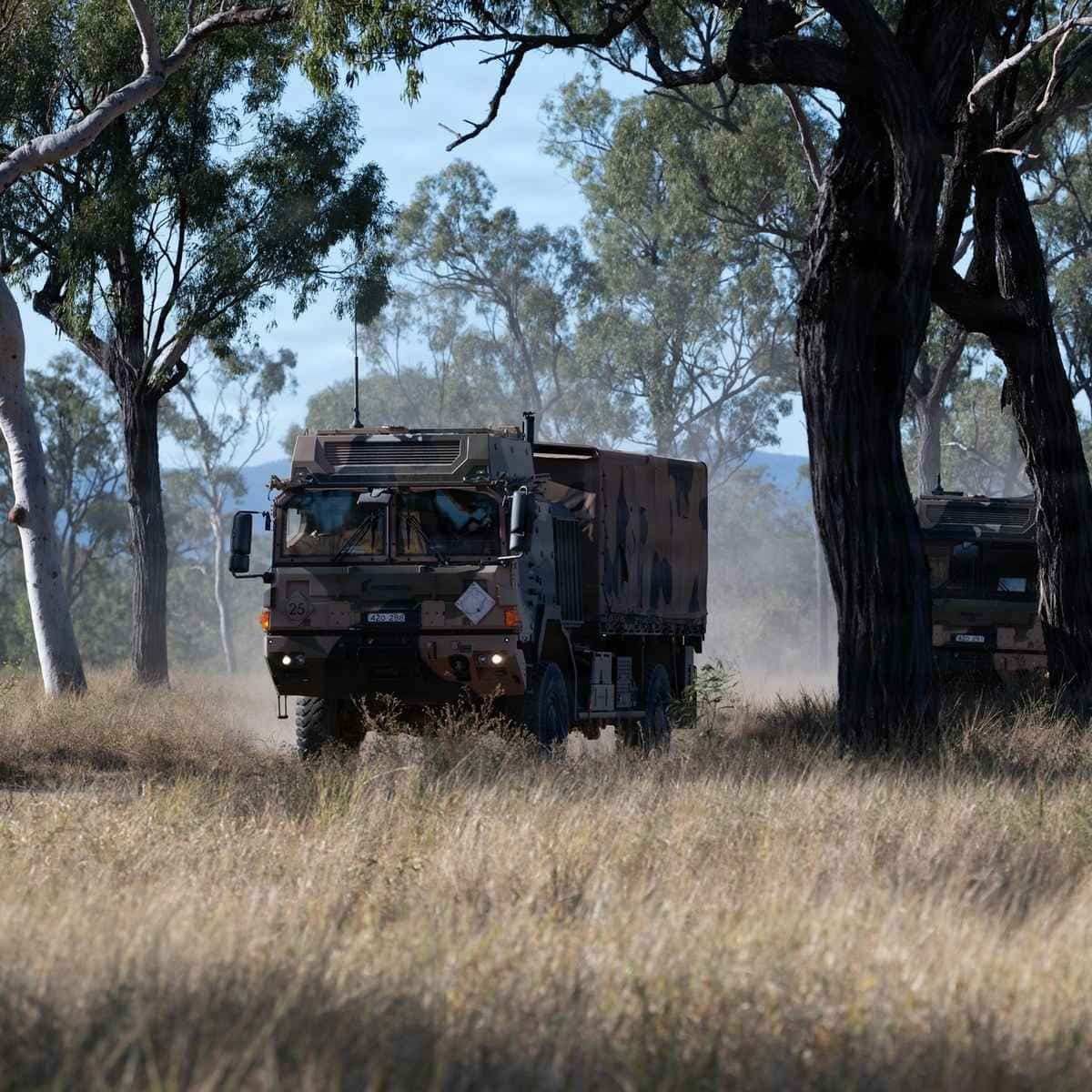
Recognising the corps behind the networks and the deliveries
The work described here depends on people: signallers who keep information services running and transport soldiers who keep personnel and stores moving. Their contribution is often less visible than a ship or aircraft.
If you are marking a Signals connection, browse Royal Australian Corps of Signals gifts and collectables, such as the RASigs Lapel Pin, which the listing describes as a 20mm full-colour enamel lapel pin with a gold-plated finish, supplied on a presentation card. For a Transport connection, the RACT gifts and collectables range includes the RACT Hat Badge, which the listing says features the Royal Australian Corps of Transport badge. Start with the service connection that matters to the person you are recognising.
Sources
1 Australian Army | Royal Australian Corps of Transport | date not shown | https://www.army.gov.au/about-us/army-corps/royal-australian-corps-transport
2 Australian Army | Royal Australian Corps of Signals | date not shown | https://army.gov.au/about-us/army-corps/royal-australian-corps-signals
3 Australian Government directory (directory.gov.au) | Cyber Operations (Department of Defence, Joint Capabilities Group) | date not shown | https://directory.gov.au/portfolios/defence/department-defence/joint-capabilities-group/cyber-operations
4 Australian Army Research Centre | Cyber-resilient Supply Chains: Mission Assurance in the Future Operating Environment | Australian Army Journal, Volume 14, Number 2 (Cyber Warfare Edition), date not shown on page | https://researchcentre.army.gov.au/library/australian-army-journal-aaj/volume-14-number-2-cyber-warfare-edition/cyber-resilient-supply-chains-mission-assurance-future-operating-environment
5 ASD's Australian Cyber Security Centre | Cyber supply chain risk management | first published November 2019, last updated May 2023 | https://cyber.gov.au/sites/default/files/2025-03/Cyber%20supply%20chain%20risk%20management%20%28May%202023%29.pdf
6 ASD's Australian Cyber Security Centre | Cyber supply chain risk management (guidance publications page) | date not shown | https://cyber.gov.au/acsc/government/cyber-supply-chain-guidance
7 Australian Signals Directorate | Australian Signals Directorate releases the Annual Cyber Threat Report 2024-25 | date not shown on page (URL dated 14 October 2025) | https://www.asd.gov.au/news/2025-10-14-australian-signals-directorate-releases-annual-cyber-threat-report-2024-25