


Leather Care for Ceremonial Belts and Accessories
Table of Contents
- Step 1: Decide whether the item is worn or kept
- Step 2: Follow your unit's dress instructions and the maker's advice
- Step 3: Leather care starts with gentle cleaning
- Step 4: Be cautious with dressings, polish and saddle soap
- Step 5: Watch the buckles, clips and metal fittings
- Step 6: Store leather in steady, dark and dry conditions
- Step 7: Handle with clean hands or gloves
- Leather care for the full ceremonial set
- Sources
- FAQs
Good leather care for a ceremonial belt, sword frog or knot starts with one question: is the item still worn, or is it kept as a keepsake? Leather you wear needs to stay supple and presentable, so following the maker's care advice and your unit's dress instructions comes first. Leather you keep is better served by the gentler approach museums use: clean, stable storage, little handling and very little added to the surface.
This leather care guide brings together published advice on caring for leather from conservation bodies in Australia, Canada and the United States. It does not set out dress rules for any service or unit. For how a belt or accessory should look on parade, follow your unit or dress instructions. For products, follow the maker's directions and test anything new in a hidden spot first.
Step 1: Decide whether the item is worn or kept
Conservators draw a clear line between leather in use and leather in a collection. Museums and Galleries of NSW says the care needed to preserve a leather object of historic value "is very different" from everyday care. It adds that stiffening over time is "generally not a problem, as historic items should not be used." [3]
The US National Park Service (NPS) makes the same split. Its Conserve O Gram on leather dressings says applying them to "personal (non-museum) objects is also acceptable if these objects must still function," giving examples such as leather work boots and horse saddles. [2] A Sam Browne belt worn on parade sits closer to that working category. A grandfather's belt in a display case sits closer to the museum one. The right leather care depends on which side of that line your item sits.
Step 2: Follow your unit's dress instructions and the maker's advice
Ceremonial leather is often part of a uniform, and the standard for its finish comes from the service, not from a blog. Check your unit or dress instructions before changing how a belt, frog, sling or knot looks. If you are unsure, ask your chain of command.
For leather care products such as cleaners and conditioners, the maker's directions are your best guide. Museums and Galleries of NSW warns against using petroleum products "or anything that does not list its ingredients" on leather. [3] That is useful advice for any military belt, worn or kept. If a product does not tell you what is in it, think twice before putting it on something you value.
Step 3: Leather care starts with gentle cleaning
When deciding how to clean leather you value, the safest cleaning is the least you need to do. If historic leather is dirty or mouldy, Museums and Galleries of NSW suggests cleaning it "with dry brushes or damp cotton cloths." [3] Its advice on mould also recommends a dust mask and a vacuum cleaner on low suction, as some moulds are toxic to humans. [3]
Prevention saves cleaning. The Canadian Conservation Institute (CCI) recommends keeping collections dust free "by using dust covers or enclosures." [1] For a belt you wear, we suggest a soft brush after each use and a quick check for marks. In our view, keeping water to a minimum is the safer habit.
Step 4: Be cautious with dressings, polish and saddle soap
This is where leather care advice for worn and kept leather differs most. For collection objects, the conservation view is clear. CCI answers the question of applying dressings to restore flexibility with "The answer is no," because "in time, oils oxidize and may produce deteriorative effects within the skin structure." [1] CCI also says saddle soap should not be used on collection leather, partly because these products are alkaline. [1]
NPS lists further problems with dressings on museum objects: darkening, a sticky surface and a white, waxy bloom called fatty acid spew that is often mistaken for mould. It warns that dressings "can trap moisture in the fibers of the leather and create the ideal environment for mold." [2] Museums and Galleries of NSW sums it up: "Anything that is put on leather is there to stay." [3]
For a belt you still wear, NPS accepts dressings where the item must keep working. [2] In our view, the sensible middle path is to use only what the maker recommends, use it sparingly and stop once the leather looks right. If an old belt moves from your wardrobe to a display case, stop adding products to it.
Step 5: Watch the buckles, clips and metal fittings
Ceremonial belts carry buckles, studs, rings and clips, and metal and leather do not always sit well together. CCI advises avoiding contact between metals and leather where possible. Where copper or its alloys touch leather, it notes the corrosion products "are typically waxy and green." [1] Where the metal is part of the object, CCI suggests inserting a barrier such as Melinex between metal and leather, and says to consult a conservator if the metal is actively corroding. [1]
For a stored heirloom, check the leather around each fitting from time to time. For a belt you wear, keep metal polish off the leather and follow your unit's instructions on how fittings should look. For leather cases, Museums and Galleries of NSW also suggests not fastening the buckles every time you open and close the case, as this "can lead to breakage." [3]
Step 6: Store leather in steady, dark and dry conditions
In leather care, how you store a military belt matters as much as how you clean it. Damp, heat and light do most of the slow damage. Conservation sources give these guide points:
- Damp: CCI says relative humidity (RH) above 65% favours mould on leather. [1]
- Dryness: CCI advises taking extra precautions when handling leather in dry environments below 30% RH, as loss of moisture may lead to loss of flexibility and risk of physical damage. [1]
- A steady middle: a National Museum of Australia conservation workshop suggested storage areas "should ideally have a relative humidity of between 45 and 55 per cent," and advised trying to keep it stable. [4]
- Heat: Museums and Galleries of NSW says temperatures above 20°C, especially with low humidity, "can dry the leather." [3]
- Light: the same workshop noted that visible and especially UV light "causes materials to fade and become brittle." [4]
Avoid airtight containers. Museums and Galleries of NSW says storage boxes should not be airtight so air can flow. [3] CCI suggests wrapping or covering items in a humidity buffering material such as cotton. [1] Store long straps loosely: asked about long leather straps, a National Museum of Australia textiles conservator said a multi layer shoe strap should not be wound tightly but "wound very loosely around the outside." [4]
Step 7: Handle with clean hands or gloves
Good handling is a simple part of leather care. Skin oils and grime transfer easily to leather. CCI advises wearing gloves and avoiding direct handling of collection items for this reason. [1] Museums and Galleries of NSW names improper handling as "the greatest danger to leather objects." [3]
For a belt you wear, clean, dry hands are a practical standard. Support the whole item when you lift it, rather than letting a heavy buckle or sword frog hang from a thin strap. If you find a white bloom and are unsure what it is, NPS suggests photographing it and sending the photo to a conservator for help with identification. [2]
Leather care for the full ceremonial set
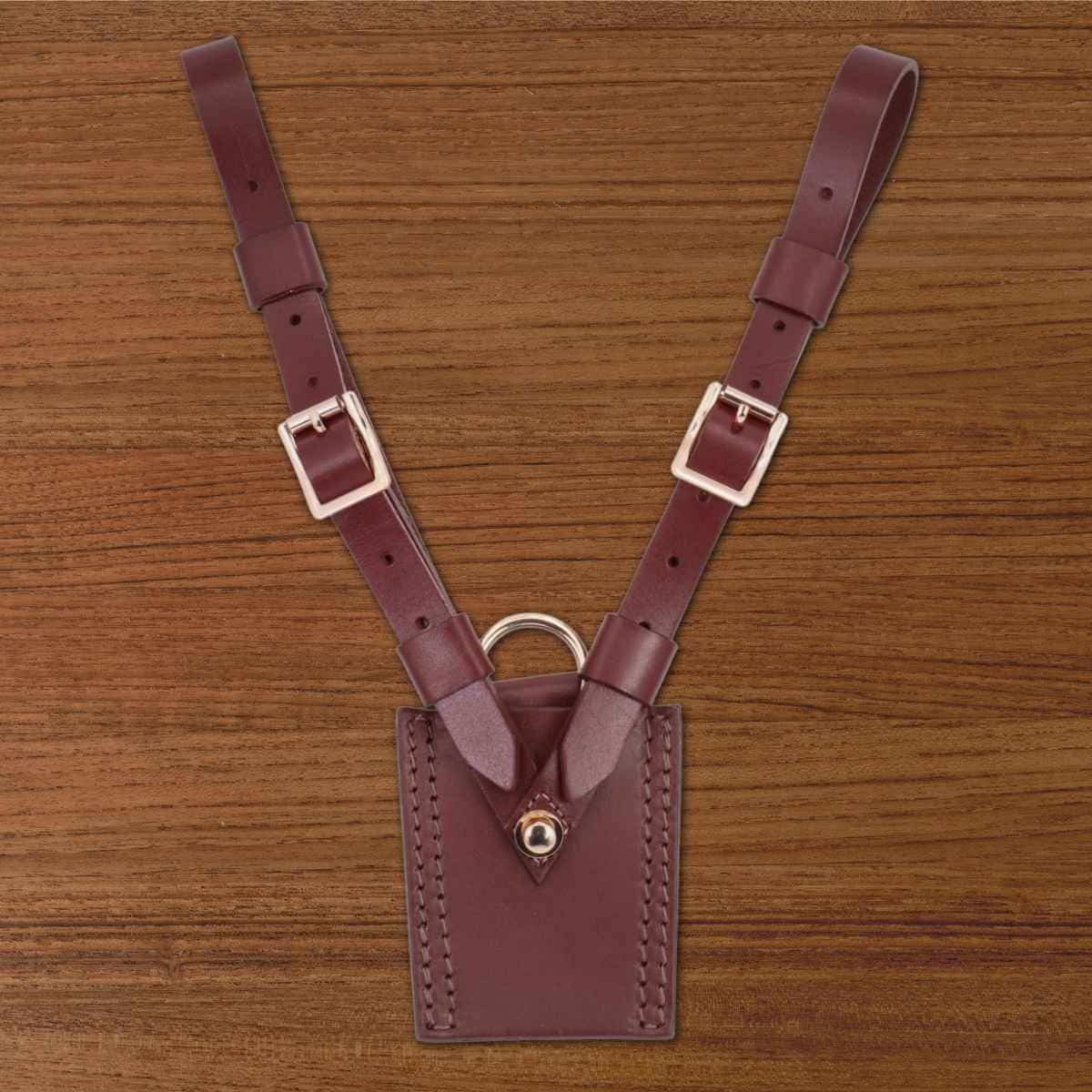
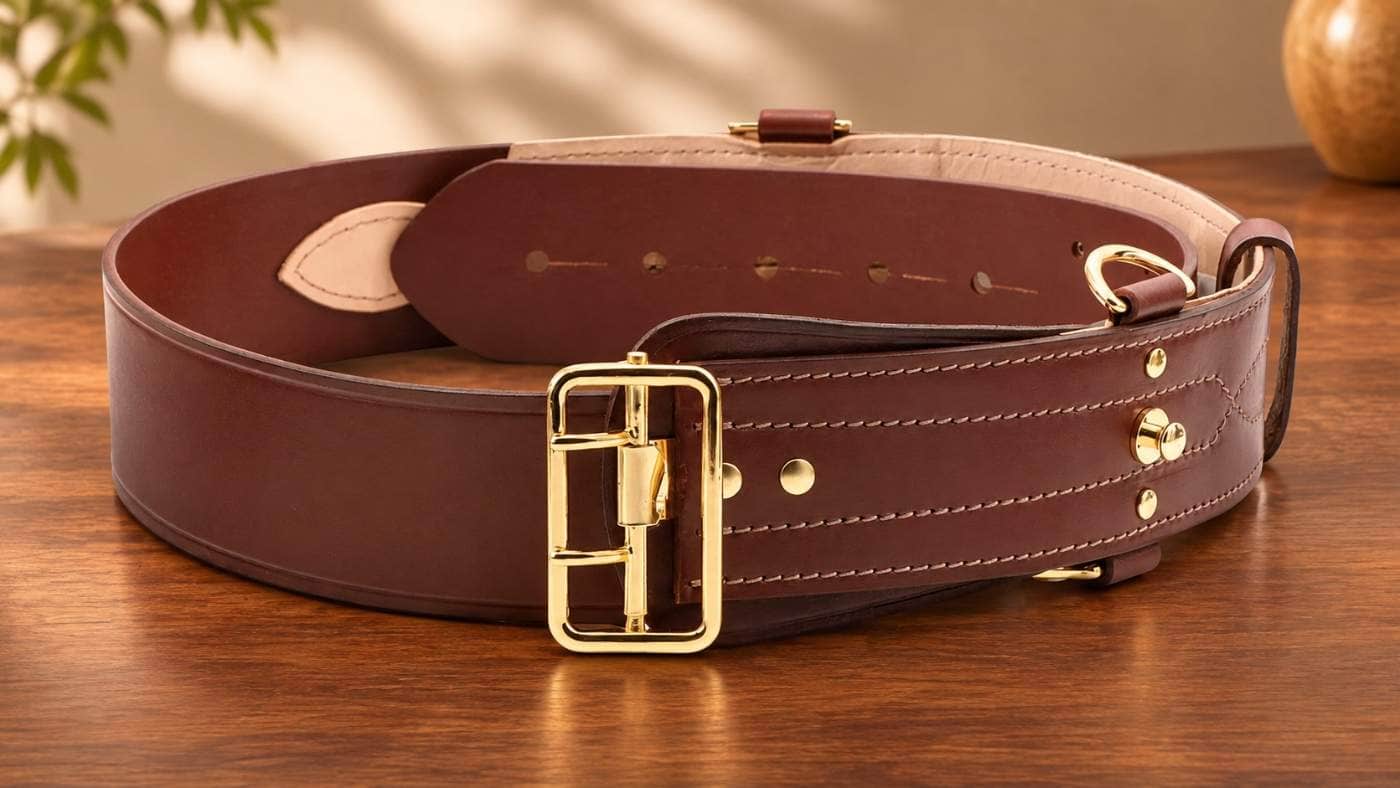
A ceremonial belt rarely works alone. Our ceremonial swords and accessories range brings together swords, belts, frogs, knots and stands. If you are starting or replacing a set, our Sam Browne belts range includes the Sam Browne belt in red brown, which the listing describes as made from leather and designed for use with the shoulder strap, leather scabbard and sword frog. [5] For its history, sizing and wear, see our complete guide to Sam Browne belts.
The Infantry and Artillery leather sword frog is described in its listing as hand made from leather. [6] For storage, the listing for the sword storage bag describes it as crafted from leather. [7] If you are still choosing a sword, our guide on how to choose your military sword is a good place to start. Whatever you own, the same leather care habits apply: gentle cleaning, careful use of products and steady storage. For more on caring for field gear, read our guide on how to care for a tactical pack before reproofing.
Sources
1 Canadian Conservation Institute (Carole Dignard and Janet Mason) | Caring for leather, skin and fur | modified 14 December 2018 | https://www.canada.ca/en/conservation-institute/services/preventive-conservation/guidelines-collections/caring-leather-skin-fur.html
2 US National Park Service (Fran Ritchie, Kyle Bryner, Ellen Carrlee) | Conserve O Gram 9/1: Fatty Acid Spew on Leather Objects | January 2025, updated 2 July 2025 | https://www.nps.gov/articles/conserve-o-gram-9-1-leather-dressings.htm
3 Museums and Galleries of NSW | Preservation of historic leather, including saddlery | 17 September 2013, modified 13 April 2026 | https://mgnsw.org.au/sector/resources/online-resources/collection-care/preservation-historic-leather-including-saddlery/
4 National Museum of Australia (Kerryn Wagg, Carmela Mollica and Michelle Newton-Edwards) | Door to store: caring for your hats and shoes (transcript) | 14 March 2013 | https://nma.gov.au/audio/door-to-store-caring-for-your-collection/transcripts/door-to-store-caring-for-your-hats-and-shoes
5 Military Shop | Sam Browne Belt (Red Brown) | SKU BN11845 | https://militaryshop.com.au/products/sam-browne-belt-red-brown.html
6 Military Shop | Infantry/ Artillery Leather Sword Frog (Red Brown) | SKU BN7345 | https://militaryshop.com.au/products/infantry-artillery-leather-sword-frog-red-brown.html
7 Military Shop | Sword Storage Bag | SKU BN37544 | https://militaryshop.com.au/products/sword-storage-bag.html