



Space Domain Awareness: What the Public Defence Term Means
Table of Contents
- What is space domain awareness?
- Why space domain awareness matters: knowing what is in orbit
- The three space domain awareness capabilities Defence names
- Who leads the space domain: Defence Space Command
- Commercial data and international partners
- Reading space domain awareness stories carefully
- Exploring Air Force and space history
- Sources
- FAQs
In Defence’s public description, space domain awareness is about knowing what is in orbit and where it is heading. Defence lists it as one of the space mission sets its workforce will support, and describes its space capabilities as able to “track, monitor, characterise and predict an object’s trajectory in space”. [1] Put simply, it is the job of watching the space environment closely enough to understand it.
The term appears often in Defence news about radars, telescopes and space units, which can make it sound more mysterious than the public record suggests. This guide sets out what Defence has published about space domain awareness, the capabilities it names, the organisation that leads the space domain and how to read space stories without assuming more than the sources say.
What is space domain awareness?
Defence’s space mission sets, as listed in its space domain overview, are: satellite communications; position, navigation and timing; space domain awareness; missile warning; satellite operations; space control; intelligence, surveillance and reconnaissance; and environmental monitoring. [1] Space domain awareness is one of those eight, not a label for all military space activity.
The same page explains what its space capabilities do: they “track, monitor, characterise and predict an object’s trajectory in space”. [1] Each verb adds something. Tracking follows an object. Monitoring keeps watching it over time. Characterising works out what it is. Predicting estimates where it will go next. Together they describe an understanding of the space environment rather than a single sensor or system.
Defence publishes its space overview as one of its military domains. Our article on the ADF’s multiple domains explains how space fits alongside the others.
Why space domain awareness matters: knowing what is in orbit
Defence’s space page begins with everyday life. It notes that Australians “routinely rely on the space domain for everyday activities, such as checking the weather,” and describes much of the force as “reliant on space-based meteorology, communications, intelligence, surveillance, reconnaissance” and other services. [1]
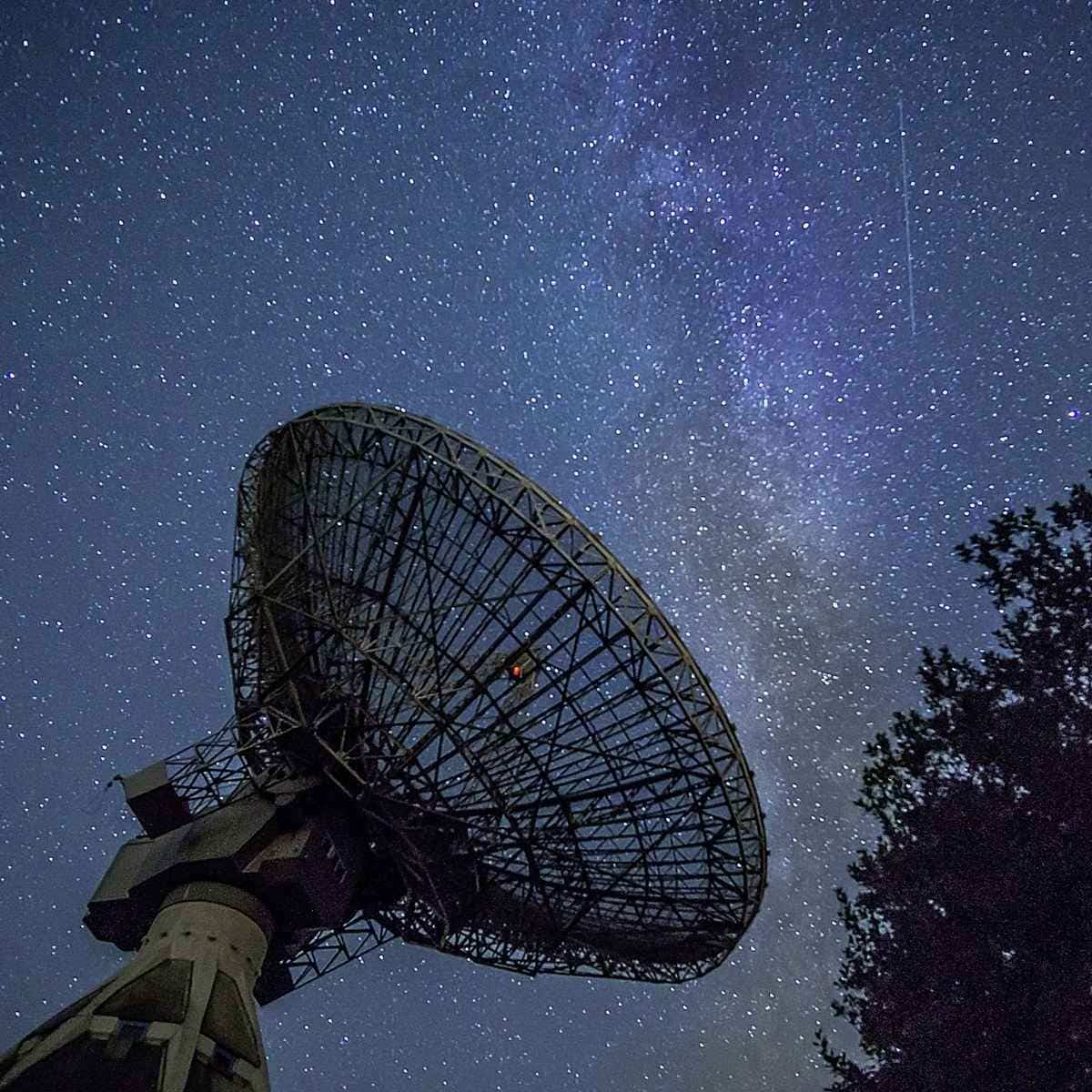
If satellites support those services, knowing what else is in orbit becomes practical. Defence’s August 2025 release on the Space Surveillance Telescope at Exmouth says the telescope helps to “detect, track, catalogue and identify objects in geostationary orbit, as well as predict and avoid potential collisions”. [2] The 2017 announcement on the C-Band radar says it “can accurately track several hundred objects a day and identify space debris and satellites”. [3]
Those statements explain the purpose in plain terms: a crowded orbital environment is easier to operate in safely when the objects in it are tracked and catalogued.
The three space domain awareness capabilities Defence names
Defence’s space page says it works “through combined efforts with international partners” to operate three capabilities. [1] Each has a separate public history, so the dates below come from the release cited, not from today.
| Capability | What Defence has published | Status and date of source |
|---|---|---|
| C-Band Radar | Operates from Harold E. Holt Naval Communication Station near Exmouth, Western Australia, as a joint initiative between the USAF and Australia [3] | Reported as reaching Full Operational Capability in a release dated 7 March 2017 [3] |
| Space Surveillance Telescope | Relocated from New Mexico to Exmouth, Western Australia; observes objects in geostationary orbit [2] | Reported as reaching Final Operational Capability in a release dated 19 August 2025 [2] |
| Deep-space Advanced Radar Capability (DARC) | Announced at the second AUKUS Defence Ministers’ Meeting; a site near Exmouth that will integrate with sites in the United States and United Kingdom, designed to “track and identify objects in deep space” [4] | Described on 2 December 2023 as “expected to be operational by 2026” [4] |
The DARC release also describes the network as offering “24-hour continuous global and all weather coverage”. [4] That December 2023 statement is a planned timeline. A later US Space Force article reported that “DARC was approved for Early Use capability for U.S. Space Command in Sept. 2025” and that the program “prioritizes the final operational acceptance milestone”. [9] This article does not state whether the DARC radar site in Australia has reached full operation; check Defence’s latest announcements for its current status.
Who leads the space domain: Defence Space Command
Defence’s organisation pages show the structure has changed in a short time. The Air Force’s page on the command states that “Defence Space Command was established on 18 January 2022,” bringing members of Air Force, Army, Navy and the Australian Public Service together and, at that time, “reporting to the Chief of Air Force, as the Space Domain Lead”. [5]
Defence’s Joint Capabilities Group page then records “DSpC’s move to Joint Capabilities Group on 1 July 2023, reporting to the Chief of Joint Capabilities”. [6] By July 2026, Defence news coverage of a space and cyber industry forum referred to “Commander Space Command Major General Greg Novak”. [7]
The lesson for readers is to date any organisational statement. A 2022 description of the command reporting to the Chief of Air Force should not be repeated as current in 2026. If your interest is the Air Force’s own surveillance work, which is a separate subject, our article on RAAF intelligence, surveillance and response covers it.
Commercial data and international partners
Space domain awareness is not only a matter of government-owned sensors. In August 2024, Defence reported that Space Command was “displaying its space domain awareness (SDA) capabilities through a key partnership” during Exercise Pitch Black 24. [8] The article named 1 Space Surveillance Unit and described the Joint Commercial Operations network as “a US Space Force-led international collaboration” that uses “non-classified commercial SDA data”. [8]
According to that article, the network watches for “changes in space objects’ photometric shifts, manoeuvres and re-entries”. [8] It is a useful public example of the concept in practice: observing change in orbit, then sharing what is seen with partners.
Reading space domain awareness stories carefully
Space reporting often mixes concepts, current capabilities and future plans. A few checks help keep them apart:
- Is the source describing the concept, a named capability or an organisation?
- What date is on the source, and has the structure or programme changed since?
- Is a milestone reported as achieved, or as expected by a future date?
- Does the article state a detail, or would you be inferring it?
Public sources describe purposes and milestones, not the full operational detail of how these systems are used. This article stays within what Defence has published and does not speculate about classified roles or performance.
Exploring Air Force and space history
Space domain awareness is a newer area of Defence work, and the public record will keep changing as capabilities mature. If you are looking for a gift for someone with an Air Force connection, our Air Force collection brings together drinkware, tie bars and other gifts, and the Air Force Tie Bar is a simple option the listing describes as a 20mm full colour enamel tie bar on a presentation card. For those connected to the Air Force’s surveillance community, the Surveillance and Response Group collection is listed separately. Space Command is a joint organisation, so check a person’s actual service before choosing anything unit specific.
Sources
- Department of Defence | Space domain | no date shown
- Department of Defence | From New Mexico to Exmouth: Space surveillance telescope reaches crucial milestone | 19 August 2025
- Minister for Defence | Australia’s Space Surveillance Radar reaches Full Operational Capability | 7 March 2017
- Deputy Prime Minister and Minister for Defence | New Defence space capability boosts regional security | 2 December 2023
- Royal Australian Air Force | Defence Space Command | no date shown
- Department of Defence | Joint Capabilities Group | no date shown
- Department of Defence | Exploring future space and cyber domains | 24 July 2026
- Department of Defence | Space Command shines in the Top End | 5 August 2024
- US Space Force, Combat Forces Command Public Affairs | New Deep Space Radar Capability Employed Early | no date shown on page (syndicated copies dated May 2026)