


What Is the Last Post? The Meaning Behind the Bugle Call
Table of Contents
If you have stood at an Anzac Day or Remembrance Day service, you know the moment. The Ode is spoken, the crowd falls quiet, and a single bugle sounds the Last Post. It lasts little more than a minute, yet it is one of the most moving sounds in Australian life. So what is the Last Post bugle call, where does it come from, and why do we play it?
What is the Last Post?
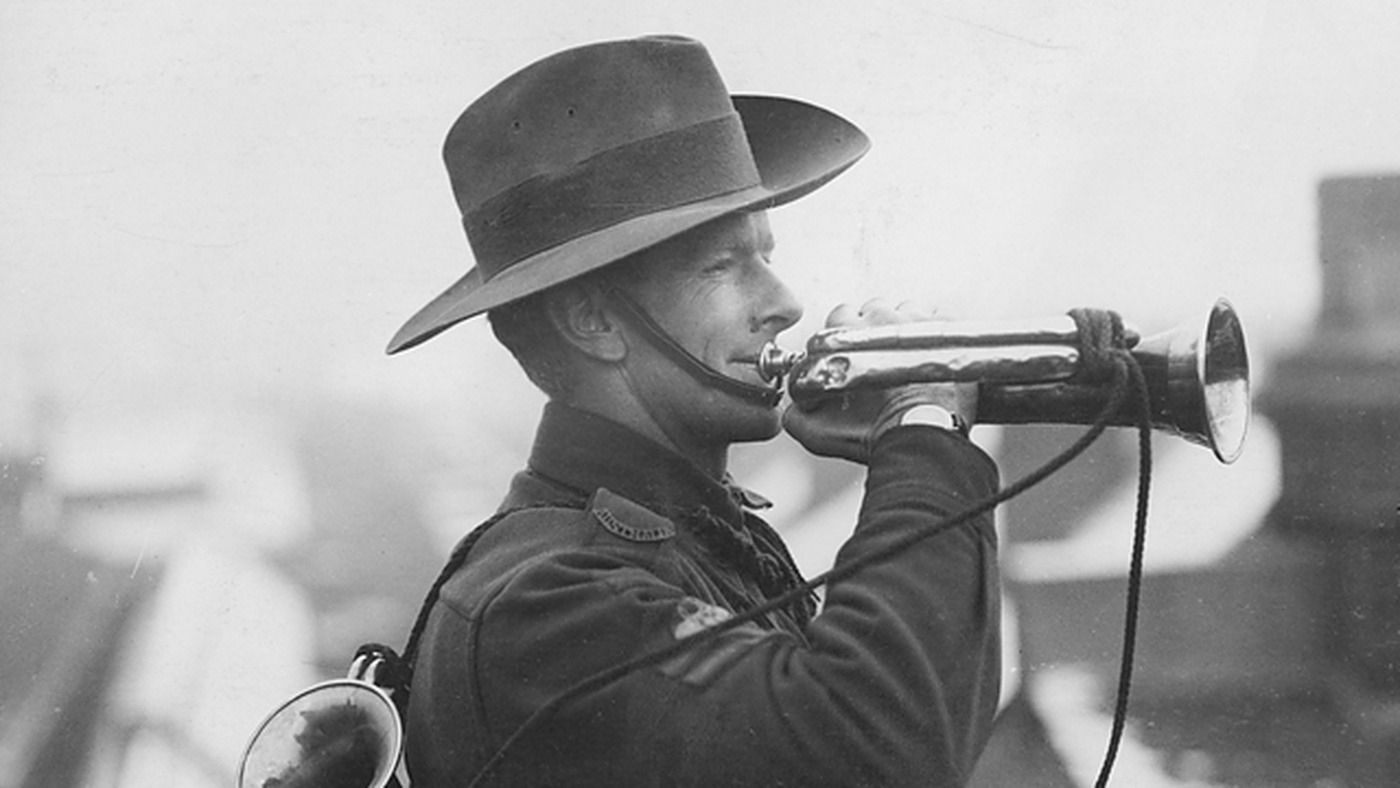
The Last Post is a bugle call that marks the end of the day. At commemorative services it is a final farewell to those who have served and died. In the words of the Australian War Memorial, it symbolises that the duty of the dead is over and they can rest in peace.
Where did the Last Post come from?
The Last Post began as an ordinary part of army routine. The Australian War Memorial traces it to the British Army's evening routine known as tattoo, which began in the 17th century. Each night the duty officer made his rounds of the camp's sentry posts with musicians. A call sounded as the rounds began, and a final call at the last post told the camp that the night sentries were alert and the day's work was done. It was also a last warning to any soldier still out that it was time to be back in barracks.
The word tattoo is often traced to the Dutch phrase "do den tap toe", meaning turn off the taps, said to have sent English soldiers in the Low Countries back from the inns in the 1690s. As Australian War Memorial historian Dr Meleah Hampton has noted, there is little documented evidence, so no one can say for certain exactly how the call began.
You may have seen a story online that the Last Post was written on an American Civil War battlefield by a captain who found his dying son. AAP FactCheck found that story to be false. It is a myth, and it is linked to the American call Taps, not the Last Post.
From the barracks to the memorial
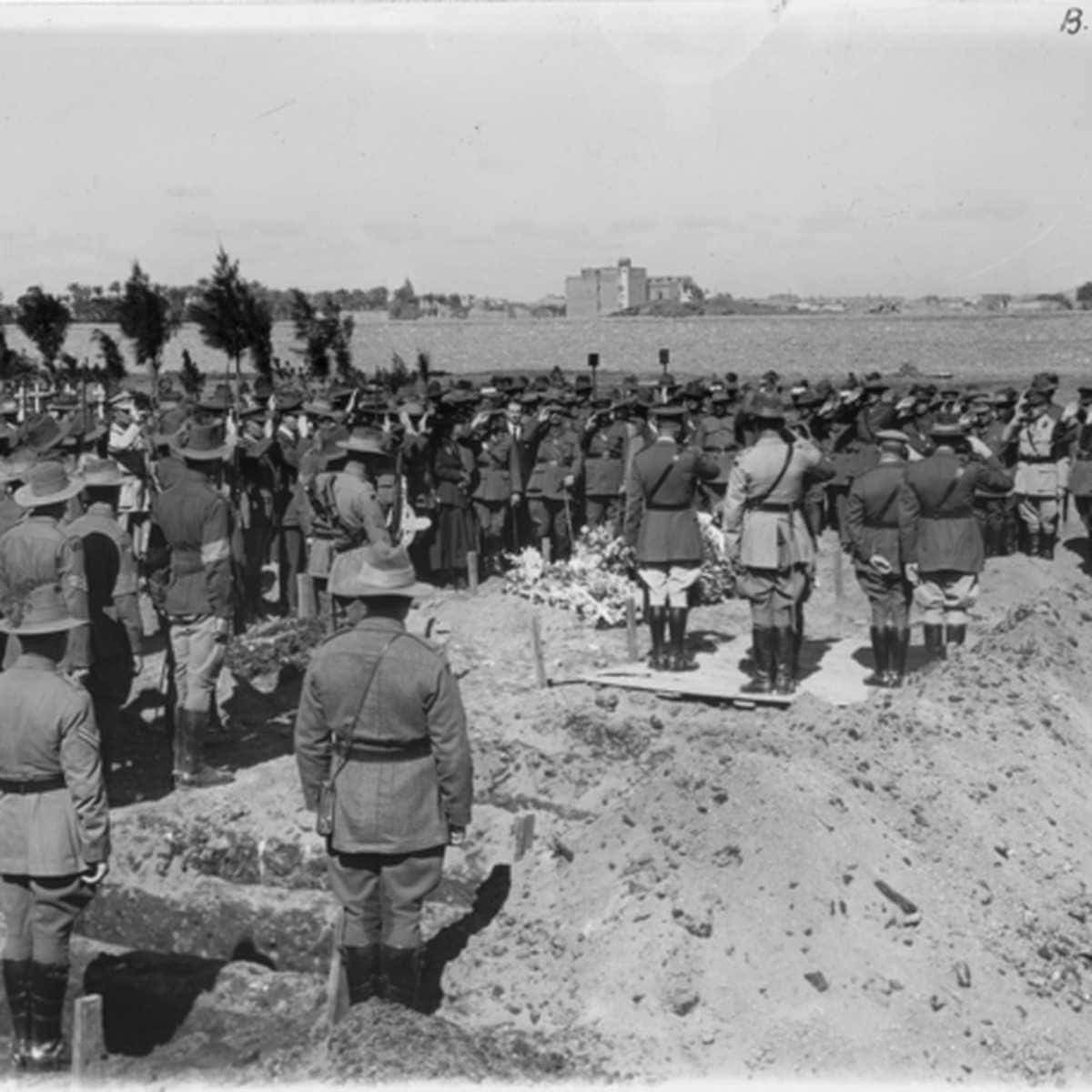
Over time, the call that ended a soldier's day was carried into military funerals and memorial services. The symbolism was clear: the day is done, the watch is over, and the soldier can rest. Today the Last Post is sounded at military funerals and at commemorations across Australia, from the Australian War Memorial to the smallest country cenotaph.
Why is the Last Post played at Anzac Day and Remembrance Day?
At an Anzac Day or Remembrance Day service, the Last Post sits at the heart of a set order:
1. The Ode of Remembrance, the fourth verse of Laurence Binyon's 1914 poem For the Fallen
2. The Last Post
3. A period of silence, usually one minute (traditionally two at an Anzac Day dawn service)
4. The Rouse, played as the flags are raised (Reveille is played instead at an Anzac Day dawn service)
The Ode reminds us why we are there:
They shall grow not old, as we that are left grow old:
Age shall not weary them, nor the years condemn.
At the going down of the sun and in the morning
We will remember them.
The Last Post then closes the day for the fallen, and the silence that follows is our time to remember them. On Remembrance Day the silence begins at 11am, the hour the guns fell silent on the Western Front on 11 November 1918. The Rouse then closes the service as the flags are raised.
The Last Post Ceremony at the Australian War Memorial
In Canberra, the Last Post is heard every day. Since 17 April 2013, the Australian War Memorial's Last Post Ceremony has told the story of one person from the Roll of Honour each day, researched from enlistment papers and service records. The Roll of Honour holds about 103,000 names (the Memorial's 2023 figure), and the Memorial estimates that reading every story would take more than 280 years. Check the Memorial's website for current details before you visit.
The 2026 Last Post coin
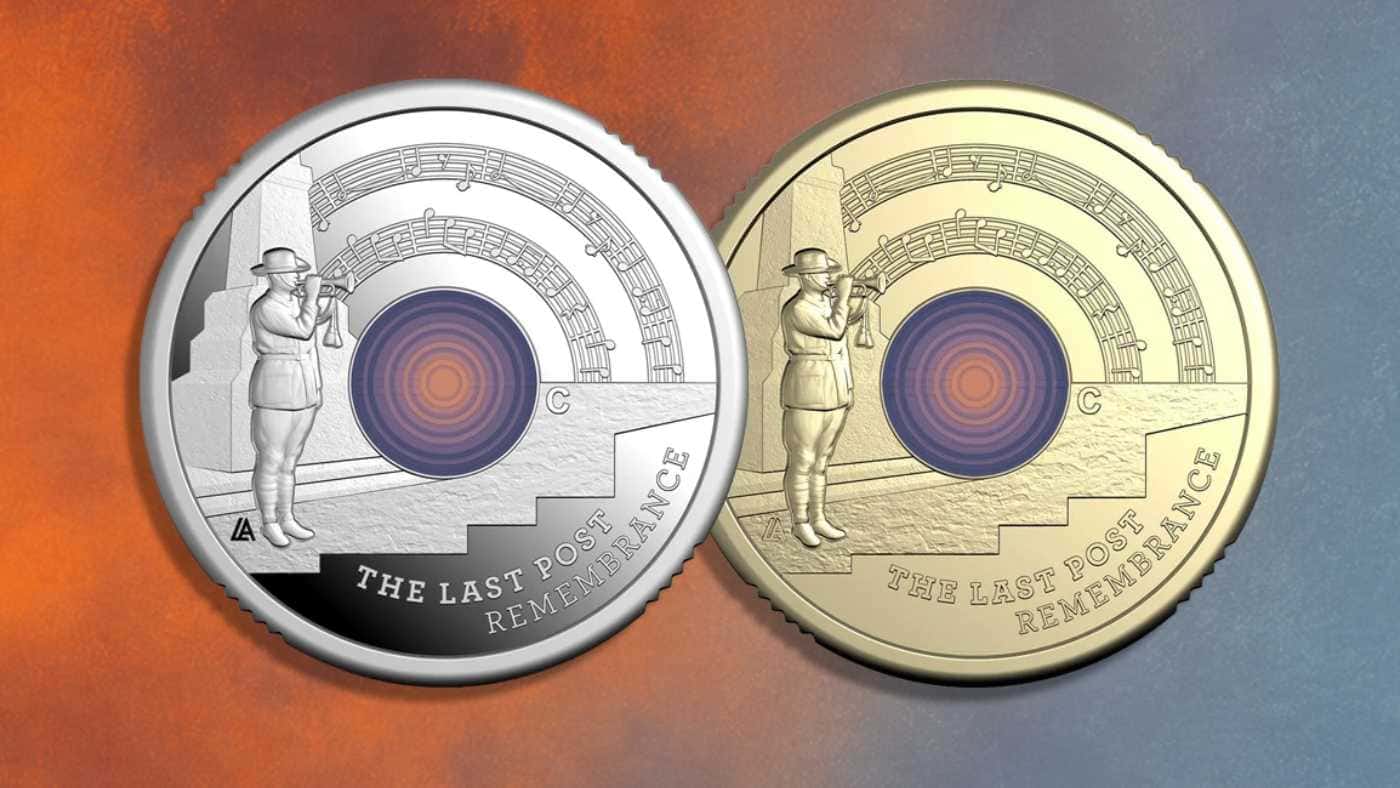
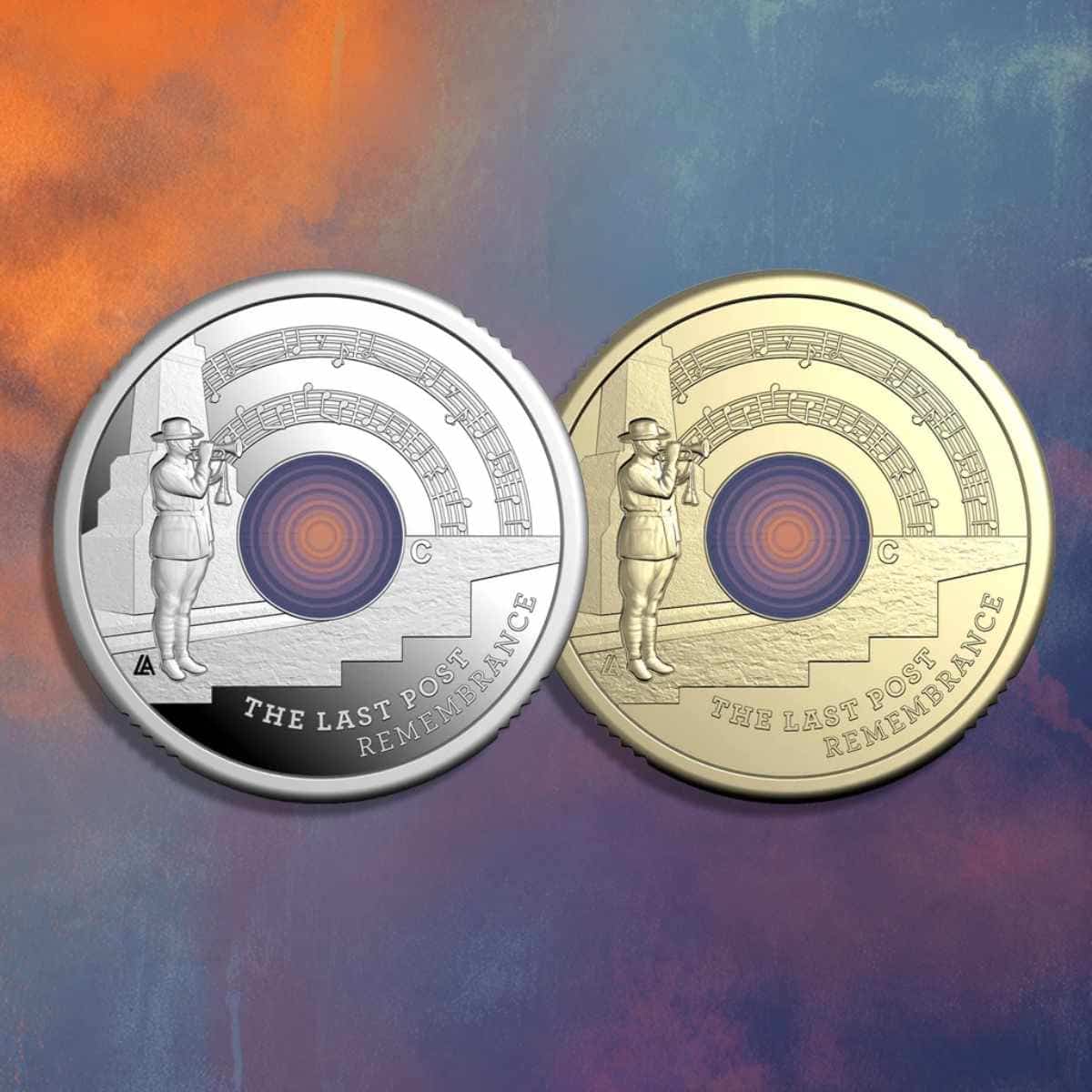
In 2026 the Royal Australian Mint is honouring the Last Post with a new coloured $2 coin. Designed by Lydia Ashe, it shows a bugler before a war memorial at sundown, with bars of music radiating out like the setting sun and musical rests marking the silence that follows. It follows the Mint's Dawn Service coin of April 2026.
Military Shop has the 2026 $2 'C' Mintmark Coloured Uncirculated and Silver Proof Coins, The Last Post, in five limited packs, each pairing the coin in its official Royal Australian Mint packaging with collectables from our remembrance range. Only 390 packs are available, on sale from 8:30am AEDT on Tuesday 10 November 2026.
See the 2026 $2 Last Post coin packs
Sources
- Australian War Memorial: The Last Post
- Australian War Memorial: Last Post Ceremony
- Australian War Memorial: 10th anniversary of the Last Post Ceremony (2023)
- AAP FactCheck: Did the Last Post originate on an American Civil War battlefield? (30 April 2020)
- DVA Anzac Portal: Order of service and flag protocols for a commemorative event
- Royal Australian Mint: We Will Remember Them, Last Post Coins (22 October 2026)
FAQs
How long is the Last Post?
At a commemorative service it runs for about one minute and 22 seconds.
What is played after the Last Post?
A period of silence, then the Rouse. At an Anzac Day dawn service, Reveille is played instead of the Rouse.
Is the Last Post the same as Taps?
No. Taps is the American bugle call used at funerals and at day's end. The Last Post comes from the British Army tradition.
Why is the Last Post played?
It tells us the day is done and that those we remember have gone to their final rest. At commemorative services it follows the Ode of Remembrance and comes before a minute's silence.
Lest we forget.