


A Maritime Nation Without Looking at a Map: Trade, Information and Australia's Exclusive Economic Zone
Table of Contents
- Maritime trade: almost all exports travel by ship
- Fuel, freight and the ships that carry them
- Information under the sea: submarine cables
- What Australia's exclusive economic zone covers
- Resources and the blue economy
- Why the sea matters to defence
- Seeing a maritime nation and its exclusive economic zone without a map
- Marking Australia's connection to the sea
- Sources
- FAQs
You do not need a map to see that Australia is a maritime nation. Almost all of our exports leave by ship, most international data crosses the seabed in cables, and Australia's exclusive economic zone gives the nation rights over the natural resources of more than 10 million square kilometres of ocean. [1] [2] [3] Trade, information and resources all depend on the sea.
This article looks at each of those three links, from maritime trade and subsea cables to the exclusive economic zone, using Australian Government, Navy and research agency sources. It describes what those sources state, flags where an analysis is older or undated, and keeps published strategy separate from current capability.
Maritime trade: almost all exports travel by ship
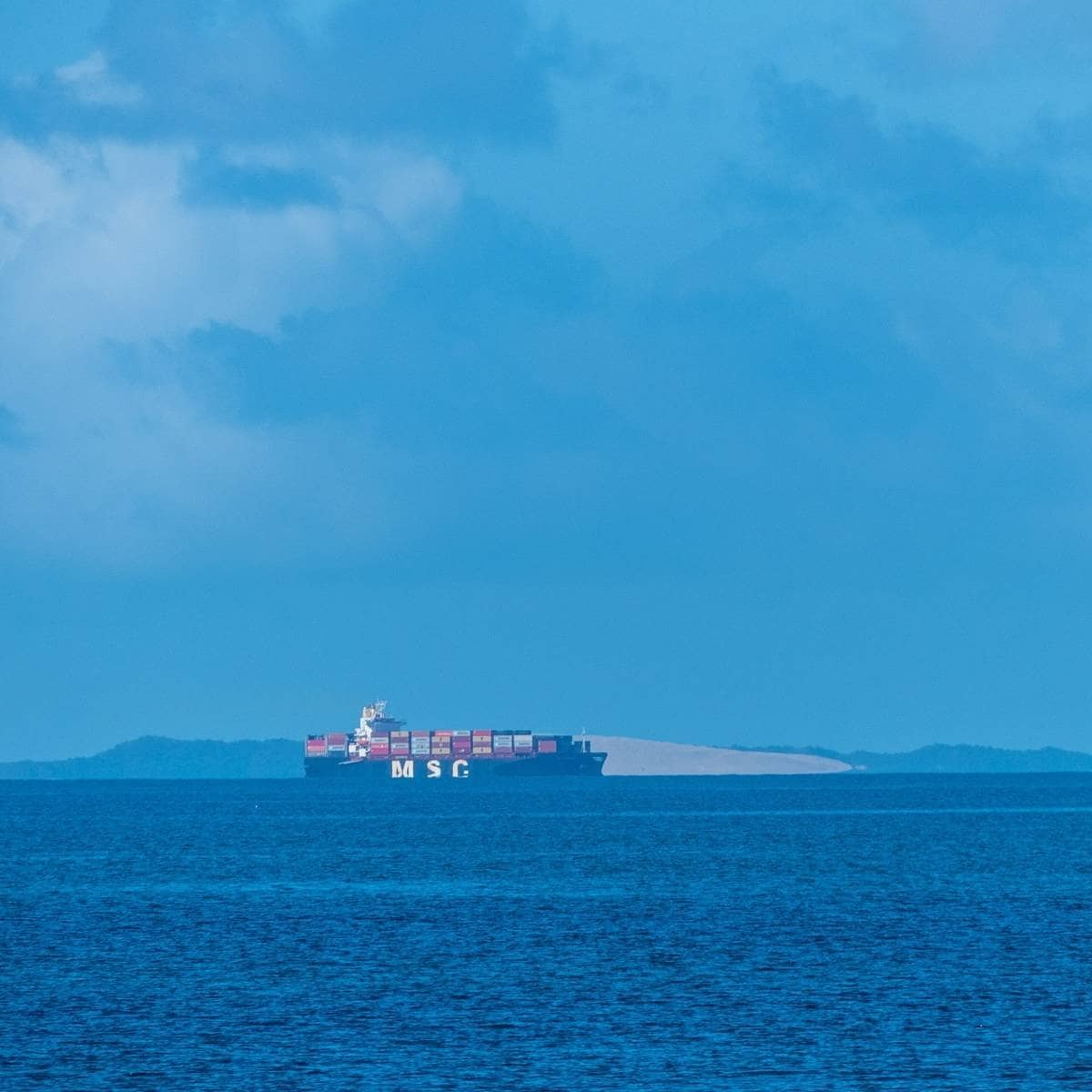
The Department of Infrastructure puts it plainly: "Australia relies on sea transport for 99 per cent of our exports." [1] That single figure explains why ports, shipping lanes and the ships that use them matter so much to the national economy.
The Bureau of Infrastructure and Transport Research Economics (BITRE) shows the scale. In 2023-24, the volume of goods exported by sea rose to 1,558.2 million tonnes, and the value of Australia's maritime exports was $467.01 billion. [4] In the same year, Australia "imported 111.6 million tonnes of goods worth $336.9 billion by sea". [4]
Those numbers are easy to read past. In practice, they mean that most of what Australia sells overseas, and a large share of what it buys, spends part of its journey on the water.
Fuel, freight and the ships that carry them
Fuel is a clear example. A Navy Sea Power Centre article by Captain Michael Beard states that "Some 90 percent of total transport fuels are imported by sea" and that "approximately 15 percent of this tanker trade transits the Strait of Hormuz." [5] The same article says more than 99 per cent of Australia's imports and exports by volume rely on international shipping, and nearly 80 per cent by value. [5]
The article is undated and cites sources up to March 2020, so treat its percentages as a snapshot rather than the latest count. The broader point still matches the current BITRE and Infrastructure figures above: Australia's trade is overwhelmingly maritime trade.
Commercial ships and their crews carry that trade, not warships. Our article on the Merchant Navy and Australian defence looks at how merchant shipping and national defence have been linked.
Information under the sea: submarine cables
The second link is less visible. The Cable Connectivity and Resilience Centre, an Australian Government initiative within the Department of Foreign Affairs and Trade, states: "Subsea cables are the backbone of global internet connectivity, carrying almost all international data traffic." [2] It describes them as "fibre optic cables laid on the ocean floor". [2]
For Australia specifically, the Sea Power Centre article says submarine cables "account for more than 95 percent of Australia's telecommunications traffic." [5] When you make an overseas video call or open a website hosted offshore, the data very likely travels along the seabed for part of the way.
Cables can be damaged. The Centre notes that "Most damage occurs in shallow waters from fishing gear and ship anchors". [2] The Australian Communications and Media Authority (ACMA) warns that "Any damage can stop the flow of voice and data information to and from Australia", and it has set protection zones for some cables. In those zones, ACMA says: "We ban or restrict certain activities". [6]
What Australia's exclusive economic zone covers
The third link is resources. Geoscience Australia states that "Australia's maritime jurisdiction covers more than 13.86 million square kilometres of ocean and seabed", which is around 1.5 times the landmass (excluding the Australian Antarctic Territory and its adjacent maritime jurisdiction). [3]
Within that area, the Australian exclusive economic zone "covers more than 10 million square kilometres of ocean". The exclusive economic zone extends up to 200 nautical miles from the territorial sea baseline in most areas. [3] In the exclusive economic zone, "Australia has sovereign rights to explore, exploit, conserve and manage living and non-living natural resources" in the water column, seabed and subsoil. [3]
The coastline itself is harder to measure than it looks. Geoscience Australia's latest estimate is that the coastline is "in the vicinity of 200,000 kilometres in length", while at a scale of 1:100,000 it is approximately 34,000 kilometres (excluding small offshore islands). [3] The answer depends on how closely you look, which is a good reminder that maps simplify the sea.
Resources and the blue economy
The Australian Institute of Marine Science (AIMS) measures what Australia's marine industries are worth to the economy. Its 2025 Index of Marine Industry reports that "Australia's growing marine industry economic output was $229 billion in 2023", supporting 712,000 full-time equivalent jobs. [7]
Natural gas and offshore oil exploration and extraction reached "$122 billion in output", more than half of the total. Marine tourism and recreation was the second largest sector by output and grew 65 per cent over the period measured. [7] AIMS says the edition also explores the blue economy, "highlighting opportunities to align economic goals with sustainability." [7]
Why the sea matters to defence
Defence links these interests directly to national security. Reporting on the 2026 National Defence Strategy, announced on 16 April 2026, Defence records the Defence Minister saying that "as an island trading nation, Australia's sea lines of communication defined its national security." [8] The same report quotes him: "The geography of our national security lies well beyond our coastline or even our immediate waters". [8]
That is a statement of strategy and direction, not a description of every current capability. The Navy's part in it covers more than combat. Our guide to Navy roles: military, diplomatic and constabulary explains how those roles fit together.
Seeing a maritime nation and its exclusive economic zone without a map
Our suggestion is to look for the sea in ordinary things rather than on a chart. A few everyday prompts:
- The fuel in the car: most transport fuel arrives by tanker. [5]
- The overseas call or stream: international data travels mostly by subsea cable. [2] [5]
- The export economy: almost all exports leave by ship. [1]
- The resources offshore: the exclusive economic zone gives Australia sovereign rights over natural resources across a vast area of ocean. [3]
Seen this way, the ocean, from the shipping lanes to the exclusive economic zone, is less a border at the edge of the map and more the system that connects Australia to everyone else.
Marking Australia's connection to the sea
If someone in your life has served at sea, or simply loves Australia's naval story, our Royal Australian Navy gear shop gathers Navy gifts and collectables in one place. You can also read about the 125th anniversary of the Royal Australian Navy on our blog.
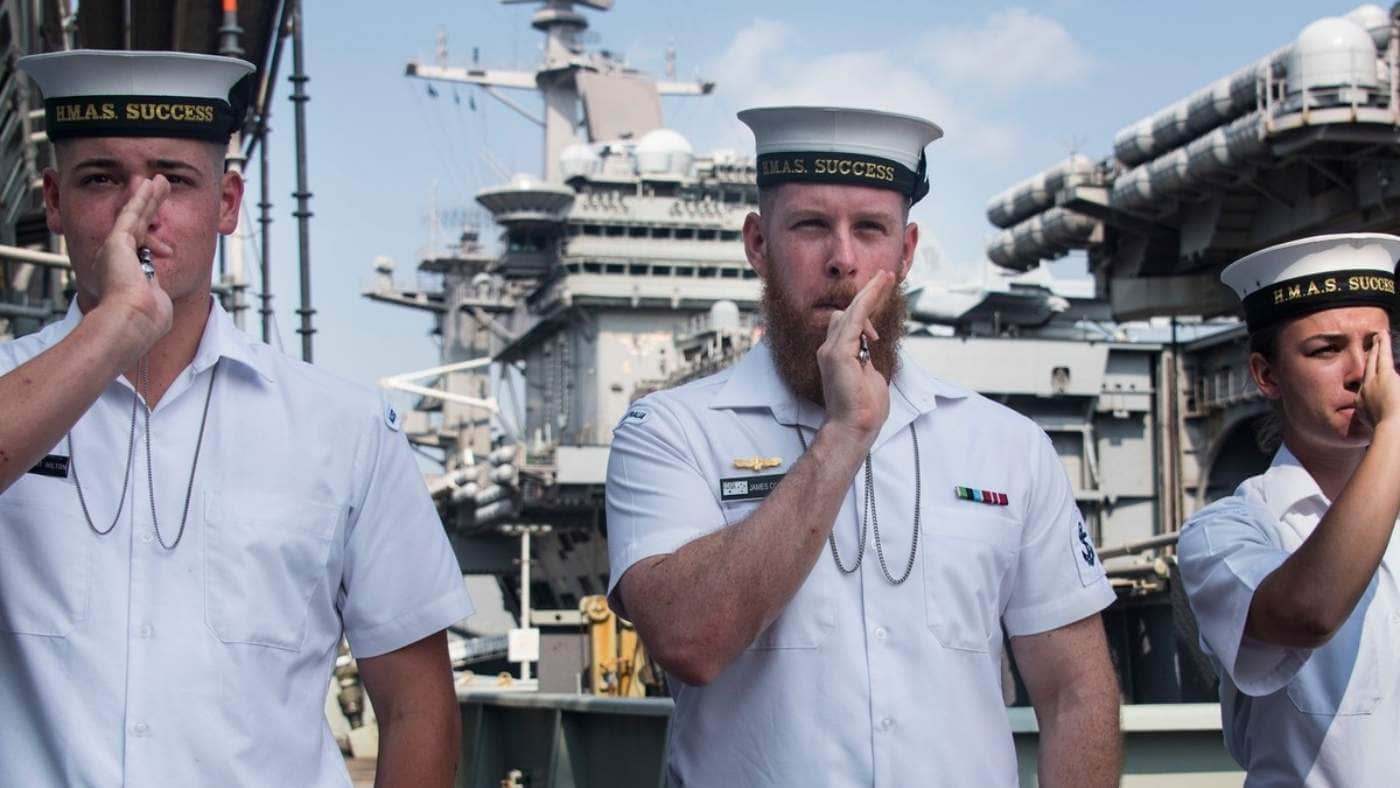
The Lazy Anchor Button Challenge Coin and Boatswain's Call Collection honours 125 Years of the Royal Australian Navy. The listing describes the boatswain's call as historically used aboard ships to pass orders when a voice could not be heard clearly (Limited Edition: 1125). [9] The Anchored in History button collection pairs a numbered Navy medallion with eight lapel pins, each representing a distinct era of naval button design, according to the listing (Limited Edition: 1250). [10] For something small, the Ensign lapel pin is an everyday way to show your connection to the sea.
Sources
1 Department of Infrastructure (infrastructure.gov.au) | Maritime | date not shown | https://www.infrastructure.gov.au/infrastructure-transport-vehicles/maritime
2 Cable Connectivity and Resilience Centre (Department of Foreign Affairs and Trade) | Frequently asked questions | date not shown | https://www.ccrc.gov.au/frequently-asked-questions
3 Geoscience Australia | How long is Australia's coastline, and other FAQs | last updated 27 August 2026 | https://www.ga.gov.au/scientific-topics/marine-and-coastal/maritime-jurisdiction/knowledge/faqs
4 Bureau of Infrastructure and Transport Research Economics | Australian Sea Freight 2023-24 (statistical report) | August 2025 | https://www.bitre.gov.au/sites/default/files/documents/asf-2023-24.pdf
5 Royal Australian Navy Sea Power Centre | CAPT Michael Beard, article on protecting Australia's maritime trade | date not shown (cites sources to March 2020) | https://seapower.navy.gov.au/analysis/protecting-australias-maritime-trade-need-plan-now-bring-future-present
6 Australian Communications and Media Authority | Explore or extract resources around submarine cables | date not shown | https://www.acma.gov.au/explore-or-extract-resources-around-submarine-cables
7 Australian Institute of Marine Science | $229 billion for Australia's national economy from marine industry | 3 September 2025 | https://www.aims.gov.au/information-centre/news-and-stories/229-billion-australias-national-economy-marine-industry
8 Department of Defence | Preparing Australia for future strategic challenges (news) | 17 April 2026 | https://defence.gov.au/news-events/news/2026-04-17/preparing-australia-future-strategic-challenges
9 Military Shop | Limited Edition Lazy Anchor Button Challenge Coin and Boatswain's Call Collection | SKU BN34573 | https://militaryshop.com.au/products/limited-edition-lazy-anchor-button-challenge-coin-and-boatswain-s-call-collection.html
10 Military Shop | Anchored in History: 125 Years of the Royal Australian Navy Button Collection | SKU BN34570 | https://militaryshop.com.au/products/anchored-in-history-125-years-of-the-royal-australian-navy-button-collection.html