


Littoral Operations in Plain English: Why the Land-Sea Connection Matters
Table of Contents
- The littoral includes coastal waters and the land connected to them
- Amphibious operations are part of the picture, not another name for everything
- Army and Navy bring different roles to the same coastal environment
- Landing craft and helicopters link a ship with the shore
- Water levels and coastal conditions still affect access
- Cowley Beach training shows why shore teams matter
- The Mallacoota evacuation shows how the connection can work in reverse
- Three questions help you understand a report about coastal operations
- Understanding the land-sea connection helps you recognise the service behind it
- Sources and publishing details
- FAQs
How coastal operations connect land forces, ships and support teams, and why that connection matters to Australia.
You may have seen the word “littoral” in a Defence headline and wondered what it means. In military use, it concerns the coastal environment where activity on land and at sea can affect each other. Littoral operations take place across that connected space, rather than treating the coast as a dividing line. [2]
For the Australian Defence Force, or ADF, the subject is not simply how to put soldiers on a beach. It includes how forces move, work together and remain supported around coastlines and islands. That is why littoral operations are broader than amphibious landings alone. [2]
Here is a practical guide to the terms, the tasks and two documented examples that make the land-sea connection easier to understand.
The littoral includes coastal waters and the land connected to them
Think of the littoral as a connected coastal area, not just the strip of sand at the water’s edge. A ship can support people ashore, while activity on land can affect what happens at sea. The relevant military area is therefore not defined by one universal distance from the shoreline. [4]
In a May 2024 speech, the Chief of Army described a broad environment that includes coastal waters, rivers, land, towns, people, cultures and the airspace above. This helps explain why a coastal mission cannot be understood by looking at the sea alone. [3]
The people and places along a coast matter too. For a general reader, the useful starting point is the connection: what is happening on land, what is happening on the water, and how does one affect the other?
Amphibious operations are part of the picture, not another name for everything
Amphibious operations use a sea-based force to carry out tasks involving the shore. They can include landing personnel and equipment, but they are not limited to an attack on a beach. An Australian Army Research Centre paper also discusses withdrawal, demonstrations and support to other operations, including disaster relief. [4]
The same paper explains that littoral operations are broader. A land force can influence events at sea without first arriving in a landing craft. The paper offers a conceptual discussion, rather than a new set of binding instructions. [4]
A helpful reading shortcut is this: “littoral” draws your attention to the connected operating environment; “amphibious” describes a particular way forces operate between sea and shore. The terms overlap, but they are not interchangeable. [2][4]
Army and Navy bring different roles to the same coastal environment
Army describes its role as the integrated force’s experts in land combat. Its published tasks include being ready to fight wars in the littoral, building regional partnerships and supporting states and territories during crises and disasters. [1]
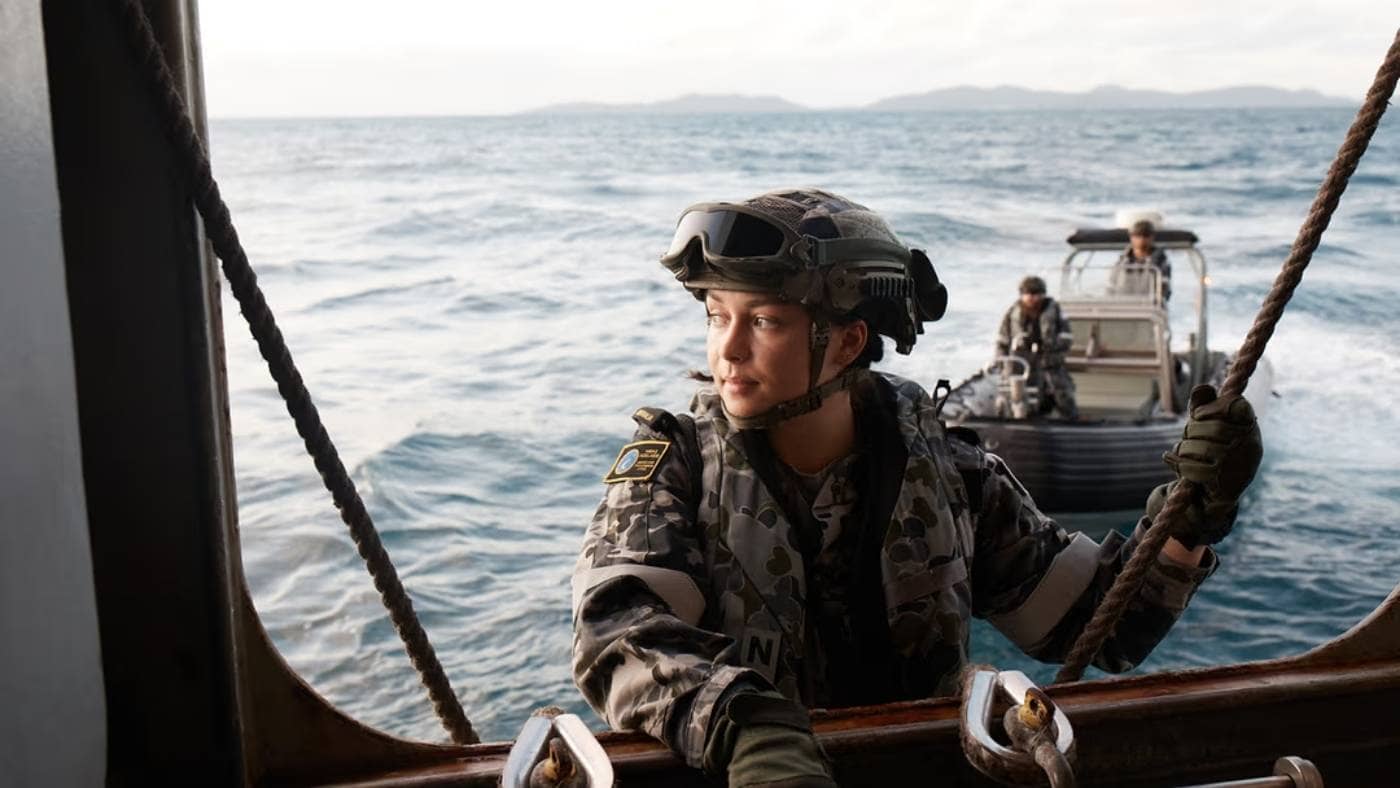
Navy’s mission is to prepare naval power to enable the integrated force in competition and conflict. Its contribution includes ships, submarines, aircraft and specialist teams. Navy also explains the importance of the sea to Australia’s trade, prosperity and security. [5]
These roles are connected, not identical. A coastal setting does not make Army a second Navy, or turn every naval task into a landing operation. Read the stated purpose of the mission, rather than assuming the location tells you everything. [1][5]
Landing craft and helicopters link a ship with the shore
A large ship can transport an embarked force, meaning personnel carried aboard for a mission. Getting those personnel and their equipment ashore is another part of the task. Navy describes HMAS Canberra’s ability to deploy a force using landing craft, helicopters or a combination of both. [6]
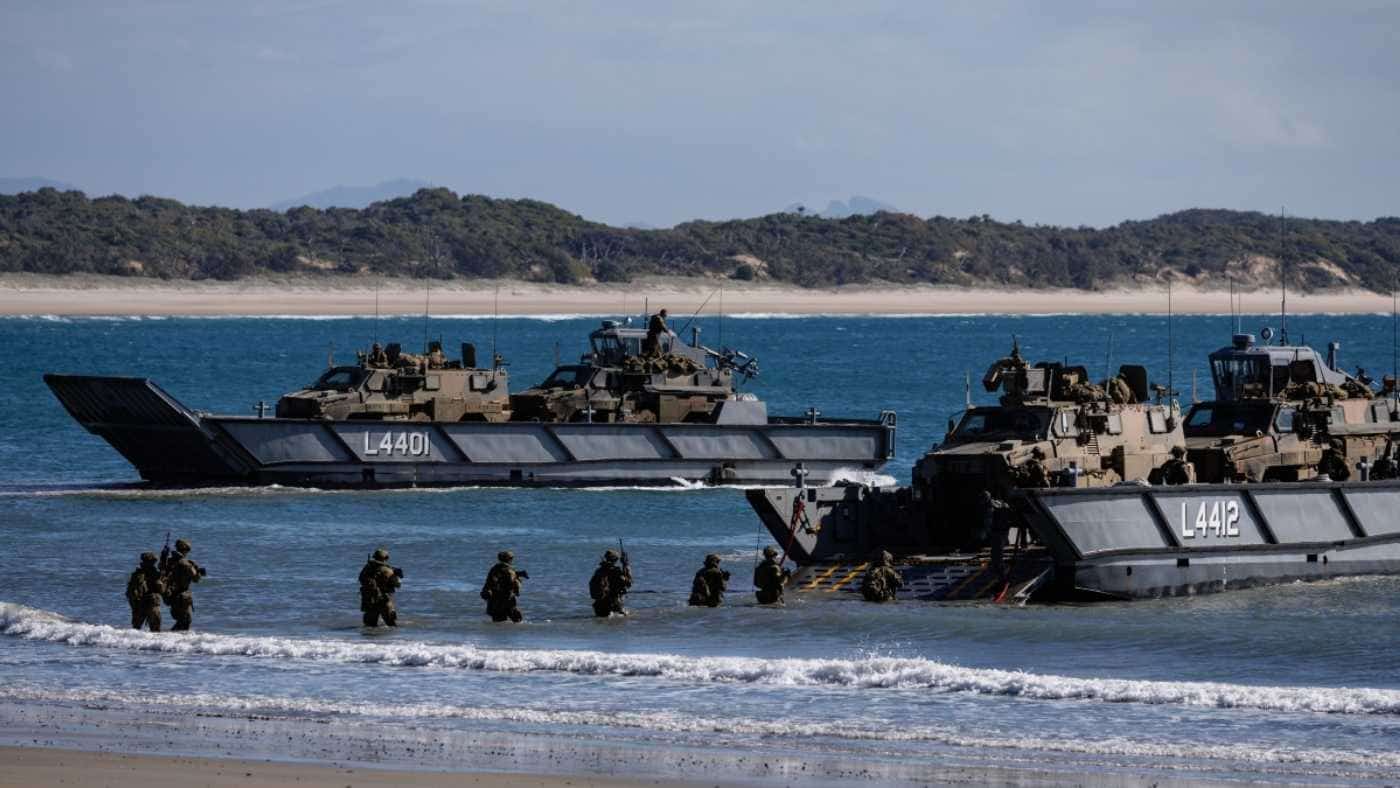
Landing craft provide a particularly useful connection where conventional port facilities are not available. Navy’s LHD Landing Craft page explains that these vessels are designed to deliver troops and equipment onshore without fixed port facilities. LHD stands for landing helicopter dock, the type of amphibious ship they support. [7]
This does not mean every ship can unload on every coast. It means the connection between the transport vessel and the shore is a capability in its own right. The smaller craft should not disappear from the story simply because the larger ship attracts attention. [7][8]
Moving people ashore is only one step. Forces also need continuing transport and supplies. The Army Research Centre paper identifies resupply and distance as ongoing challenges, reminding us that an operation must be supported after the initial arrival. [4]
Water levels and coastal conditions still affect access
The shoreline is not a loading bay with unchanging conditions. The Bureau of Meteorology explains that sea-level information helps navigators assess whether water is deep enough for a vessel’s keel. Tides also involve moving water, known as tidal streams. [8]
That makes environmental information part of the practical picture, not background detail. When reading about a coastal operation, do not interpret a vessel’s advertised capability as a promise that it can use any landing point at any time. Conditions and the task still need to be considered. [7][8]
Cowley Beach training shows why shore teams matter
Defence’s report of 18 July 2025 provides a clear example. During Talisman Sabre training at Cowley Beach in Queensland, vehicles and personnel disembarked from HMAS Canberra and HMAS Choules. Australian personnel worked alongside New Zealand and Japanese forces. [9]
The activity included loading and unloading vehicles, guiding their movement and rehearsing vehicle recovery along the shore. The Amphibious Beach Team prepared access lanes and practised keeping movement through the beach area possible. Environmental teams also observed the activity to help minimise its impact on the site. [9]
This was a training exercise, not a report of combat. Its value as an example is the work beyond the arrival of the ships: people on the shore helped the movement continue. The lesson for readers is to look for the support teams as well as the troops and vessels. [9]
The Mallacoota evacuation shows how the connection can work in reverse
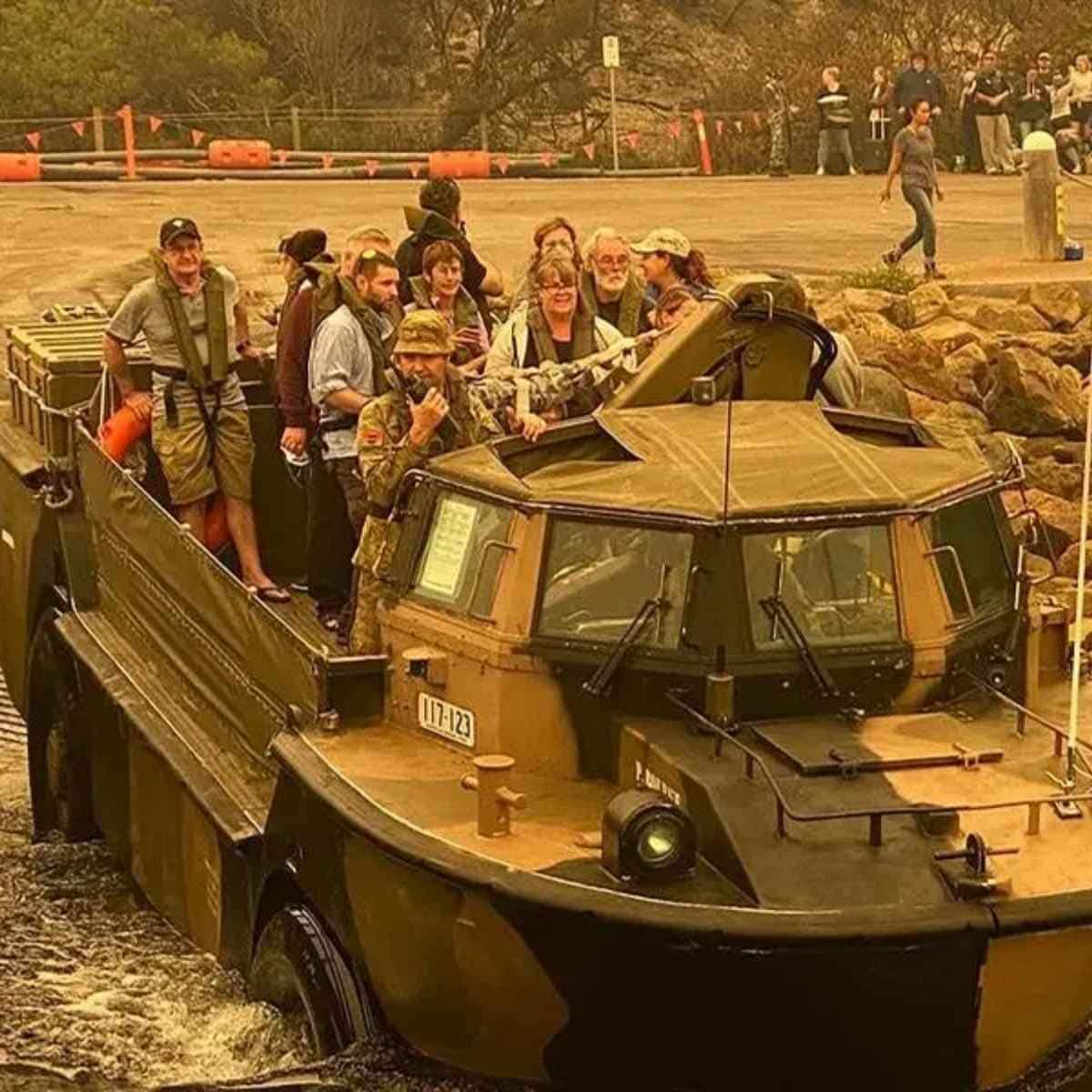
In January 2020, HMAS Choules used landing craft during the evacuation of residents, tourists and pets from Mallacoota in Victoria. The activity formed part of Operation Bushfire Assist 2019–2020. [11]
Navy’s historical account describes landing craft ferrying evacuees to the ship, personnel reassuring civilians, and others helping with relief ashore. Local emergency services had protected people who gathered near the beachfront as the fire threatened the town. [10]
The movement here was from shore to ship, with civilian safety at its centre. It was disaster assistance, not a combat landing. The example shows the practical value of connecting land and sea, without suggesting that humanitarian assistance and warfighting are the same mission. [10][11]
It also keeps the people in view. Understanding the operation means recognising the community and emergency services, alongside the naval crews and their vessels. [10]
Three questions help you understand a report about coastal operations
Start with the purpose. Is the report describing training, combat or assistance to a community? Cowley Beach and Mallacoota both involved movements between ships and the coast, but their purposes were different. [9][10]
Then look at what is moving. Are people or supplies going ashore, coming aboard, or moving between coastal locations? Do not assume that every photograph of a landing craft shows the same kind of activity.
Finally, look for what makes the movement possible. Who is operating the craft, preparing the shore, caring for passengers or providing support? These questions are a reading guide, not operational instructions. They help you understand the whole activity without needing to learn military planning procedures.
Understanding the land-sea connection helps you recognise the service behind it
The central idea is straightforward: coastal operations depend on connections between people and places, not only on individual ships or vehicles. Keeping the environment, the task and the supporting work separate makes the terminology much easier to follow.
For further reading, explore Army’s official mission page and Navy’s published ship and landing-craft information. They provide the public context behind the terms used here. [1][6][7]
At Military Shop, we encourage you to learn about the service behind the symbols. Explore our military collectables and gifts for pieces connected with the service history and people that matter to you. [12]
Sources and publishing details
Sources checked on 1 October 2026. Numbered citations and source titles are clickable.
[1] Australian Army: Our Mission
Public Army role and tasks; no force-size or readiness claims.
[2] The Cove: The Cove Theme 2026: Littoral Operations
3 March 2026. Professional education; broader scope than amphibious operations.
[3] Australian Army: LANPAC 2024 Speech from Chief of Army
15 May 2024. Broad description of the coastal operating environment.
[4] Australian Army Research Centre: Littoral Operations for the Australian Army
John Nash. Conceptual paper; definitions and amphibious/littoral distinction, not binding doctrine.
[5] Royal Australian Navy: Mission and values
Naval role within the integrated force and Australia’s maritime interests.
[6] Royal Australian Navy: HMAS Canberra (III)
Embarked forces, landing craft and helicopter deployment; no capacity figures used.
[7] Royal Australian Navy: LHD Landing Craft (LLC)
Ship-to-shore transport where fixed port facilities are unavailable.
[8] Bureau of Meteorology: Tides and sea level
Sea level, water depth and tidal streams; no navigation advice provided.
[9] Defence: Partners hit the beach for littoral operations
18 July 2025. Cowley Beach training, shore teams and environmental observation.
[10] Royal Australian Navy: Operation Bushfire Assist
Historical account of community support and the Mallacoota evacuation.
[11] Royal Australian Navy: Landing craft, vehicle and personnel
Confirms use of Choules’ landing craft at Mallacoota in January 2020.
[12] Military Shop: Military collectables and gifts
First-party browsing destination, not an authority for Defence information.
FAQs
What are littoral operations?
Littoral operations are military activities that take place across the connected coastal environment where activity on land and at sea can affect each other, encompassing not just putting soldiers on a beach but how forces move, work together, and remain supported around coastlines and islands.
How do littoral operations differ from amphibious operations?
Littoral operations describe the broader, connected operating environment encompassing coastal waters, land, and air, whereas amphibious operations describe a particular sea-based way forces operate between the sea and shore.
What roles do the Australian Army and Royal Australian Navy play in the littoral environment?
The Australian Army serves as the integrated force's experts in land combat with tasks including fighting wars in the littoral, while the Royal Australian Navy prepares naval power using ships, submarines, aircraft, and specialist teams to enable the integrated force.
How do landing craft and helicopters assist in coastal operations?
Landing craft and helicopters link transport ships with the shore, allowing troops, equipment, and evacuees to be delivered or retrieved where conventional port facilities are not available.
What factors can affect access to a shoreline during a mission?
Environmental conditions such as water levels, sea-level information, tides, and moving water known as tidal streams directly affect whether a vessel's keel can access a landing point.