


Gaiters for Australian Bush Conditions: When They Help
Table of Contents
- Gaiters Cover the Gap Between Your Boots and Trousers
- Gaiters Help Most When the Track Is Muddy, Loose or Overgrown
- Low Gaiters and High Gaiters Solve Different Problems
- Fit Matters Because a Gaiter Only Works When It Stays in Place
- Ordinary Hiking Gaiters Should Not Be Treated as Snake-Proof
- Gaiters Do Not Replace Proper Bushwalking Clothing and Planning
- Use This Quick Checklist Before Choosing Gaiters
- For Many Australian Walks, Gaiters Are Useful When the Terrain Justifies Them
- Sources
- FAQs
| In plain English: hiking gaiters cover the gap between your footwear and lower legs. They can help keep out dirt and loose debris, shield your ankles and shins from scrub, and add some protection from moisture, depending on the model. |
Gaiters are not essential on every Australian walk, but they can be extremely useful when the track is muddy, rocky, overgrown or wet. They are also common equipment in more demanding bushwalking environments. Parks & Wildlife Service Tasmania, for example, includes gaiters on its minimum recommended pack list for day walks. [1]
The key is choosing gaiters for the conditions you actually expect. A lightweight trail gaiter designed to block grit from a running shoe is very different from a tall, abrasion-resistant gaiter intended for scrub and mud. Neither should automatically be assumed to provide snake-bite protection.
Gaiters Cover the Gap Between Your Boots and Trousers
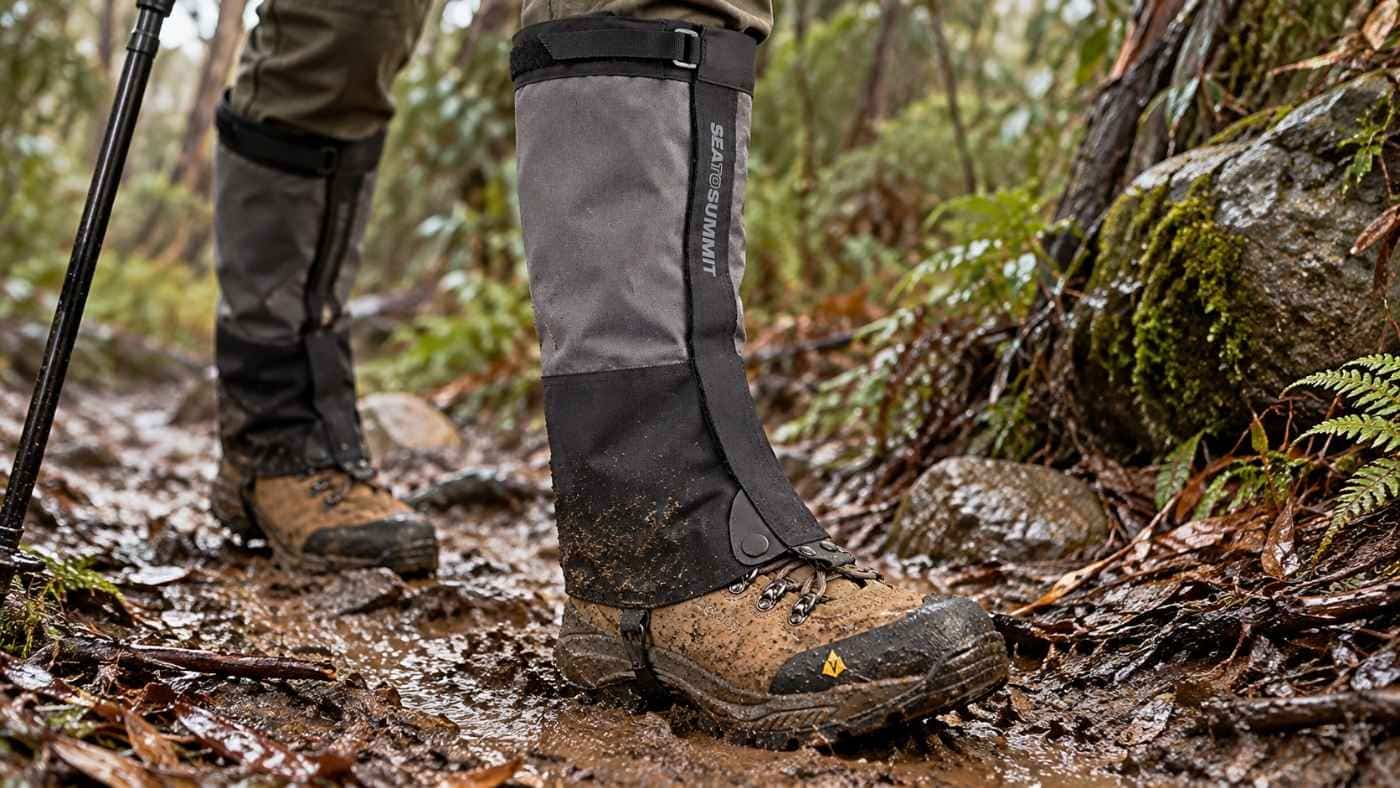
A gaiter wraps around the ankle or lower leg and sits over the top of your footwear. Most designs use some combination of a lace hook, elastic edge, hook-and-loop closure, buckle and an instep strap that passes under the boot or shoe.
That simple barrier can solve several common trail problems. It can reduce the amount of gravel, sticks, grass seeds and dirt entering your footwear, protect the lower leg from light brush and help keep mud and splashes away from socks and trouser cuffs. Manufacturers such as Salomon and Outdoor Research describe these functions directly in their trail-gaiter ranges. [3] [4] 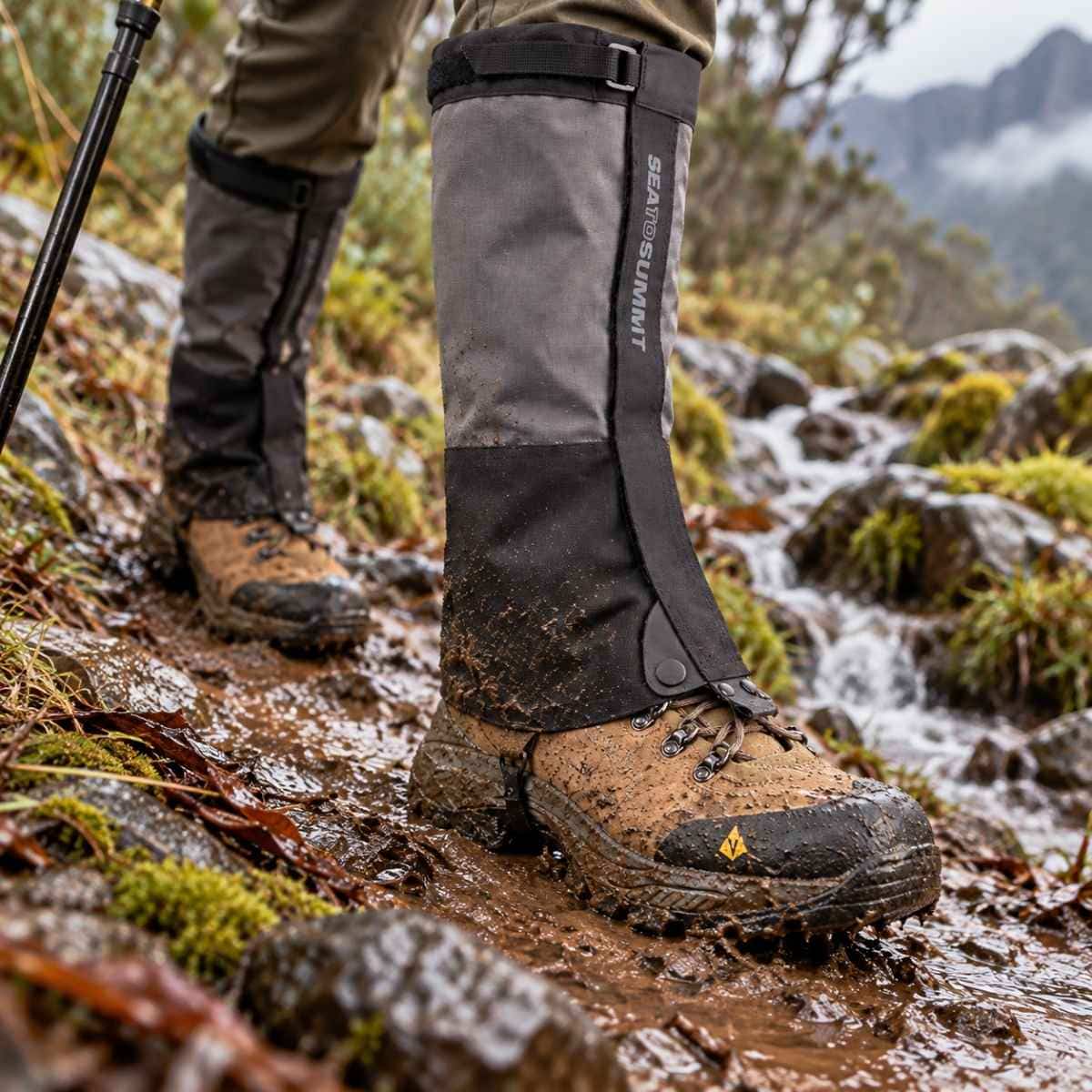
Gaiters Help Most When the Track Is Muddy, Loose or Overgrown
You are most likely to notice the benefit of gaiters when the ground or vegetation is constantly reaching the top of your footwear. On a dry, formed walking track, they may add little. On rougher terrain, they can save repeated stops to empty debris from your shoes and can reduce direct contact between scrub and your lower legs.
| Condition | How gaiters can help | Important limitation |
| Loose gravel, sand and leaf litter | Helps block debris from entering footwear. | A loose fit can still let fine material in. |
| Mud and wet vegetation | Keeps mud and splashes off the lower leg and top of footwear. | Water resistance varies by fabric; gaiters are not waders. |
| Scrub and rough vegetation | Adds a sacrificial layer over socks, trouser cuffs and lower legs. | Thin trail gaiters offer less abrasion protection than heavier bushwalking models. |
| Long grass and insects | Reduces exposed skin around the ankle when combined with long clothing. | Still use appropriate insect repellent and normal bite-prevention measures. |
| Easy, dry formed tracks | May offer little practical benefit. | Extra fabric can feel warmer and add another item to manage. |
NSW National Parks recommends comfortable protective shoes, long loose clothing and insect repellent for bushwalking. Gaiters can complement that clothing system, but they do not replace the broader preparation needed for a safe walk. [2]
Low Gaiters and High Gaiters Solve Different Problems
Low gaiters usually sit around the ankle and are designed mainly to stop grit, stones, sticks and other loose material from entering trail shoes. Salomon describes its trail gaiters as a barrier that stops debris reaching your feet. [3]
Higher gaiters cover more of the lower leg. They are generally more useful for wet grass, mud, scrub and rough off-track travel because they provide more coverage. Outdoor Research describes its Rocky Mountain Low gaiters as protection against brush, rocks and moisture. [4]
More coverage is not automatically better. A taller, heavier gaiter can feel warmer and bulkier in hot conditions. Choose the height and fabric around the track rather than simply buying the most substantial model available.
Fit Matters Because a Gaiter Only Works When It Stays in Place
Before a long walk, put your gaiters on with the exact footwear and trousers you plan to use. The lower edge should sit neatly over the footwear, the upper closure should be secure without restricting circulation, and any underfoot strap should be adjusted so it does not drag excessively against the ground.
Check that the gaiter does not interfere with the boot laces, ankle movement or trouser fit. Walk around, climb a few steps and flex your ankles. If the gaiter rotates, rides up, rubs or repeatedly catches, adjust it before heading into the bush.
After muddy or wet use, follow the care instructions for the actual gaiter. Salomon, for example, specifies cold hand washing for its Trail Gaiters High. Other materials may require different care, so avoid assuming one cleaning method suits every product. [3]
Ordinary Hiking Gaiters Should Not Be Treated as Snake-Proof
This is an important Australian safety distinction. Standard hiking gaiters can add another layer over the lower leg, but that does not prove they are resistant to a snake bite. Snake-protective gaiters are a separate product category and need specific evidence for that claim.
Healthdirect recommends avoiding snake bites by watching where you walk, sit and place your hands, using a torch at night, and wearing thick clothing such as jeans and boots for extra protection. If a snake bite is suspected, treat it as a medical emergency and call Triple Zero (000). [5]
Unless a gaiter has been specifically designed and tested for snake protection, buy it for the functions the manufacturer actually states, such as debris, scrub or weather protection.
Gaiters Do Not Replace Proper Bushwalking Clothing and Planning
A useful gaiter is still only one part of your clothing system. NSW National Parks advises bushwalkers to wear comfortable protective shoes, waterproof and windproof clothing when conditions require it, lightweight layers, and long loose clothing for protection from sun, insects and scratches. It also recommends checking the weather and park alerts before setting out. [2]
Tasmania Parks and Wildlife goes further for its conditions and includes gaiters in its minimum day-walk recommendations, together with hiking boots, weatherproof clothing, water, food and first aid equipment. [1]
That difference is a useful reminder: the right gear depends on the route. A coastal track, alpine walk, muddy rainforest trail and dry fire trail can all create very different clothing needs.
Use This Quick Checklist Before Choosing Gaiters
- Is the route likely to be muddy, wet, rocky, sandy or overgrown?
- Do I mainly need to block debris, or do I need more lower-leg coverage from scrub and moisture?
- Will a low gaiter be enough, or is a taller gaiter more suitable?
- Does the gaiter fit my exact boots or trail shoes securely?
- Is the fabric breathable enough for the expected temperature?
- Does the product actually claim water resistance, waterproofing or another protective feature?
- Am I relying on a normal hiking gaiter for snake protection without specific test evidence? If so, choose a product designed for that purpose instead.
For Many Australian Walks, Gaiters Are Useful When the Terrain Justifies Them
Gaiters are simple equipment, but their value changes dramatically with the terrain. If you are walking through mud, loose gravel, wet grass or dense scrub, they can keep debris out of your footwear and give your lower legs another layer of protection. If you are staying on a short, dry and well-formed track, you may decide they are unnecessary.
The best choice is the one that matches the conditions, your footwear and the level of protection you actually need. Check the route, weather and product specifications before you leave, then make sure the gaiters fit comfortably before relying on them for a long day outside.
Looking for lower-leg protection for outdoor and field use? Explore Military Shop's current gaiters and protective gear.
Sources
1. Parks & Wildlife Service Tasmania, Safety in parks
2. NSW National Parks and Wildlife Service, Bushwalking safety
3. Salomon, Trail Gaiters High
4. Outdoor Research, Rocky Mountain Low Gaiters
5. Healthdirect Australia, Snake bites
6. Military Shop, Tactical Guards and Gaiters
FAQs
What is the primary function of hiking gaiters?
- Hiking gaiters wrap around the ankle or lower leg, sitting over the top of footwear to help close the gap between your boots and trousers.
- They help keep out dirt, stones, sticks, and loose debris.
- They can shield your ankles and shins from scrub and offer added protection against moisture depending on the specific model.
Are hiking gaiters necessary for every Australian bushwalk?
No, gaiters are not essential on every walk. They are most useful when tracks are muddy, rocky, overgrown, or wet, or in more demanding bushwalking environments.
How do low gaiters and high gaiters differ in their usage?
Low gaiters usually sit around the ankle and are designed mainly to block grit, stones, and loose material from entering trail shoes. Higher gaiters cover more of the lower leg, making them more useful for wet grass, mud, scrub, and rough off-track travel due to their increased coverage.
Should ordinary hiking gaiters be relied upon for snake-bite protection?
No, standard hiking gaiters should not be treated as snake-proof unless they are specifically designed, tested, and marketed for that purpose with dedicated evidence.
What does Tasmania Parks and Wildlife recommend regarding gaiters?
Tasmania Parks & Wildlife Service includes gaiters on its minimum recommended pack list for day walks.