


Malaya and Borneo Veterans Day: Honouring History, Service, and Sacrifice
Table of Contents
Observed annually on 31 August, Malaya and Borneo Veterans Day provides an important opportunity to honour the thousands of Australian service personnel who deployed to Southeast Asia during the mid-twentieth century. Serving across the dense jungles of the Malay Peninsula and the rugged terrain of Borneo, Australian soldiers, sailors, and aviators displayed remarkable endurance, professionalism, and courage.
Despite the long duration and intense nature of these operations, the campaigns in Malaya and Borneo are sometimes described as Australia’s "forgotten conflicts." Preserving this history ensures that the sacrifice and dedication of these servicemen and women receive the enduring recognition they deserve.
Australia’s Commitment to Southeast Asian Security
In the aftermath of the Second World War, Australia’s strategic defence focus shifted heavily toward securing its northern approaches and supporting Commonwealth partners in Southeast Asia. Between 1948 and 1966, thousands of Australian Defence Force (ADF) personnel were deployed to the region during a volatile period defined by anti-colonial movements and cold war expansion.
Australia’s military presence encompassed three major branches of service operating under demanding joint conditions:
Ground Forces: Infantry units from the Royal Australian Regiment (RAR), Special Air Service (SAS) squadrons, field artillery, and supporting combat engineers engaged in long-range jungle patrols and border protection.
Naval Support: Royal Australian Navy (RAN) destroyers and frigates conducted anti-smuggling patrols, coastal bombardments, and maritime interdiction.
Air Operations: Royal Australian Air Force (RAAF) bomber, fighter, and transport squadrons provided air strikes, reconnaissance, supply drops, and vital casualty evacuations.
These operations represented Australia's longest continuous operational commitment up to that point in history, laying the foundation for modern ADF jungle tactics and deep regional partnerships.
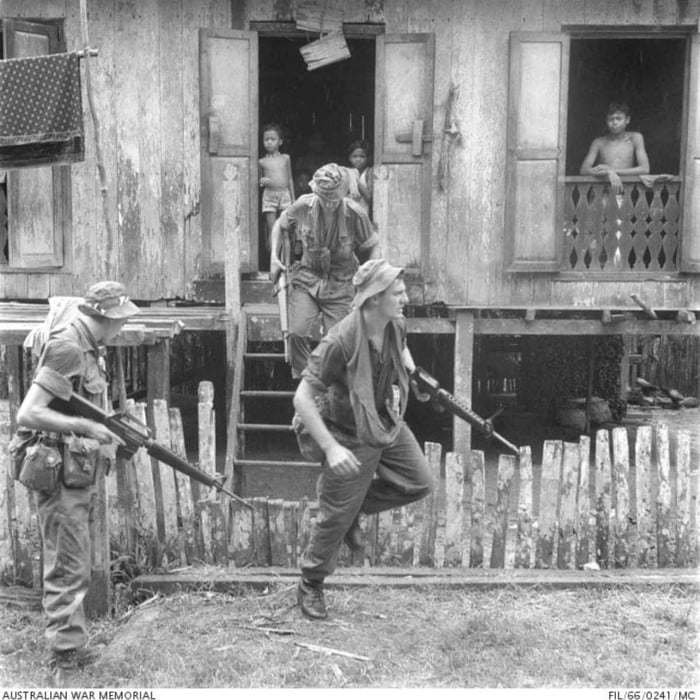
The Historical Context: Post-WWII Conflicts
Southeast Asia became a primary stage for geopolitical friction during the 1950s and 1960s. Australia committed forces to two main operational theatres to maintain regional stability: the Malayan Emergency and the Indonesian Confrontation.
The Malayan Emergency (1948-1960)
The Malayan Emergency officially began in June 1948 when the Malayan Races Liberation Army (MRLA), the armed wing of the Malayan Communist Party, launched an armed insurgency against British colonial rule and local security forces. The insurgent strategy relied heavily on guerrilla tactics, striking from secluded jungle bases against rubber plantations, mines, and rural infrastructure.
Australia’s military involvement commenced in 1950 with RAAF transport and bomber squadrons, followed by RAN vessels conducting coastal patrols. In 1955, Australian infantry units joined the Far East Strategic Reserve.
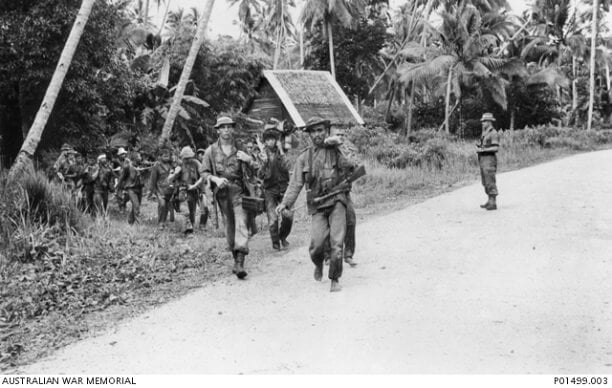
Ground operations required exceptional discipline. Australian soldiers spent weeks on extended jungle patrols, tracking guerrilla units through deep rainforests and mountainous terrain. Operations required meticulous tracking skills, silent movement, and constant vigilance against ambushes. The strategic counter-insurgency effort eventually succeeded in neutralizing the threat, and the Emergency was declared officially over in July 1960.
The Indonesian Confrontation (1963-1966)
Hardly had the situation in Malaya stabilized when a new conflict emerged. The Indonesian Confrontation, often referred to by the Indonesian term Konfrontasi, arose from Indonesia’s opposition to the creation of the Federation of Malaysia, which united Malaya, Singapore, Sarawak, and Sabah.
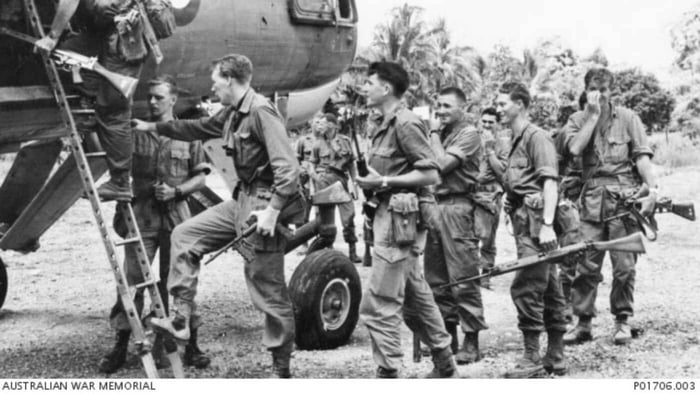
In 1963, Indonesian forces began launching border raids and insurgent incursions into Malaysian territory on the island of Borneo. To support Malaysian and Commonwealth forces, Australia deployed units to Borneo in early 1965. Australian troops, including elements of 3RAR and 4RAR, SAS squadrons, and artillery batteries, were tasked with protecting the border regions of Sarawak and Sabah.
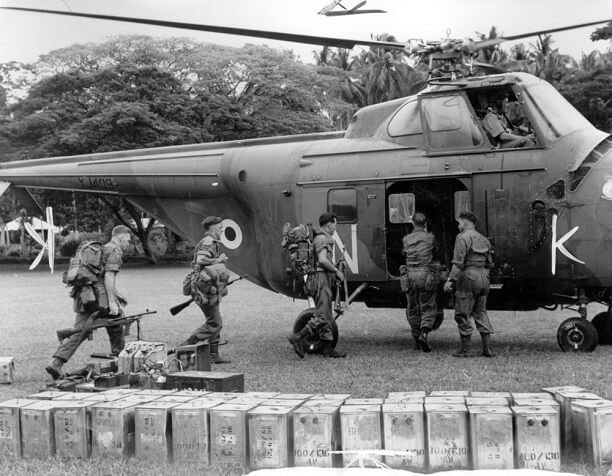
Combat in Borneo was characterized by aggressive patrolling and covert "Claret" operations classified as border-crossing missions designed to intercept Indonesian raiders before they could reach Malaysian settlements. Fighting took place in dense, trackless jungle where visibility was often limited to a few metres. RAAF helicopter squadrons provided critical resupply and medical evacuation support, while RAN ships maintained vigilant patrols along the coastline. The conflict concluded in August 1966 following a peace treaty signed between Malaysia and Indonesia.
Why August 31? The Significance of the Date
The choice of 31 August for Malaya and Borneo Veterans Day carries deep historical meaning. On 31 August 1957, the Federation of Malaya officially declared its independence from British colonial rule, an event celebrated as Hari Merdeka (Independence Day).
Australian forces played a crucial protective role leading up to and immediately following this milestone. By securing rural regions and stabilizing the nation’s security environment, Australian service personnel helped safeguard the newly independent democratic state.
Selecting 31 August as the designated day of recognition directly links Australia’s military contribution to the birth and ongoing sovereignty of Malaysia. It serves as an enduring reminder of the strong diplomatic and military ties that unite Australia and Malaysia.
The Legacy of Service and Sacrifice
The operational environments of Malaya and Borneo posed relentless physical and psychological challenges. Troops endured tropical heat, extreme humidity, torrential rainfall, and debilitating jungle diseases alongside the constant risk of enemy contact.
During these operations:
39 Australians lost their lives during the Malayan Emergency, with many more wounded.
23 Australians made the ultimate sacrifice during the Indonesian Confrontation.
Beyond those killed in action, hundreds of veterans returned home carrying the physical and hidden scars of hard-fought jungle warfare. For decades, their contribution received limited public attention, partially due to the classified nature of certain operations and the shadow cast by Australia’s subsequent, larger involvement in the Vietnam War.
In recent years, dedicated efforts by veteran associations and military historians have helped elevate the profile of Malaya and Borneo Veterans Day. Today, their tactical success in counter-insurgency and border defense is widely studied for its professional military excellence.
How to Honour Malaya and Borneo Veterans Today
Honouring servicemen and women goes beyond reflecting on historical facts, it involves active remembrance and ongoing support for the veteran community. Here are several meaningful ways to mark the significance of Malaya and Borneo Veterans Day:
Attend a Commemorative Service: Local RSL sub-branches and military associations across Australia host memorial services on or around 31 August each year. Attending a service is a direct way to pay tribute to local veterans and their families.
Wear Commemorative Lapel Pins and Badges: Displaying a commemorative pin or badge shows visible support for veterans of post-WWII conflicts and helps spark educational conversations with others.
Explore Family and Military History: Take time to research family members who served in the ADF during the 1950s and 1960s. Understanding their service records helps keep their personal legacy alive for future generations.
Support Veteran Organisations: Supporting organisations that provide welfare, mental health support, and advocacy for both modern and older veterans ensures those who served receive the ongoing care they deserve.
Commemorative Medals and Recognition: For veterans, descendants, and collectors looking to preserve this heritage, specific official and commemorative honours represent service in these Southeast Asian operational theatres:
Australian Active Service Medal 1945-1975: Awarded for service in post-WWII active operational areas, worn with specific campaign clasps.
Malaya Clasp & Malaysia Clasp: Attached to qualifying campaign medals to denote precise deployment zones during the Emergency and Confrontation.
Pingat Jasa Malaysia Medal: A commemorative medal issued by the Government of Malaysia to declare the nation's enduring gratitude to Australian and Commonwealth veterans who served between 1957 and 1966.
By continuing to observe Malaya and Borneo Veterans Day, we acknowledge the service, fortitude, and sacrifice of all Australians who served in the jungles and waters of Southeast Asia. Their legacy of duty and mateship remains an integral, permanent chapter of Australia's military history.
FAQs
When is Malaya and Borneo Veterans Day held in Australia?
Malaya and Borneo Veterans Day is observed annually across Australia on 31 August.
What conflicts are remembered on Malaya and Borneo Veterans Day?
The day honours Australian Defence Force (ADF) personnel who served during the Malayan Emergency (1948–1960), the Indonesian Confrontation (1963–1966), and subsequent security operations along the Thai-Malay border.
Why is Malaya and Borneo Veterans Day commemorated on August 31?
August 31 marks the date in 1957 when the Federation of Malaya officially declared its independence (Hari Merdeka). Australian forces played a critical role in stabilizing the region and protecting the nation leading up to and following its independence, directly connecting Australia’s military service to Malaysia's sovereignty.
What was the Malayan Emergency?
The Malayan Emergency was an armed conflict from 1948 to 1960 between Commonwealth security forces and the Malayan Races Liberation Army (MRLA), the armed wing of the Malayan Communist Party. Australian forces deployed air, naval, and ground troops including infantry from the Royal Australian Regiment (RAR) to conduct counter-insurgency and extended jungle patrols.
How many Australians lost their lives in the Malaya and Borneo campaigns?
During these post-WWII operations, 39 Australians died during the Malayan Emergency and 23 Australians lost their lives during the Indonesian Confrontation.