


What Is a Hoochie and Why Do Australian Soldiers Use Them?
Table of Contents
- What Is a Hoochie?
- Where Did the Australian Hoochie Come From?
- What Does an Australian Army Hoochie Look Like?
- Why Do Australian Soldiers Use Hoochies?
- Is a Hoochie the Same as a Tent?
- How Do You Set Up a Hoochie?
- What Is Hoochie Cord?
- What Else Can You Use a Hoochie For?
- How Should You Look After a Hoochie?
- Why the Hoochie Remains Useful
- FAQs
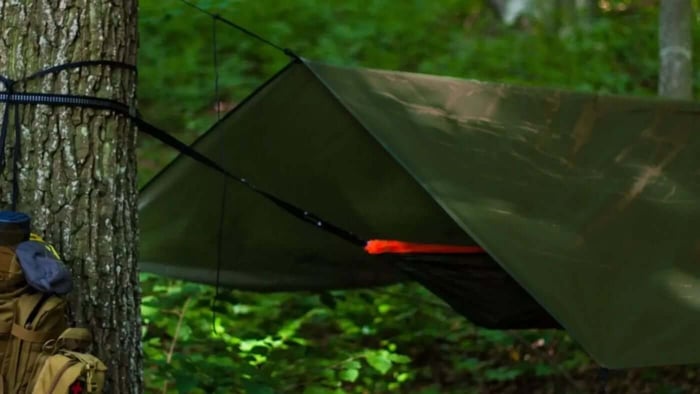
A hoochie is one of the simplest pieces of field equipment used by Australian soldiers. Essentially a lightweight shelter tarp, it can be pitched between trees, secured with cord and pegs, or configured in different ways to provide protection from rain, wind and sun.
Unlike a conventional tent, a hoochie has no complicated frame to assemble. The shelter takes its shape from the way it is tensioned and secured, making it compact to carry and relatively quick to set up.
That straightforward design has made the hoochie a familiar part of Australian military field equipment for decades. It has also found a following among cadets, campers and outdoor enthusiasts who value lightweight shelter without the bulk of a conventional tent.
What Is a Hoochie?
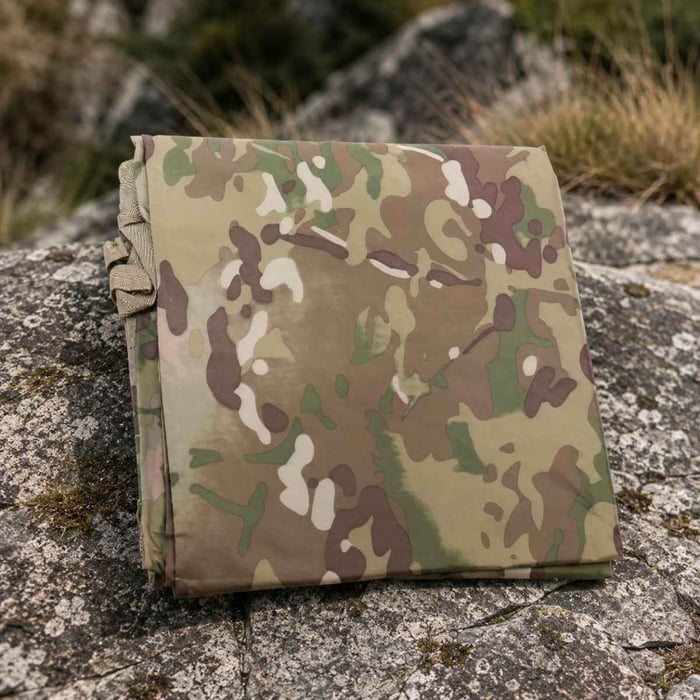
A hoochie is a waterproof or water-resistant shelter tarp designed to provide temporary field accommodation. It is typically a rectangular sheet of durable fabric with reinforced attachment points around the edges and, depending on the design, along the centre.
The tarp can be suspended from trees or other supports using hoochie cord, with the corners secured to the ground to create a basic sleeping shelter. Its configuration can be changed to suit the terrain, weather and amount of protection required.
The term is strongly associated with Australian military fieldcraft and became particularly familiar through the Vietnam War era. Australian War Memorial collections include references to hoochies used by Australian personnel in Vietnam, including a work titled Landscape, Pine Tree and Hoochie, Phuoc Tuy Province, Vietnam.
The basic idea has remained much the same: carry a simple shelter that can be adapted to the environment rather than relying on a heavier, more structured tent.
Where Did the Australian Hoochie Come From?
The hoochie has a long association with Australian soldiers operating in the field, particularly during the Vietnam War.
Lightweight shelter sheets were practical in conditions where troops needed to carry their own equipment over difficult terrain. A conventional tent with poles and a separate frame could take up considerably more room in a pack. A shelter tarp offered another option.
The name itself became part of Australian military terminology, with soldiers commonly referring to their shelter sheet as a hoochie or hootchie.
Over time, the term became familiar beyond the regular army. Today, an Australian hoochie can refer to the military-style shelter tarp used for field camping, as well as civilian versions based on the same basic design.
What Does an Australian Army Hoochie Look Like?
Although designs vary, an Australian army hoochie is generally a compact rectangular shelter sheet made from durable synthetic fabric.
The most useful features are the attachment points that allow the tarp to be tensioned and configured in different ways.
Depending on the design, these can include:
Reinforced loops or webbing attachment points
Eyelets for securing cord or pegs
Press studs for joining shelter sheets together
A reinforced centre section for ridge-line setups
Waterproof or water-resistant fabric
A camouflage pattern suited to field use
Press studs can be particularly useful when a larger shelter is needed. Multiple sheets can be joined together to create more covered space than a single hoochie can provide.
The main advantage is packability. When folded, a shelter tarp takes up considerably less room than a conventional tent with poles and a rigid frame.
Why Do Australian Soldiers Use Hoochies?
The answer comes down to practicality.
Soldiers operating in the field already carry clothing, food, water, communications equipment and other essential kit. Shelter needs to provide useful protection without becoming an unnecessarily large part of the load.
A hoochie offers several advantages.
Lightweight and Compact
A tarp can be folded or rolled down into a relatively small package, making it easier to carry during extended movements.
There is also no conventional tent frame to account for. That means fewer components to pack, assemble and potentially lose.
Quick to Set Up
A hoochie can be pitched using trees, cord, pegs or other suitable anchor points. Once the basic technique is understood, setting up a simple shelter is relatively straightforward.
The lack of poles also makes the setup adaptable. The surrounding terrain can become part of the shelter structure rather than something that needs to be worked around.
Adaptable to Different Conditions
A hoochie does not have to be pitched in one fixed configuration.
It can be raised higher to create more usable space or lowered closer to the ground when additional protection from wind and rain is needed. The angle can also be adjusted to encourage water to run off rather than collect on the fabric.
That flexibility is useful when conditions change during a field exercise or camping trip.
Easy to Carry and Reuse
The same shelter can be packed away, moved to another location and pitched again without needing to transport a collection of rigid components.
For field equipment, that combination of simplicity and versatility is hard to beat.
Is a Hoochie the Same as a Tent?
You'll sometimes hear the term hoochie tent, but technically a hoochie is closer to a shelter tarp than a conventional tent.
A traditional tent usually has a defined structure, poles, a floor and an enclosed sleeping area. A hoochie relies on the user to create its structure using cord, anchor points and the surrounding environment.
That difference has advantages and disadvantages.
A hoochie is generally lighter, more compact and more adaptable. However, it does not provide the same enclosed living space as a conventional tent. Depending on how it is pitched, the sides may remain open and there may be no built-in floor.
For someone who prioritises a small pack and simple field shelter, that trade-off can make sense.
How Do You Set Up a Hoochie?
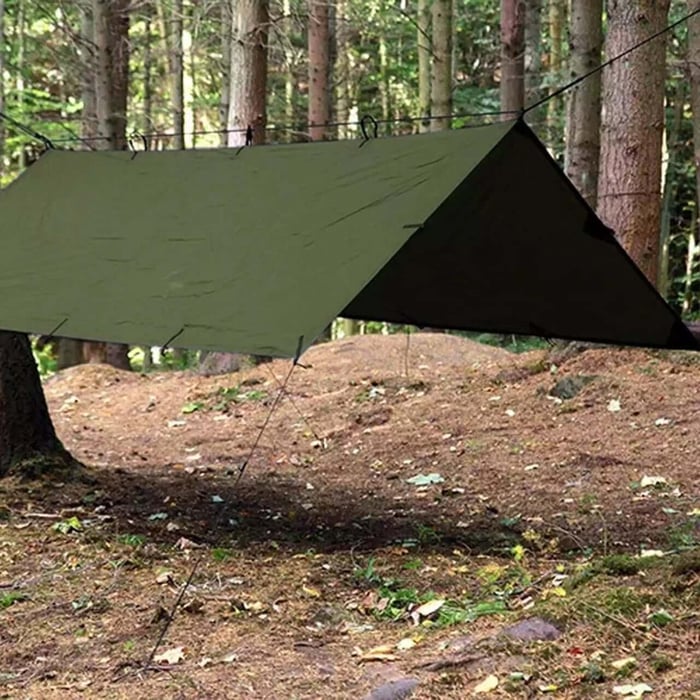
The exact setup depends on the terrain and weather, but an A-frame is one of the simplest configurations.
Step 1: Choose the Location
Start with suitable ground that is reasonably level and does not collect water. Look for reliable anchor points such as sturdy trees or other supports.
Step 2: Set the Ridge Line
Run hoochie cord between two suitable anchor points and tension it securely. The height of the line will affect the amount of space underneath the shelter.
Step 3: Position the Tarp
Drape the centre of the hoochie over the ridge line, making sure the fabric is sitting evenly on both sides.
Step 4: Secure the Corners
Use the reinforced attachment points to run cord from each corner to suitable pegs or anchor points. Keep enough tension in the fabric to create a stable shelter without overstressing the attachment points.
Step 5: Check the Pitch
Look at the slope of the tarp before settling in. Water should have clear paths to run off rather than pooling in low sections.
The same principles can be used to create other configurations, including a lean-to. The best setup depends on the available anchor points and the direction of wind and rain.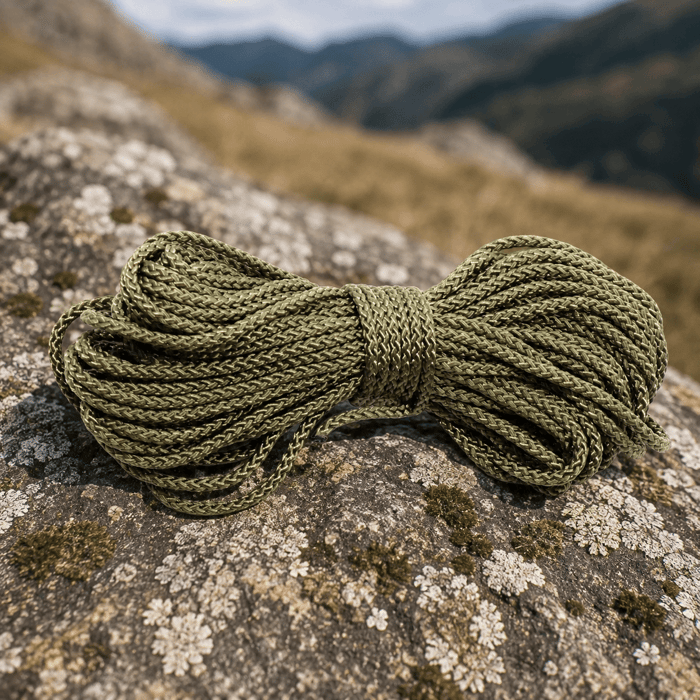
What Is Hoochie Cord?
Hoochie cord is the cordage used to secure and tension the shelter.
It connects the tarp's attachment points to trees, pegs or other anchors and allows the user to adjust the pitch. The cord needs to be strong enough to hold the shelter securely while remaining lightweight enough to carry as part of a field kit.
Carrying sufficient cord is important because the shelter itself is only one part of the setup. Without a practical way to tension and secure it, the tarp cannot perform as intended.
It is also worth carrying a little more cord than the bare minimum. Different terrain and shelter configurations can require different lengths.
What Else Can You Use a Hoochie For?
A hoochie is primarily a shelter, but its simple construction makes it useful for other jobs around camp.
Depending on the situation, it can provide:
Temporary cover for equipment
Shade during hot weather
Protection from rain while working or resting
A dry layer between equipment and damp ground
Additional covered space when combined with another shelter
A simple overhead shelter during short stops
These secondary uses are another reason the tarp remains useful. One piece of equipment can perform several jobs without taking up much room.
How Should You Look After a Hoochie?
Good maintenance starts with proper drying.
Avoid packing a wet hoochie away for extended periods. Once back from the field, unfold it and allow the fabric to dry completely before storing it. This helps reduce the risk of mould, mildew and deterioration of the waterproof coating.
Cleaning should also be kept simple. Remove dirt with water and a soft brush rather than using harsh chemicals that could damage the fabric or its protective coating.
Before the next trip, inspect the attachment points, stitching, eyelets, press studs and fabric for signs of damage. Small problems are much easier to deal with at home than when you are trying to establish shelter in the field.
Why the Hoochie Remains Useful
Understanding what is a hoochie helps explain why this simple shelter remains useful in military and outdoor settings. It is a good example of equipment built around a straightforward requirement: provide reliable shelter without adding unnecessary weight and complexity.
Its design allows a soldier to carry a compact shelter, adapt it to the terrain and configure it according to the conditions. There are no complicated poles or rigid components to assemble, and the same basic tarp can be used in several different ways.
That practicality explains why the Australian army hoochie tarp remains familiar well beyond its original military setting. For anyone spending time outdoors, the same principles apply. A good shelter needs to be portable, adaptable and capable of protecting its user from changing weather.
If you're putting together a field, camping or outdoor kit, browse Military Shop's range of military and outdoor products for practical equipment designed for life in the field.
FAQs
Is a hoochie better than a tent?
A hoochie and a conventional tent serve different purposes. A hoochie is lighter, packs down smaller and can be configured quickly using cord and available anchor points. That makes it well suited to field exercises, lightweight camping and situations where keeping pack weight down matters.
A conventional tent generally provides more enclosed space, privacy and protection from insects and poor weather. Australian military users discussing the two options often point to the hoochie's speed and simplicity as its main advantages, while a tent can be more comfortable for longer stays.
Can you sleep comfortably under a hoochie?
Yes, but the rest of your sleeping system matters. A hoochie provides overhead protection rather than the complete enclosure of a tent, so a suitable sleeping bag, sleeping mat and, where necessary, bivvy bag can make a significant difference.
Australian military users have specifically recommended using a sleeping mat underneath a hoochie to provide insulation and separation from the ground.
Your choice of location also matters. Look for reasonably level ground, avoid areas where water could collect and check the surrounding trees for unstable branches before pitching.
Can two hoochies be joined together?
Yes. Many military-style hoochies have press studs or similar fasteners that allow multiple shelter sheets to be joined together.
This can create a larger covered area or provide more room for two people. Australian military and cadet users commonly discuss joining two hoochies together, particularly when more space is needed.
The advantage is that you can carry individual shelter sheets and combine them when required instead of always carrying a larger tent.
How much hoochie cord do I need?
The amount depends on how you intend to pitch the shelter and how many anchor points are available. You'll generally need enough cord to establish the main support line and secure the corners, with additional length useful for alternative configurations.
It is worth carrying some spare. Australian Army fieldcraft guidance specifically recommends carrying a useful length of hoochie or paracord and describes using cord at the corners to make setup and pack-down easier.
Having extra cord also gives you more flexibility when the available trees, pegs or other anchor points are not ideally positioned.
What should I use with a hoochie?
A hoochie works best as part of a wider shelter system rather than as a complete replacement for every piece of camping equipment.
Useful additions can include a sleeping mat, sleeping bag, bivvy bag, suitable pegs and enough hoochie cord for the configuration you plan to use. A mosquito net can also be useful in areas where insects are a concern.
Australian bushcraft courses commonly issue an Australian Army-style hoochie alongside cord, a groundsheet and other basic field equipment, reinforcing the idea that the tarp works as one part of a broader outdoor setup.
The right combination ultimately depends on the weather, terrain and length of the trip. A simple setup may be perfectly adequate for a short overnight stay, while colder or wetter conditions call for additional protection.