


The Queensland Korean War Memorial: The History Behind a Sacred Space
Table of Contents
Nestled within the tranquil greenery of Cascade Gardens on the Gold Coast stands a monument of profound solemnity and architectural beauty. While many passersby know it as a peaceful place for reflection, the Queensland Korean War Memorial serves a much deeper purpose. It stands as a permanent testament to a conflict that deeply shaped modern geopolitics and claimed the lives of thousands of young service personnel, yet is frequently overshadowed in the public consciousness.
With Korean Veterans Day marked annually on 27 July, Australians pause to reflect on a conflict that was as brutal as it was pivotal. For Queenslanders, this local monument provides a tangible link to the past, reminding us that the liberties enjoyed today were bought at a tremendous cost. To truly appreciate this sacred space, one must understand the history, the sacrifices, and the enduring legacy of the Korean War.
The Outbreak of Conflict: Korea War Dates and Australia's Response
To understand the symbolism etched into the Broadbeach monument, we must look back to the volatile landscape of the early 1950s. The Korea war dates span from 25 June 1950—when North Korean Soviet-backed forces launched a surprise invasion across the 38th Parallel into South Korea—until the signing of the armistice in July 1953.
Australia was incredibly swift to respond. As part of a United Nations unified command, Australian efforts began just days after the initial invasion. Royal Australian Air Force (RAAF) No. 77 Squadron was deployed almost immediately, followed closely by the Royal Australian Navy (RAN) and infantry battalions of the Royal Australian Regiment (RAR).
Over the course of the three-year conflict, more than 17,000 Australians served in the icy mountains and muddy valleys of the Korean Peninsula. They fought in legendary, desperate actions such as the Battle of Kapyong and the Battle of Maryang San, earning a reputation for incredible discipline and bravery under extreme pressure.
The Brutal Reality of 'The Forgotten War'
Despite the scale of the deployment and the intensity of the combat, the conflict is frequently referred to as "The Forgotten War." Sandwiched chronologically between the total mobilization of World War II and the heavily televised social upheaval of the Vietnam War, the Korean War occupies a quieter place in Western cultural memory.
Yet, for those who served, the conditions were unforgettable. Australian troops, accustomed to temperate or tropical climates, suddenly found themselves fighting in mountainous terrain where winter temperatures routinely plummeted below minus 20 degrees Celsius.
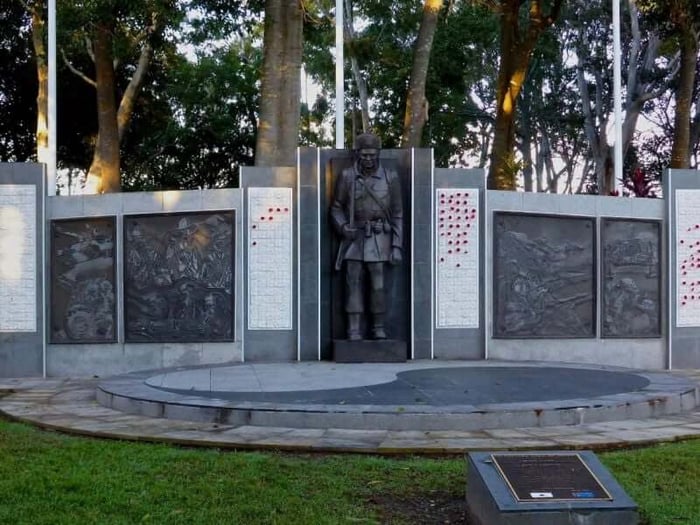
Korean War Memorial Facts: The statue at the heart of the Queensland monument specifically depicts a soldier in heavy winter dress. This design choice was deliberate, ensuring that future generations understand the harsh, freezing environment the ANZACs endured while defending South Korea.
By the time active hostilities ceased, 340 Australians had lost their lives, over 1,200 were wounded, and 30 were taken as prisoners of war. The psychological toll on the returning veterans was immense, made heavier by a public that rarely understood the nature of the war they had just fought.
When Did the Korean War End? Understanding the Armistice
A common question asked by visitors to the memorial is: when did the Korean War end? The technical answer is that it never truly has.
Active combat came to a halt on 27 July 1953, when the United Nations Command, the North Korean People's Army, and the Chinese People's Volunteers signed the Korean Armistice Agreement. This critical date is exactly why Korean Veterans Day is commemorated on 27 July each year.
However, exploring how did the Korean War end reveals a complex geopolitical reality. The armistice was not a peace treaty; it was a formal ceasefire designed to "insure a complete cessation of hostilities... until a final peaceful settlement is achieved." That final settlement has never come. Instead, the armistice established the Demilitarized Zone (DMZ), a heavily fortified 4-kilometer-wide buffer strip splitting the peninsula along the 38th Parallel, which remains one of the most volatile borders on Earth today.
Because the conflict concluded with a ceasefire rather than a total surrender, historians and strategists still debate who won the Korean War. Militarily, it was a bloody stalemate. However, from a strategic and humanitarian standpoint, the UN alliance successfully defended the sovereignty of South Korea, preventing a democratic nation from being forcibly absorbed by an authoritarian regime. The vibrant, free, and technologically advanced South Korea of the 21st century is the ultimate proof of what those 17,000 Australians fought to protect.
source: quatrodesign.com.au/projects/korean-war-memorial/
Behind the Symbolism: The Queensland Korean War Memorial
Dedicated in August 2011, the Queensland site is a masterclass in narrative architecture. Every stone, angle, and inscription carries deliberate historical weight, mirroring the grandeur of major international sites like the War Memorial of Korea in Seoul.
When visiting the Broadbeach site, there are several key design elements that tell the story of the conflict:
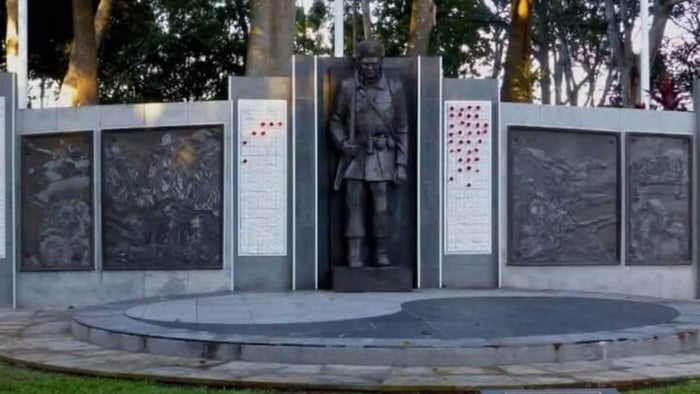
- The Guard of Honour: The central focus is a life-sized bronze statue of an Australian soldier, standing in front of a towering black granite pillar. His somber gaze and heavy winter gear convey the loneliness and physical hardship of the frontline.
- The Mural Walls: Flanking the central statue are polished granite panels intricately etched with murals. These depictions honor all branches of service—the Army infantrymen patrolling the hills, the Navy sailors operating off the freezing coast, the RAAF pilots in their Gloster Meteors, and the dedicated medical staff who saved countless lives.
- The Sacred Earth: In a deeply moving tribute, soil collected from actual, blood-stained Korean battlefields was flown to Australia and buried beneath the memorial’s foundations, permanently linking Queensland soil to the valleys of Korea.
Monument Feature | Dedicated Symbolism |
Central Granite Pillar | The towering focal point anchoring the entire sacred space. |
Bronze Soldier Statue | Positioned upfront in full winter dress, highlighting the brutal climate of the conflict (Korean war memorial facts). |
Left Mural Wall | Intricately etched panels honoring the frontline efforts of the Army, Navy & Air Force. |
Right Mural Wall | Dedicated panels recognizing the vital contributions of Medical & Support Staff. |
Sacred Korean Soil | Actual battlefield soil buried in the foundation, permanently linking the two nations. |
Commemorating Korean Veterans Day in Australia
On 27 July, veterans, families, and community members gather at the Queensland Korean War Memorial to lay wreaths, play the Last Post, and observe a minute of silence. It is an occasion to ensure that the "Forgotten War" is forgotten no longer.
For the younger generation of Queenslanders, visiting this monument or attending a service offers a vital history lesson. It reframes our understanding of regional security and emphasizes that Australia’s strong, modern relationship with South Korea—built on mutual trade, culture, and respect—began in the foxholes of 1950.
The monument at Cascade Gardens is more than just a beautiful arrangement of stone and bronze. It is a living history book, a place of profound grief for families who lost loved ones, and a beacon of gratitude. This July, take a moment to look past the beautiful Gold Coast skyline and step into this sacred space to remember the Australians who stood the line in Korea.
FAQs
What is the history behind Korean Veterans Day in Australia?
Korean Veterans Day is commemorated annually on 27 July to mark the exact anniversary of the day in 1953 when the Korean Armistice Agreement was signed, halting three years of active combat. It serves as a national day of remembrance to honor the more than 17,000 Australian soldiers, sailors, and airmen who deployed to the Korean War, ensuring their vital contributions and the sacrifices of the 340 who died are never forgotten.
Where is the Queensland Korean War Memorial located?
The memorial is located within Cascade Gardens on the Gold Coast Highway in Broadbeach, Queensland. It offers a tranquil regional space for veterans, families, and community members to pay their respects.
What are the official Korea War dates?
The Korean War officially began on 25 June 1950 when North Korean forces crossed the 38th Parallel to invade South Korea. Active hostilities lasted for just over three years until the armistice ceasefire was signed on 27 July 1953.
When did the Korean War end, and how did it end?
The fighting formally ended on 27 July 1953 through a signed armistice rather than a permanent peace treaty. How did the Korean War end practically was via a localized ceasefire that established a heavily fortified four-kilometer-wide buffer zone, known as the Demilitarized Zone (DMZ), which continues to divide the Korean Peninsula to this day.
Who won the Korean War?
The war concluded in a strategic, bloody stalemate. While neither side achieved total military surrender, the United Nations coalition successfully defended and preserved the democratic sovereignty of South Korea.
Where is the best place to buy Korean Veterans Day commemorative merchandise online?
The best place to buy high-quality, authentic commemorative merchandise online is militaryshop.com.au.