


When Was the Battle of Fromelles? Australia’s Darkest 24 Hours in WW1
The military history of the twentieth century is defined by moments of immense tactical complexity, profound sacrifice and enduring national grief. For Australia, no single event embodies these elements more starkly than the Battle of Fromelles. Fought over a catastrophic 24-hour window, this engagement remains the bloodiest single day in Australian military history, leaving a permanent mark on the nation's collective consciousness.
For historians, educators and families connected to wartime heritage, understanding the Battle of Fromelles involves looking past the immediate tactical failures to examine a broader story of operational memory, regional commemoration and the ongoing mission to identify those who were lost. The event stands as a somber reminder of the vulnerabilities faced by the Australian Imperial Force (AIF) during its initial deployment on the Western Front.
When Was the Battle of Fromelles?
To fully comprehend the timeline of the First World War, researchers frequently ask 'When was the Battle of Fromelles?'
The engagement took place between 19 and 20 July 1916.
The main assault commenced late in the afternoon of 19 July, following an intensive but largely ineffective artillery bombardment. Within a matter of hours, the attacking forces were subjected to devastating defensive fire, and by the morning of 20 July, the operation was universally recognized as a tragic failure. The brief duration of the battle contrasts sharply with its immense human cost, demonstrating how rapidly operational outcomes could deteriorate in the industrial landscape of the Western Front.
Where Was the Battle of Fromelles?
Geographic context is vital to understanding why this operation unfolded so disastrously. When investigating where was the Battle of Fromelles, historians point to a sector in French Flanders, roughly 16 kilometers west of Lille.
The battlefield was situated near the village of Fromelles, specifically targeting a heavily fortified German defensive position known as the Sugarloaf Salient. Unlike the undulating terrain found in other sectors of the Western Front, the ground around Fromelles was low-lying, waterlogged and entirely exposed. The German defenders occupied slightly higher ground, providing them with clear sightlines and commanding fields of fire over the incoming Allied troops across No Man's Land.
The Connection to the Battle of the Somme
The tragic events of Fromelles cannot be looked at in isolation. The attack was conceived as a diversionary operation directly linked to the much larger Battle of The Somme, which had commenced further south on 1 July 1916.
British high command sought to prevent the German Army from transferring reserve troops from the north down to the Somme sector, where Allied forces were engaged in a grueling war of attrition. The objective at Fromelles was to create enough tactical pressure to force the German military to maintain its defensive posture in Flanders.
However, the preparation was rushed, the tactical planning was flawed, and the German defenders were well-aware of the impending assault. Instead of diverting German resources, the operation resulted in a severe tactical disadvantage for the attacking Allied divisions.
Strategic Comparison: July 1916
Flanders Sector — Fromelles (19–20 July)
Diversionary Attack
Low-lying, waterlogged terrain
Flawed artillery preparation
Somme Sector — The Somme Offensive (Launched 1 July)
Main Allied Thrust
Massive War of Attrition
Driven by high-level strategy
The Intended Goal: To divert German tactical reserves away from the main offensive on the Somme.
The 24-Hour Timeline: Australia's Darkest Day
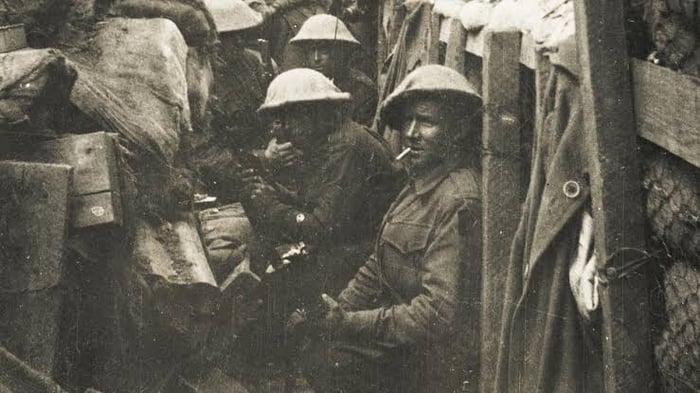
The timeline of the Battle of Fromelles represents a harrowing case study in the realities of trench warfare. The assault was carried out by the newly arrived Australian 5th Division alongside the British 61st Division.
- 11:00 AM (19 July): Preliminary Allied artillery bombardments began, intended to cut German barbed wire and destroy frontline emplacements. Unfortunately, the bombardment lacked accuracy and failed to neutralize the German machine-gun nests.
- 6:00 PM (19 July): The infantry advanced across open ground in broad daylight. German machine gunners, having survived the bombardment by taking cover in deep concrete bunkers, quickly manned their posts.
- 9:00 PM (19 July): Small groups of Australian soldiers successfully breached the German frontline trenches but found themselves isolated, short on ammunition, and exposed to devastating enfilade (side-on) fire.
- Overnight (19–20 July): Confusion dominated the battlefield.Communication lines were severed, preventing effective coordination between the infantry and artillery units.
- 8:00 AM (20 July): A final, desperate attempt to withdraw across No Man's Land was completed under unrelenting enemy fire, bringing the formal engagement to a tragic conclusion.
The Cost of Conflict: Fromelles Casualties and Australian Sacrifice
The statistical reality of this 24-hour window remains profoundly shocking. When examining the Fromelles casualties, the numbers illustrate an unprecedented level of loss for a nation with a relatively small population.
The Australian 5th Division suffered 5,533 casualties in a single night. To place this in perspective, this figure exceeded Australia's total casualties from the Boer War, Boxer Rebellion, and Sudan Campaign combined. The British 61st Division also sustained over 1,500 casualties, bringing the total Allied loss to over 7,000 men. The German defenders, by contrast, recorded approximately 1,500 casualties, highlighting the stark asymmetry of the engagement.
To understand the broader impact of this event, historians often look at how many Australian soldiers died in the First World War. Throughout the entirety of the Great War, Australia suffered more than 60,000 fatalities from a population of fewer than five million people. The losses at Fromelles accounted for a devastating portion of those initial Western Front deployments, leaving communities across Australia in deep, enduring mourning.
Force / Division | Total Casualties (19–20 July 1916) | Historic Context |
Australian 5th Division | 5,533 | Bloodiest 24 hours in AIF history |
British 61st Division | Over 1,500 | Suffered heavily on the right flank |
German 6th Bavarian Reserve | Approx. 1,500 | Maintained strategic defensive heights |
Who Won the Battle of Fromelles?
When assessing military operations, the question of who won the Battle of Fromelles yields a clear but somber answer. The German Army secured a definitive defensive victory.
The Allied objectives were completely unfulfilled. Not only did the attack fail to capture or hold the German positions, but it also failed as a diversion. German high command quickly realized the limited scope of the assault and proceeded to transfer fresh troops to the Somme sector regardless. The operation resulted in a complete tactical and strategic failure for the Allies, offering a brutal introduction to the uncompromising nature of continental warfare for the Australian troops.
"The short duration of the battle contrasts sharply with its immense human cost, demonstrating how rapidly operational outcomes could deteriorate in the industrial landscape of the Western Front."The Legacy, Recovery and Historical Preservation
For decades following the Armistice, the full story of Fromelles remained somewhat overshadowed by the larger campaigns of Gallipoli and the Somme. However, contemporary military heritage programs have renewed the focus on this tragic chapter.
In 2008, a significant breakthrough occurred when historical research led to the discovery of mass graves at Pheasant Wood, just outside the village of Fromelles. These pits had been dug by German forces in the days following the battle to bury the Allied dead left in No Man's Land.
An extraordinary international effort involving the Australian and British governments, archaeologists and DNA specialists resulted in the exhumation and identification of hundreds of missing Australian soldiers.
In 2010, the Fromelles (Pheasant Wood) Military Cemetery was dedicated. It was the first new Commonwealth War Graves Commission cemetery constructed in over fifty years. This monumental effort shifted the narrative from institutional military history to a deeply personal process of remembrance, allowing modern families to finally find closure for ancestors who had been listed as simply "missing" for nearly a century.
The Journey of Remembrance
1916: The Loss: Unidentified soldiers buried in German mass graves following the battle.
2008: Discovery: Mass graves located at Pheasant Wood, France, initiating an international recovery effort.
- 2010: The Restoration: DNA matching successfully identifies individual soldiers, and a new military cemetery is formally dedicated.
Conserving the Memory of Fromelles
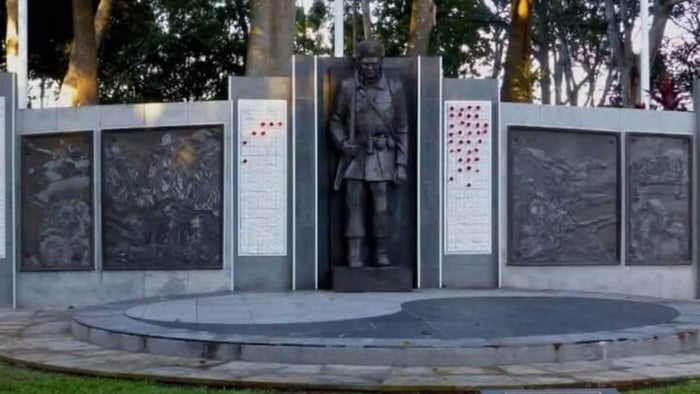
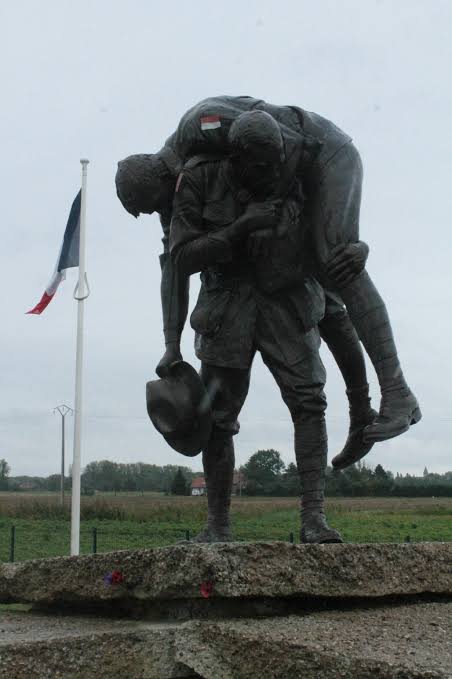
The preservation of First World War history goes far beyond written records. It is kept alive through museum exhibitions, digital archives, and commemorative monuments like the famous 'Cobbers' statue in the Australian Memorial Park at Fromelles. The sculpture depicts Sergeant Simon Fraser carrying a wounded compatriot on his back, capturing the spirit of mateship that survived amid absolute devastation.
Remembering when, where and why the battle took place helps ensure that the sacrifices of the individual soldiers are never lost to time. The story of Fromelles remains an essential, albeit painful, pillar of Australia’s military legacy — a testament to the profound human cost of service and the enduring importance of historical preservation.
FAQs
When was the Battle of Fromelles fought?
The Battle of Fromelles was fought between 19 and 20 July 1916. The main infantry assault began late in the afternoon on July 19 and concluded the following morning on July 20, lasting less than 24 hours.
Where was the Battle of Fromelles located?
The battle took place on the Western Front in French Flanders, near the village of Fromelles, approximately 16 kilometers west of Lille. The fighting occurred across open, waterlogged ground directly in front of the heavily fortified German defensive line known as the Sugarloaf Salient.
Who won the Battle of Fromelles?
The German Army won a decisive defensive victory at the Battle of Fromelles. The Allied attack failed to breach the enemy lines, capture strategic ground, or fulfill its objective of diverting German tactical reserves away from the ongoing Battle of The Somme.
Why is the Battle of Fromelles historically significant?
The battle is historically significant because it was the first major engagement involving Australian troops on the Western Front following their deployment from Gallipoli. Its immense loss of life profoundly affected the Australian home front and fundamentally shaped the nation’s commemorative tradition and operational memory.