


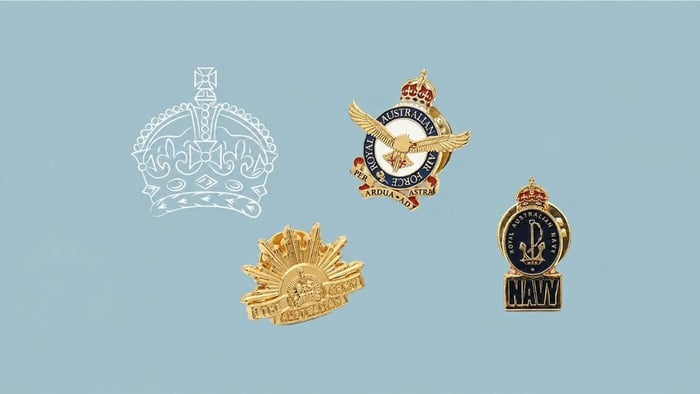
Tudor Crown Features In New Army, Navy and Air Force Badges
Table of Contents
- Understanding the Tudor Crown in Military Insignia
- The Meaning Behind CIIIR
- Updates Across the Australian Army
- Royal Australian Navy Badge Changes
- Royal Australian Air Force (RAAF) Updates
- Why These Changes Matter
- Transition Periods and Practical Considerations
- The Broader Commonwealth Context
- Preserving Accuracy and Respect
- A New Chapter in Australian Military Symbolism
- FAQs
The transition to a new monarch marks more than a constitutional milestone; it reshapes the visual language of national identity. Across Australia’s Defence Force, this evolution is now visible in the updated insignia of the Army, Navy and Air Force, which are being revised to incorporate the Tudor Crown.
For serving personnel, veterans, collectors and historians alike, these updates represent an important moment in Australian military heritage. Badges are not mere decorative items. They are symbols of authority, allegiance and service. The adoption of the Tudor Crown signals continuity of the Crown while acknowledging the beginning of a new reign under King Charles III.
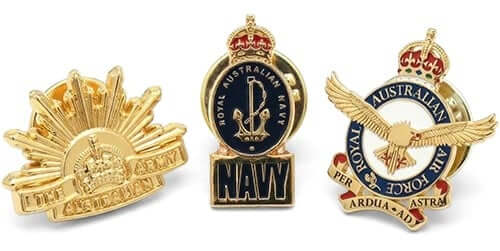
With the accession of His Majesty King Charles III, the CIIIR Tudor Crown now symbolises Australian service, duty and remembrance. This historic transition is honoured through a considered range of apparel, badges, gifts and collectables that reflect the new era of service while remaining grounded in Anzac tradition. Explore the collection.
Understanding the Tudor Crown in Military Insignia
The Tudor Crown is historically associated with earlier British monarchs and has re-emerged as the heraldic crown representing King Charles III. It differs in design from St Edward’s Crown, which featured in Australian Defence insignia during the reign of Queen Elizabeth II.
In practical terms, the crown presents a slightly lower and more rounded form, with distinctive arches and detailing. Though subtle to the casual observer, these differences are significant within heraldry and military tradition. The crown depicted on badges, rank insignia and crests is not interchangeable; it reflects the reigning Sovereign.
For Australia, a constitutional monarchy within the Commonwealth, military badges incorporating the Crown symbolise lawful authority exercised in the name of the Sovereign. Updating insignia to the Tudor Crown ensures that Defence symbols remain accurate and constitutionally appropriate.
The Meaning Behind CIIIR
Many insignia now incorporate CIIIR, the royal cypher of King Charles III. Unveiled in September 2022, the personal cypher for King Charles III consists of the letters "C" (for Charles) and "R" (for Rex, Latin for King) with "III" inside the R, topped with the Tudor Crown.
Royal cyphers have long appeared on military equipment, medals, commissions and badges. They serve as a personal emblem of the Sovereign’s authority and are particularly prominent in Commonwealth armed forces.
The introduction of CIIIR across Air Force, Navy and Army insignia reinforces the link between the Defence Force and the Crown. It reflects a new chapter in service history while maintaining the enduring constitutional relationship between Australia’s armed forces and the monarch.
Updates Across the Australian Army
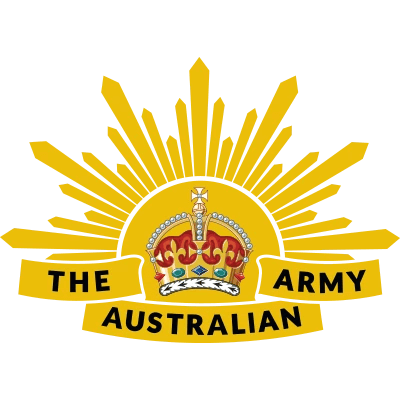
Within the Australian Army, the Crown appears prominently in cap badges, corps insignia and various official emblems. As new stock is produced and issued, the Tudor Crown replaces the previous crown design associated with the late Queen.
This change affects:
Regimental and corps cap badges
Officer rank insignia incorporating the Crown
Ceremonial and dress uniform elements
Official emblems and heraldic devices
The update is not instantaneous. Defence organisations typically introduce revised insignia through natural replacement cycles. Existing badges remain authorised for wear until formally withdrawn or replaced. Over time, however, the Tudor Crown will become the standard feature across Army insignia.
For collectors and historians, this transition marks a distinct period in Australian Army history—clearly separating the Elizabethan era from the Carolean era.
Royal Australian Navy Badge Changes
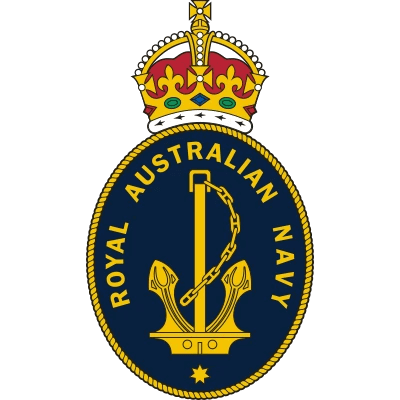
The Royal Australian Navy (RAN) has a longstanding tradition of incorporating the Crown within its badge and ceremonial emblems. Naval badges, ship crests and officer insignia often prominently display the Crown above anchors or heraldic shields.
With the accession of King Charles III, the Tudor Crown is progressively appearing on:
Tricorne Hats and Peaked Caps
Rank, branch, and specialisation badges
Official documentation and ceremonial items
Naval tradition is deeply rooted in symbolism. The Crown above the anchor is not merely ornamental—it represents authority vested in naval command. Updating to the Tudor Crown ensures that the RAN’s visual identity remains constitutionally aligned with the reigning monarch.
The inclusion of CIIIR in relevant insignia further personalises the connection between the Sovereign and the service.
Royal Australian Air Force (RAAF) Updates
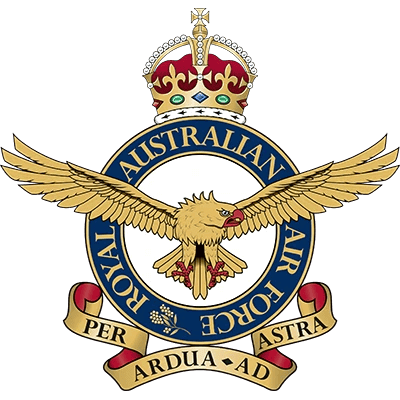
The Royal Australian Air Force (RAAF) also incorporates the Crown within its badge and rank insignia. The iconic Air Force badge features an eagle surmounted by the Crown, symbolising both air power and sovereign authority.
As with the Army and Navy, RAAF insignia are transitioning to display the Tudor Crown. This includes:
Cap badges
Officer rank insignia with Crown devices
Official emblems and heraldic material
Commemorative and ceremonial items
The change is subtle yet historically significant. For serving members, it marks service under a new monarch. For veterans and collectors, it provides a clear visual distinction between periods of service.
Why These Changes Matter
To some observers, the alteration of a crown design may seem minor. However, in military tradition, insignia carry weight and meaning. They denote allegiance, rank, honour and lawful authority.
The transition to the Tudor Crown matters for several reasons:
1. Constitutional Accuracy
The Australian Defence Force serves under the authority of the Crown. Updating insignia ensures accuracy in representing the reigning Sovereign.
2. Historical Continuity
Military history is often recorded through symbols. Crown changes help historians and collectors identify eras of service and production.
3. Respect for Tradition
Rather than discarding tradition, the change demonstrates its continuation. The Crown remains; only its form reflects the current monarch.
4. Collectability and Heritage
Transitional insignia often become historically significant. Collectors and museums carefully document variations to preserve an accurate record of military evolution.
Transition Periods and Practical Considerations
It is important to understand that updates to military badges do not occur overnight. Defence supply systems operate through procurement cycles, manufacturing timelines and authorised wear instructions.
Existing badges bearing the previous crown remain legitimate until formally replaced. Serving personnel should follow official Defence directives regarding the wear and acquisition of updated insignia.
For veterans, collectors and families, awareness of the Tudor Crown update is useful when purchasing memorabilia or replacing badges. Ensuring that insignia match the appropriate era of service maintains historical integrity.
The Broader Commonwealth Context
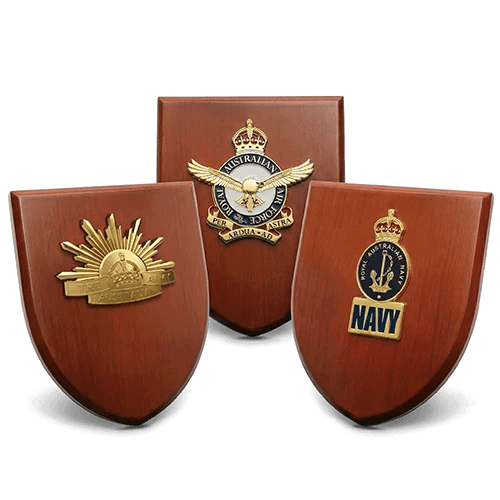
Australia is not alone in this transition. Across the Commonwealth, armed forces and government institutions are updating insignia to reflect the new monarch. This shared evolution reinforces the interconnected heritage of Commonwealth defence forces while allowing each nation to maintain its distinct identity.
Within Australia, the adoption of the Tudor Crown highlights the nation’s constitutional framework. While uniquely Australian in operation and culture, the ADF continues to serve under the authority of the Crown.
Preserving Accuracy and Respect
As badges evolve, so too does the responsibility to preserve their meaning. Accurate reproduction, respectful display and proper entitlement remain essential to maintaining trust in military symbols.
Whether worn on active duty, displayed in a collection or mounted for ceremonial purposes, badges featuring the Tudor Crown represent a specific and historic moment in Australia’s military timeline.
For suppliers and collectors, attention to detail is paramount. Differences in crown design, cypher inclusion and authorised patterns distinguish authentic insignia from inaccurate reproductions. Maintaining high standards ensures that the integrity of military honours and insignia is preserved.
A New Chapter in Australian Military Symbolism
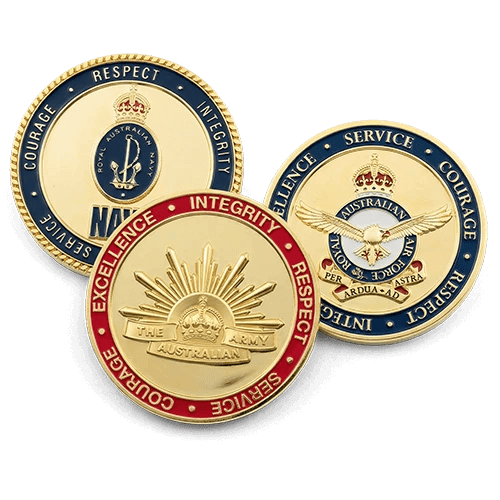
The update to Air Force, Navy and Army badges incorporating the Tudor Crown and CIIIR marks the beginning of a new era in Australian Defence symbolism. While the change is visual, its significance is constitutional, historical and ceremonial.
Military insignia function as living history. They evolve with the nation, the monarch and the Defence Force itself. As the Tudor Crown gradually becomes the standard across Australian service badges, it will come to symbolise service during the reign of King Charles III.
For serving members, it represents continuity of duty. For veterans, it distinguishes generations of service. For historians and collectors, it provides a clear marker of transition.
Above all, the adoption of the Tudor Crown reaffirms the enduring relationship between Australia’s armed forces and the Crown—an institution woven into the fabric of the nation’s military heritage.
FAQs
Why are Australian Defence Force badges changing to the Tudor Crown?
The change reflects the accession of King Charles III. With the transition from Queen Elizabeth II to His Majesty, official insignia across Commonwealth realms are being progressively updated to feature the Tudor Crown rather than St Edward’s Crown, aligning military symbols with the new reign.
What does CIIIR mean on military insignia?
CIIIR is the royal cypher of King Charles III. It stands for Charles III Rex (Latin for “King”), with the “R” denoting Rex. The cypher is incorporated into official emblems, badges and insignia associated with the Sovereign.
Do personnel need to replace their badges immediately?
Transition periods typically apply. Existing insignia remain valid, with updated badges introduced progressively through official supply channels. Serving members should follow Defence guidance regarding wear and entitlement.