


Why Tradies Are Adding Tactical Multi-Tools to Their Everyday Kits
If you step onto any Australian commercial job site, civil project, or residential build, you will notice a distinct shift in the everyday carry (EDC) gear hanging from tool belts. The standard, shiny hardware-store pocket knives of the past are disappearing. In their place is a new breed of blacked-out, high-torque gear: tactical multi-tools.
For a long time, the humble multi-tool was viewed by professional tradespeople as a weekend camping gadget—something fine for opening a tin of baked beans or tightening a loose screw on a bicycle, but entirely useless under the pump on a real-work site. If you put real pressure on the pliers, they flexed. If you tried to cut hard wire, the jaws nicked.
Not anymore. Modern engineering has elevated the pocket-sized tool into a military-grade asset. This guide breaks down exactly why an army of Aussie chippies, sparkies, plumbers, and mechanics are adding a heavy duty multi-tool to their permanent kits, what to look for when buying a multi-tool in Australia, and how to choose the right setup for your job.
What is a Tactical Multi-Tool?
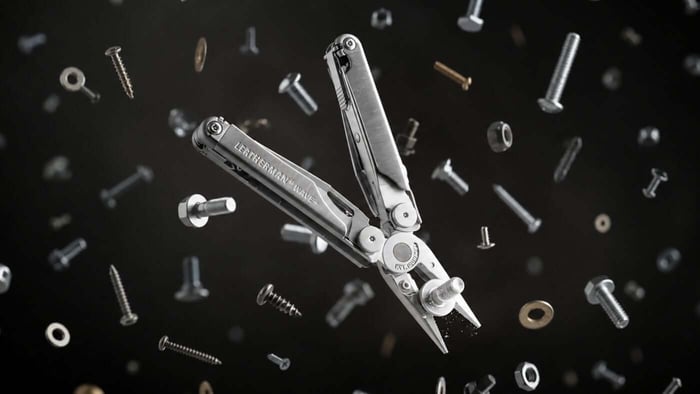
A tactical multi-tool is a high-performance, pocket-sized hand tool engineered to military or first-responder specifications. Unlike standard multi-tools, tactical variants prioritize high-torque structural integrity, matte corrosion-resistant finishes (like Black Oxide or Diamond-Like Carbon coatings), one-handed deployment, and premium blade steels capable of enduring extreme industrial abuse.
Why the Walk to the Ute is Costing You Serious Money
Every tradie knows the exact frustration: you are up on a ladder, squeezed deep into a roof cavity, or wedged underneath a switchboard, and you realize you need to snip a heavy-duty zip tie, scrape back some gunk from a thread, or tighten a random hex bolt.
You have two choices:
- Stop what you are doing, climb down, walk across the site, rummage through the back of the ute, grab a dedicated pair of pliers, and walk all the way back.
- Reach down to your hip, deploy a tool with one thumb, solve the problem in 10 seconds, and keep working.
The True Cost of the "Ute Walk"
- 5 trips to the truck per day x 6 minutes per round trip = 30 minutes lost daily.
- 30 minutes x 5 days a week = 2.5 hours of wasted billable time every single week.
Over a month, that is 10 hours of lost productivity just from walking.
A premium tactical multi-tool is not designed to replace your primary toolbags, your heavy socket sets, or your 18V power tools. It is your first line of defense. It is the tool that saves you hundreds of trips to the truck over a year, putting hours of billable time back into your pocket.
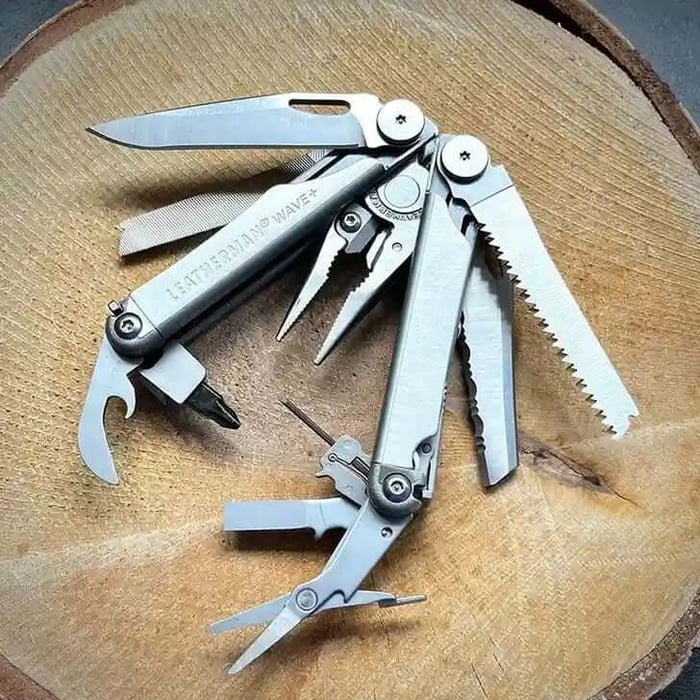
Key Features Tradies Look for in a Heavy Duty Multi-Tool
When you are dropping serious money on a premium pocket tool, you cannot afford to buy a gimmick. The Australian climate and the sheer brutality of our job sites will destroy cheap gear within a week. If you want a tool that survives, look closely at these five crucial pillars.
1. One-Handed Operation (The "Ladder Test")
This is the ultimate non-negotiable feature for any tradesperson. If you are holding a piece of heavy timber, structural cabling, or a copper pipe with your left hand, your multi-tool is completely useless if it requires two hands to open.
The best modern options feature magnetic architectures or butter-smooth pivot points that allow you to flick the pliers open or deploy the primary blade using only your thumb. If it fails the one-handed ladder test, leave it on the shelf.
2. Advanced Coatings: Black Oxide and DLC
Standard stainless steel looks great out of the box, but it has a major flaw on-site: it reflects harsh sunlight straight into your eyes, and it can pit and rust when exposed to coastal humidity, rain, or corrosive sweat inside a pocket.
Tactical tools are treated with specialized industrial coatings:
- Black Oxide: A chemical conversion coating that adds a matte finish, reduces glare, and offers excellent oil-retention properties to prevent corrosion.
- DLC (Diamond-Like Carbon): An ultra-thin, incredibly hard coating that mimics the structural properties of natural diamond. It provides immense scratch resistance and makes the moving parts slide smoothly without needing heavy grease.
3. High-Performance Blade Steels
A standard knife edge will go blunt the second time you use it to cut through thick cardboard, plasterboard, or heavy rubber insulation. Look for tactical gear utilizing high-end metallurgy like MagnaCut, 154CM, or S30V steel. These steels offer an exceptional balance of edge retention, toughness, and corrosion resistance, meaning you spend less time over a sharpening stone and more time cutting.
4. Replaceable Wire Cutters
Tradies abuse their tools—it is an occupational hazard. If you accidentally snip a hardened steel masonry nail or a live wire, you are going to notch the cutting jaws. On an old-school tool, a damaged cutter meant the entire unit was ready for the bin. Modern industrial variants feature replaceable carbide or tool-steel wire cutter inserts secured by small Torx screws. If you ding them, you simply swap them out for a fresh set for a few dollars.
The Legal Trap: Navigating Multi-Tool Laws in Australia
Before you clip any tool to your belt, you must understand the legal realities of owning a multi-tool in Australia.
Unlike the US or the UK, where knife laws can be highly standardized, Australian weapon laws vary significantly by state (e.g., Summary Offences Act in SA, Weapons Prohibition Act in NSW, or the Control of Weapons Act in VIC). Generally, carrying a locking knife blade in a public place without a "lawful excuse" is an offense.
Important Site Tip: Working as a professional tradesperson on a commercial or residential job site, or traveling directly to and from that site, constitutes a clear lawful excuse for carrying your work tools. However, if you leave that tool clipped to your work shorts when you head down to the local pub for knock-off drinks on a Friday afternoon, your lawful excuse disappears.
The Rise of the Bladeless Multi-Tool
Because of strict state laws, corporate site safety mandates, and airport transit security rules, many manufacturers now produce a dedicated bladeless multi-tool.
Standard Tactical Layout | Bladeless Tactical Layout |
Heavy Duty Pliers | Heavy Duty Pliers |
Locking Knife Blade | Heavy Duty Scissors |
Wood/Metal Saw | Wood/Metal Saw |
Bit Driver & File | Bit Driver & File |
By swapping out the primary cutting edge for a pair of high-performance, spring-loaded scissors or an extra file, a bladeless multi-tool provides all the heavy-duty mechanical leverage of a standard kit without the legal liabilities or workplace health and safety (WHS) compliance headaches. It is a massive winner for subbies working across high-security government sites, schools, or tier-one commercial projects.
Category Breakdown: Which Version Fits Your Trade?
Not all multi-tools are built the same way. To get the best return on your investment, you need to match the architecture of the tool to the daily demands of your specific trade.
The Heavy Industrial Workhorse
These are large, unapologetically heavy, and built for maximum torque. If you are a chippie, boilermaker, or diesel mechanic, you need a tool that can take a beating.
- Key Design Elements: Full-sized pliers, large wood saws, metal files, and integrated wire crimpers.
- Standout Features: Usually requires a dedicated heavy leather or nylon belt sheath because they are too heavy to sit comfortably in a loose pocket.
- Top Examples: Leatherman Surge, Victorinox Swiss Tool BS.
The High-Torque Tactical Specialist
Originally engineered for military weapon maintenance and explosive ordnance disposal (EOD), these tools have been heavily adopted by commercial trades due to their sheer durability and specialized components.
- Key Design Elements: Carbon scrapers (excellent for cleaning out old silicone, gasket material, or grout), bolt override tools, and heavy-duty compound leverage jaws.
- Standout Features: Jaws engineered to grip round pipes and nuts with double the clamping power of standard parallel pliers.
- Top Examples: Gerber Dual-Force, Leatherman MUT.
The Minimalist Everyday Carry (EDC)
If you are a site manager, supervisor, or estimator, you probably do not need a massive 400-gram brick hanging off your belt. You want something slim that can sit invisibly in your pocket until needed.
- Key Design Elements: Stripped-back frame, lightweight skeletonized handles, integrated pocket clip.
- Standout Features: Focuses strictly on the core essentials: pliers, a premium blade, and an adaptable bit driver.
- Top Examples: Leatherman Skeletool CX, Gerber Armbar Drive.
Pro Maintenance: How to Stop Plaster, Mud, and Grit from Killing Your Tool
A premium tactical tool is a piece of precision machinery. If you are constantly working around drywall dust, sawdust, wet cement, or metallic shavings from an angle grinder, that fine grit will eventually make its way into the pivot locks and freeze up the mechanism.
To keep your gear operating smoothly, follow this simple three-step maintenance routine every few months:
- The Blowout: Use an air compressor or a can of compressed air to thoroughly blast out all concrete dust, sand, and wood shavings from the internal tracks and locking wells.
- The Hot Wash: If the tool is choked with dried grease or mud, submerge it in a bucket of warm water mixed with a few drops of standard dishwashing liquid. Work the pliers and tools open and closed under the water to flush the pivot points. Rinse thoroughly with fresh water.
- The Dry Lube: Dry the tool completely (leave it in the sun or use a heat gun). Never spray it with heavy, sticky oils or WD-40. Standard wet oils act like an absolute magnet for plasterboard dust, turning into an abrasive paste inside your tool. Instead, apply a few drops of a dry, Teflon-based or graphite lubricant. It will keep the action fast and smooth without attracting site debris.
The Final Verdict: Is it Worth the Investment?
When you can walk into a local cheap auto shop and buy a generic multi-tool for thirty bucks, spending upwards of $150 to $350 on a professional-grade tactical multi-tool can feel like a tough pill to swallow.
But out on the job site, you always get exactly what you pay for. A cheap tool will fail you the exact moment you need it most—the jaws will twist, the metal will snap, or the knife edge will dull within three cuts.
A premium, heavy-duty tactical tool is a genuine investment in your daily efficiency. By keeping full-sized plier leverage, adaptable screw bits, a razor-sharp premium steel edge, and rugged corrosion protection directly on your hip, you stop wasting time, eliminate unnecessary trips across the site, and keep your momentum going. For the modern Australian tradie, it is no longer a luxury—it is an essential component of a smart, professional toolkit.
FAQs
Is it legal to carry a tactical multi-tool in Australia?
Yes, but context is everything. Australian weapon laws vary by state, and carrying a locking knife blade in public without a "lawful excuse" is generally an offense. Working as a professional tradesperson on a job site, or traveling directly to and from work, constitutes a clear lawful excuse. However, if you leave the tool on your belt when heading to the pub for knock-off drinks, that lawful excuse disappears.
What features are essential in a good multi-tool?
A job-site-ready multi-tool requires four essential pillars: one-handed operation for easy deployment while holding materials on a ladder, high-torque structural integrity to prevent the jaws from flexing under heavy pressure, premium blade steel (like 154CM or MagnaCut) to maintain a sharp edge against abrasive site materials, and replaceable wire cutter inserts so a nicked jaw only costs a few dollars to fix instead of ruining the entire tool.
Can a multi-tool replace my primary tool kit?
No. A premium tactical multi-tool is not meant to replace your primary toolbags, heavy socket sets, or 18V power tools. Instead, think of it as your first line of defense—an everyday carry (EDC) item on your hip that handles quick, unexpected tasks and saves you from constantly wasting time walking back to the ute.