

Then. Now. Always. RAAF Centenary
Discover the people, events and research behind each commissioned work.
View the original commissioned artwork and, where available, enquire about acquisition.
Discover and purchase rare #1–#10 Archive Editions and historically significant retained pieces.
Explore related Limited Edition lapel pins, medallions and art.
Centenary of the Royal Australian Air Force
The Royal Australian Air Force marked 100 years of service on 31 March 2021, but the story behind the Centenary began before the RAAF itself existed. At Point Cook, Victoria, Australia established its first military flying school in 1914. From there, Australian airmen went on to serve with the Australian Flying Corps during the First World War. After the war, the temporary Australian Air Corps bridged the transition to a permanent independent air service.
By its Centenary, the RAAF had evolved from timber-and-fabric aircraft into a highly networked modern force operating advanced combat, transport, surveillance, maritime patrol, refuelling and training aircraft. Yet across every era, the continuing story was its people, the generations who flew, maintained, supported and commanded the aircraft and served Australia in war and peace.
Read more
The origins of Australian military aviation are closely tied to Point Cook. The Central Flying School opened there in February 1914 and flying training began that August. During the First World War, Australian Flying Corps squadrons served in the Middle East and on the Western Front. After the Australian Flying Corps was disbanded, the Australian Air Corps provided a temporary bridge until the Australian Air Force was created in 1921.
The Second World War transformed the service. By late 1944 the RAAF had grown to more than 182,000 personnel and around 6,200 aircraft in 61 squadrons. Australians served across Europe, North Africa, the Mediterranean, Asia and the Pacific. The post-war Air Force then entered the jet age and continued operational service through Korea, Malaya, Confrontation and Vietnam, with aircraft such as the Meteor, Canberra, Sabre, Mirage, Iroquois, Caribou and F-111 marking successive generations of capability.
The decades approaching 2021 brought another transformation: strategic airlift, airborne early warning, air-to-air refuelling, maritime surveillance, electronic attack, remotely piloted systems and the F-35A. The Centenary theme, Then. Now. Always. therefore looked in both directions: honouring the service and sacrifice of past and present members while recognising that Air Force would continue to adapt beyond its first hundred years.
The RAAF Centenary
The Royal Australian Air Force marked its centenary on 31 March 2021 under the official theme, Then. Now. Always. The centenary program commemorated the service and achievements of past and present members, increased public awareness of the Air Force’s history and contribution to Australia, and sought to inspire future generations to continue its legacy of service.
The centenary was commemorated across Australia and at deployed and diplomatic locations overseas. It was both a historical anniversary and an opportunity for Air Force to explain how a service born in the age of timber-and-fabric aircraft had become a highly networked force operating sophisticated combat, transport, surveillance and support systems.
Then. Now. Always. Centenary of The Royal Australian Air Force
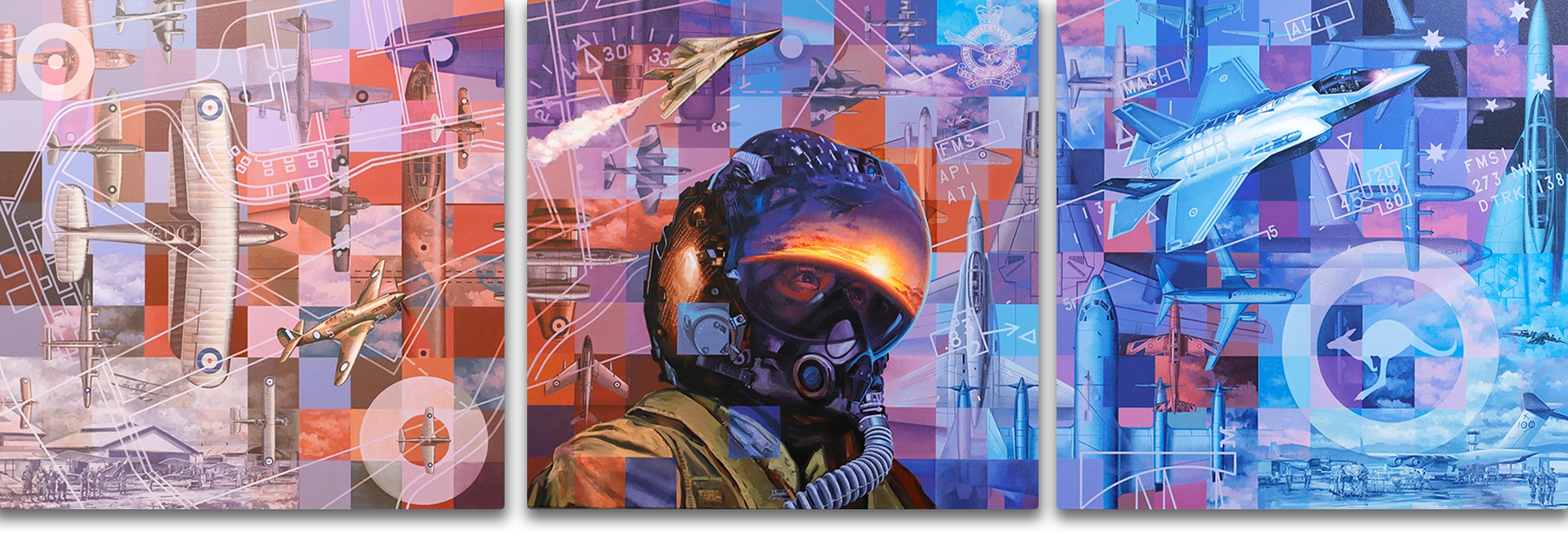
To commemorate the Air Force Centenary, BrandNet commissioned Australian aviation artist Drew Harrison to create an artwork capable of carrying an unusually large story: 100 years of aircraft, people, service, technological change and national history.
Read more
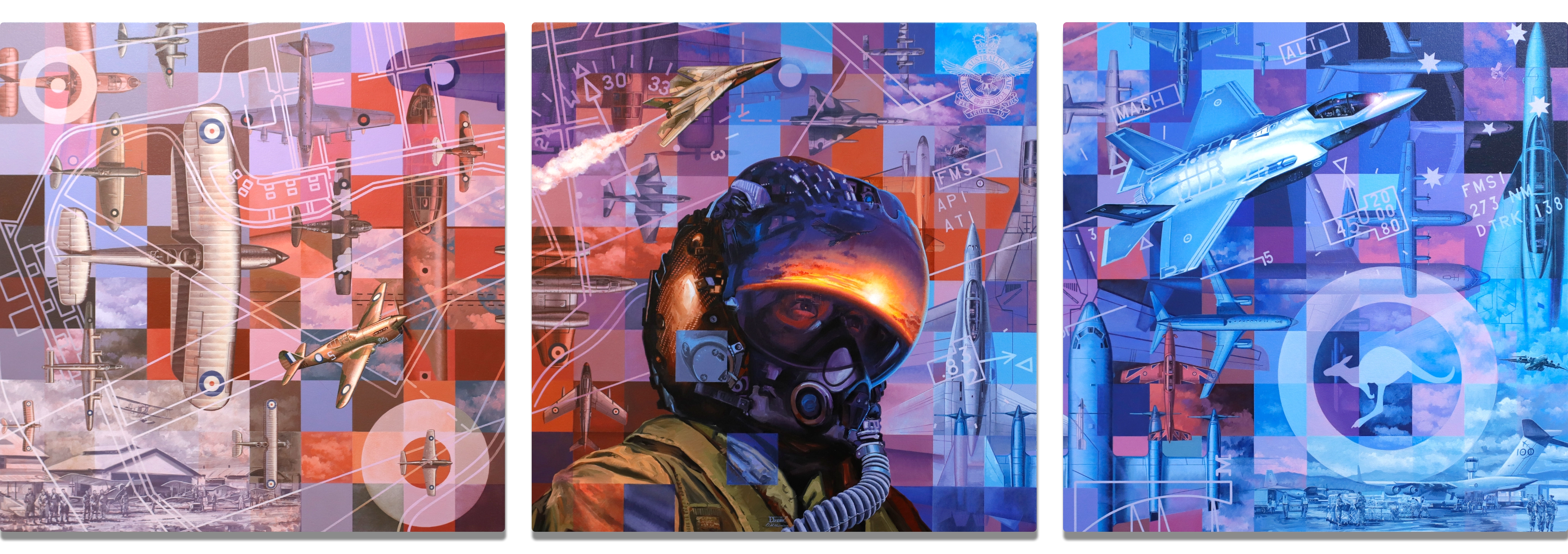
Harrison initially explored more traditional aviation concepts, including a pilot surrounded by historical vignettes and aircraft flying in formation. He concluded that a conventional aviation painting could not comfortably contain the breadth of the centenary. The solution was a contemporary triptych, three interconnected one-metre-square panels that could operate as one work while giving the story room to move from past to present and future.
The composition takes cues from the RAAF100 identity and the words Then. Now. Always. A single pilot anchors the centre. Around that figure, aircraft, roundels, crest imagery, Head-Up Display graphics, a map of Point Cook and the centenary grid overlap in layers. The result is neither a chronological chart nor a traditional air-combat scene. It is a visual tapestry of Air Force history.
Historical Accuracy
Then. Now. Always. is a visual history of a century, not a single moment in time. Aircraft separated by decades appear within the same composition because the work is designed to connect eras rather than reconstruct an actual formation.
Read more
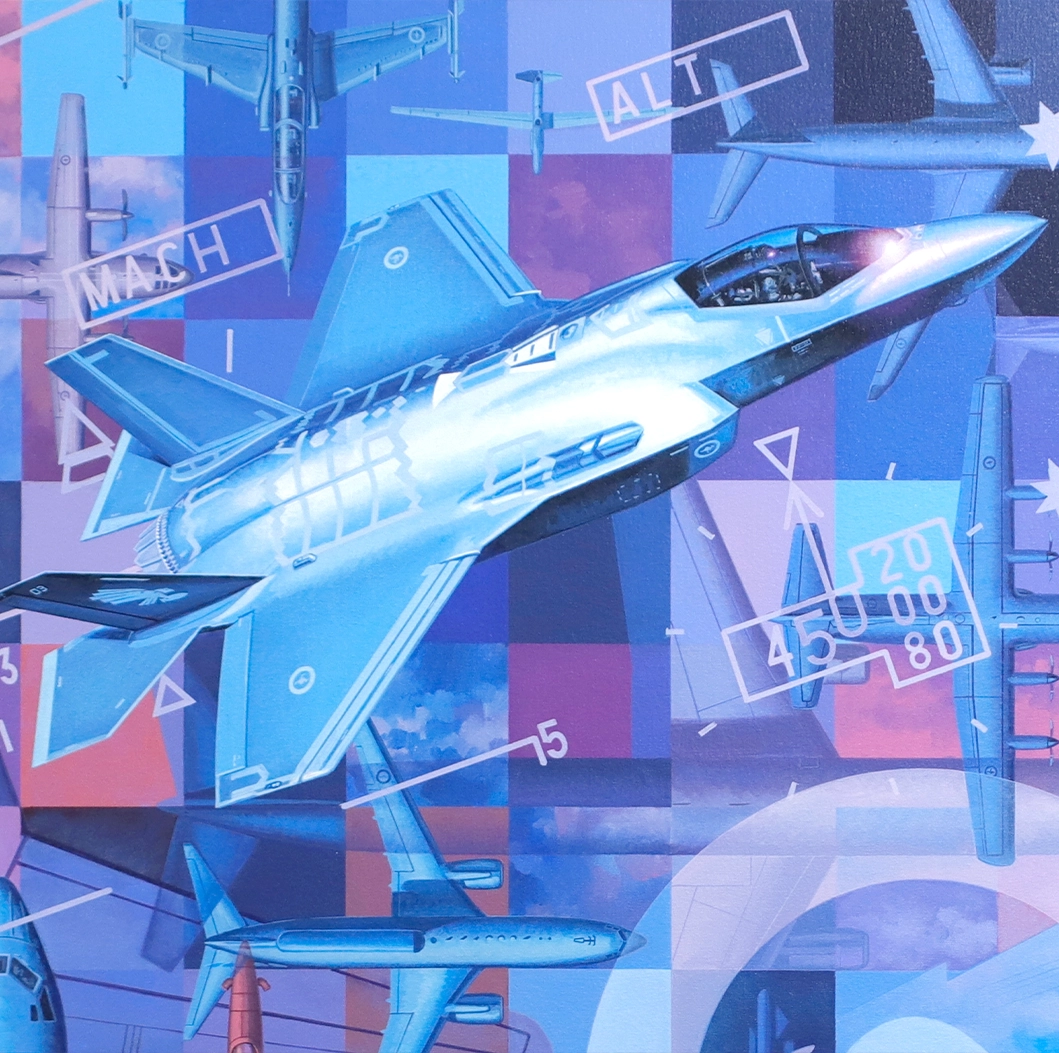
The historical detail lies in the aircraft, insignia, symbols and places represented. Harrison included 40 aircraft spanning the century, from early types associated with the beginnings of Australian military aviation through Second World War aircraft, Cold War and Vietnam-era types, and the modern F-35A, Wedgetail, Poseidon, Growler and other contemporary platforms.
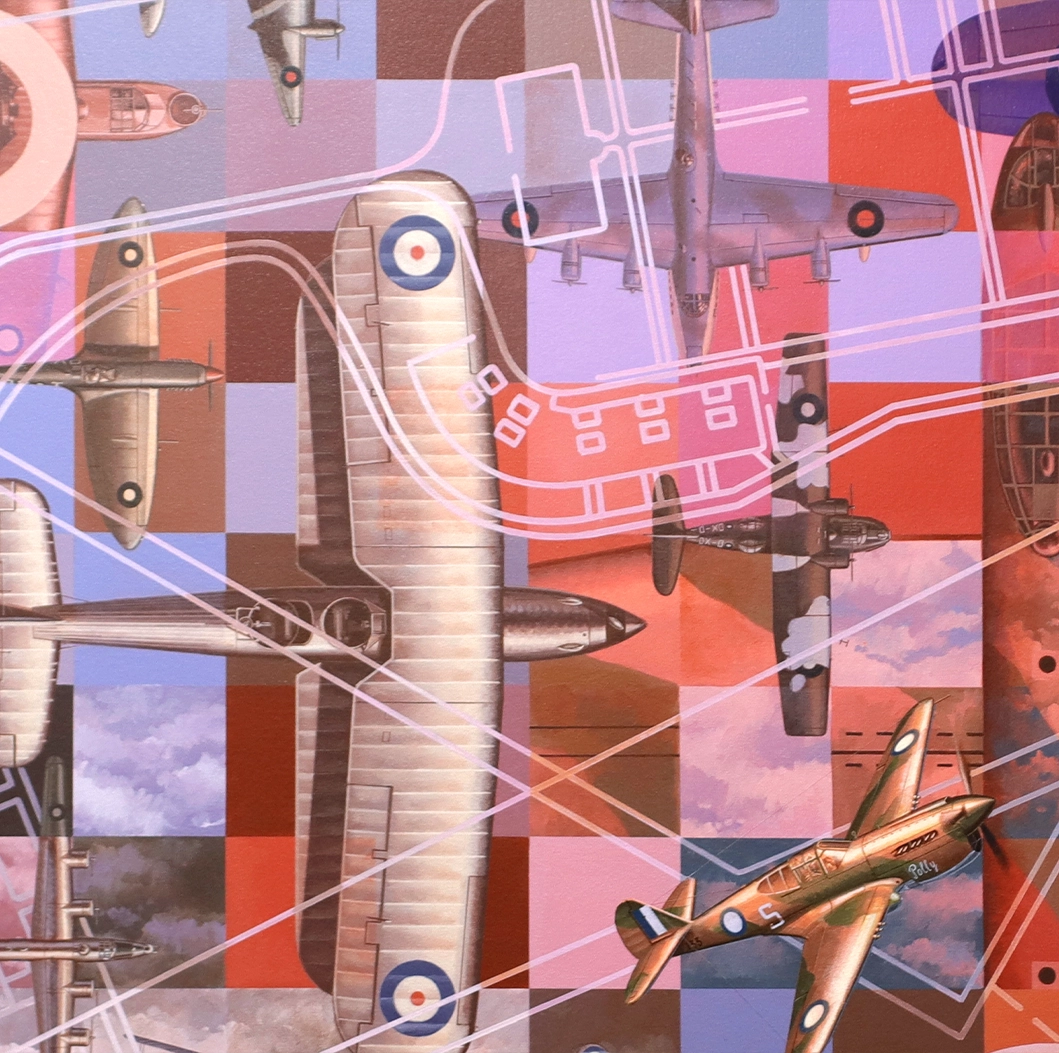
The structure itself carries historical meaning. The narrative begins at Point Cook and moves from the lower left toward the upper right. Sepia tones evoke the early years before the work transitions into the familiar deep blues associated with Air Force. Each of the three canvases contains a 10 × 10 grid (100 squares) while the central pilot provides a human link between generations. The work therefore uses deliberate artistic compression while retaining historically recognisable aircraft and symbolism.
100 years built into the design
Each panel contains a 10 × 10 grid, creating 100 squares within each canvas. The device gives the work structure while quietly repeating the centenary number. Harrison described the squares as both building blocks and a kind of tapestry, a way of connecting ideas, people, aircraft and technological advance. Combined with the shift from sepia to deep blue, the grid helps the viewer read the artwork as a passage through time.
The people behind the aircraft
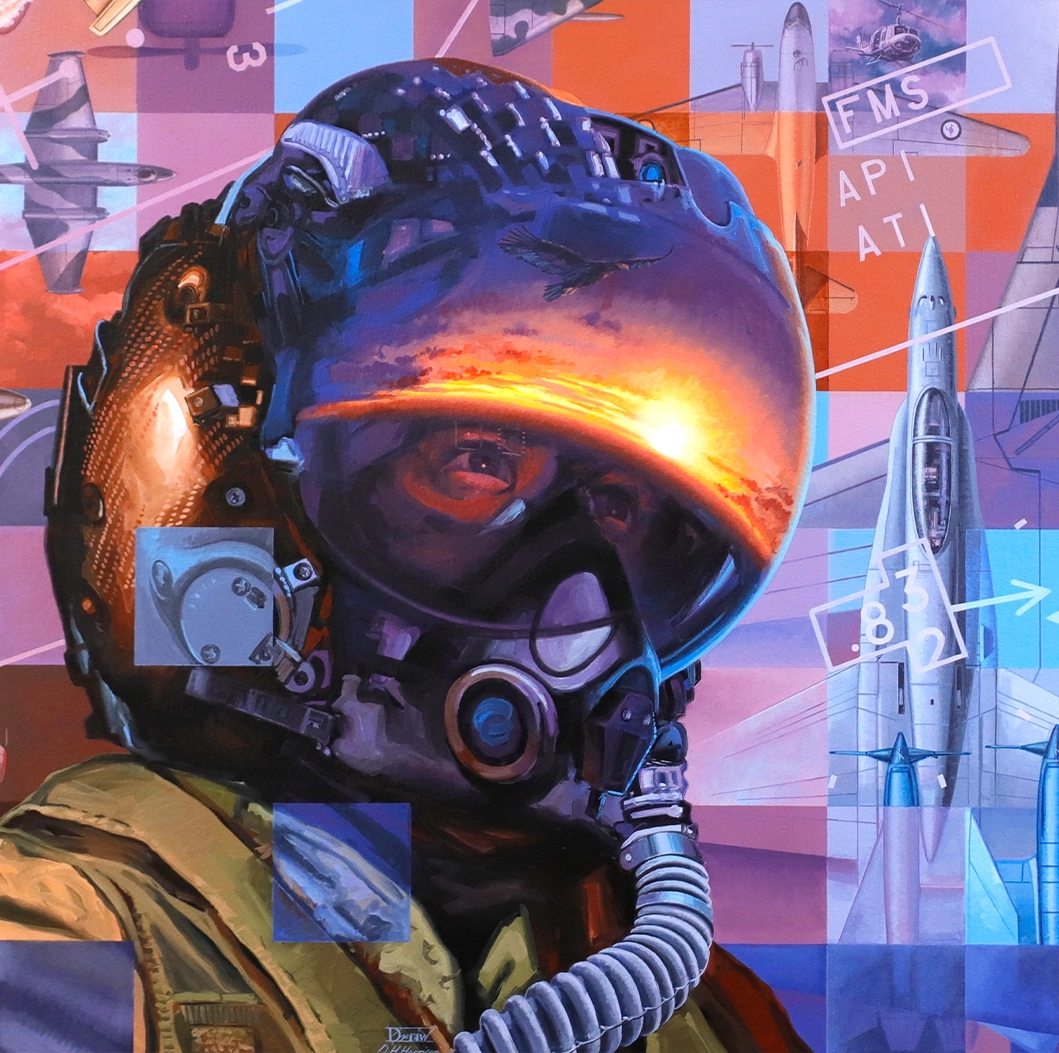
At the centre is a single pilot figure. The figure is not intended as a portrait of one individual; it represents the generations of people who have contributed to Air Force service. The choice is important. Aircraft dominate aviation history visually, but Harrison makes the person the unifying element. Technology changes from canvas-covered biplanes to stealth fighters and remotely piloted systems; the continuing thread is the people who operate, maintain and support them.
A century of changing capability
Forty aircraft are woven through the three panels. Three (the P-40, F-111 and F-35) receive particular three-dimensional prominence, while the remaining aircraft appear within the layered grid. The selection is deliberately representative rather than exhaustive. It includes aircraft associated with training, fighter defence, strike, maritime patrol, reconnaissance, transport, helicopters and modern surveillance. Together they show how Air Force capability expanded from basic flying and reconnaissance into a sophisticated, multi-role force.
Drew Harrison
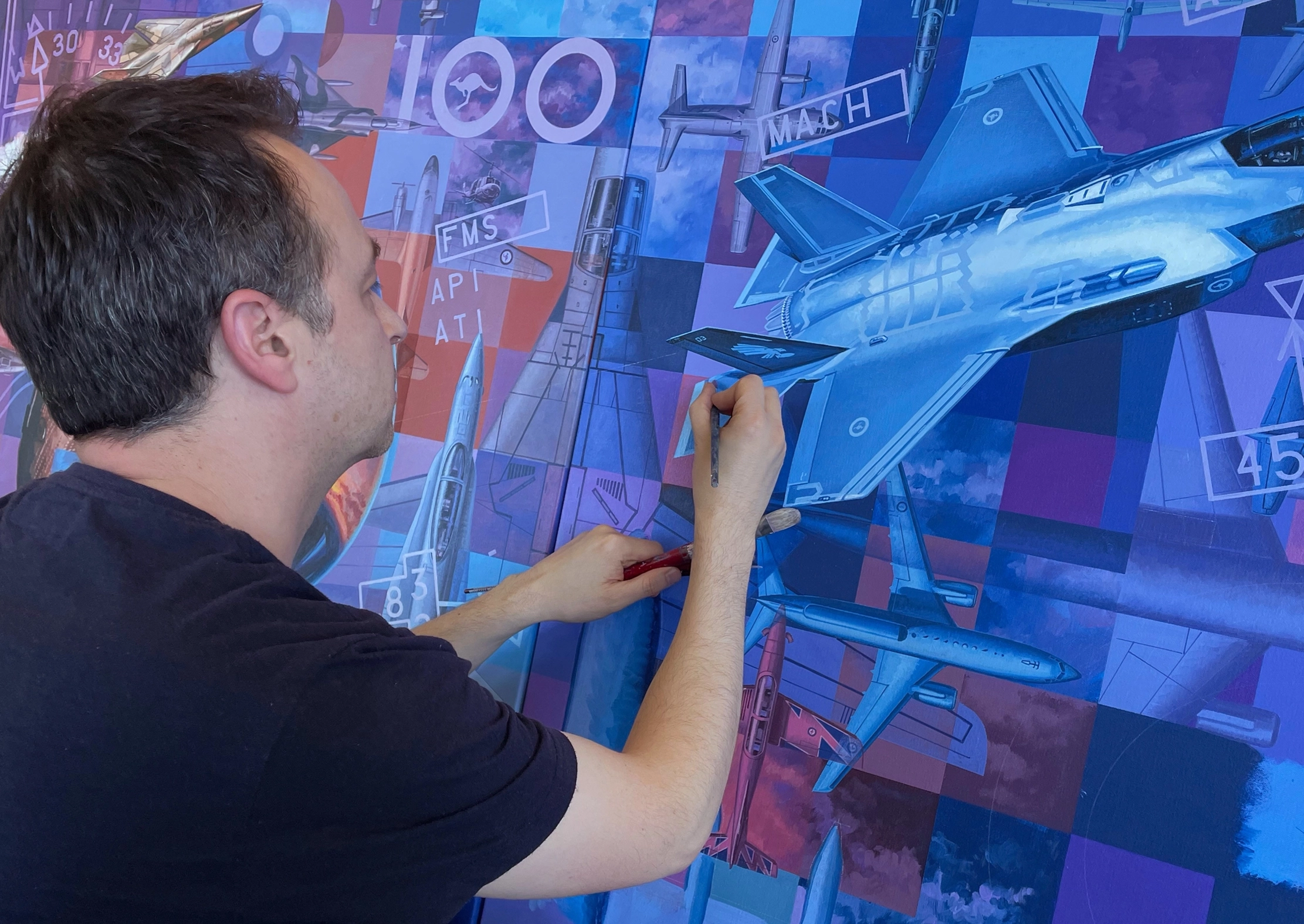
Drew Harrison is an Australian artist whose military and aviation work combines detailed research with a contemporary visual language. His experience in traditional aviation painting gave him the technical grounding to render aircraft accurately, while commissions such as Then. Now. Always. allowed him to move beyond a single aircraft scene into broader visual storytelling.
For the Centenary commission, Harrison deliberately resisted the temptation to turn 100 years of Air Force history into a crowded chronological montage. His solution was to use symbolism, colour, repeated geometry and carefully selected aircraft to create a work that could be understood at several levels: first as a strong contemporary image, then as an aviation artwork, and finally as a detailed visual history.
Artist’s Notes
Harrison’s central idea was movement from Point Cook in 1921 toward the modern Air Force and beyond. The pilot became the human centre of the composition; the grid represented both technological building blocks and the interconnected fabric of the service; and the palette moved from historical sepia into deep Air Force blue.
The artwork also incorporates RAAF crest imagery, roundels, Head-Up Display graphics and a map of Point Cook. In the pilot’s visor is the reflection of an eagle, linking the modern figure back to the enduring idea of flight and to Air Force identity. The three most prominent aircraft (P-40, F-111 and F-35) span different generations, while more than thirty additional aircraft appear in plan view across the composition.
Detailed Artwork Description
The first panel begins in sepia. Early aircraft and Point Cook establish the origins of the story, while Second World War types build the historical density of the image. Across the central panel the palette and technology change. The pilot occupies the visual centre, surrounded by aircraft and layered Air Force symbolism. In the final panel, deep blues, modern aircraft and the upward movement of the design carry the eye toward contemporary capability and the future.
Look closely and the work rewards repeated viewing. Aircraft are not arranged simply by size or fame. They are layered into the grid so that the eye moves between generations. Roundels, the RAAF crest, map elements and digital graphics connect institutional heritage with modern technology. The three canvases remain distinct, yet the diagonal movement across them makes the triptych read as one continuous century.
The original Then. Now. Always.
The original commissioned artwork by Drew Harrison is preserved within the BrandNet Archives. Painted as three individual panels, each measuring 1000 × 1000 mm, it is the unique source work from which the Centenary limited editions and wider collection were created. For a collector, organisation or institution, the original offers something no reproduction can: the artist’s hand, surface and scale, together with direct provenance to the RAAF Centenary commission.
Read More
The triptych was conceived from the outset as a single centenary work. Viewed at full scale, its three-metre visual span allows the progression from Point Cook to the future to unfold as Harrison intended. The original also preserves details and texture that inevitably change when the image is reduced for canvas, aluminium and other collectable formats.
Own a part of the story
The original triptych became the foundation for a family of limited-edition art and Centenary collectables. Each format carries Harrison’s visual history of Air Force into a different scale and setting.
 Click to enlarge
RAAF Centenary 3 Frame Limited Edition Canvas Artwork
Three individually framed canvases preserve the triptych format of Harrison’s original work, allowing the Then, Now and Always panels to retain their intended separation while reading as one continuous composition. Special provenance: the first 100 large-format reproductions were promoted with a metal disc cut from A21-1, the first F/A-18A built and flown in Australia.
View the Artwork → Click to enlarge
RAAF Centenary Large Limited Edition Canvas Artwork
The three panels are combined into a single 1800 × 600 mm canvas, presented in a black shadow frame with a centrally positioned engraved message plate.
View the Artwork → Click to enlarge
RAAF Centenary Medium Limited Edition Canvas Artwork
A more compact 1200 × 400 mm single-canvas edition, presented in a black shadow frame while retaining the complete Then. Now. Always. Heritage inclusion: a small piece of metal from a No. 452 Squadron Spitfire Mk VIII, donated by the Darwin Aviation Museum. The medium edition was designed for smaller display spaces without cropping the artwork. All three panels are combined into one continuous canvas, preserving the movement from the early Air Force to the modern service.
View the Artwork → Click to enlarge
Then. Now. Always. AF100 Aluminium Artwork
A contemporary aluminium presentation of Harrison’s complete Centenary artwork, combining the vivid colour and sharp detail of the original composition with a clean modern display format. The aluminium format is particularly suited to the contemporary character of the commission. Its smooth surface and crisp reproduction complement the grid, aircraft silhouettes and deep blues of the later panels while keeping the full centenary story together in one piece.
View the Artwork → Click to enlarge
Then. Now. Always. AF100 Set of 4 Limited Edition Coffee Mugs
A four-mug set carrying imagery from the Then. Now. Always. Centenary collection, designed to bring elements of Harrison’s artwork into an everyday commemorative format. The mug set is part of the wider collection rather than a fine-art edition. It demonstrates how individual aircraft and visual elements from the commission were adapted beyond the original triptych while retaining the Air Force 100 identity.
View the Set →History, artwork and collecting
Explore the history behind the Then. Now. Always. Artwork, the choices and decisions made by the artist, and the Archive and Limited Edition pieces created from the commission.
The Artwork
Why was Point Cook important to the birth of Australian military aviation?
Point Cook became the home of Australia’s first military flying school and is closely associated with the origins of the RAAF. The Central Flying School opened at Point Cook in February 1914 and flying training began that August. Australian military aviators trained there before the Australian Flying Corps served overseas during the First World War.
After the war, Point Cook remained central to the Australian Air Corps and then to the new Australian Air Force formed in 1921. That is why Harrison begins the centenary narrative there.
When was the Royal Australian Air Force formed?
The Australian Air Force was formed as an independent service on 31 March 1921 and received authority to use the title “Royal” later that year. The new Air Force replaced the temporary Australian Air Corps and became the third arm of Australia’s military forces.
The 31 March date became the basis of the 2021 Centenary. The change was more than a new name: it established a permanent independent air service whose roles and technology would expand dramatically over the next century.
How large did the RAAF become during the Second World War?
By late 1944 the RAAF had more than 182,000 personnel and around 6,200 aircraft in 61 squadrons. More than 215,000 men and women served in the RAAF during the Second World War, and 9,870 lost their lives.
Australians served across Europe, North Africa, the Mediterranean, Asia and the Pacific. The scale of that wartime expansion explains why so many Second World War aircraft occupy the historical side of Then. Now. Always.
What did the RAAF do after 1945?
The RAAF remained operational through the Cold War and served in Korea, Malaya, the Indonesian Confrontation, Vietnam and later peacekeeping and Middle East operations. No. 77 Squadron entered the Korean War within days of the conflict beginning, initially flying Mustangs and later Meteors.
Later decades brought Sabres, Canberras, Mirages, Iroquois helicopters, Caribous and F-111s, alongside transport, maritime and support aircraft. Air Force also became increasingly involved in peacekeeping, humanitarian assistance and regional operations.
Why was the 2021 Centenary called Then. Now. Always.?
The phrase connected Air Force heritage, present-day service and the generations still to come. Air Force used the Centenary to honour past and present members, strengthen public understanding of its contribution to Australia and inspire future generations.
The theme was therefore deliberately forward-looking. Harrison adopted the same idea structurally: the artwork starts with the past, moves through the present and continues visually toward future and space-related capability.
The Commission
Why is the artwork a triptych?
Three panels gave Harrison enough visual space to tell a century-long story without turning it into a conventional timeline. Early concepts based on a pilot surrounded by historical scenes or aircraft in formation proved too restrictive.
The triptych allowed Harrison to create three connected chapters and to move the eye continuously from Point Cook in 1921 toward the future.
Who is the pilot in the centre?
The pilot is a symbolic figure representing generations of Air Force personnel, not one named individual.
Harrison wanted people to remain at the centre of a story that could easily have become dominated by aircraft. The pilot connects every era: aircraft, uniforms and technology change, but service is ultimately carried by people.
Why are aircraft from different eras shown together?
Because the painting is a visual history, not a literal formation. Forty aircraft from across the century are layered through the three panels.
Their placement is designed to create historical progression and visual balance rather than reproduce an event that actually occurred. The approach lets a viewer compare generations of capability within one continuous composition.
What is the meaning of the 10 × 10 grid?
Each panel contains 100 squares, reinforcing the Centenary while providing a structure for the layered imagery.
Harrison saw the grid as both technological “building blocks” and a tapestry linking people, ideas and aircraft. It also gives the work a contemporary visual language very different from a traditional aviation painting.
Why does the colour change across the artwork?
The palette moves from sepia into deep Air Force blues to signal the passage from history toward the present and future. The colour transition is one of the work’s strongest storytelling devices.
The historical side feels archival, while the later panels become increasingly contemporary. The pilot looks toward that blue, future-facing side of the composition.
The Collection
How was the three-panel original adapted for collectors?
It was reproduced both as a three-frame treatment and as combined single-canvas editions, with aluminium and other collectables extending the collection further. The three-frame edition preserves the structure of the original triptych.
The 1800 × 600 mm and 1200 × 400 mm versions combine all three panels into one continuous canvas. The aluminium artwork provides a more contemporary display option, while medallions, mugs and other pieces carried the Centenary story into smaller collectable formats.
What makes the large and medium canvas editions special?
Both were limited to 250 and carried an engraved Chief of Air Force message, edition number and a heritage-metal inclusion.
Military Shop’s Centenary page records that the 1800 × 600 mm and 1200 × 400 mm canvas editions each incorporated a small disc of metal from a No. 452 Squadron Spitfire Mk VIII, donated by the Darwin Aviation Museum. This physically links the modern Centenary reproduction with an aircraft from the RAAF’s wartime heritage.
What was special about the first 100 large-format reproductions?
They were promoted with a metal disc cut from A21-1, the first F/A-18A built and flown in Australia. That inclusion connected the Centenary artwork with a significant physical piece of Australian aviation heritage.
Where an archive example contains the A21-1 disc, its certificate and message plate should be retained with the artwork as part of its provenance.
Archive Editions
What is an Archive Edition?
An Archive Edition is a retained piece from BrandNet’s original release, preserved with its documented edition number and provenance. For Then. Now. Always. the archive can include early-numbered artwork editions and other retained Centenary pieces.
The significance is not simply age: it is the documented connection between the piece, the original BrandNet release and the Centenary commission.
Why are low edition numbers sought after?
Collectors often value early numbers because they sit at the beginning of a finite numbered release. The image quality is not inherently different, but a low number can add collecting interest, particularly where the piece remains complete with its original certificate, message plate, heritage-metal inclusion and BrandNet provenance.
What should remain with a limited-edition artwork?
Keep the artwork, certificate, numbered message plate and any original heritage-metal inclusion or presentation material together. Those elements help establish exactly what the collector owns.
With special Centenary editions, the metal inclusion and engraved plate are part of the story of the object, not simply packaging.
Then. Now. Always. A century preserved
Then. Now. Always. occupies a special place in the BrandNet Archives. Commissioned for a once-in-a-century anniversary, the original triptych records how Air Force chose to look at its own history in 2021: proud of its beginnings, conscious of the service and sacrifice of generations, and already looking toward what came next.
The BrandNet Archives preserve the original artwork alongside selected editions and collectables developed from it. Together they record more than the finished products. They preserve the path from historical research and artistic commission to the limited releases created for the Centenary, a small material record of how 100 years of Royal Australian Air Force history were commemorated.
Explore the BrandNet Archives →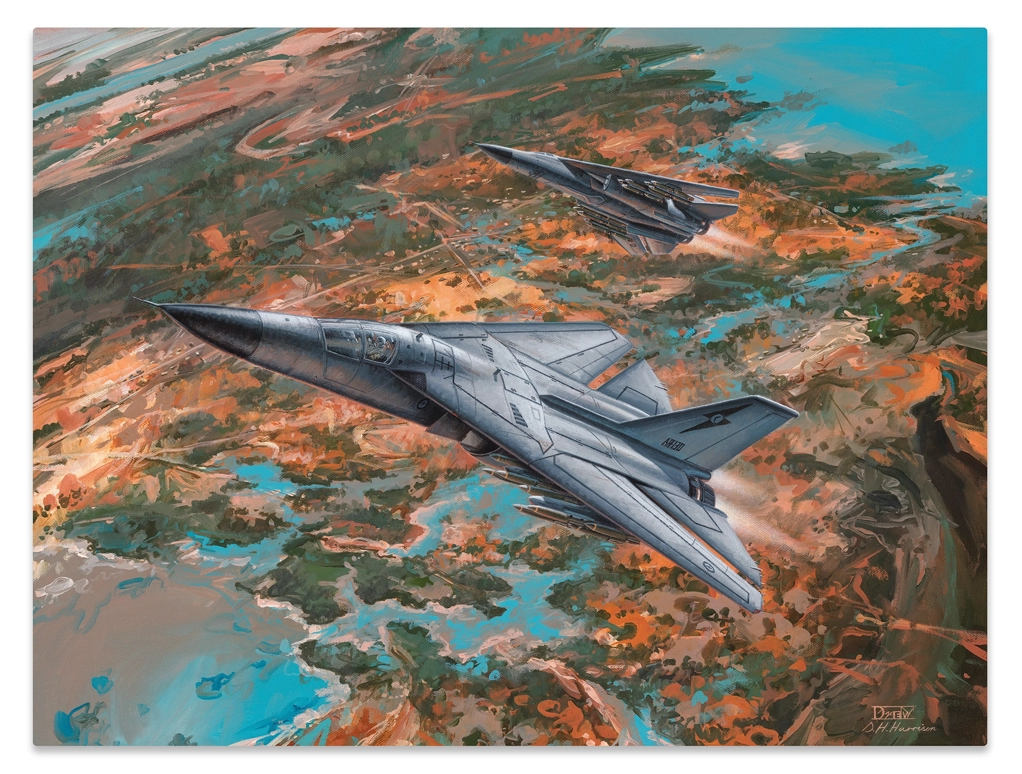
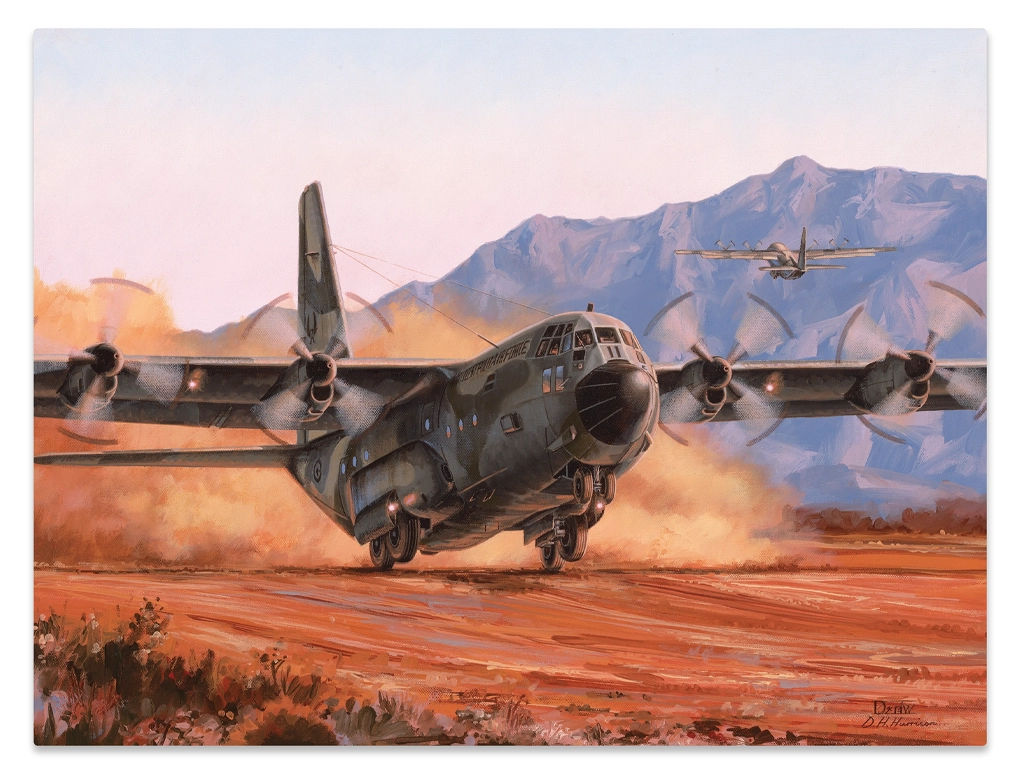
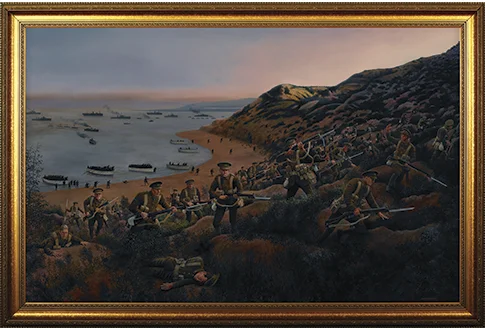
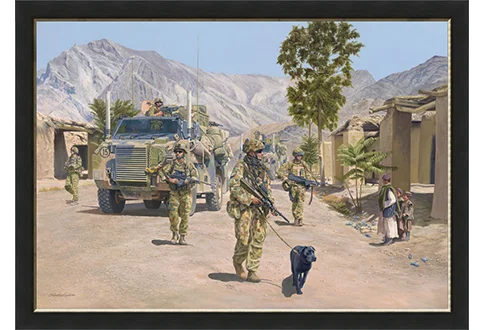
Explore more Australian military stories, art and collectables
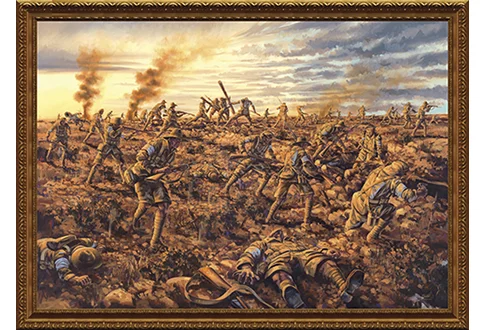
The Battle of The Nek is one story within a much larger archive of commissioned military artworks, historically significant pieces, low-number Archive Editions and Limited Edition collections.
Explore The BrandNet Archives