

F-111: Seek, Strike, and Return
Discover the people, events and research behind each commissioned work.
View the original commissioned artwork and, where available, enquire about acquisition.
Discover and purchase rare #1–#10 Archive Editions and historically significant retained pieces.
Explore related Limited Edition lapel pins, medallions and art.
General Dynamics F-111C
Few aircraft have entered Australian service amid as much controversy — or departed with as much affection — as the General Dynamics F-111. Australia selected the aircraft in 1963 to replace the Canberra bomber and provide the Royal Australian Air Force with a modern long-range strike capability. Technical problems, rising costs and delays turned the acquisition into a national controversy, and Australia temporarily leased F-4E Phantoms while it waited.
The first six F-111Cs finally arrived at RAAF Base Amberley on 1 June 1973. What followed was a remarkable reversal in reputation. With variable-sweep wings, terrain-following radar, long range and the ability to deliver a heavy weapons load at high speed and low altitude, the F-111 became the mainstay of Australian strike power and an important regional deterrent.
Read more
Operated from Amberley by No. 1 and No. 6 Squadrons within No. 82 Wing, the aircraft served Australia for 37 years. Reconnaissance-modified RF-111Cs added another capability, including operational reconnaissance over East Timor in 1999. To the public, the F-111 also became famous for its spectacular 'dump and burn' displays.
The fleet retired on 3 December 2010. By then 'The Pig', as it was affectionately known in Australia, had moved from troubled acquisition to aviation icon, remembered as much for the people who flew and maintained it as for its extraordinary performance.
The F-111 was an ambitious choice. Australia ordered 24 aircraft before the design had fully matured, seeking a strike aircraft able to travel long distances, penetrate at low level and deliver a substantial weapons load. The F-111C was unique to Australia, combining features from different American variants. Development problems with the aircraft’s innovative variable-geometry wing structure contributed to a five-year delay between the first Australian aircraft flying in 1968 and the fleet’s arrival in 1973.
Once in service, those capabilities proved enduring. The wings could sweep for efficient high-speed flight or extend for lower-speed operation; terrain-following systems allowed crews to fly very low in poor visibility; and the aircraft’s range gave Australia a strike reach unmatched in the region. Four F-111Cs were later converted to RF-111C reconnaissance aircraft, and additional ex-USAF F-111Gs joined the fleet in the 1990s.
Australia never employed the F-111 in an operational strike mission. Its strategic value instead rested heavily on deterrence, the knowledge that the RAAF possessed a credible long-range strike capability. The RF-111 did see operational employment over East Timor in November 1999, gathering aerial imagery after Indonesian forces withdrew. When the final aircraft landed at Amberley in December 2010, the F-111 left behind one of the longest and most distinctive chapters in RAAF combat-aircraft history.
Campaign Facts
Australia selected the F-111 in 1963 to replace the Royal Australian Air Force’s Canberra bombers, with the first six F-111Cs arriving at RAAF Base Amberley on 1 June 1973. Australia was the first and only foreign customer for the American F-111, which served with Nos 1 and 6 Squadrons of No. 82 Wing at Amberley. Combining variable-sweep wings, long range, high speed and terrain-following capability, the F-111 became a significant component of Australian air power. Four Australian aircraft were converted to the RF-111C reconnaissance configuration, and these aircraft flew operational reconnaissance missions over East Timor in November 1999.
Read more
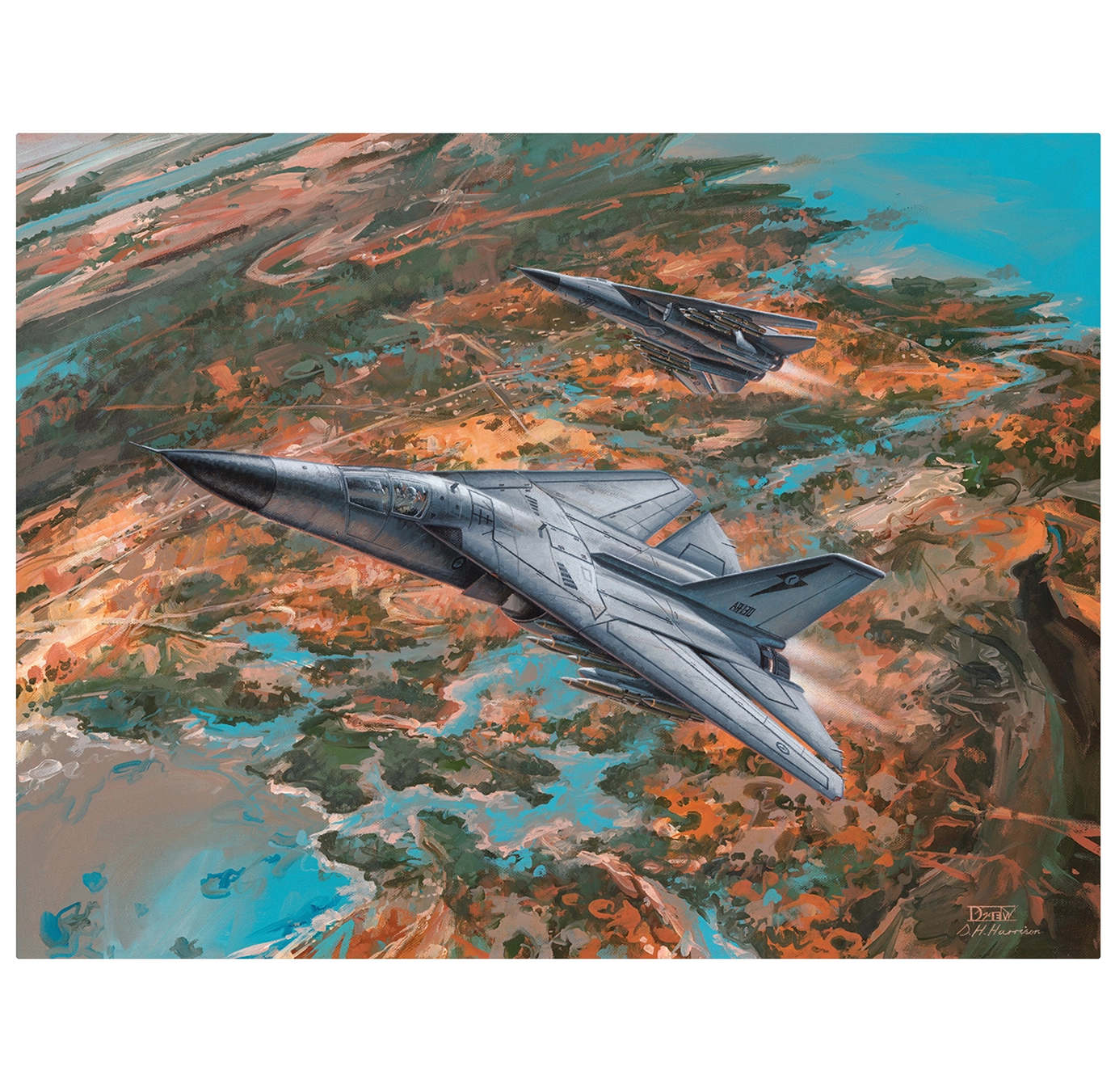
The RAAF’s F-111 fleet was retired on 3 December 2010, bringing an end to 37 years of Australian service. Seek, Strike, and Return depicts F-111Cs A8-130 and A8-147 late in their service lives. The aircraft’s longevity is an important part of its significance: ordered in the 1960s, introduced in the 1970s and operated well into the 21st century, the F-111 remained a central part of Australian air power for decades. Air Force has described it as one of the world’s outstanding long-range strike aircraft, while the Australian War Memorial preserves RF-111C A8-134 as a significant object in the National Collection.
Seek, Strike, and Return: The F-111
Seek, Strike, and Return was created by Drew Harrison as the first work in BrandNet’s Iconic Aviation Collection, a series commissioned to tell the stories of aircraft that became inseparable from Royal Australian Air Force history.
Read more
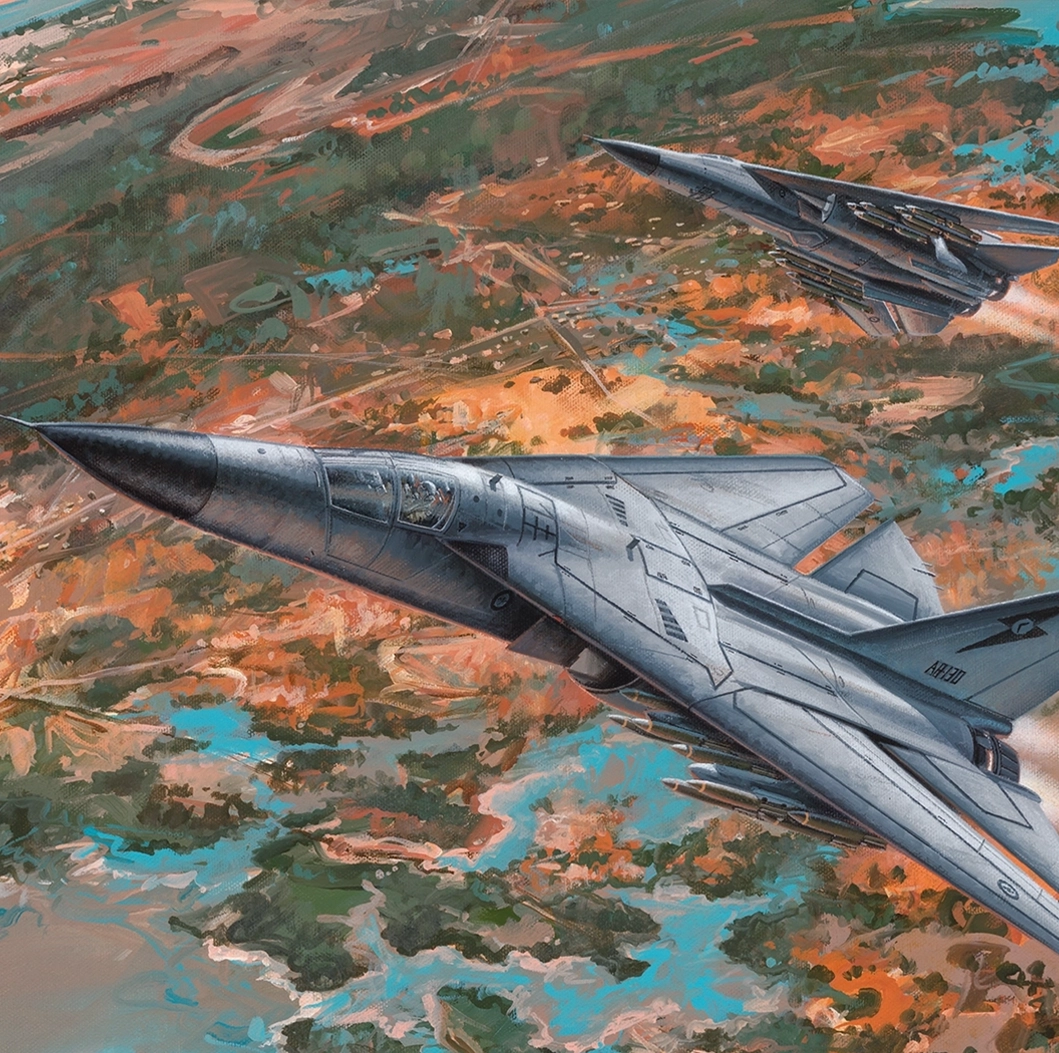
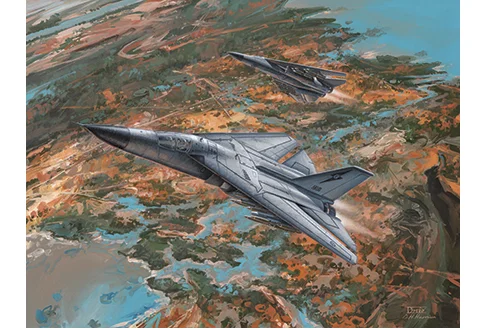
Harrison depicts two F-111Cs in flight over northern Australia: A8-130 carrying No. 6 Squadron identity and A8-147 representing No. 1 Squadron. They are shown fully armed, wings set for fast flight, with the coastline below reinforcing the distance and geography that shaped Australia’s need for long-range strike capability.
The title captures the mission in three words. 'Seek' evokes navigation, reconnaissance and target acquisition; 'Strike' reflects the aircraft’s central purpose; and 'Return' speaks to the range, fuel capacity and systems that allowed crews to fly deep missions and come home. It is not the record of one sortie, but a visual summary of what the F-111 was built to do.

Historical Accuracy
Drew Harrison’s Seek, Strike, and Return is a researched aviation composition built around two identifiable RAAF F-111Cs: A8-130 of No. 6 Squadron and A8-147 of No. 1 Squadron. Military Shop’s original collection notes place both aircraft late in their service lives, fully armed over the northern Australian coastline.
Read more
The scene is representative rather than a record of a specific operational strike. That distinction is historically important: although the RAAF maintained the F-111 as a strike capability for decades, the Australian fleet was never deployed operationally in a strike role.
The aircraft are shown in the context that best explains their purpose, speed, range, weapons carriage and the vast distances of northern Australia. A8-130 survives in Hawaii, while A8-147 is preserved at Evans Head in New South Wales. The painting therefore combines historically identifiable aircraft with an imagined mission setting to communicate the capability the F-111 represented.
Two surviving Australian F-111Cs
The painting centres on two real aircraft from the RAAF fleet, linking the dramatic composition to identifiable airframes and squadrons. A8-130 served with No. 6 Squadron and was later gifted for museum display at Pearl Harbor, while A8-147 is preserved at Evans Head Aerodrome in New South Wales. Their survival gives the artwork an additional connection between the operational era and today’s aviation heritage.
An unmistakable silhouette
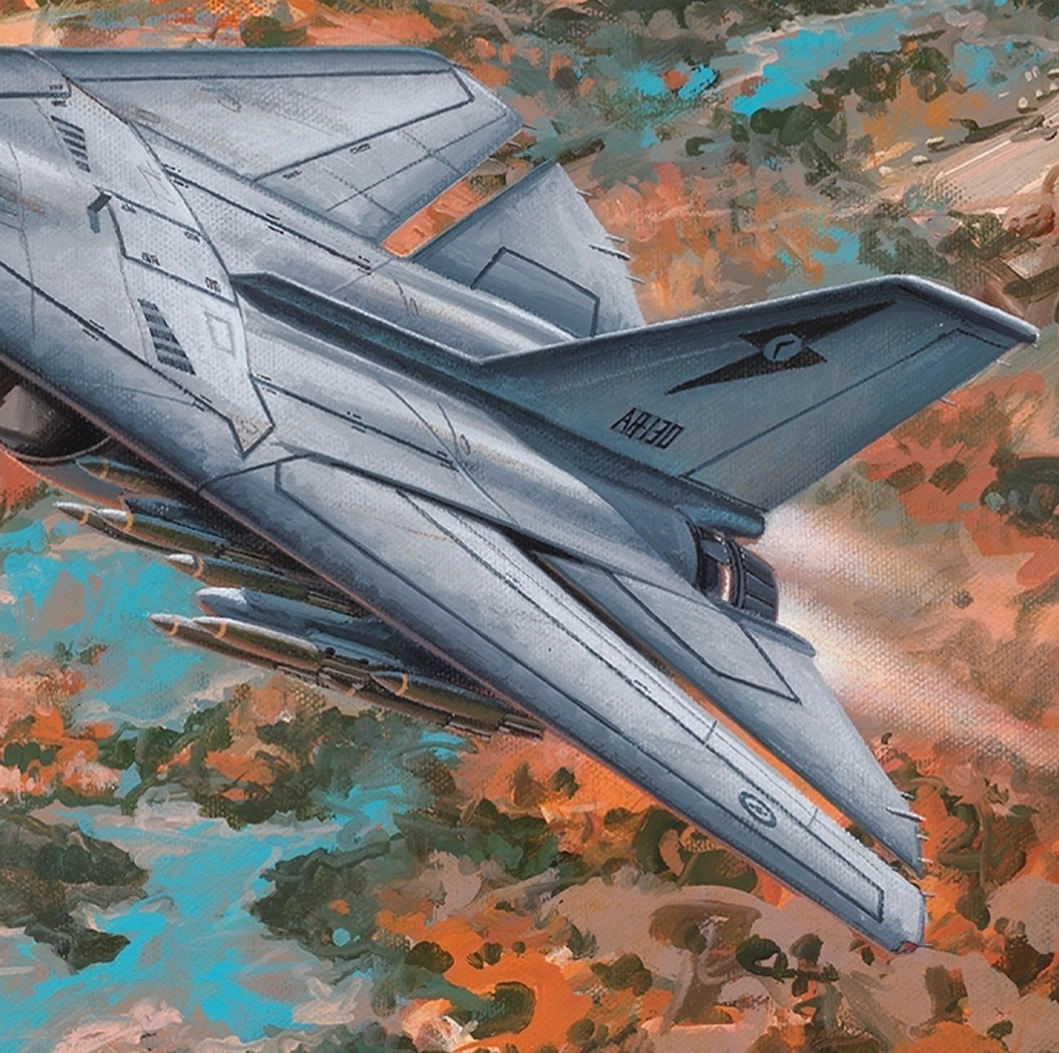
The F-111’s variable-geometry wings are central to both its capability and its visual identity. The wings could extend for take-off and lower-speed flight and sweep rearward for high-speed operation. The technology helped give the aircraft its extraordinary combination of range, speed and low-level performance and made the F-111 instantly recognisable from almost any angle.
Range made visible
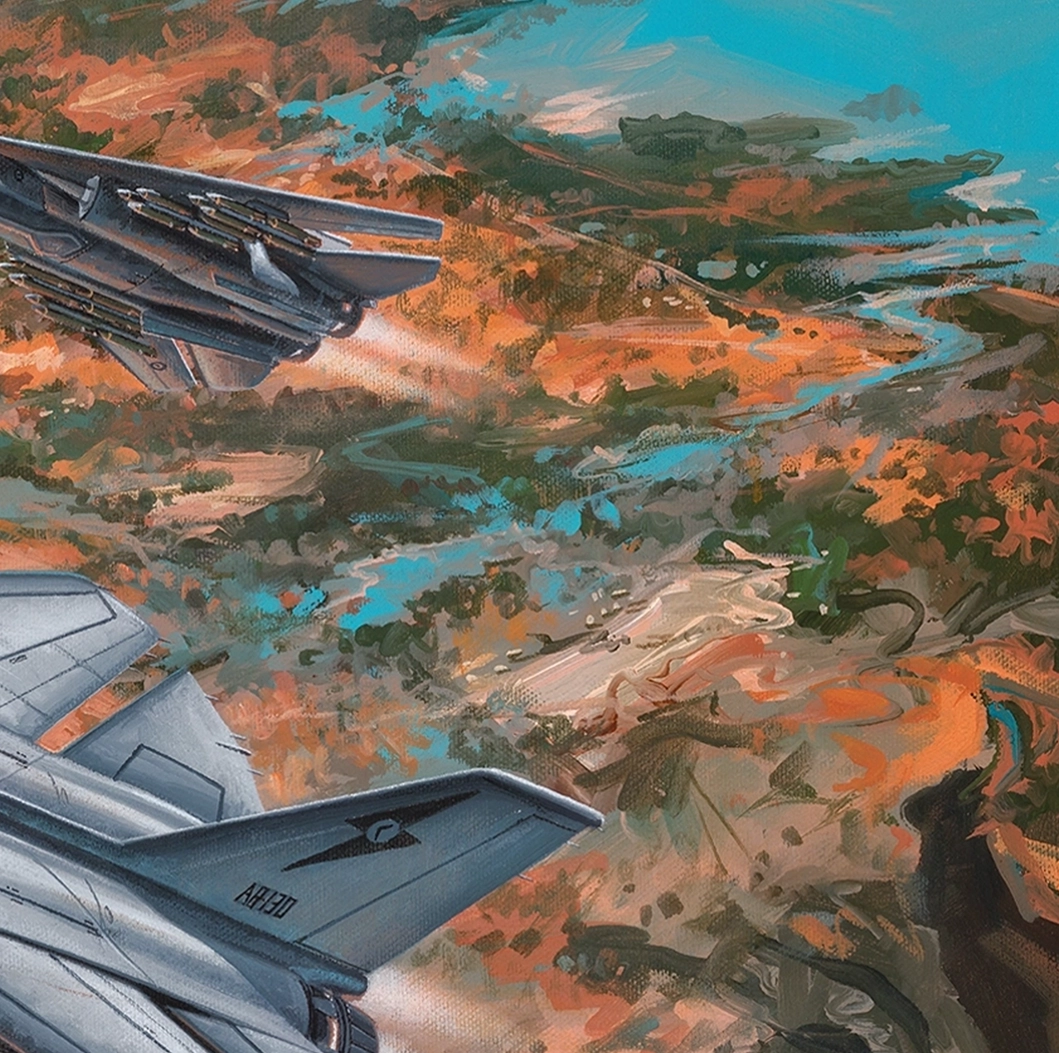
The coastline below the aircraft places the composition within the geography that made long-range strike so important to Australian defence planning. Australia’s distances shaped the F-111 requirement from the beginning. Harrison uses the open northern landscape to give visual meaning to reach: the aircraft are not simply fast jets in the sky, but machines designed to cover immense distances while carrying a substantial weapons load.
Drew Harrison
Drew Harrison is an Australian aviation and military artist whose work combines detailed aircraft research with a contemporary, cinematic approach to composition. In the Iconic Aviation Collection, Harrison was commissioned to do more than create aircraft portraits: each painting was intended to explain why its subject mattered in RAAF history.
Read more
Seek, Strike, and Return established that approach. The F-111 is technically recognisable and historically grounded, but the painting is designed around movement, atmosphere and operational purpose rather than a static side profile. Harrison’s strength is the ability to make engineering and history feel active. Aircraft markings, weapons, wing geometry and landscape provide factual anchors, while viewpoint and light give the work the drama expected of an aircraft remembered for low-level speed, afterburners and spectacular public displays.
Artist’s Notes
The F-111 presented Harrison with an aircraft whose public image was already unusually strong. Its swept wings, long nose, tandem cockpit, terrain-hugging reputation and famous dump-and-burn displays meant the challenge was not simply to make the aircraft recognisable, but to capture its purpose.
By using two aircraft and a broad northern Australian landscape, the composition shifts attention from a single airframe to capability. The viewer sees formation, weapons and distance together, a visual expression of the F-111 as a long-range strike system rather than merely an aeroplane.
Detailed Artwork Description
Two F-111Cs dominate the sky. Their wings are swept and their weapons loads visible, immediately communicating speed and strike capability. The nearer aircraft gives the viewer the mass and distinctive geometry of the F-111; the second extends the composition and reinforces the idea of an operational formation.
Below, the northern Australian coastline creates scale and distance. Rather than fill the background with competing detail, the landscape gives the aircraft room to move and reminds the viewer of the enormous geography they were intended to defend. The composition is deliberately idealised. Australia’s F-111s never flew an operational bombing mission, so the image should be read as a portrait of capability and deterrence. Harrison presents the aircraft as Australia maintained them: armed, trained and ready to perform the mission for which they had been acquired.
The original Seek, Strike, and Return
The original Drew Harrison artwork from the Iconic Aviation Collection is preserved within the BrandNet Archives. It is the unique source work from which the F-111 limited-edition canvas, paper and aluminium artworks were developed.
Read More
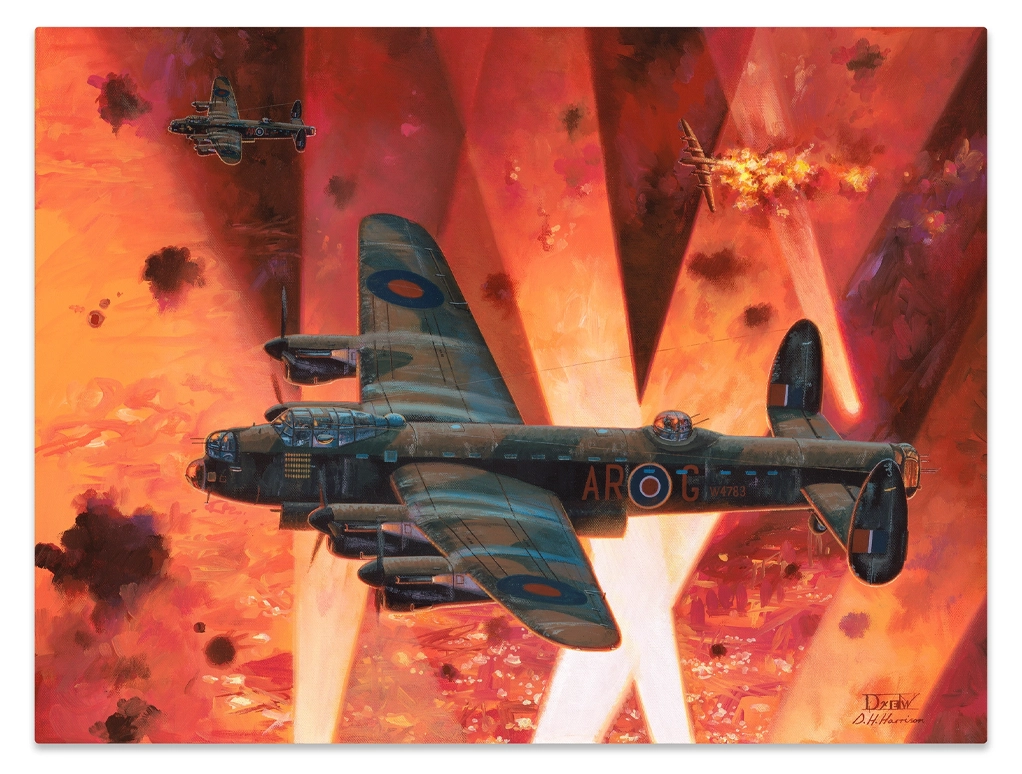
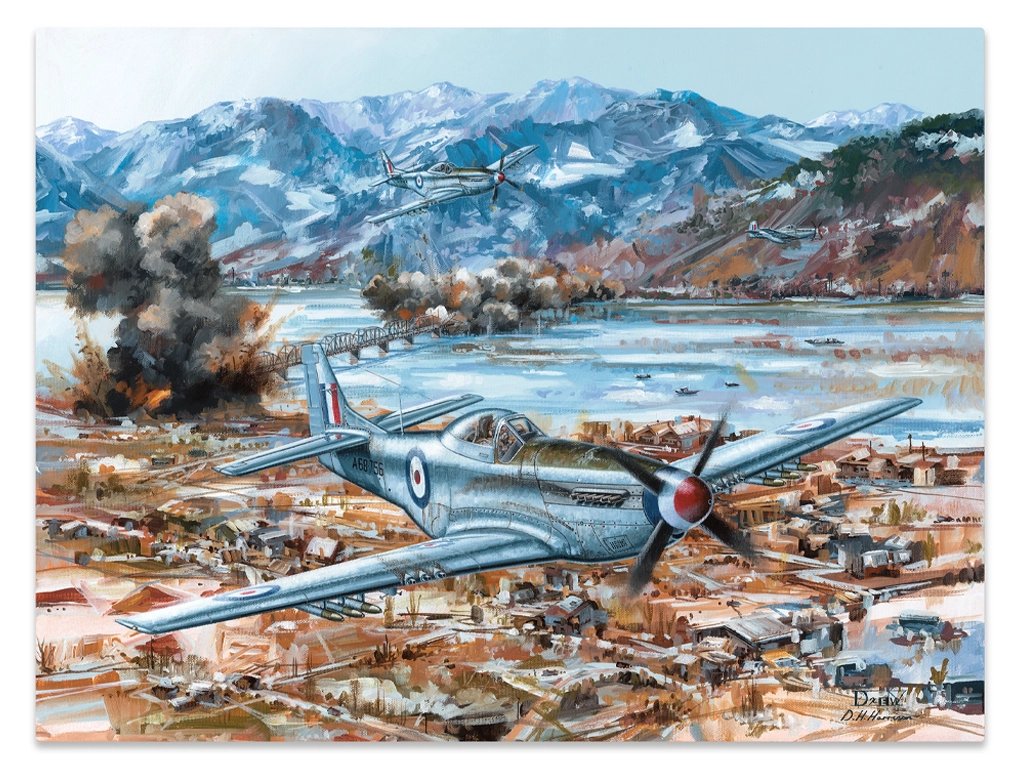
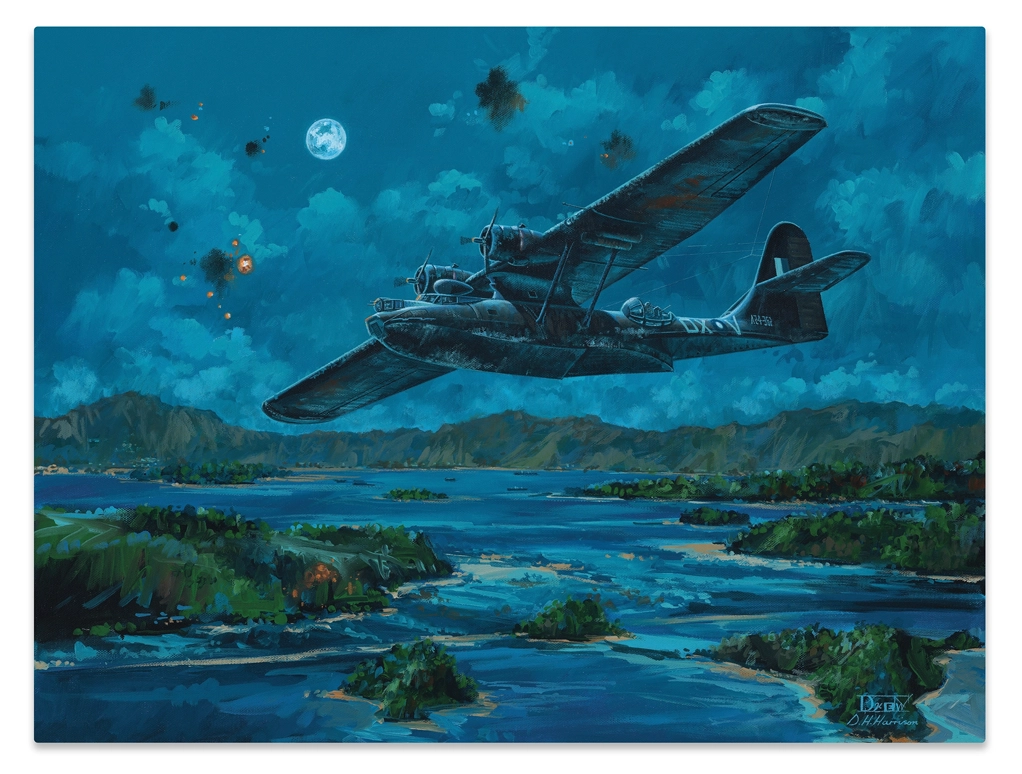
As the first work in the Iconic Aviation Collection, the original has significance beyond the F-111 subject itself. It established the visual and historical approach that continued through the Hercules, Lancaster, Mustang, Catalina and Sabre commissions.
Own a part of the story
Seek, Strike, and Return was released across several collector formats. The active artwork section below includes only products not marked SOLD OUT on the current F-111 collection page.
 Click to enlarge
F-111 Limited Edition Canvas Artwork
The canvas edition gives the two aircraft and northern Australian landscape a strong gallery presence while retaining the complete composition of Harrison’s original.
View the Artwork → Click to enlarge
F-111 Limited Edition Print
Includes certificate of authenticity and artist note. The paper edition emphasises Harrison’s fine aircraft detail and provides a traditional fine-art presentation, with the signature, number and certificate forming part of its collector provenance.
View the Artwork → Click to enlarge
F-111 Limited Edition Aluminium Artwork
The aluminium edition gives the F-111 a crisp, contemporary presentation and deliberately echoes the aircraft’s metal construction. The current product record lists stock available.
View the Artwork → Click to enlarge
Air Force 100 Iconic Aviation Limited Edition Medallion Set of 6
The complete set brings together all six aircraft from Drew Harrison’s Iconic Aviation Collection: F-111C, C-130 Hercules, Avro Lancaster, P-51D Mustang, Catalina and CAC Sabre. Minted from brass alloy with a highly polished silver finish, the medallions use full-colour details from Harrison’s artworks together with raised aircraft schematics.
View the Set → Click to enlarge
F-111 Limited Edition Coffee Mug
The mug showcases Harrison's masterpiece, "Seek, Strike and Return," along with a schematic of the aircraft in the base. Made from durable ceramic with an easy-grip handle and scratch-resistant finish, this mug is perfect for enjoying your favourite hot or cold beverages. It comes in a beautiful gift box complete with a Limited Edition Certificate.
View the Set →History, artwork and collecting
Explore the history behind the Seek, Strike and Return Artwork, the choices and decisions made by the artist, and the Archive and Limited Edition pieces created from the commission.
The Aircraft
Why did Australia buy the F-111?
Australia wanted a modern long-range strike aircraft to replace the Canberra bomber. The decision reflected Australia’s geography and defence needs. The new aircraft had to travel long distances, penetrate at low level and carry a meaningful weapons load. The F-111 promised a combination of speed, range and all-weather capability that few aircraft could match.
Why was the F-111 acquisition so controversial?
Technical problems and development delays meant Australia waited years longer than expected for the aircraft. The F-111 was ordered while still under development. Problems with its variable-geometry wing structure and other technical issues delayed delivery, while costs increased. Australia leased F-4E Phantoms as an interim capability until the F-111Cs finally arrived in 1973.
What made the F-111 unusual?
Its combination of variable-sweep wings, terrain-following radar, long range and high-speed low-level flight was exceptional. The aircraft could alter its wing sweep for different phases of flight and use automated terrain-following systems to operate very low in poor visibility. That made it especially suited to the penetrating strike role Australia had purchased it to perform.
Did Australian F-111s ever conduct combat strikes?
No. The RAAF fleet was never used operationally in a strike role. Its long-range strike capability was maintained as a deterrent. The RF-111 reconnaissance variant did undertake operational missions over East Timor in November 1999, making those flights the Australian fleet’s principal operational employment.
Why was it called 'The Pig'?
The affectionate Australian nickname reflected the aircraft’s low-level, terrain-following role. The American nickname was 'Aardvark'. In Australian service, 'The Pig' became part of the aircraft’s identity and was embraced by the crews, maintainers and public who followed it through nearly four decades of RAAF service.
What was 'dump and burn'?
It was a spectacular display in which fuel was released and ignited in the F-111’s exhaust plume. The manoeuvre became a signature of Australian air shows and major public events. It was visually dramatic rather than a combat technique and helped make the F-111 one of the most recognisable RAAF aircraft to the Australian public.
The Commission
Which aircraft are shown in Seek, Strike, and Return?
A8-130 of No. 6 Squadron and A8-147 of No. 1 Squadron. Military Shop’s original collection notes identify both as F-111C models shown late in their service lives. Both airframes survive in museum collections, giving the painting a direct link to preserved Australian aviation history.
Is the painting based on a real combat mission?
No. It is a representative operational composition. Australia’s F-111s were never used in an operational strike. Harrison therefore uses historically identifiable aircraft, markings and weapons within an imagined northern Australian setting to communicate the capability and deterrent role the fleet represented.
Why are the aircraft shown fully armed?
Because the painting is about the F-111’s strike purpose and the capability Australia maintained. The weapons load helps explain why the aircraft mattered. It could carry substantial ordnance over long distances at high speed, giving the RAAF a credible strike capability even though that capability was never called upon for an Australian combat strike.
Why is the artwork called Seek, Strike, and Return?
The title summarises the mission cycle of a long-range strike aircraft. It captures the F-111’s ability to navigate and find its target, deliver weapons, and use its range and fuel capacity to return. It is an interpretive title rather than an official RAAF motto.
The Collection
What limited-edition artwork formats are currently available?
Canvas, archival paper and aluminium editions are currently shown without SOLD OUT markers. The canvas is limited to 100 and priced at $249; the hand-signed archival print is limited to 250 and priced at $195; and the 3 mm aluminium artwork is limited to 250 and priced at $169.
Why is the medallion not shown in the active collection?
Because the current F-111 collection page marks it as SOLD OUT. it remains part of the historical Iconic Aviation release, but the BrandNet Archives purchase section is designed to show products a visitor can still acquire rather than create dead ends with unavailable pieces.
Is the canvas signed?
Yes. The current collection page states that the canvas edition is hand-signed and numbered by Drew Harrison. The paper print is also hand-signed and numbered and includes a limited-edition certificate of authenticity and an in-depth artist note. These details should remain with an Archive Edition wherever possible.
Archive Editions
What makes an early-numbered F-111 edition collectable?
It documents a piece from the beginning of a finite release tied directly to the original commission. The image itself is unchanged, but a verified low number particularly when accompanied by the artist’s signature, certificate and BrandNet provenance gives the collector a clearly documented position within the edition.
What should accompany an Archive Edition?
The edition number, certificate, artist material and original presentation components should remain with the artwork wherever possible. The archive record should also identify the exact format and condition. Canvas, paper and aluminium have different edition sizes and specifications, so those details are part of the object’s provenance.
Why preserve the original and the limited editions together?
The original records the commission; the editions record how the artwork was released to the collecting public. Together they preserve the complete BrandNet story: research and commission, Harrison’s finished artwork, and the numbered objects through which the F-111 story entered homes, offices and collections.
Seek, Strike, and Return. From controversy to icon
The F-111’s Australian story is one of transformation. Ordered amid ambition, delayed by technical problems and political controversy, it ultimately became one of the most respected and recognisable aircraft ever operated by the Royal Australian Air Force.
Preserving Drew Harrison’s original Seek, Strike, and Return alongside early-numbered editions allows the BrandNet Archives to hold both the aircraft story and the collecting story together. As the first work in the Iconic Aviation Collection, it also marks the beginning of a six-artwork series celebrating aircraft that shaped generations of RAAF service.
Explore the BrandNet Archives →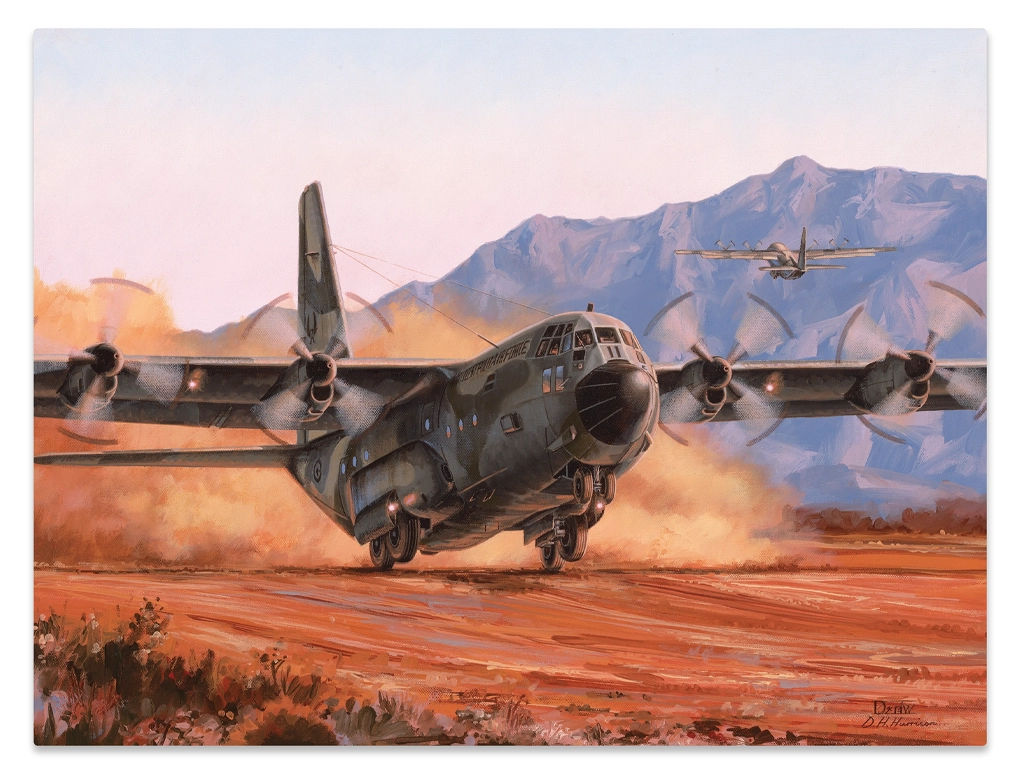
Explore more Australian military stories, art and collectables
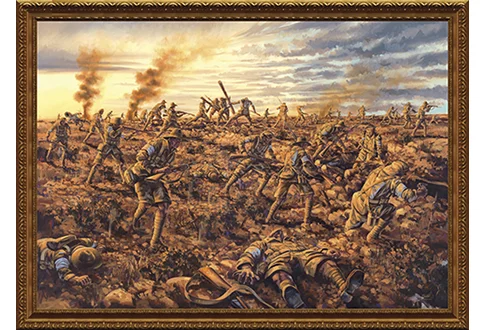
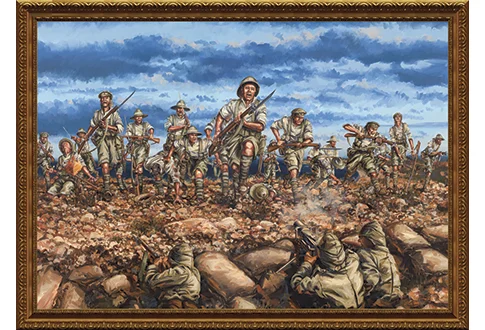
The Battle of The Nek is one story within a much larger archive of commissioned military artworks, historically significant pieces, low-number Archive Editions and Limited Edition collections.
Explore The BrandNet Archives