

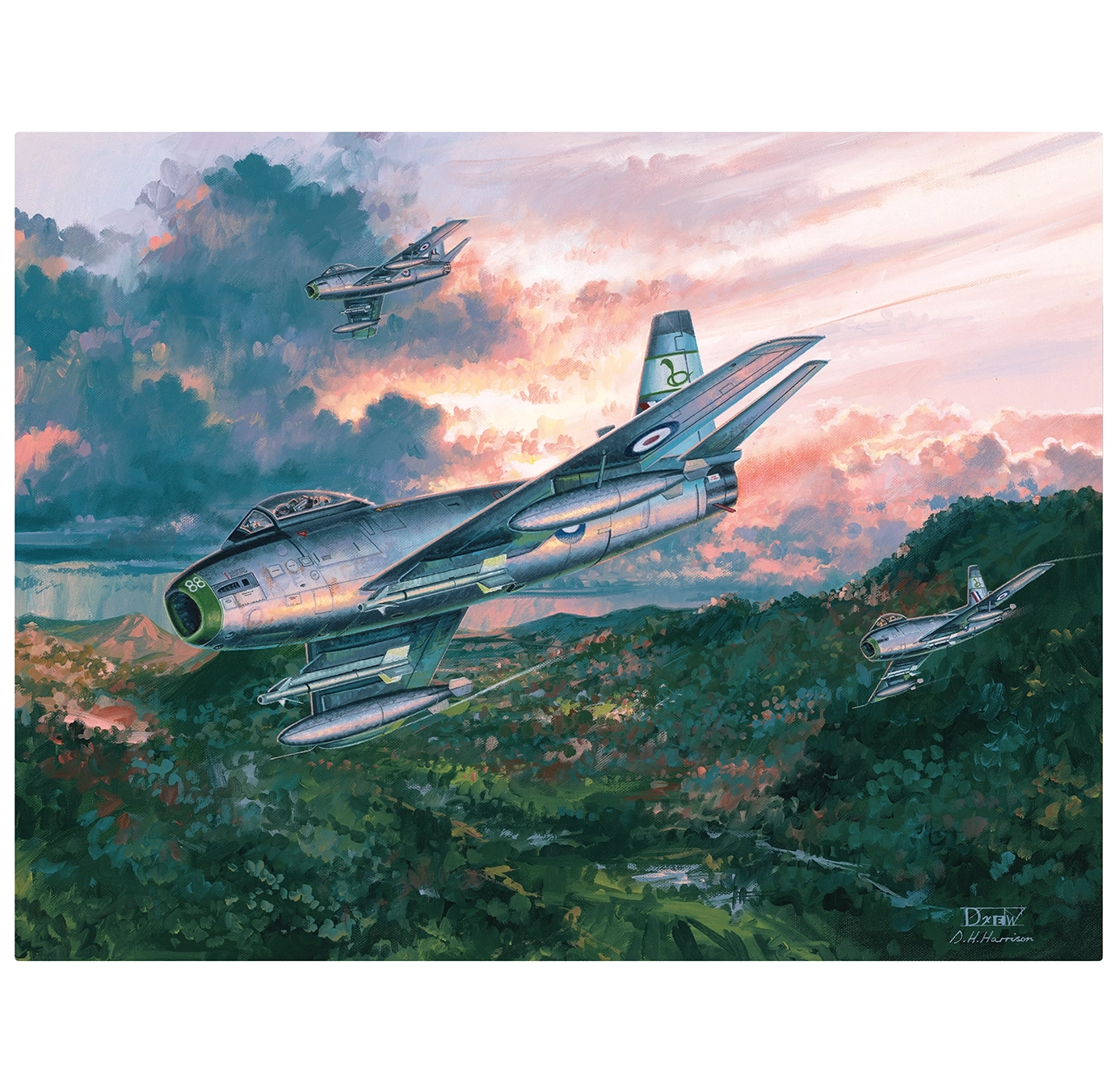
CAC Sabre: Cobra Sabres
Discover the people, events and research behind each commissioned work.
View the original commissioned artwork and, where available, enquire about acquisition.
Discover and purchase rare #1–#10 Archive Editions and historically significant retained pieces.
Explore related Limited Edition lapel pins, medallions and art.
CAC CA-27 Sabre Mk 32
The CAC Sabre looked familiar, but it was far more than an Australian-built copy of the American F-86. To meet Royal Australian Air Force requirements, Commonwealth Aircraft Corporation substantially redesigned the aircraft around the more powerful Rolls-Royce Avon engine. The result was the CA-27 Avon Sabre, one of the most distinctive Australian combat aircraft of the early jet age.
The Sabre entered RAAF squadron service in the mid-1950s. Nos 3 and 77 Squadrons deployed to Butterworth in Malaya as part of Australia’s contribution to the Commonwealth Strategic Reserve. They flew ground-attack operations during the closing stages of the Malayan Emergency and later maintained armed readiness during the Indonesian Confrontation.
Read more
In 1962, a new crisis brought the Sabre to Thailand. Concern over fighting in neighbouring Laos led the Southeast Asia Treaty Organization to reinforce Thailand. No. 79 Squadron RAAF was re-formed and deployed to Ubon, close to the borders of Laos and Cambodia, with CAC Sabres to provide air defence.
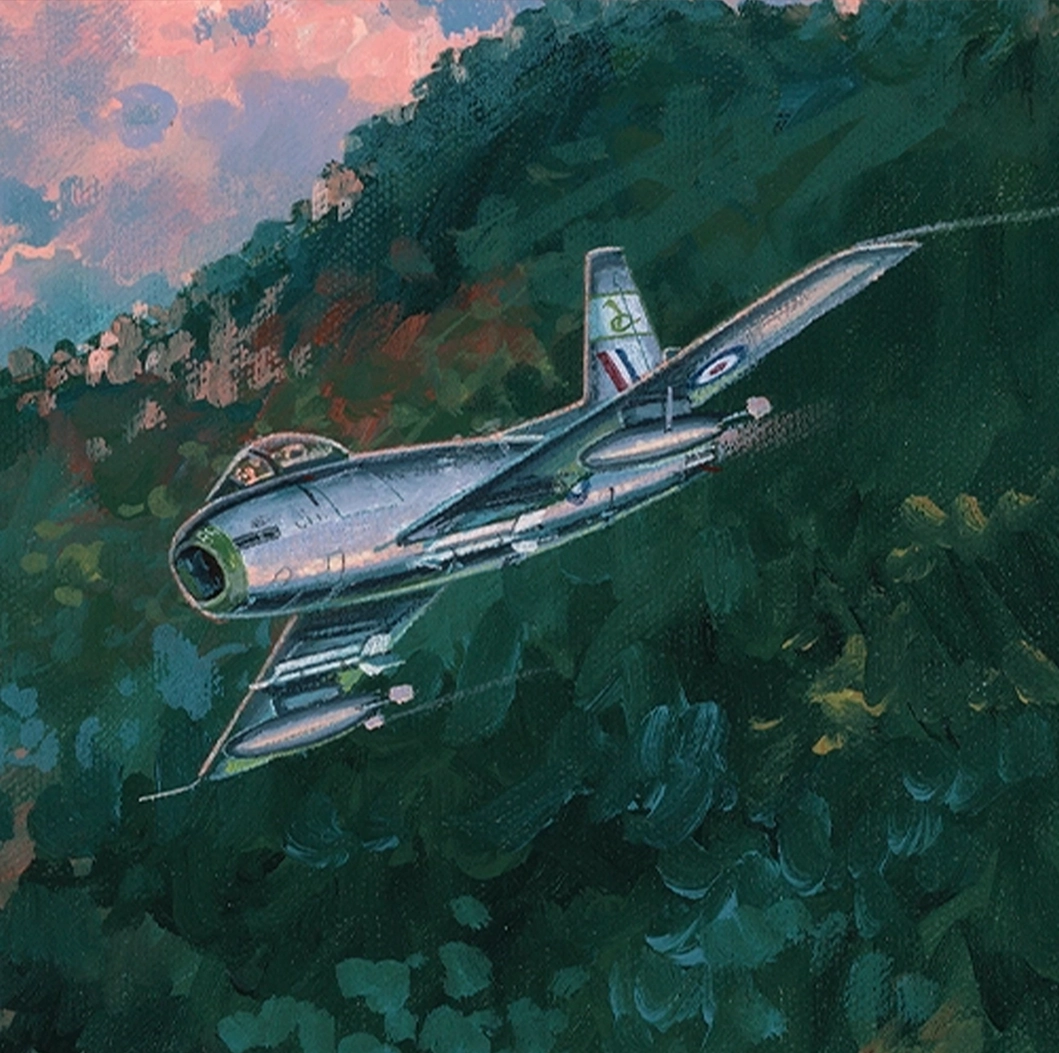
The squadron never entered combat, but its role was real. Aircraft were maintained at constant readiness while the war in nearby Vietnam escalated and Ubon became an important United States Air Force base. Some Sabres briefly carried a stylised green cobra on the tail, including A94-988. Drew Harrison’s Cobra Sabres captures those aircraft and a largely forgotten Australian Cold War deployment that lasted until 1968.
The Australian Sabre differed substantially from its North American ancestor. The Avon required around 25 per cent more airflow than the original General Electric engine, forcing a larger intake and major fuselage changes. The lighter engine also had to be positioned further aft to preserve the aircraft’s centre of gravity. Australian War Memorial records note that only about 40 per cent of the original fuselage design could be retained.
The aircraft was also heavily armed. Instead of the F-86’s six .50-calibre machine guns, the Australian Sabre carried two 30 mm ADEN cannon and could use Sidewinder air-to-air missiles. These changes produced a fighter well suited to regional air defence at a time when Australia’s strategic focus was increasingly directed toward South-East Asia.
No. 79 Squadron’s Ubon deployment began in 1962 and continued for six years. As the Vietnam War intensified, USAF F-4 Phantoms operated from the same base. The Australian Sabres maintained patrols and readiness, including cover for returning aircraft. Although they fired no shots in anger, their presence supported Thai air defence and demonstrated Australia’s commitment to regional security. The squadron withdrew in August 1968. Its Ubon service was later recognised with a Battle Honour.
Campaign Facts
The CAC CA-27 Sabre was a substantially redesigned Australian development of the North American F-86 Sabre, powered by the Rolls-Royce Avon turbojet, which required significant modifications to the aircraft’s intake and fuselage. Australian Sabres were armed with two 30 mm ADEN cannon and could also carry Sidewinder air-to-air missiles.
Read more
Their regional service extended across Southeast Asia, with Nos 3 and 77 Squadrons operating Sabres from Butterworth during the Malayan Emergency and Indonesian Confrontation. RAAF Sabres based at Butterworth were placed on high alert during the Indonesian Confrontation, while No. 77 Squadron also deployed aircraft to Labuan in Borneo. No. 79 Squadron was re-formed in 1962 and deployed to Ubon, Thailand, as part of a SEATO response to growing regional tensions. At Ubon, the squadron maintained regular patrols and kept aircraft at readiness for air defence.
The Vietnam War subsequently made Ubon an important United States Air Force base, with Australian Sabres operating alongside American aircraft. Several No. 79 Squadron Sabres, including A94-988, briefly carried a distinctive stylised green cobra on their tails. Despite maintaining a high state of readiness, No. 79 Squadron did not enter combat during its Ubon deployment. The squadron withdrew from Thailand in August 1968 and was later awarded a Battle Honour for its Ubon service.
CAC Sabre: Cobra Sabres
Cobra Sabres is the sixth and final work in BrandNet’s Iconic Aviation Collection. Drew Harrison closes the series with an aircraft that was both recognisably a Sabre and uniquely Australian, a fighter substantially redesigned and manufactured locally for RAAF service.
Read more
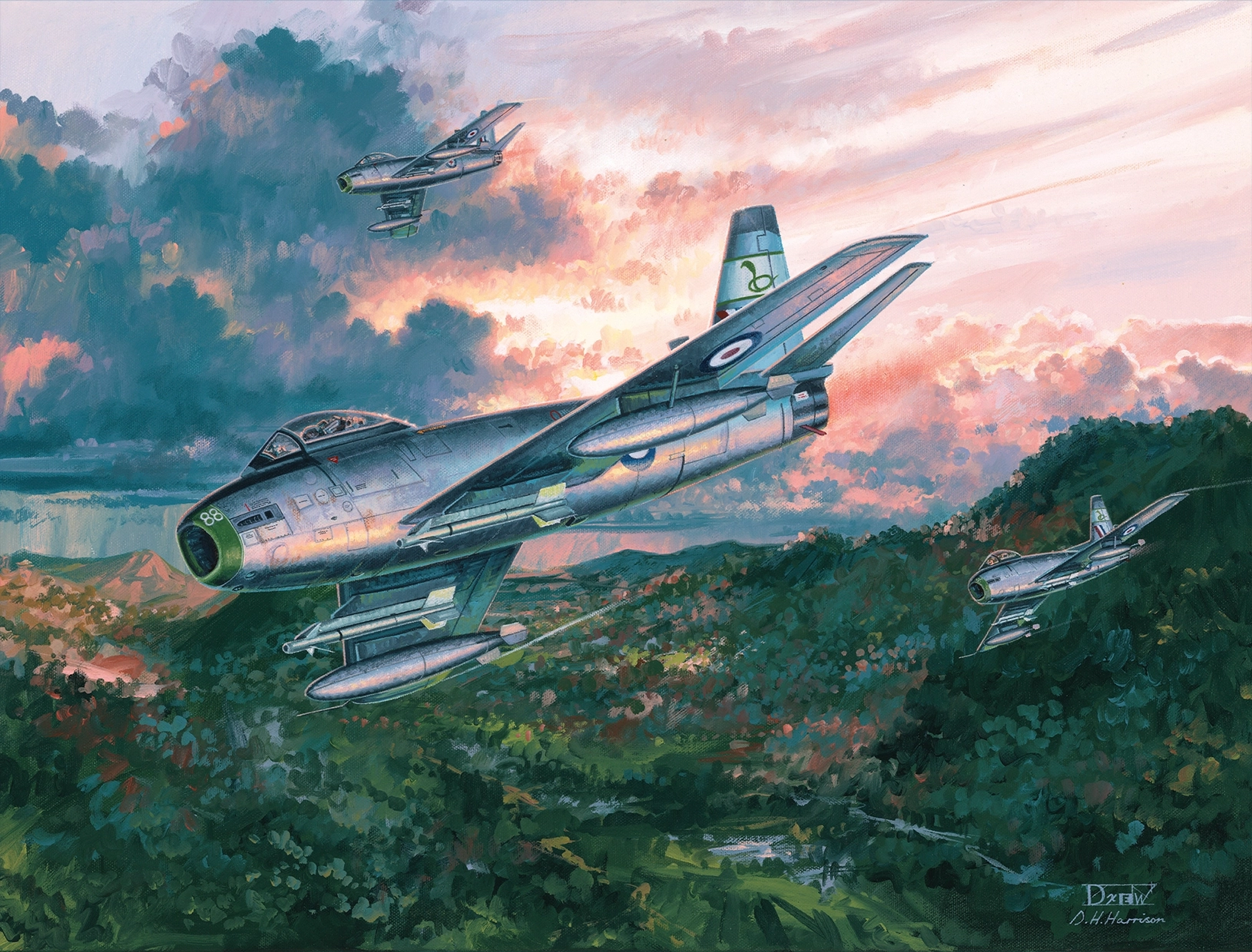
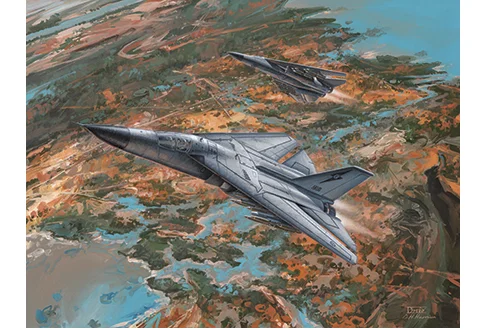
The Ubon story gives Harrison a distinctive visual and historical subject. Three Sabres fly together, their clean swept-wing forms carrying the green cobra tail marking associated with No. 79 Squadron’s Thai deployment.
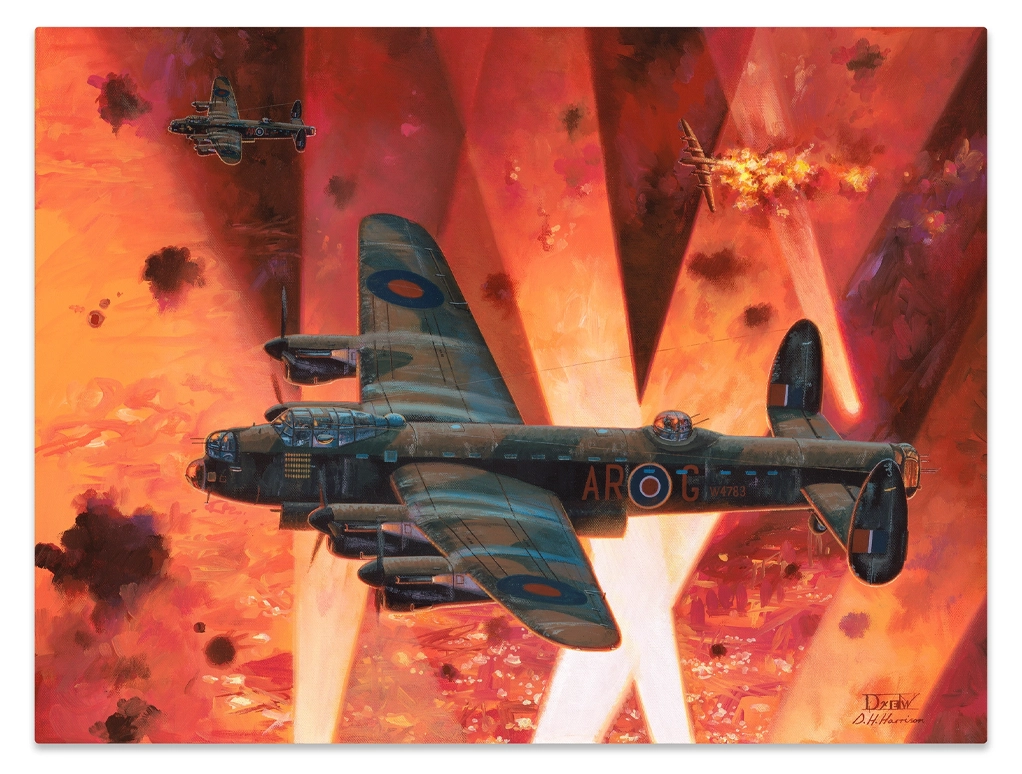
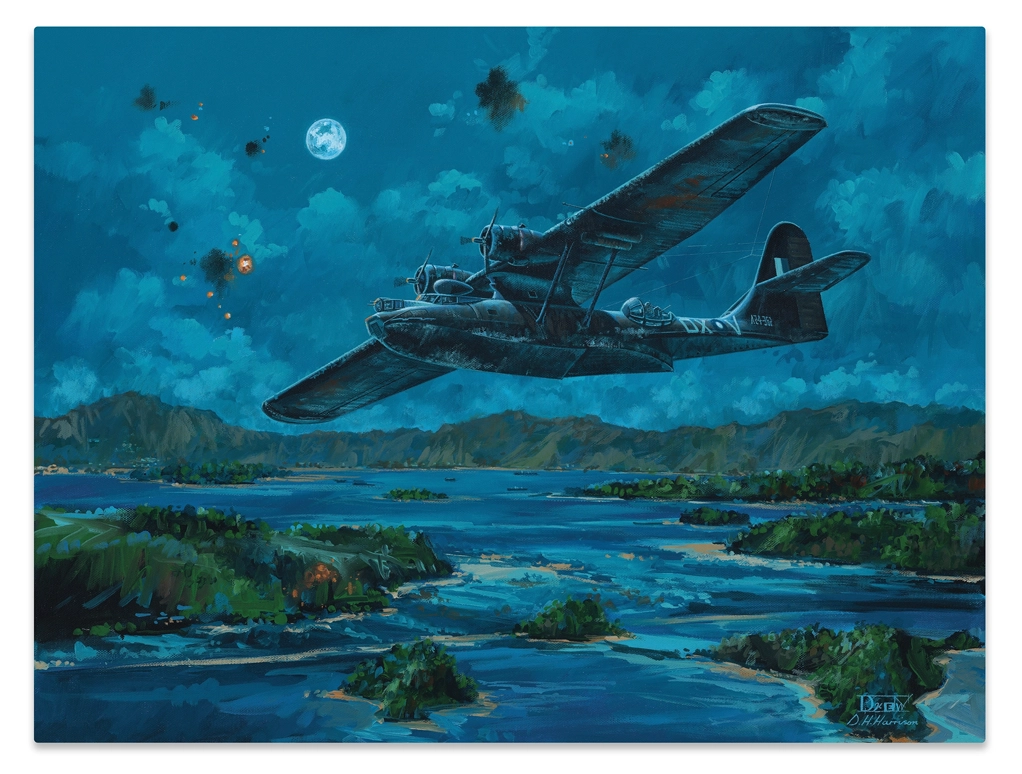
The artwork is deliberately more colourful than the dark Catalina or Lancaster compositions. The Sabre belongs to a different era: polished jet-age performance, regional deterrence and Cold War readiness. The green cobra provides a striking visual signature and turns a formation of aircraft into a specific Australian unit story.
Historical Accuracy
Cobra Sabres depicts No. 79 Squadron CAC Sabres while based at Ubon, Thailand. Military Shop’s Iconic Aviation history identifies the green cobra tail marking as a short-lived emblem carried by several CA-27 Sabre Mk 32 fighters, including A94-988.
Read more
The deployment itself is well documented. No. 79 Squadron was re-formed in 1962 and sent to Ubon as part of the regional response to instability in Laos. The squadron maintained air-defence patrols and readiness through the expansion of the Vietnam War, but did not conduct combat operations.
Harrison’s formation is an artistic composition rather than a reconstruction of one photograph. The aircraft type, unit, Ubon setting and distinctive cobra marking are historically grounded; the precise formation, light and moment represented serve the artwork.
A brief but memorable marking
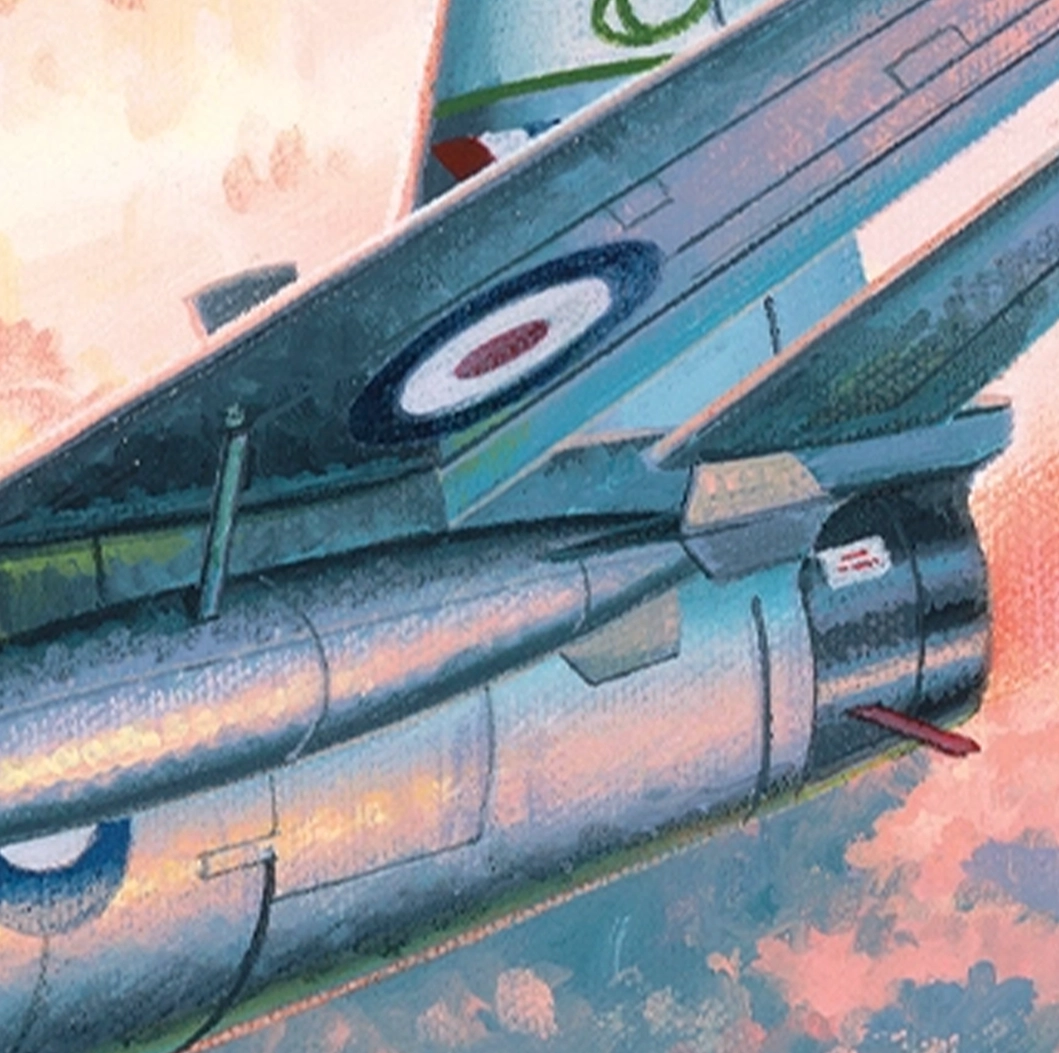
The stylised cobra on the tail immediately identifies the artwork with No. 79 Squadron’s Ubon period. Military Shop’s source history records the green cobra as a marking briefly adopted on several CA-27 Sabre Mk 32 aircraft, including A94-988. Its short life makes it an especially distinctive detail for Harrison to preserve.
an identifiable Ubon Sabre
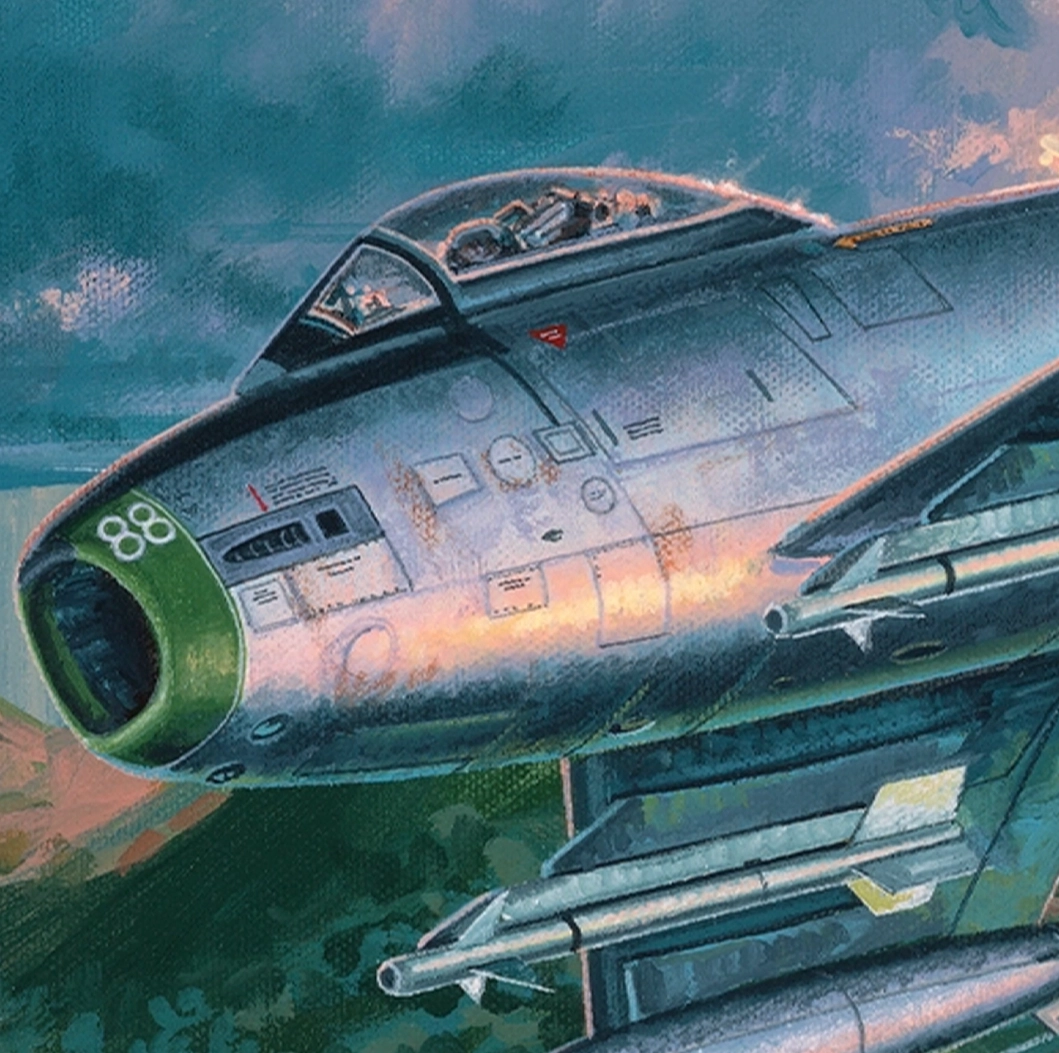
The collection history specifically links A94-988 with the cobra-tail marking. Using an identifiable aircraft gives Cobra Sabres the same historical anchor found elsewhere in the Iconic Aviation series: a real airframe, unit and operational setting rather than an anonymous aircraft portrait.
Readiness in formation
Harrison uses a three-aircraft formation to communicate squadron strength and alertness rather than combat. No. 79 Squadron’s role at Ubon was deterrence and air defence. The aircraft were maintained ready to respond, even though the squadron never entered combat. The formation expresses that state of preparedness.
Drew Harrison
Drew Harrison is an Australian aviation and military artist known for combining detailed research with contemporary, cinematic composition. The six-work Iconic Aviation Collection was commissioned to interpret aircraft that represent very different chapters of Royal Australian Air Force history.
Read more
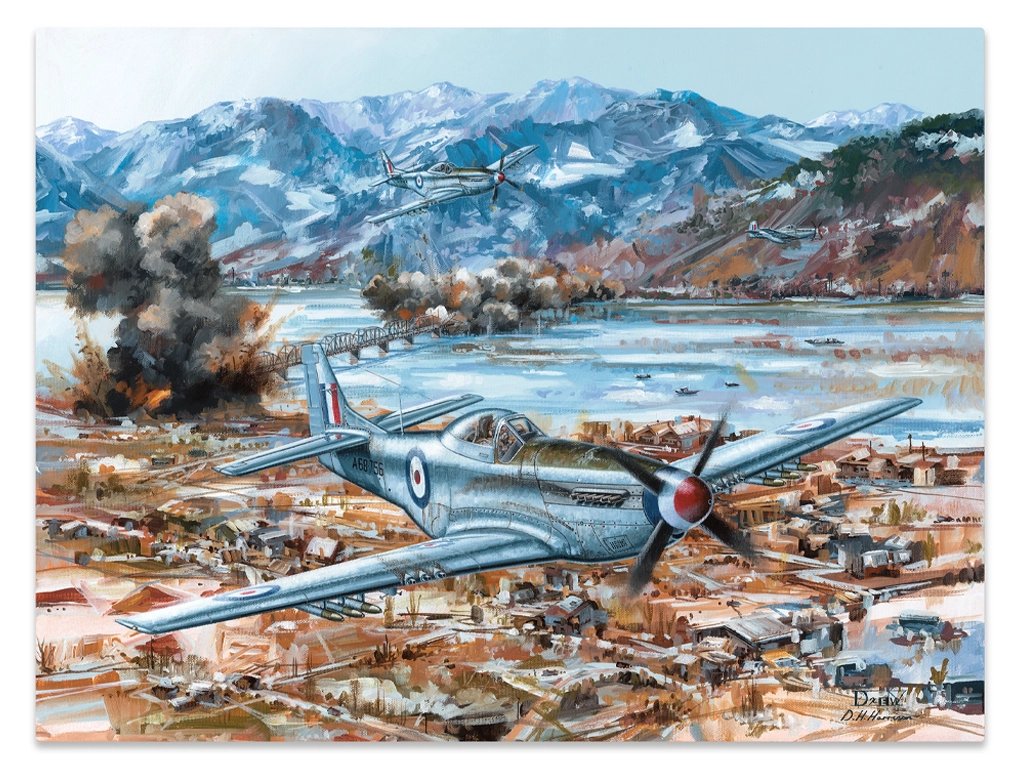
Cobra Sabres completes that journey. Harrison moves from wartime bombers and flying boats through Korea, long-range strike and tactical transport to an Australian-built fighter guarding a Cold War frontier in South-East Asia.
The Sabre’s clean lines and bright cobra marking lend themselves to a bold composition. Harrison uses those qualities without losing the historical point: these were not display aircraft. They were armed fighters deployed overseas at a time of genuine regional uncertainty.
Artist’s Notes
The CAC Sabre is a particularly Australian aviation subject. Its familiar F-86 ancestry can obscure how extensively Commonwealth Aircraft Corporation redesigned the aircraft around the Avon engine and RAAF requirements. The Ubon deployment adds another layer. The cobra marking is visually compelling, but behind it is a story of six years of readiness in Thailand while conflict intensified across the region. Cobra Sabres brings those two ideas together, Australian engineering and Australian service.
Detailed Artwork Description
Three CAC Sabres dominate the composition, their swept wings and compact jet-fighter profiles creating a strong sense of speed and formation discipline. The green cobra tail markings provide the defining colour accent.
The aircraft are presented cleanly enough for the viewer to appreciate the distinctive Australian Sabre, while the formation and setting place them within No. 79 Squadron’s operational story. The artwork avoids manufacturing drama through imagined combat. Its tension comes instead from readiness, armed aircraft deployed overseas, close to active conflicts, prepared to respond. That restraint makes the image more faithful to the Ubon story.
The original Cobra Sabres
The original Drew Harrison artwork from the Iconic Aviation Collection is preserved within the BrandNet Archives. It is the unique source work from which the CAC Sabre limited-edition collector artworks were developed.
Read More
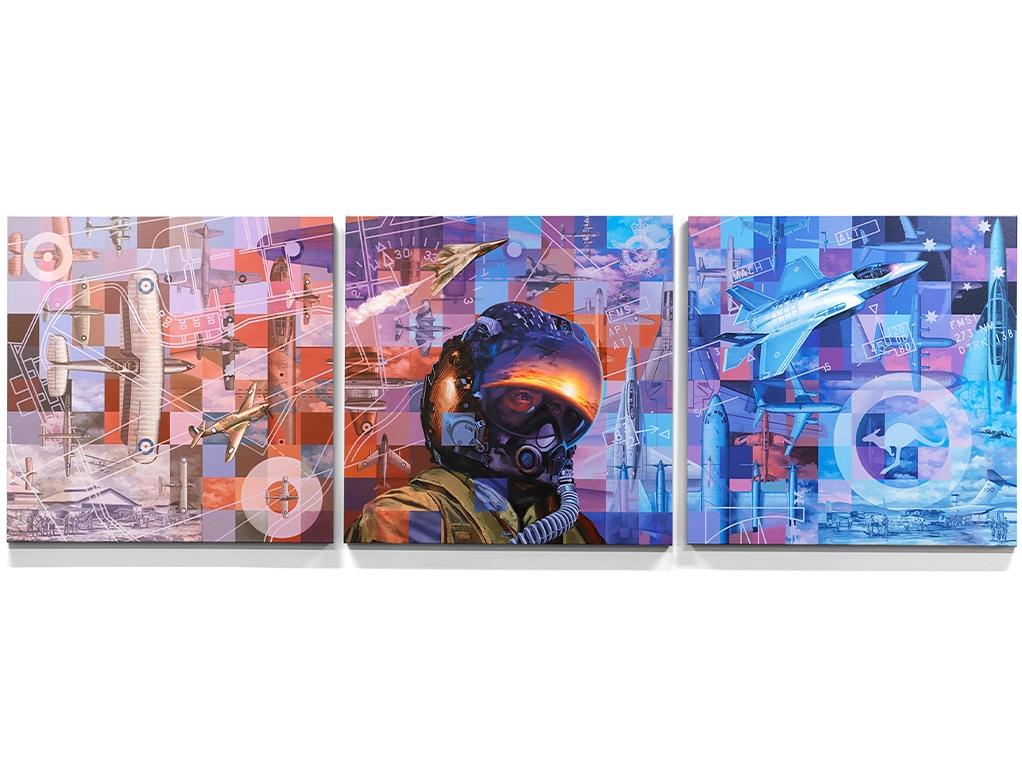
As the sixth and final smaller original aviation painting in the Iconic Aviation Collection, Cobra Sabres completes BrandNet’s commissioned series. Together the six originals trace RAAF history through aircraft whose roles ranged from wartime bombing and maritime operations to Korea, strategic strike, airlift and Cold War air defence.
Own a part of the story
Cobra Sabres was translated into artwork and collector formats across the Iconic Aviation Collection. The individual CAC Sabre medallion remains available and should be presented alongside the complete six-aircraft medallion set.
 Click to enlarge
CAC Sabre Limited Edition Canvas Artwork
The canvas edition gives Harrison’s three-aircraft formation a strong gallery presence while preserving the complete Cobra Sabres composition.
View the Artwork → Click to enlarge
CAC Sabre Limited Edition Print
The fine-art paper edition provides the traditional collector format, preserving the aircraft detail and distinctive green cobra markings.
View the Artwork →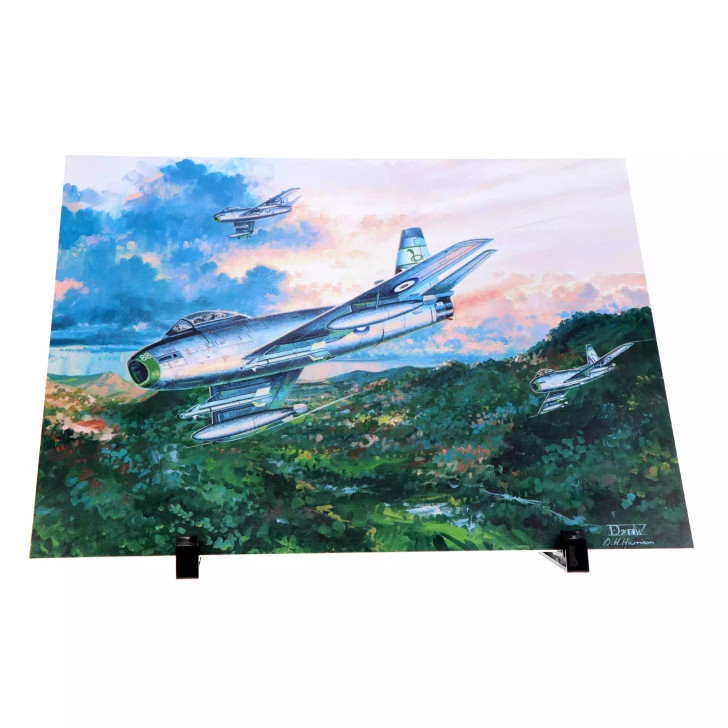 Click to enlarge
CAC Sabre Limited Edition Aluminium Artwork
The aluminium format is particularly appropriate to an Australian-manufactured jet fighter and gives Cobra Sabres a clean contemporary presentation.
View the Artwork → Click to enlarge
Air Force 100 Limited Edition Medallion CAC Sabre
A practical collector piece that uses the complete Catalina artwork in a format designed for camping, barbeques and sporting events.
View the Set → Click to enlarge
Air Force 100 Iconic Aviation Limited Edition Medallion Set of 6
The individual medallion preserves the CAC Sabre as a stand-alone part of the Air Force 100 collector program and is currently listed as available.
View the Set →History, artwork and collecting
Explore the history behind the Lancaster Artwork, the choices and decisions made by the artist, and the Archive and Limited Edition pieces created from the commission.
The Aircraft
Was the CAC Sabre simply an Australian-built F-86?
No. It was extensively redesigned in Australia around the Rolls-Royce Avon engine and RAAF requirements. The Avon required substantially more airflow than the American engine, so the intake and fuselage had to be changed. The engine was also repositioned to preserve centre of gravity. Australian War Memorial records state that only about 40 per cent of the original fuselage design could be retained.
Where was the Australian Sabre built?
By Commonwealth Aircraft Corporation in Victoria. The CA-27 became one of Australia’s most important locally manufactured combat aircraft. Its Australian engine installation, armament and structural changes distinguish it from the North American F-86 family from which it evolved.
Did Australian Sabres see combat?
Yes, in limited ground-attack operations during the Malayan Emergency; No. 79 Squadron’s Ubon Sabres did not enter combat. Nos 3 and 77 Squadrons flew several strikes against communist targets during the closing stages of the Malayan Emergency. Later, Sabres maintained armed readiness during the Indonesian Confrontation. At Ubon, 79 Squadron’s role was air defence and deterrence rather than offensive combat.
Why was No. 79 Squadron sent to Thailand?
It was part of a SEATO response to instability and the threat of conflict spilling from Laos into Thailand. The squadron was re-formed in 1962 and deployed to Ubon to provide area air defence. Its presence reassured Thailand and contributed to regional security as conflict intensified in neighbouring Laos and Vietnam.
What did the squadron do as the Vietnam War expanded?
It maintained patrols and readiness from Ubon while the base became increasingly important to United States operations. USAF F-4 Phantoms later operated from Ubon. Military Shop’s source history records Australian Sabres maintaining patrols and being ready to intercept returning Phantoms and provide air cover. The RAAF aircraft themselves did not conduct combat missions over Vietnam.
When did the Ubon deployment end?
No. 79 Squadron withdrew in August 1968. By then the squadron had maintained the commitment for six years. It was disbanded again after withdrawal and later received a Battle Honour recognising the Ubon deployment.
The Commission
Why is the artwork called Cobra Sabres?
It refers to the stylised green cobra briefly carried on the tails of several No. 79 Squadron Sabres at Ubon. The marking gives Harrison an unusually vivid historical detail. It identifies the painting immediately with one specific period and unit rather than treating the Sabre as a generic RAAF fighter.
Which aircraft is specifically associated with the cobra marking?
A94-988 is specifically identified in the collection history. Military Shop records that several CA-27 Sabre Mk 32 fighters carried the marking, including A94-988. That airframe provides an identifiable anchor for Harrison’s three-aircraft composition.
Does the painting depict combat?
No. It represents No. 79 Squadron’s Ubon deployment and air-defence role. That distinction is historically important. The squadron maintained armed readiness in a volatile region but did not enter combat. Harrison communicates preparedness through the formation rather than inventing an engagement that did not occur.
Why show three Sabres together?
The formation emphasises squadron readiness and gives the cobra marking visual rhythm across the artwork. It also allows the painting to celebrate the aircraft as a unit capability rather than as one individual machine, appropriate for a deployment whose purpose was sustained air defence.
The Collection
Which principal CAC Sabre artwork editions are available?
Canvas, fine-art paper and aluminium editions form the principal collector artwork range. The established Iconic Aviation pricing is $249 for the canvas, $195 for the paper print and $169 for the aluminium artwork. The aluminium edition is limited to 250 and is presented on 3 mm solid aluminium.
Can I buy the CAC Sabre medallion individually?
Yes. The individual CAC Sabre medallion is currently listed at $45. It is limited to 500 and features imagery from Cobra Sabres. It can be collected on its own or alongside the complete six-medallion Iconic Aviation set.
What is included in the Iconic Aviation Medallion Set of 6?
One medallion for each of the F-111C, C-130 Hercules, Lancaster, P-51D Mustang, Catalina and CAC Sabre. The proof-quality set is limited to 1,000 and combines full-colour artwork details with raised aircraft schematics. It is currently listed at $225.
Why is the Sabre a fitting final aircraft in the series?
It closes the collection with a locally manufactured Australian fighter and a distinctive RAAF Cold War story. Across six works, the collection moves through very different missions and eras. Cobra Sabres completes that sequence with Australian engineering, overseas deployment and air-defence readiness in South-East Asia.
Archive Editions
What makes an early-numbered Cobra Sabres edition interesting?
It documents a piece from the beginning of the final release in the six-work Iconic Aviation series. A verified low number, together with the artist’s signature where applicable, certificate and BrandNet provenance, gives the piece a defined place within the original release.
Should the individual Sabre medallion and complete set be treated separately?
Yes. They are different limited editions. The individual medallion is limited to 500 and focuses on Cobra Sabres. The six-medallion set is limited to 1,000 and preserves the complete Iconic Aviation sequence. Their numbers and packaging should remain distinct.
What should remain with a Sabre Archive Edition?
The edition number, certificate, artist material and original presentation components should remain together wherever possible. The archive record should also identify the format, dimensions and condition. These details preserve provenance and distinguish the numbered collector edition from an ordinary reproduction.
Why preserve all six original Iconic Aviation paintings together?
Together they form the complete commissioned series. Each original tells a different RAAF story, but the six were conceived as one collection. Keeping them documented together allows the BrandNet Archives to preserve not only the individual artworks but the full commissioning project and the limited-edition program that grew from it.
Cobra Sabres. The final chapter of Iconic Aviation
The CAC Sabre represents a period when Australia designed, manufactured and deployed its own version of one of the world’s defining early jet fighters. At Ubon, those aircraft stood armed and ready through six years of regional tension without needing to fire in combat.
Drew Harrison’s Cobra Sabres preserves that quieter form of service: deterrence, preparedness and presence. As the sixth original in BrandNet’s Iconic Aviation Collection, it completes a commissioned journey across a century of Australian air power — six aircraft, six very different stories, and one connected archive.
Explore the BrandNet Archives →
Explore more Australian military stories, art and collectables
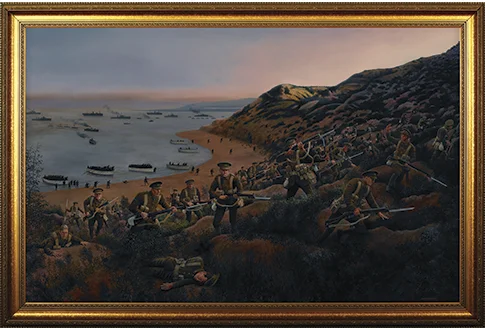
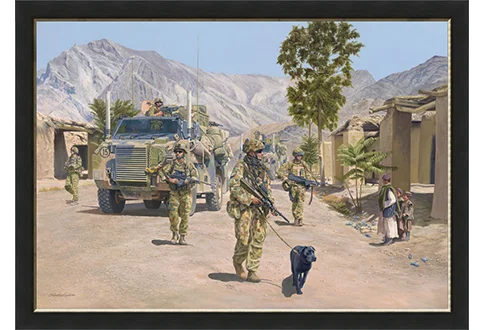
The Battle of The Nek is one story within a much larger archive of commissioned military artworks, historically significant pieces, low-number Archive Editions and Limited Edition collections.
Explore The BrandNet Archives