Our Blog
Ports, Shore Support and Industry: The Less Visible Side of Sea Power
Table of Contents
- 1. Shore support: where sea power begins
- 2. Commercial ports that carry the trade
- 3. Fleet Base East and Fleet Base West
- 4. Regional maintenance close to where ships operate
- 5. Shipbuilding at Osborne Naval Shipyard
- 6. Henderson: a planned precinct in the west
- 7. A national plan that links it together
- Recognising the people who serve ashore
- Sources
- FAQs
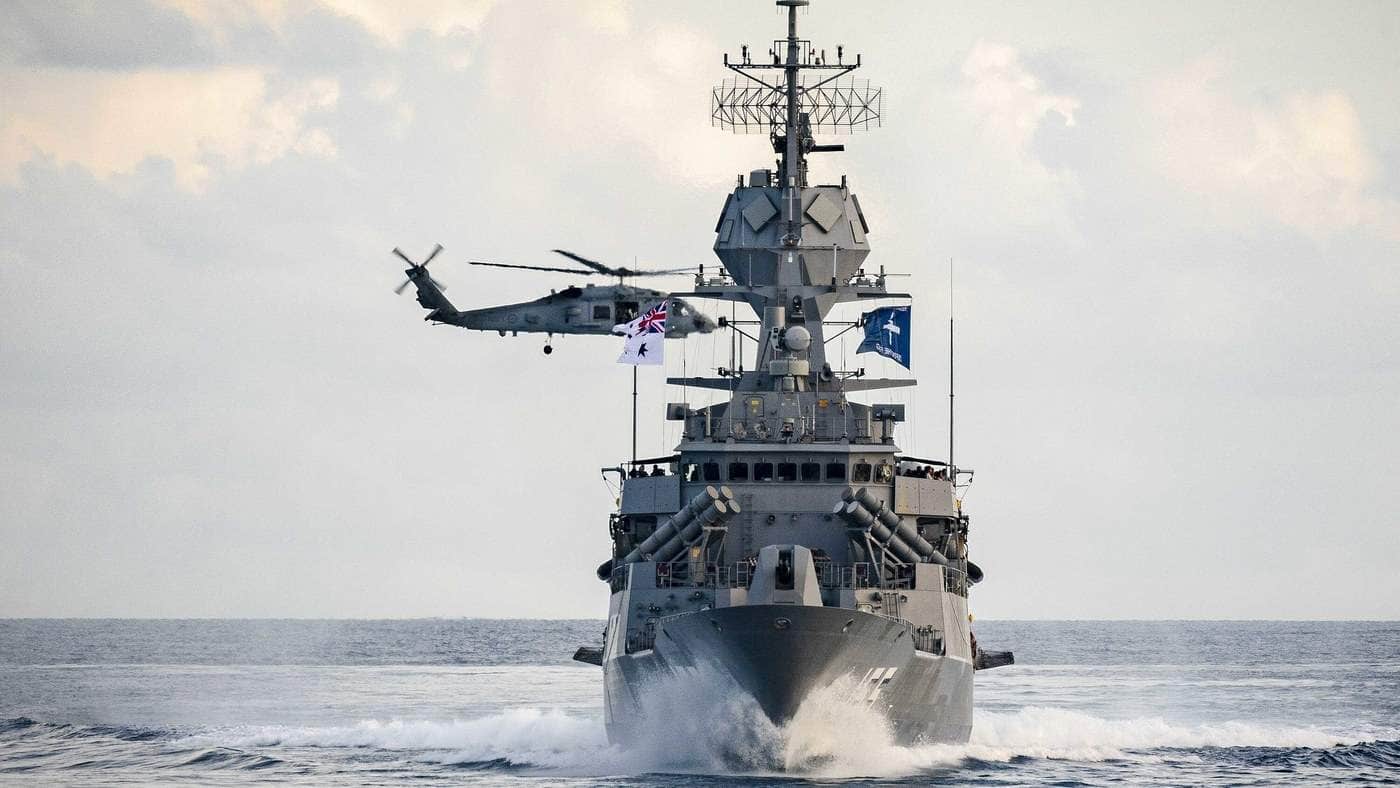
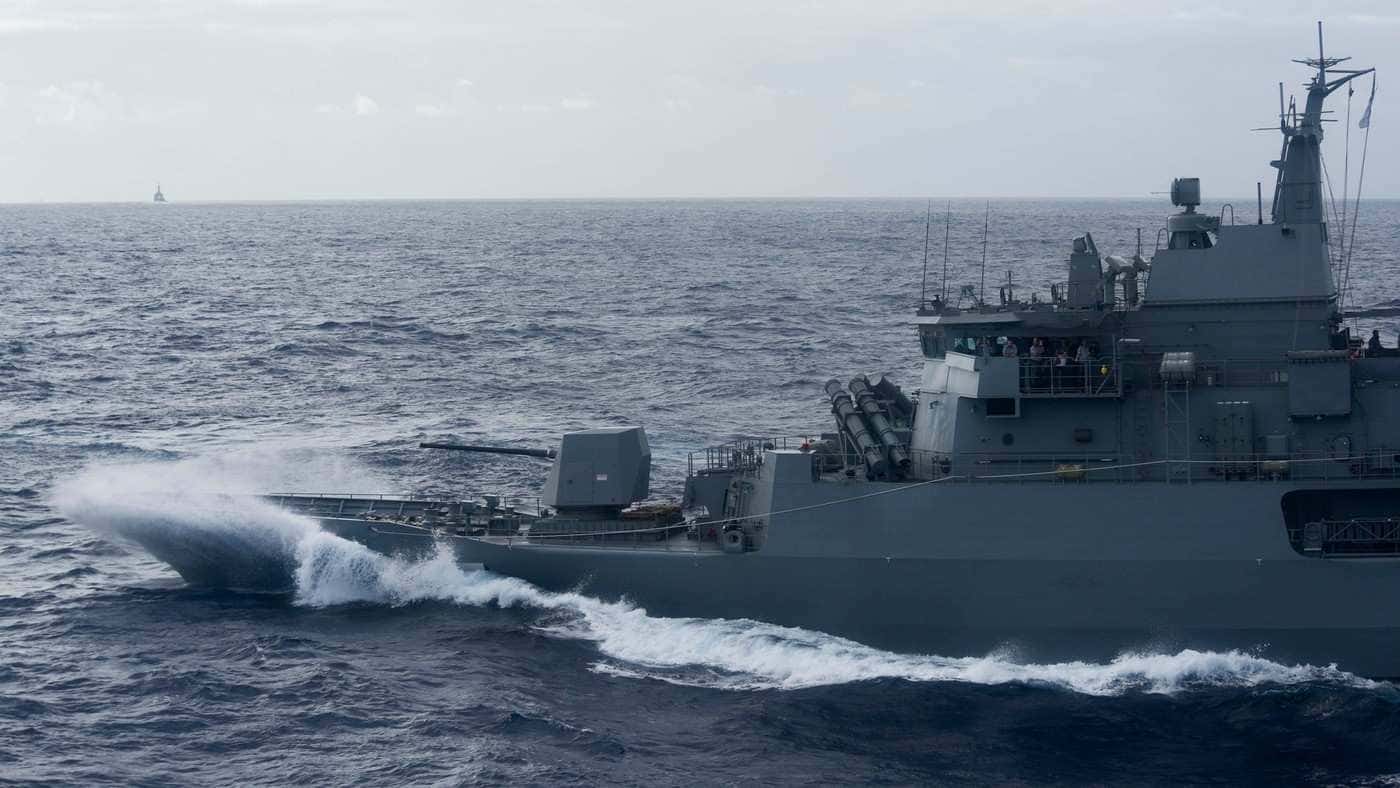
Sea power is usually pictured as a warship at sea, but every ship depends on a long chain of support ashore. Ports, fleet bases, maintenance centres, shipyards and the businesses that supply them are the less visible side of sea power. Defence's own shipbuilding and sustainment plan treats this industrial work as part of how maritime capability is delivered to the Australian Defence Force (ADF).
This list looks at six parts of that support system in Australia, using Navy, Defence and BITRE sources. It describes what public sources state and keeps facilities already operating separate from announced plans that are still being designed or built.
1. Shore support: where sea power begins
Navy's Shore Force "delivers the support required to raise, train and sustain the fleet and aircraft for maritime operations." Navy lists its responsibilities as including workforce, facilities and infrastructure, garrison support, airworthiness preparedness for airfield operations and seaworthiness preparedness of port operations.
In our view, a ship at sea is the visible end of that work. Before it sails, its crew has been trained ashore, its systems have been maintained alongside, and it has a berth to return to. Our guide to Navy roles: military, diplomatic and constabulary covers what the fleet does once it is at sea.
2. Commercial ports that carry the trade
Most of the port activity around Australia is commercial. BITRE reports that "32,142 port calls were made to Australian ports in 2024-25", with Western Australia (9,580) and Queensland (8,244) the busiest states. In the same year, "5,841 different cargo vessels visited Australian ports", and 9.1 million twenty-foot equivalent units (TEUs) were exchanged at container terminals in Brisbane, Sydney, Melbourne, Fremantle and Adelaide.
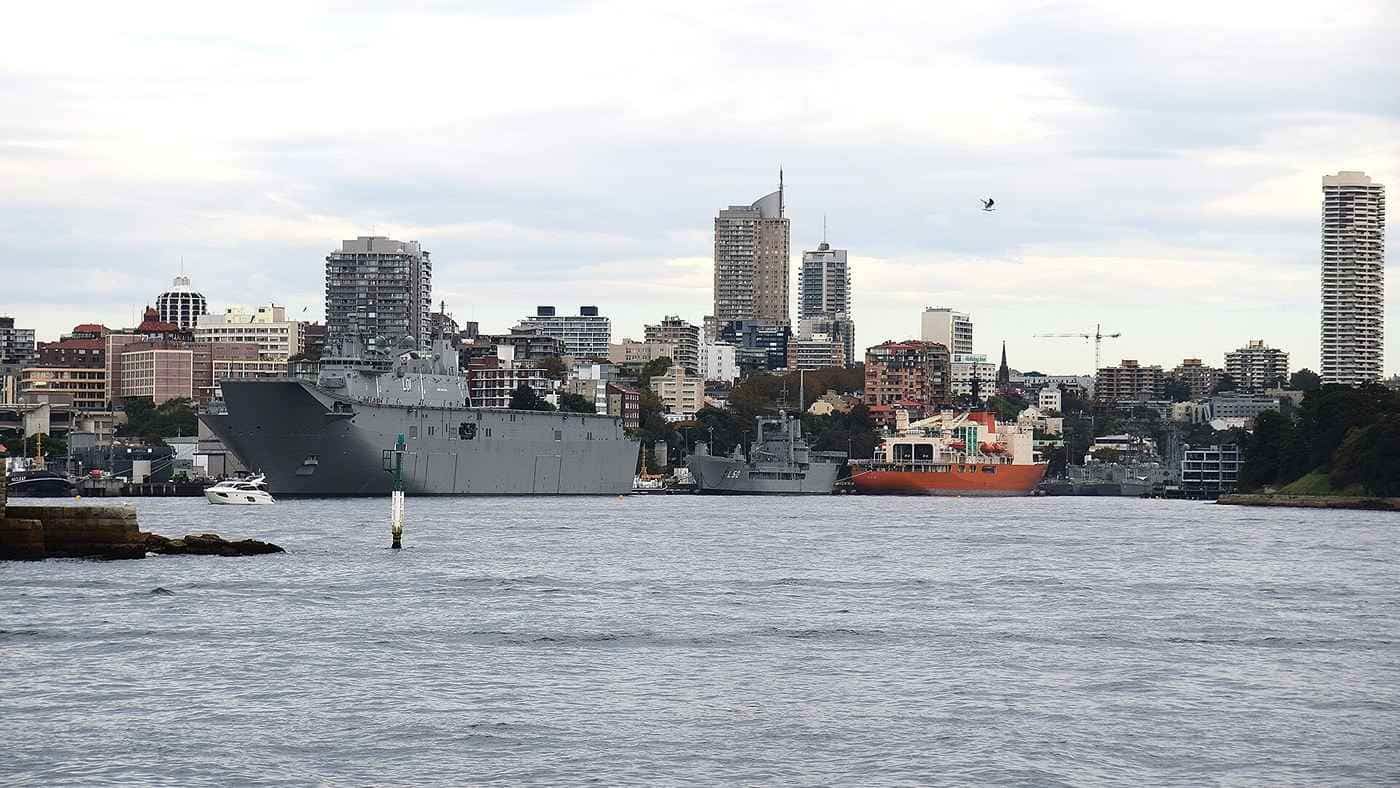
Naval and commercial shipping often share the same harbours. A 2005 Sea Power Centre paper on the strategic importance of Australian ports argued that "Specific Australian ports are also crucial to Australia's defence." It noted that naval planning assumed "continued access to those commercial ports that contain naval bases", and warned that a port system unable to meet Defence's support and surge demands "will quickly become a bottleneck and impede operations."
That paper is more than 20 years old, so its specific examples should not be read as current. Its central point, that commercial ports and naval operations are linked, still helps explain why ports belong in any discussion of sea power. Merchant shipping has its own long connection to defence, which we cover in the Merchant Navy and Australian defence, and our overview of Australian maritime systems shows how navy, commerce and ports connect.
3. Fleet Base East and Fleet Base West
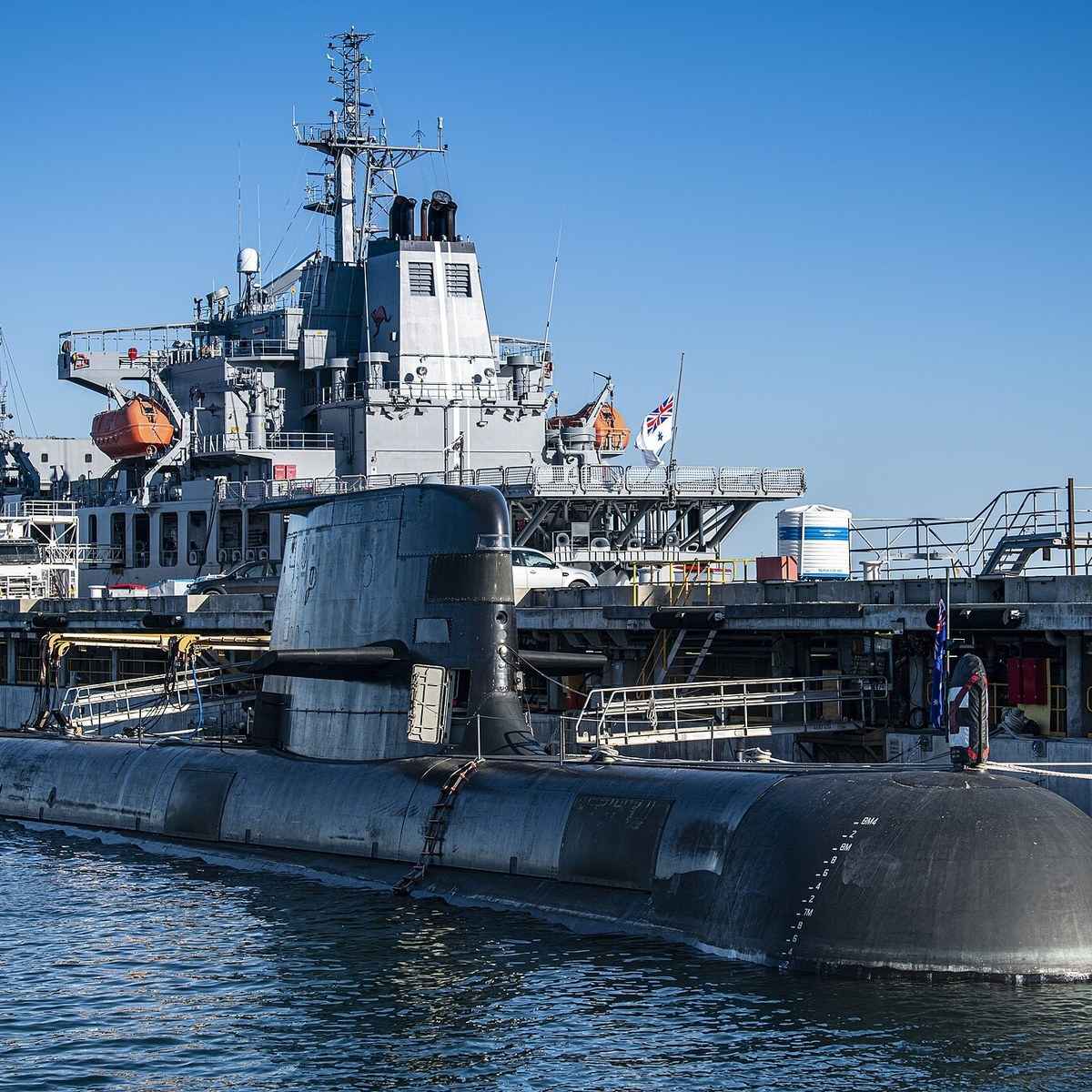
Navy states that "The 2 fleet bases are known as Fleet Base East (HMAS Kuttabul) and Fleet Base West (HMAS Stirling)." Navy's Fleet Base West page records that the Government announced its intention to begin developing a facility on Garden Island in November 1969.
The two bases reflect a long-standing decision. Navy links its two-ocean posture to the "Two-Ocean Basing Plan" announced in 1987. "HMAS Stirling was officially commissioned on 28 July 1978 though ships began visiting the facility as early as August 1975." Navy also states: "Up to half of the RAN's surface and submarine fleet is based permanently in Western Australia."
In our view, bases are more than places to tie up. They hold the people, facilities and services that keep ships ready. You can explore collectables linked to these and other shore bases in our Royal Australian Navy establishments range.
4. Regional maintenance close to where ships operate
Ships need regular maintenance, and Defence organises some of that work by region. A March 2024 Defence factsheet states: "A national network of 'sustainment centres' called RMCs has been established." The four Regional Maintenance Centres (RMCs) are:
- RMC North East in Cairns
- RMC West in Perth
- RMC North in Darwin
- RMC East in Sydney
According to the factsheet, "RMCs bring together CoA and industry resources to deliver maintenance regionally", where CoA means the Commonwealth of Australia. It describes an integrated Commonwealth and industry workforce, with Regional Maintenance Providers coordinating scheduling and growing the local supplier base, including small and medium enterprises. This is where sea power reaches into local businesses well beyond the naval bases themselves.
5. Shipbuilding at Osborne Naval Shipyard
Shipbuilding in Australia is another part of the picture. On 24 August 2026, the Government announced the keel laying of the first Hunter class frigate "at South Australia's Osborne Naval Shipyard". The release says the program is being delivered by BAE Systems Maritime Australia.
The release states the program is "directly supporting more than 2,500 jobs, with the majority of the workforce based in South Australia." It adds: "An additional 5,000 Australian industry jobs are being supported through the supply chain for the build." A keel laying is a construction milestone, so the frigate should not be described as in service.
6. Henderson: a planned precinct in the west
Henderson in Western Australia is often searched as "Henderson shipyard", but the Government's current plan is a Defence Precinct. On 24 August 2026, the Australian and Western Australian Governments announced "the selection of the site for the new Defence Precinct at Henderson."
The precinct is intended to support "delivering continuous naval shipbuilding and sustainment in Western Australia for generations to come", and the site layout includes a preferred location for the sustainment of Australia's future conventionally armed nuclear-powered submarines. The Prime Minister described the announcement as a milestone, saying "AUKUS is full steam ahead". The release refers to "an initial $12 billion funding commitment" announced in September 2025, and expects the commitments to support "around 10,000 direct jobs over the next two decades in Western Australia."
This is a plan, not a finished facility. The release says the program "will now progress into a concept design phase".
7. A national plan that links it together
The 2024 Naval Shipbuilding and Sustainment Plan, released on 20 December 2024, "sets out the national program of activities required to deliver maritime capability to the Australian Defence Force (ADF)". Defence says it covers a planned investment of $123 billion to $159 billion in maritime capability.
Workforce is central to that plan. Defence states the commitment will require growth "to support around 8,500 jobs in naval shipbuilding and sustainment by 2030, plus 20,000 jobs over the next 30 years in support of the Nuclear-Powered Submarine Program." Those are forecasts and targets, not current headcounts. In our reading, the plan, the frigate build at the Osborne shipyard and the Henderson precinct together show naval shipbuilding in Australia being organised as a continuous national effort, with sustainment given equal billing alongside construction.
Recognising the people who serve ashore
The sailors, public servants and industry workers behind the fleet rarely appear in photographs of ships at sea. If you know someone who has served at a shore base, our HMAS Stirling collection is a good place to start.
The HMAS Stirling pewter tankard features the HMAS Stirling crest engraved on a traditional pewter tankard, according to the listing. For everyday wear, the HMAS Stirling policy cap carries the Navy Ceremonial badge on the left side, as the listing describes. Whatever you choose, it can mark a part of naval service that is easy to overlook.
Sources
1 Royal Australian Navy Sea Power Centre | Shore Force | date not shown | https://seapower.navy.gov.au/node/5658
2 Royal Australian Navy Sea Power Centre | Semaphore: The Strategic Importance of Australian Ports (Issue 16) | October 2005 | https://seapower.navy.gov.au/sites/default/files/documents/Semaphore_2005_16.pdf
3 Bureau of Infrastructure and Transport Research Economics | Australian Infrastructure and Transport Statistics Yearbook 2025: Shipping | date not shown | https://www.bitre.gov.au/publications/2025/australian-infrastructure-and-transport-statistics-yearbook-2025/shipping
4 Royal Australian Navy | Fleet Base West | date not shown | https://www.navy.gov.au/about-navy/bases-and-locations/fleet-base-west
5 Department of Defence | The Regional Maintenance Centre Network: An Overview (factsheet, Version 2) | March 2024 | https://defence.gov.au/sites/default/files/2024-08/RegionalMaintenanceCentres_Factsheet_12082024.pdf
6 Minister for Defence | 'Keel laying' for Australia's first Hunter class frigate (media release) | 24 August 2026 | https://www.minister.defence.gov.au/media-releases/2026-08-24/keel-laying-australias-first-hunter-class-frigate
7 Minister for Defence | Albanese and Cook Governments select site of the Henderson Defence Precinct (media release) | 24 August 2026 | https://www.minister.defence.gov.au/media-releases/2026-08-24/albanese-cook-governments-select-site-henderson-defence-precinct
8 Department of Defence | 2024 Naval Shipbuilding and Sustainment Plan | released 20 December 2024 | https://defence.gov.au/about/strategic-planning/2024-naval-shipbuilding-sustainment-plan
9 Military Shop | HMAS Stirling Pewter Tankard | SKU BN4661 | https://militaryshop.com.au/products/hmas-stirling-pewter-tankard.html
10 Military Shop | HMAS Stirling Policy Cap | SKU BN29827 | https://militaryshop.com.au/products/hmas-stirling-policy-cap.html