Our Blog
Australian Search and Rescue: Where the Navy Fits in the Wider Maritime Task Framework
Table of Contents
- Who coordinates Australian search and rescue
- AMSA and the Rescue Coordination Centre
- A search and rescue region of 53 million square kilometres
- Where Navy search and rescue support comes in
- Search and rescue in the span of maritime tasks
- Search and rescue is not the same as disaster relief
- Recognising the people who stand ready
- Sources
- FAQs
Australian search and rescue is coordinated by civil authorities, not by the Navy. The Australian Maritime Safety Authority (AMSA) coordinates searches for people on vessels at sea and for many aircraft, and state and territory police coordinate land searches and incidents on inland waterways and within ports. The Australian Defence Force (ADF) coordinates searches for Australian and foreign military personnel, aircraft, ships and submarines, and provides search and rescue assistance to civil authorities.
That makes the Navy an important helper rather than the lead agency for most rescues at sea. This article explains who does what in Australian search and rescue, where the Navy fits in its own published framework of maritime tasks, and why search and rescue is distinct from disaster relief. It draws only on AMSA, Navy and Defence public pages and doctrine.
Who coordinates Australian search and rescue
AMSA describes three organisations that make up "Australia's SAR authorities": AMSA, state and territory police, and the ADF. Volunteers, shipping and other groups support them, but coordination sits with these three.
Each has its own area. AMSA coordinates search and rescue for people on or from vessels at sea, international civil aircraft and aircraft on the Civil Aviation Safety Authority or Recreational Aviation Australia registers. Police coordinate land searches, people and vessels on inland waterways and within port limits, and aircraft not on those registers, as well as volunteer rescue groups in their jurisdictions.
The ADF "coordinates SAR operations for Australian Defence Force and foreign military personnel, aircraft, ships and submarines." It also "provides SAR assistance to civil SAR authorities." Those two lines are the core of the Navy's place in the system.
AMSA and the Rescue Coordination Centre
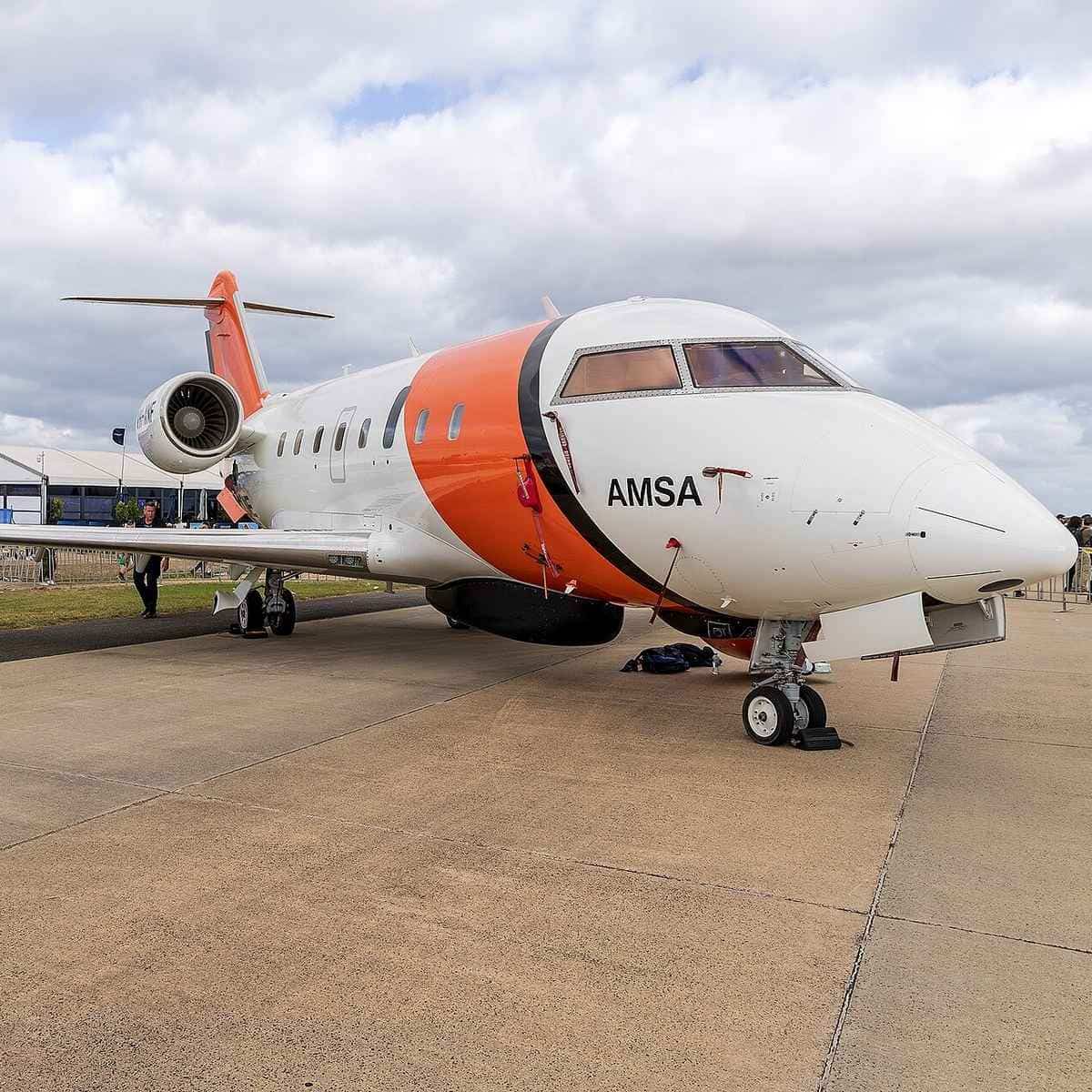
AMSA says it provides "a search and rescue (SAR) service for Australia." Its Rescue Coordination Centre (RCC) is in AMSA's Canberra office and runs around the clock. The RCC "receives distress alerts and either coordinates the response or transfers coordination" to the responsible SAR authority.
The centre has a history. AMSA says that in 1997 its responsibilities merged with Airservices Australia to form the Joint Rescue Coordination Centre (JRCC), which provided search and rescue coordination for maritime and aviation incidents and assisted police with land-based incidents. AMSA's current pages use the name Rescue Coordination Centre.
The workload behind Australian search and rescue is real. AMSA reports that in 2025 it responded to 253 distress incidents across maritime, aviation and land environments, 186 of them maritime, and that it assisted 994 people and saved 187 lives. Its Challenger search and rescue jets flew 1,086 hours on live operations that year.
A search and rescue region of 53 million square kilometres
Australian search and rescue covers a vast area. Australia's search and rescue region covers "nearly 53 million square kilometres (one tenth of the Earth's surface)". It takes in large areas of the Indian, Pacific and Southern Oceans and borders the search and rescue regions of 10 other countries.
AMSA says its search and rescue service is consistent with Australia's obligations under the Convention on International Civil Aviation 1944 and the International Convention on Maritime Search and Rescue 1979. At a national level, the National Search and Rescue (NATSAR) Council is "the national coordinating body for SAR response arrangements in Australia". It brings the main Australian search and rescue authorities together: AMSA, the ADF and eight federal, state and territory police services. Agreed SAR response and coordination arrangements are set out in the National Search and Rescue Manual.
Where Navy search and rescue support comes in
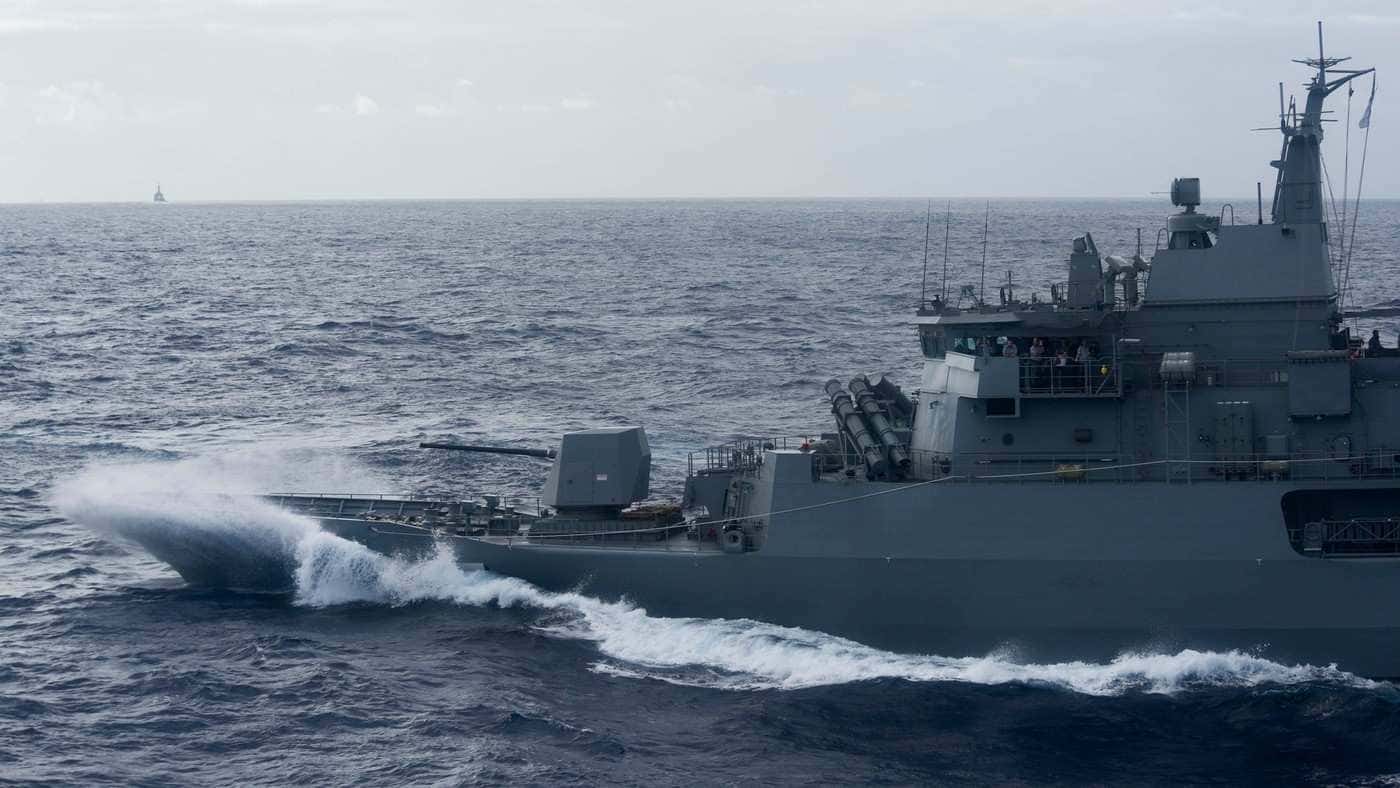
Navy's own description of its part in Australian search and rescue is modest and clear. It notes that Navy people are "constantly operating at sea conducting training or transiting between ports," and that they "stand ready to support search and rescue operations." It adds: "Navy works closely with the Australian Maritime Safety Authority to respond to these situations whenever possible."
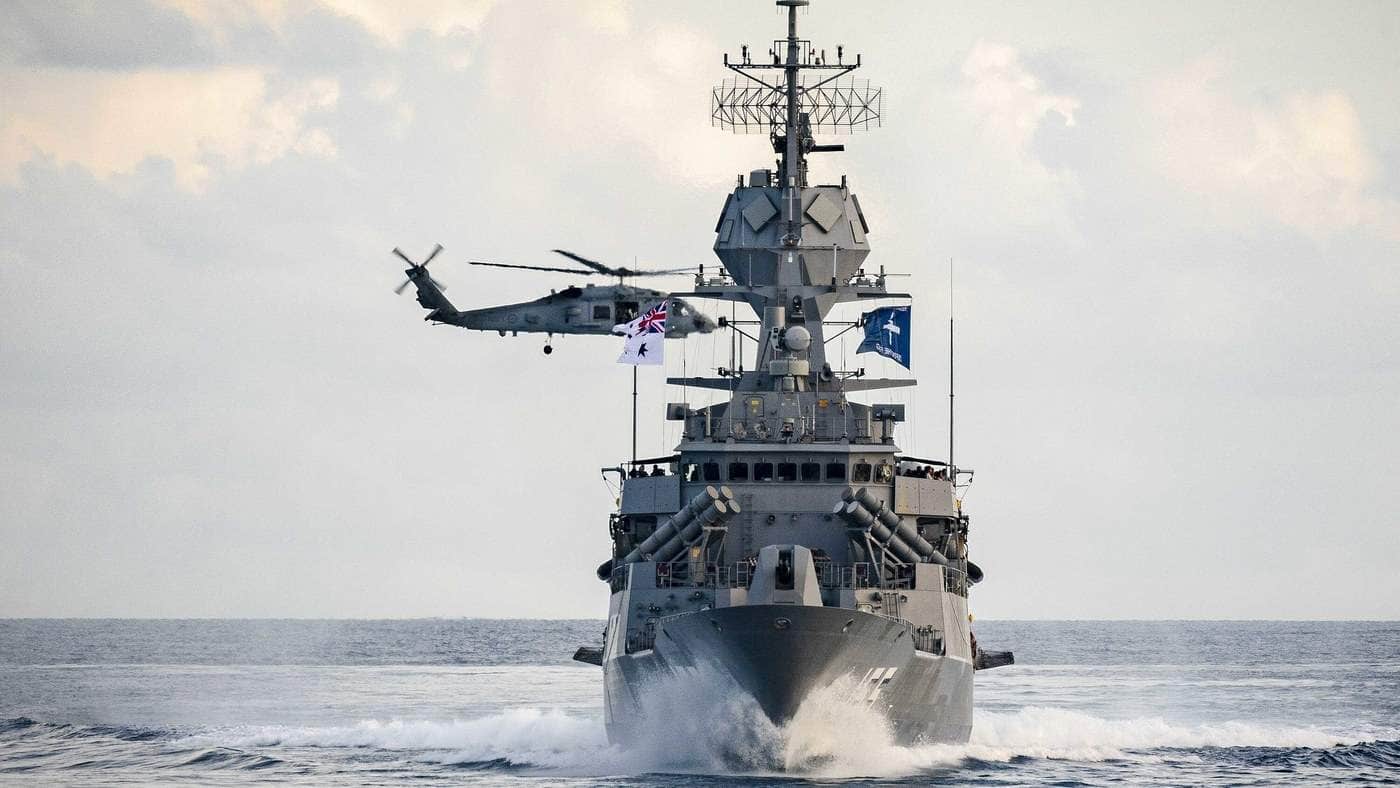
An AMSA media release on a rescue off Christmas Island shows how this works. AMSA's Rescue Coordination Centre coordinated the response. AMSA's rescue jet located the sailor's partially submerged catamaran and dropped life-saving supplies. The Supply class auxiliary oiler replenishment vessel HMAS Supply repositioned to assist, and its embarked MH-60R Seahawk helicopter retrieved the sailor. AMSA described it as an operation where "multiple agencies worked together to achieve a successful outcome."
In that example, AMSA led and the Navy brought a ship and a helicopter. That is the pattern AMSA's arrangements describe for Australian search and rescue at sea.
Search and rescue in the span of maritime tasks
Navy doctrine places search and rescue inside a wider picture. Australian Maritime Operations (Sea Power Centre, second edition, 2017) includes a figure called "The Span of Maritime Tasks". It shows "the three core roles of maritime forces and their subordinate tasks", and lists Search and Rescue among those tasks, alongside Humanitarian Assistance and Disaster Relief. This is published doctrine from 2017, not a statement of the Navy's current ships or capability.
The same document warns against reading the figure too rigidly. It says "the roles are rarely exclusive and the tasks are representative rather than specific," and that several tasks may be carried out at once. In its section on maritime preparedness, it also lists search and rescue among "those functions all ships are required to perform", noting "SOLAS compliance".
The doctrine adds that the ability to take on constabulary and diplomatic roles is "largely a by-product of the resources and core skills developed for war-fighting." Our article on Navy roles: military, diplomatic and constabulary explains those three roles in more detail.
Search and rescue is not the same as disaster relief
It is easy to blur search and rescue with humanitarian assistance and disaster relief. Navy's own page separates them. Overseas, "Humanitarian assistance and disaster relief aid is coordinated and provided by the Department of Foreign Affairs and Trade", with Defence helping, particularly for neighbours in the South Pacific and South East Asia.
At home, Defence support to the community runs through Defence Assistance to the Civil Community (DACC). Defence says DACC applies "when local resources are not sufficient, have been overwhelmed" or no alternative is available, and lists "assistance with search and rescue" among emergency support. Navy notes that states and territories seek Commonwealth help, including Defence help, "through Emergency Management Australia."
So there are two channels. At sea, maritime search and rescue runs through AMSA's coordination, with Navy assisting. Wider emergencies and disasters run through state requests and DACC. For a related distinction, see our guide to naval diplomacy and maritime law enforcement.
Recognising the people who stand ready
Australian search and rescue relies on many people working together: AMSA coordinators, police, volunteers, aircrews and, when needed, the Navy. If you would like to recognise someone who has served at sea, our Royal Australian Navy range is a good place to start.
For a naval aviator or anyone who has worked with ship's helicopters, the Fly Navy Remove Before Flight tag is described in its listing as a woven tag with a swivel hook for keys and bags. For a more traditional gift, the Navy pewter tankard features an engraved Navy crest, according to the listing. Whatever you choose, a few accurate words about the person's service will mean the most.
Sources
1 Australian Maritime Safety Authority | Our role in search and rescue | last updated 20 August 2026 | https://www.amsa.gov.au/safety-navigation/search-and-rescue/our-role-search-and-rescue
2 Australian Maritime Safety Authority | Search and rescue arrangements in Australia | last updated 30 July 2020 | https://www.amsa.gov.au/safety-navigation/search-and-rescue/search-and-rescue-arrangements-australia
3 Australian Maritime Safety Authority | Australia's search and rescue region | last updated 15 March 2022 | https://amsa.gov.au/safety-navigation/search-and-rescue/australias-search-and-rescue-region
4 Australian Maritime Safety Authority | History of search and rescue in Australia | last updated 22 April 2021 | https://amsa.gov.au/safety-navigation/search-and-rescue/history-search-and-rescue-australia
5 Royal Australian Navy | Humanitarian support | date not shown | https://navy.gov.au/navy-activities/humanitarian-support
6 Department of Defence | Defence Assistance to the Civil Community Initiative | date not shown | https://defence.gov.au/programs-initiatives/support-australian-community
7 Sea Power Centre, Royal Australian Navy | Australian Maritime Operations, second edition | 2017 (foreword September 2017) | https://seapower.navy.gov.au/sites/default/files/documents/Australian_Maritime_Operations_2017.pdf
8 Australian Maritime Safety Authority | Joint rescue operation off Christmas Island showcases Australia's search and rescue capability (media release) | date not shown | https://media.amsa.gov.au/media-release/joint-rescue-operation-christmas-island-showcases-australias-search-and-rescue-capability
9 Military Shop | Fly Navy Remove Before Flight Tag | SKU BN55567 | https://militaryshop.com.au/products/fly-navy-remove-before-flight-tag.html
10 Military Shop | Navy Pewter Tankard | SKU BN2271 | https://militaryshop.com.au/products/navy-pewter-tankard.html