Our Blog
Captain Percy Cherry VC: From the Military Cross to Lagnicourt, 1917
Table of Contents
- Early life in Victoria and Tasmania
- Enlisting in the 26th Battalion
- Gallipoli and a first wound
- The Western Front and Pozières
- The Military Cross at Malt Trench
- Lagnicourt, 26 March 1917
- Captain Percy Cherry is killed
- Victoria Cross recipients and the family left behind
- Remembering Captain Cherry
- Sources
- FAQs
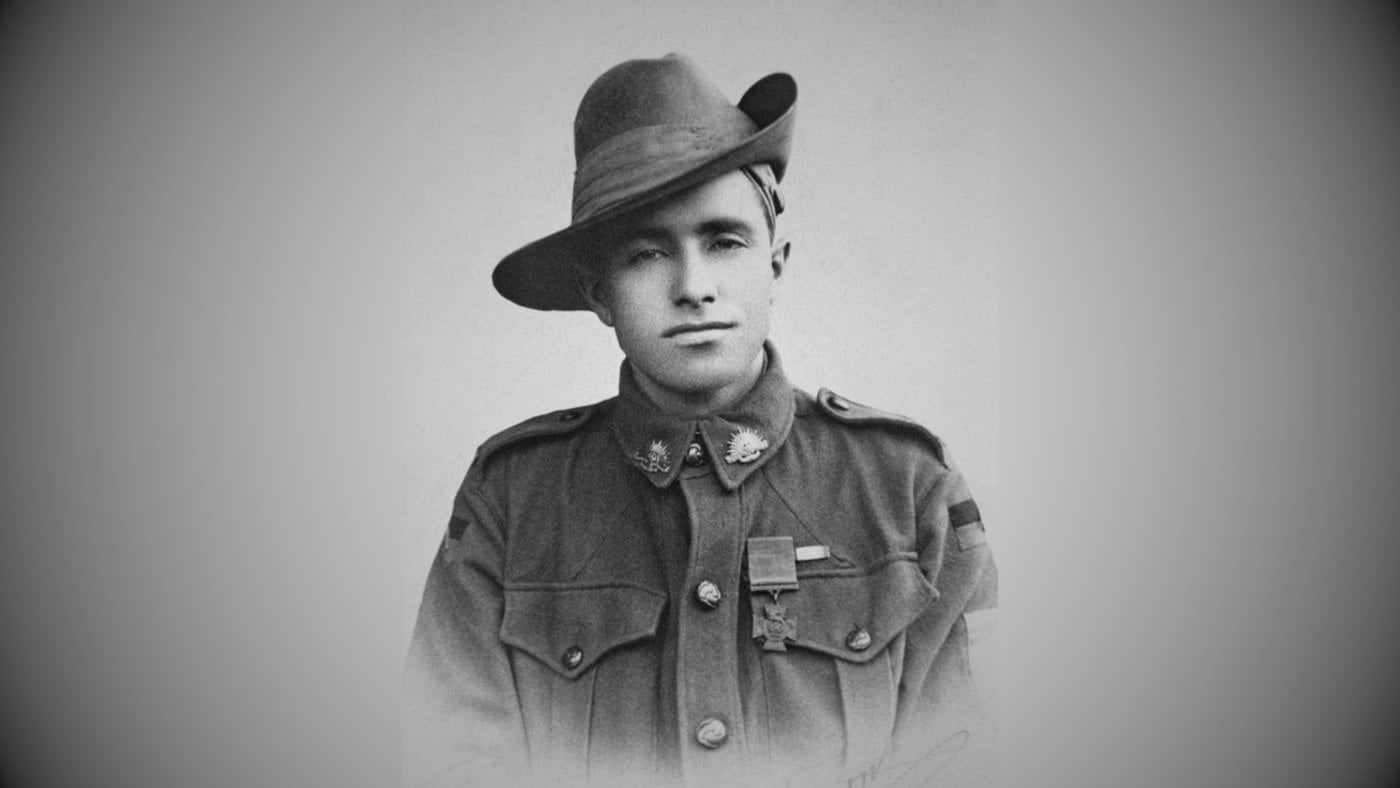
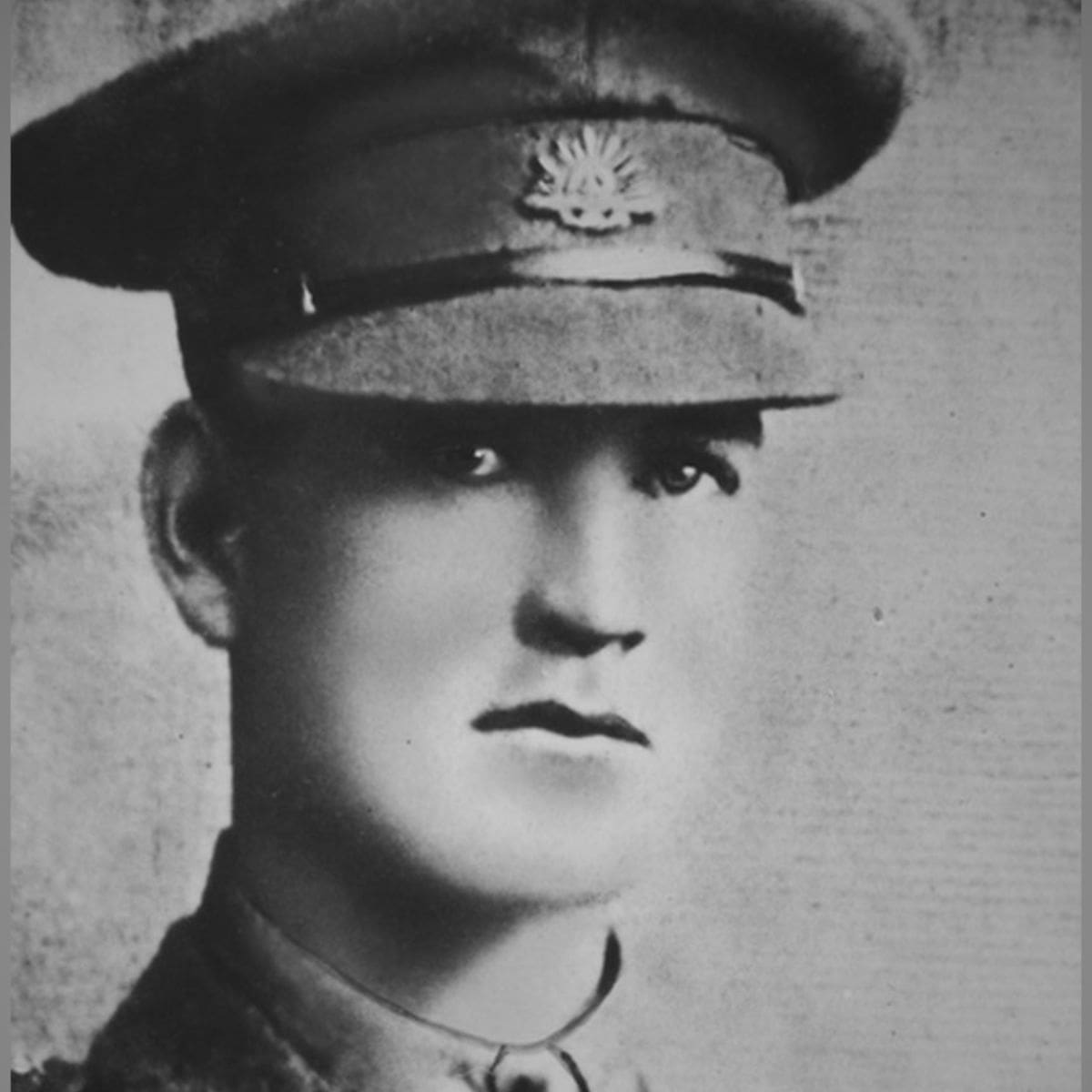
Captain Percy Cherry VC MC was a young Tasmanian officer of the 26th Battalion who was awarded the Military Cross for his actions at Malt Trench and the Victoria Cross for his leadership at Lagnicourt, France, on 26 March 1917. He was killed by an enemy shell later that day. He was 21 years old.
Percy Cherry served at Gallipoli and on the Western Front, and was wounded several times before Lagnicourt. The AWM notes that he never learnt of the honours given to him, the Military Cross and the Victoria Cross. His Victoria Cross and Military Cross were presented to his parents in Hobart in October 1917.
Early life in Victoria and Tasmania
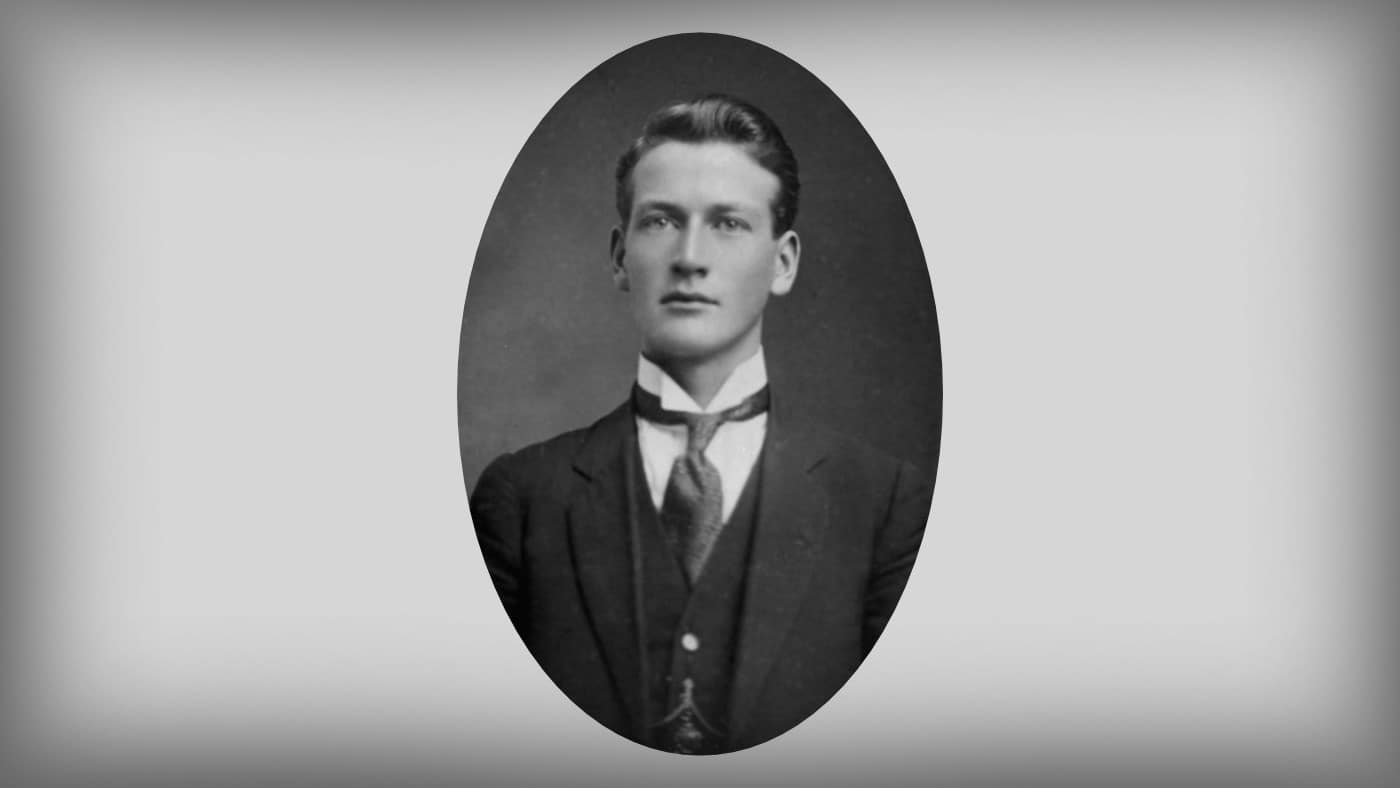
The Australian War Memorial (AWM) records that Percy Herbert Cherry was born at Drysdale, Victoria, on 4 June 1895. His parents were John Gawley Cherry and Elizabeth, née Russel. When he was seven, the family moved to Tasmania and settled on an orchard called "Cherry Vale" at Cradoc.
The AIF Project lists his occupation as orchardist, with an address at Cradoc, Huon. It also records earlier service as a lieutenant in the 93rd Senior Cadets, a role he still held when he enlisted. The Australian Army's Cove adds that he received a commission with the 93rd Infantry Regiment in 1913.
Enlisting in the 26th Battalion
Percy Cherry enlisted on 5 March 1915 at Franklin, Tasmania. He was posted to D Company, 26th Battalion, as a quartermaster sergeant, with the service number 1023. The Australian Army's Cove notes that military authorities "deemed him too young for officer status" at the time.
The AWM explains that the 26th Battalion was raised at Enoggera, Queensland, in April 1915, from recruits from Queensland and Tasmania, and formed part of the 7th Brigade. The AIF Project records that Cherry embarked from Brisbane on HMAT A60 Aeneas on 29 June 1915.
Gallipoli and a first wound
Cherry arrived on Gallipoli in early September 1915. There he was appointed D Company's sergeant major on 13 September. The Cove records that he served at Taylor's Hollow and Russell's Top.
On 1 December 1915 he was wounded in the face and head by a bomb blast and evacuated to Egypt. While he was in hospital, he was appointed a second lieutenant on 8 December.
The Western Front and Pozières
In March 1916 Cherry went to France. The AWM records that he took part in the failed attack on heavily defended German lines at Pozières on 28 and 29 July 1916.
On 5 August, attacking the same objective while commanding No. 2 Battery of the 7th Machine Gun Company, he was severely wounded and evacuated to London. The Cove describes these injuries as sustained "during combat with a German officer at Pozières". He was promoted to lieutenant on 25 August 1916. In November he returned to France and later rejoined the 26th Battalion. He was appointed a temporary captain, and this rank was confirmed in mid February 1917.
The Military Cross at Malt Trench
In early 1917 the German Army began to pull back to a new defensive position, the Hindenburg Line. DVA explains that the German plan was to withdraw "destroying everything behind them". The 26th Battalion attacked at Warlencourt on 1 and 2 March 1917.
During the attack on Malt Trench, north of Warlencourt, Cherry led his men to a gap in the German wire and into the German trenches. He was wounded but continued to fight. He personally captured one enemy machine gun and his men captured another, and the recommendation records that he turned one of them on the enemy. For this action he was awarded the Military Cross.
Lagnicourt, 26 March 1917
Just over three weeks after his Military Cross action, on 26 March 1917, Cherry took part in an operation by the 7th Brigade to capture the village of Lagnicourt. The UK Government's case study describes his Victoria Cross as awarded for "most conspicuous bravery, determination and leadership" that day.
The citation, as quoted in that case study, states that "after all the officers of his company had become casualties", he carried on the attack. The ANZAC Day Commemoration Committee notes that a stoutly defended crater temporarily checked the attackers. The AWM's record of the recommendation adds that he was wounded in the leg at about 6.30 am "but would not leave his post". The AWM's Victoria Cross record also states: "During the day he personally killed 9 Germans."
Captain Percy Cherry is killed
Later that afternoon, Captain Percy Cherry was killed by a single German shell. The AWM records the time as about 4.30 pm.
The recommendation for his Victoria Cross states: "His gallantry and bravery are beyond description." It also notes that he had been wounded on three occasions before this attack. His commanding officer, Lieutenant Colonel Reginald Travers, wrote: "I cannot speak in sufficiently glowing terms of this brave and gallant officer."
He was first buried near Lagnicourt, north east of Bapaume. After the war his body was reinterred in Queant Road Cemetery at Buissy, France.
The fighting around the village did not end with his death. DVA notes that by 9 April the British and Australians were already fronting the Hindenburg Line. DVA records that on 15 April 1917 the Germans launched an assault from both sides of Quéant, overran Lagnicourt and captured 21 field guns.
Victoria Cross recipients and the family left behind
Percy Cherry is one of the Australian Victoria Cross recipients of the First World War whose award was made after death. The DVA Anzac Portal lists him as "Lagnicourt, 26 March 1917, posthumous".
In October 1917 the Governor of Tasmania, Sir Francis Newdegate, presented his Victoria Cross and Military Cross to his parents at Hobart. The AWM's collection record lists the location of his Victoria Cross as its Hall of Valour. The AWM's collection also includes his Military Cross.
Remembering Captain Cherry
If you would like to remember the Australians of the Western Front, our Australia in the Great War collection brings together commemorative pieces that mark Australia's part in the First World War.
The Lieut. Albert Murray Western Front Bear is dressed in officer attire with a "Brodie" helmet, as the listing describes it (Limited Edition: 10,000). The WW1 Digger Figurine depicts an AIF infantryman of 1915 in a cold-cast bronze finish (Limited Edition: 5,000). You can also browse our range of WW1 badges, including the WW1 Ribbon Poppy Lapel Pin.
Sources
1 Australian War Memorial | Victoria Cross: Captain Percy Herbert Cherry, 26 Battalion, AIF (C136069) | date made c 1917 | https://www.awm.gov.au/collection/C136069
2 Australian War Memorial | Military Cross: Captain P H Cherry, 26 Battalion, AIF (RELAWM16241) | date made c 1917 | https://www.awm.gov.au/collection/C136070
3 Australian War Memorial | Studio portrait of Captain (Capt) Percy Herbert Cherry VC MC, 26th Battalion | date made c 1916 | https://www.awm.gov.au/collection/C376059
4 UNSW Canberra, The AIF Project | Percy Herbert Cherry | date not shown | https://aif.adfa.edu.au/showPerson?pid=51561
5 Australian War Memorial | Captain Percy Herbert Cherry | date not shown | https://www.awm.gov.au/collection/P11072616
6 Australian Army, The Cove | Highest Honour: Percy Cherry (page also covers Albert Chowne) | last reviewed June 2025 | https://cove.army.gov.au/article/highest-honour-10-percy-cherry-albert-chowne
7 UK Government (Foreign and Commonwealth Office) | WW1 Australian VC recipient Percy Herbert Cherry | 20 June 2016 | https://www.gov.uk/government/case-studies/ww1-australian-vc-recipient-percy-herbert-cherry
8 Australian War Memorial | 26th Australian Infantry Battalion | date not shown | https://www.awm.gov.au/collection/U51466
9 Department of Veterans' Affairs, Anzac Portal | 1917: Bapaume and Bullecourt | date not shown | https://anzacportal.dva.gov.au/resources/1917-bapaume-and-bullecourt
10 ANZAC Day Commemoration Committee (Queensland) | Captain Percy Herbert Cherry | date not shown | https://anzacday.org.au/captain-percy-herbert-cherry
11 Military Shop | Ltd Ed Lieut. Albert Murray: the Western Front Bear | SKU BN34974 | https://militaryshop.com.au/products/ltd-ed-lieut-albert-murray-the-western-front-bear.html
12 Military Shop | WW1 Digger Figurine | SKU BN50722 | https://militaryshop.com.au/products/ww1-digger-figurine.html
13 Military Shop | WW1 Ribbon Poppy Lapel Pin | SKU BN45213 | https://militaryshop.com.au/products/ww1-ribbon-poppy-lapel-pin.html