


Operation Slipper: The Australian Service in Afghanistan from 2001 to 2021
Table of Contents
- Australia Began Operation Slipper After the 11 September 2001 Attacks
- More Than 35,000 Australians Served in Afghanistan or Supporting Roles
- Reconstruction, Mentoring, and Community Support in Uruzgan
- Operation Highroad Continued Training and Advice From 2015
- The 2021 Kabul Evacuation and the Human Cost of Conflict
- Reflections, Inquiries, and National Remembrance
- FAQs
When you hear about Australian service in Afghanistan, you may think of a family member, a mate, or the images broadcasted on the news. Australia's role evolved significantly over two decades. It encompassed combat, reconstruction, training and advisory missions, and a high-stakes evacuation from Kabul in 2021. Understanding this complex history around Operation Slipper involves looking at the main stages, the diverse personnel involved, and why their military service remains a vital part of our national memory.
Whether you have a personal connection to an Afghanistan campaign or are exploring this chapter of Australia in Afghanistan history for the first time, this overview outlines how the mission unfolded.
Australia Began Operation Slipper After the 11 September 2001 Attacks
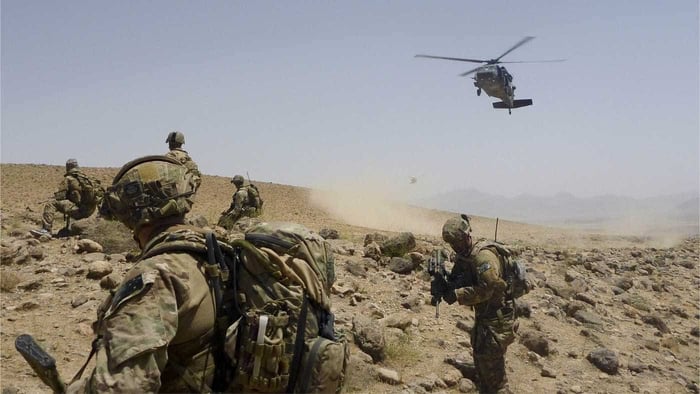
Australia joined the United States-led response to the terrorist attacks of 11 September 2001. Al-Qaeda, the group responsible, operated training bases inside Afghanistan under the protection of the ruling Taliban regime. In response, Australia established Operation Slipper on 11 October 2001 as its primary contribution to the international campaign against terrorism.
During the early stages of the deployment, Australian special forces gathered vital intelligence through reconnaissance and surveillance. The initial Special Air Service Task Group withdrew in December 2002, but a renewed commitment followed in 2005, demonstrating that the two-decade deployment was not a single, unchanging operation.
Concurrently, the broader international security mission took shape. The International Security Assistance Force (ISAF) was established in December 2001, with NATO assuming command in August 2003 to help the Afghan Government establish security and develop its national security forces.
More Than 35,000 Australians Served in Afghanistan or Supporting Roles
Official government records show that more than 35,000 Australians served during the Afghanistan service period, either directly in-country or supporting operations across the wider Middle East Area of Operations. This figure captures personnel deployed across the region and should not be read exclusively as a count of troops stationed inside Afghanistan.
The wider effort relied on a joint force comprising:
- Royal Australian Navy: Supporting maritime security and logistics operations.
- Australian Army: Deploying infantry, engineers, cavalry, and specialised task groups.
- Royal Australian Air Force: Providing critical transport and mobility.
- Civilian Agencies: Involving diplomats, federal police, government staff, and international aid organisations.
Air mobility was essential to sustaining the mission. For instance, Australian C-130 Hercules aircraft carried vital supplies to deployed forces, while Boeing 707 aircraft operated out of Kyrgyzstan to provide crucial in-flight refuelling.
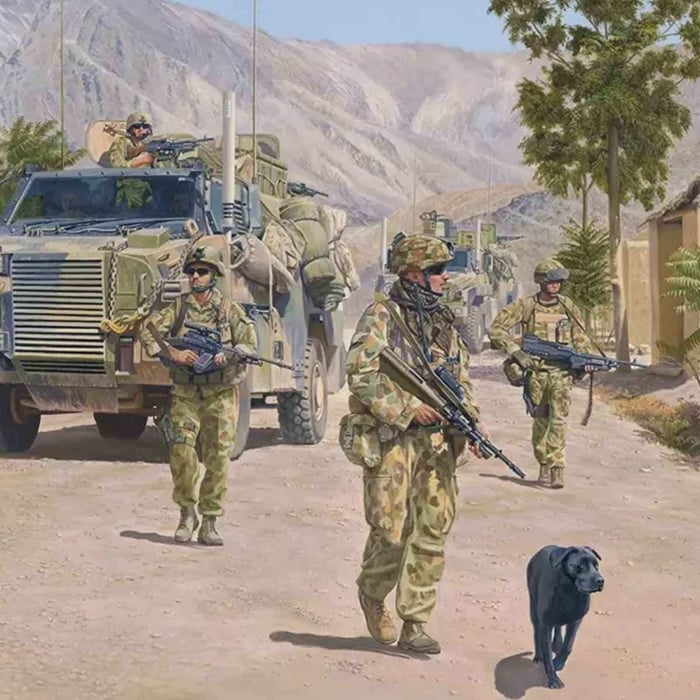
Operation Slipper Full Size Framed Canvas Print
Reconstruction, Mentoring, and Community Support in Uruzgan
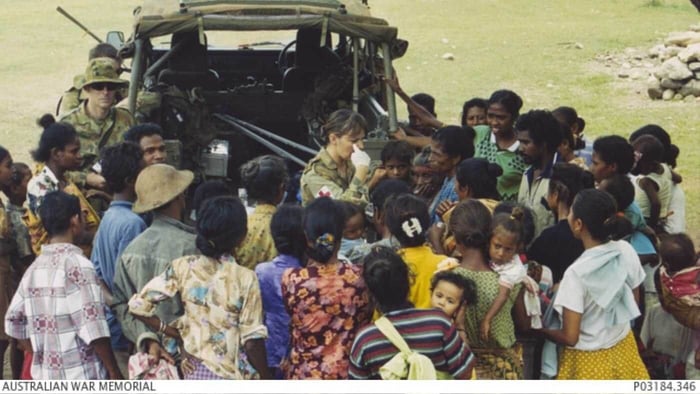
A significant portion of Australia's operational footprint was concentrated in Uruzgan Province in southern Afghanistan. Alongside tactical operations, Australian personnel actively contributed to local infrastructure development. They assisted in building schools, medical centres, hospitals, roads, and bridges. A dedicated trade training school was also established to teach practical skills like carpentry, plumbing, bricklaying, and concreting.
Furthermore, Australian personnel mentored Afghan security forces to help them build long-term institutional stability. Afghan interpreters and local support workers played an invaluable role by bridging cultural and language divides, forming an integral part of the human story.
Although Australia officially completed its mission in Uruzgan in December 2013, this did not mark the end of the nation's involvement. Specialised training and advisory roles continued in other strategic hubs like Kabul and Kandahar.
Operation Highroad Continued Training and Advice From 2015
With operation slipper officially concluding on 31 December 2014, a new phase of Australian military involvement began. On 1 January 2015, Operation Highroad commenced as Australia's direct contribution to NATO's Resolute Support Mission.
Under Operation Highroad, Australian Defence Force (ADF) personnel worked alongside international coalition partners to train, advise, and assist Afghan defence and security forces as they assumed full responsibility for their nation's security. Recognising the distinction between Slipper and Highroad helps explain the various operational phases across the broader twenty-year timeline, proving that active military engagement persisted long after traditional combat roles shifted.
The 2021 Kabul Evacuation and the Human Cost of Conflict
In August 2021, shifting political dynamics saw coalition forces withdraw and the Taliban retake control of Kabul. The sudden collapse of the Afghan Government created an immediate humanitarian crisis and an urgent need to evacuate vulnerable individuals.
Between 18 and 26 August 2021, Australia successfully evacuated around 4,100 people across 32 dedicated flights. ADF personnel, aircrews, medics, and Department of Foreign Affairs and Trade officials worked tirelessly across Afghanistan, the United Arab Emirates, and Canberra to execute the complex airlift. Medics played a vital role on board, caring for injured, exhausted, and dehydrated evacuees during transit.
The human toll of the twenty-year engagement remains deeply felt. The Australian War Memorial’s Roll of Honour records 47 ADF personnel who lost their lives as a result of their service in Afghanistan. Official figures also document 263 Australians wounded in action, alongside ongoing physical and psychological impacts acknowledged by the Department of Veterans' Affairs (DVA).
Reflections, Inquiries, and National Remembrance
The history of this era also encompasses complex institutional evaluations, including the Afghanistan Inquiry, which examined allegations of serious misconduct by members of the Special Operations Task Group between 2005 and 2016. Published in late 2020, Defence clarified that this was an administrative inquiry rather than a criminal investigation, reinforcing that honouring the broader sacrifice of thousands does not conflict with transparent accountability.
For veterans seeking to understand their recognitions, awards like the Afghanistan Medal, introduced in 2004, acknowledge qualifying service across specified operations under official eligibility guidelines.
As we mark significant milestones, such as the 25th anniversary of the initial deployment beginning in October 2001, national commemorative services honour the dedication of all who served. If exploring this history brings up difficult thoughts or feelings, free and confidential mental health support is available around the clock through Open Arms - Veterans & Families Counselling on 1800 011 046.
At Military Shop, we encourage you to reflect respectfully on the people behind this history, honour their service, and support those who served when and where they need it most.
FAQs
How many soldiers did Australia lose in Afghanistan?
The Australian War Memorial’s Roll of Honour records 47 Australian Defence Force personnel who lost their lives as a result of their service in Afghanistan.
Why did Australia join the war in Afghanistan?
Australia joined the United States-led response following the 11 September 2001 terrorist attacks. Al-Qaeda, the group responsible for the attacks, operated training bases inside Afghanistan under the protection of the ruling Taliban regime.
What was Operation Slipper in Afghanistan?
Operation Slipper was established on 11 October 2001 as Australia's primary military contribution to the international campaign against terrorism. It involved special forces reconnaissance, surveillance, and regional support until it officially concluded on 31 December 2014.
How many Australians served in total during the conflict?
More than 35,000 Australians served in Afghanistan or in supporting regional roles across the wider Middle East Area of Operations.
What was Operation Highroad?
Operation Highroad began on 1 January 2015 as Australia's contribution to NATO's Resolute Support Mission. Under this operation, Australian Defence Force personnel trained, advised, and assisted Afghan security forces until later phases of the deployment.
What role did Australia play during the 2021 Kabul evacuation?
Between 18 and 26 August 2021, Australia evacuated around 4,100 people across 32 dedicated flights. Defence personnel, aircrews, and medical staff worked together to airlift Australian citizens, approved foreign nationals, and vulnerable individuals to safety.
Where can veterans and families find support if they need help?
Free, confidential mental health and well-being support is available around the clock through Open Arms – Veterans & Families Counselling by calling 1800 011 046.