


A Tribute to the Military Nurse Corps
Table of Contents
The history of military medicine in Australia is inextricably bound to the extraordinary courage, resilience, and clinical excellence of the women and men who have served on the frontline. Long before specialised medical corps were fully established in modern configurations, civilian and military health professionals stepped forward to tend to the wounded under harrowing conditions. Within the broader framework of the Australian Defence Force, the military nurse corps has earned an enduring legacy of bravery under fire, saving countless lives across every major global conflict, peacekeeping mission, and humanitarian crisis.
Tracing the evolution of these dedicated professionals reveals a remarkable story of professionalisation, sacrifice, and an unwavering commitment to the welfare of Australian service personnel. From the pioneering days of colonial militias to the sophisticated aeromedical evacuation teams of the modern era, military healthcare providers have continually adapted to meet the shifting demands of warfare and emergency medicine.
Origins and Early Foundation of the Army Nursing Service
The formal roots of organised military nursing in Australia stretch back to the late 19th century, prior to Federation in 1901. Individual colonial forces recognised the growing need for trained medical support during regional conflicts and overseas expeditions. However, it was not until the establishment of official colonial and state nursing services that a structured pathway emerged for female nurses to deploy overseas under official military command and recognition.
The formal genesis of the army nursing service took shape as colonial nursing associations coalesced at the turn of the 20th century. When the Australian Imperial Force (AIF) was raised for service following the outbreak of World War I, these pioneering professionals mobilised rapidly. Operating under the title of the Australian Army Nursing Service (AANS), they formed the backbone of military medical care far from home, establishing a standard of compassionate and rigorous clinical practice that set an exceptional benchmark for allied nations across the globe.
Courage Under Fire: Australian Nurses in World War I
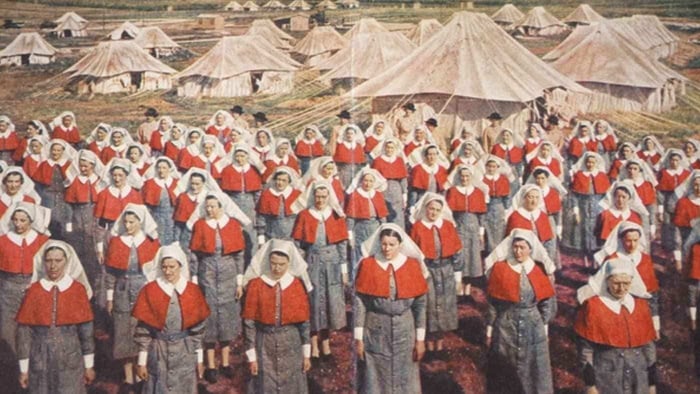
During the First World War, Australian nurses in WW1 served across a staggering array of grueling environments, including military hospitals in Egypt, the Greek island of Lemnos, France, England, and aboard hospital ships navigating dangerous submarine-infested waters.
Working in hastily established tent hospitals, damp casualty clearing stations, and under canvas structures battered by extreme weather, these nurses faced unprecedented operational challenges. They treated horrific shrapnel wounds, severe gas burns, and rampant infectious diseases like typhoid, dysentery, and trench fever. Despite enduring relentless air raids, heavy artillery shelling, and severe physical exhaustion, their dedication remained entirely unshakeable.
Nurses were recognised with honours including the Royal Red Cross for exceptional nursing service, and a small number received the Military Medal for bravery under fire. Their selfless actions cemented the reputation of Australian medical personnel as pillars of strength, professionalism, and clinical competence amidst the chaos of total war.
World War II and the Ultimate Sacrifice
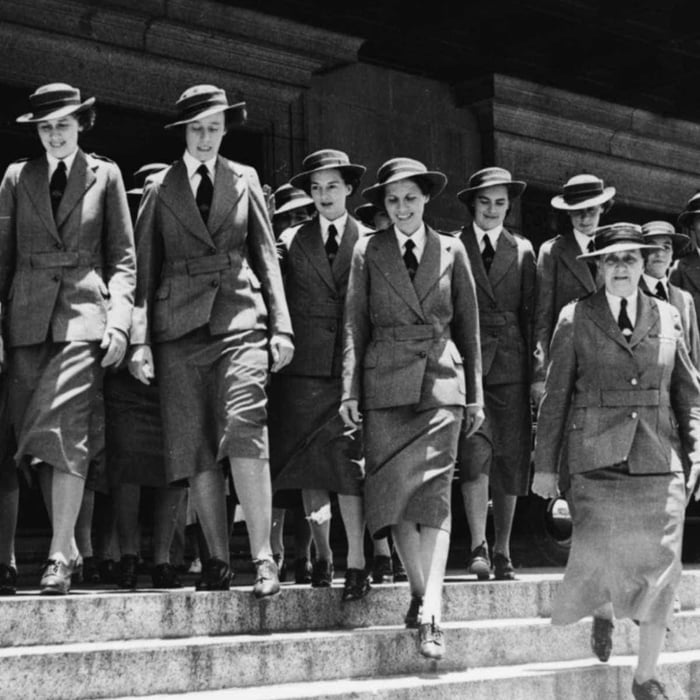
The outbreak of World War II tested the resilience of the nursing service to its absolute limits once again. As the conflict engulfed Europe, the Middle East, and later the Asia-Pacific, nurses deployed globally to meet mounting casualties. The expansion of mobile field hospitals, hospital carriers, and land-based stations meant that healthcare professionals were positioned closer to active combat zones than ever before in military history.
The most poignant and tragic chapter in this history unfolded during the fall of Singapore in 1942. When the evacuation ship SS Vyner Brooke was bombed and sunk by Japanese aircraft off the coast of Bangka Island, members of the AANS survived harrowing hours in the ocean only to face brutal capture. On the beaches of Bangka Island, 21 Australian nurses were lined up and massacred by Japanese soldiers. Sister Vivian Bullwinkel, miraculously surviving gunshot wounds by feigning death, endured years of brutal captivity as a prisoner of war before returning home to share their story of sacrifice.
This profound tragedy etched the courage of these personnel permanently into the national consciousness, symbolising the ultimate price paid in the line of duty.
https://collections.slq.qld.gov.au/viewer/IE2813218
Post-War Development and the Modern ADF Nurse
Following the conclusion of the Second World War, the operational requirements of military medicine evolved rapidly to align with changing geopolitical dynamics. The post-war era saw the reorganisation of medical corps, leading eventually to the formal formation of the Royal Australian Army Nursing Corps (RAANC) in 1951, recognising the permanent, indispensable role of nurses within the regular military structure.
During the Korean War, the Malayan Emergency, and the Vietnam War, members of the nursing corps continued their proud tradition of frontline care. Operating out of the 1st Australian Field Hospital in Vung Tau and aboard aeromedical evacuation flights, nurses managed complex trauma cases under demanding jungle and combat conditions, saving numerous lives.
Today, the modern ADF nurse continues this legacy of excellence, operating within (HADR) missions; such as earthquake, flood, and cyclone responses across the Indo-Pacific. Today's army nurse combines advanced critical care nursing with tactical military readiness.
Whether serving in high-intensity combat zones or participating in multilateral peacekeeping operations, the modern military nurse corps remains a cornerstone of Australian military capability. Their history is a powerful testament to the enduring values of compassion, professional mastery, and unmatched courage under fire.
FAQs
Is nurse corps military?
Yes, the nurse corps is an integral branch of the military. In Australia, the Royal Australian Army Nursing Corps (RAANC) operates as part of the Australian Defence Force, providing essential medical care and clinical support to service personnel across operations and training.
Can I join the Army as a nurse?
Yes, eligible registered nurses can join the Australian Army, serving as professional healthcare specialists who combine advanced clinical nursing expertise with military tactical training.
How do you become a nurse in the army?
To become a military nurse, individuals typically need to hold recognised tertiary nursing qualifications (such as a Bachelor of Nursing) and current registration with the Nursing and Midwifery Board of Australia before completing specialised military officer and medical corps training.
How many years does it take to become a military nurse?
Becoming a military nurse generally requires completing a standard three-year university nursing degree followed by professional clinical experience, after which qualified applicants undergo ADF officer and corps-specific induction training.
What was the role of Australian nurses during World War I and World War II?
During World War I and World War II, Australian nurses served courageously in military hospitals, tent stations, and hospital ships across Egypt, Europe, the Middle East, and the Pacific, treating severe combat wounds, enduring heavy bombardments, and making profound sacrifices.
How do modern ADF nurses support humanitarian and peacekeeping missions?
Modern ADF nurses deploy on international humanitarian assistance and disaster relief (HADR) missions, aboard navy amphibious ships, and within deployable joint force hospitals to provide critical emergency healthcare during natural disasters and regional crises.