Our Blog
Military Figurines: Materials, Finishes and Care
Table of Contents
- What military figurines in our range are made of
- What cold-cast bronze means
- Cold-cast bronze and solid bronze figurines are not the same
- Finishes: antique gold, antique bronze and more
- Bases, plates and other features
- How to dust a figurine safely
- Light, heat and humidity
- Handling and moving your figurine
- Choosing your next piece
- Sources
- FAQs
Nearly every figurine listing we checked on Military Shop for this guide gives the same material line: resin with a cold-cast bronze finish. That combination gives military figurines a metal look without foundry casting. It also shapes how you care for them: dust them dry, keep them out of direct sun and heat, and lift them with both hands.
This beginner's guide to military figurines explains what our listings say about materials and finishes, what cold-cast bronze means according to a casting materials maker, and what conservation bodies advise on dust, light and handling for resin figurines. Always follow any care instructions supplied with your figurine first.
What military figurines in our range are made of
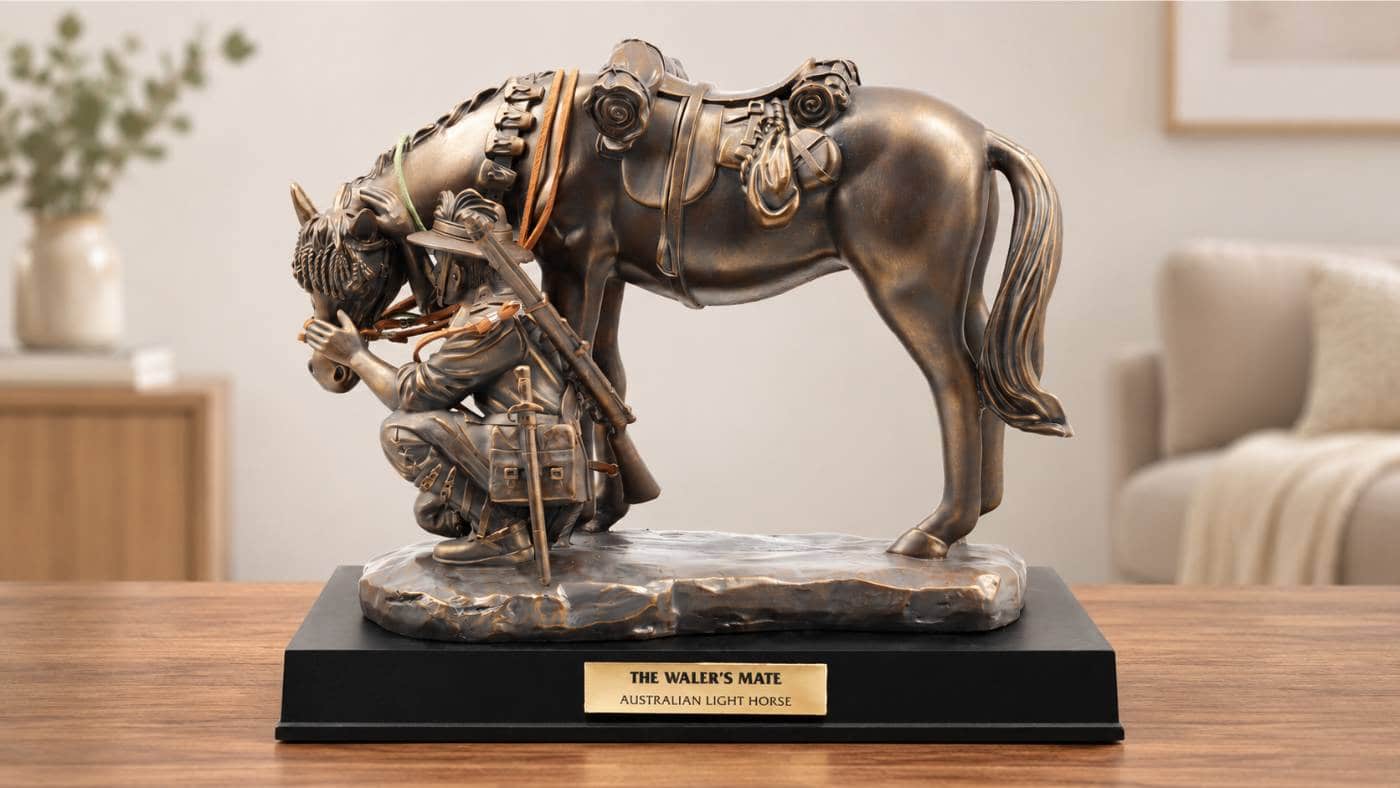
The specifications on our military figurines listings read "Material: Resin, Cold-Cast Bronze Finish". That applies to the Vietnam Digger Figurine and to The Walers Mate Light Horse Figurine, among many others.
Some listing titles use the shorter word "bronze". The Naked Army UN Peacekeeper Rwanda 1995 Bronze Figurine is one example, yet its specifications still read "Resin, Cold-Cast Bronze Finish". So when you see "bronze" in a title, check the material line. None of the figurine listings we checked describe a piece as solid cast bronze.
What cold-cast bronze means
Smooth-On, a maker of casting resins, describes cold-casting as "the process of mixing metal powder with a resin". It lists bronze, brass, aluminium and copper among the powders used. According to Smooth-On, "The finished casting gives the appearance and weight of solid metal."
Smooth-On is describing its own materials and method. Figurine makers may use different recipes, and our listings do not give the proportion of metal powder in each piece. What the listings do make clear is the basic structure: a resin body with a cold-cast bronze finish.
Cold-cast bronze and solid bronze figurines are not the same
Smooth-On says the cold-cast process is "faster and much less expensive when compared with foundry casting of molten metal". In our view, that cost difference helps explain why so many figurines use a cold-cast bronze finish. A solid bronze figurine would instead go through foundry casting of molten metal.
The difference matters for care. The Canadian Conservation Institute (CCI) lists metals, stone, ceramics and glass as materials with no sensitivity to UV. It also lists "Cracking of most plastics, resins, varnishes, rubber" among the effects of ultraviolet (UV) light. In our view, a cold-cast piece should be cared for as a resin object with a metallic surface, not as a lump of solid metal.
Finishes: antique gold, antique bronze and more
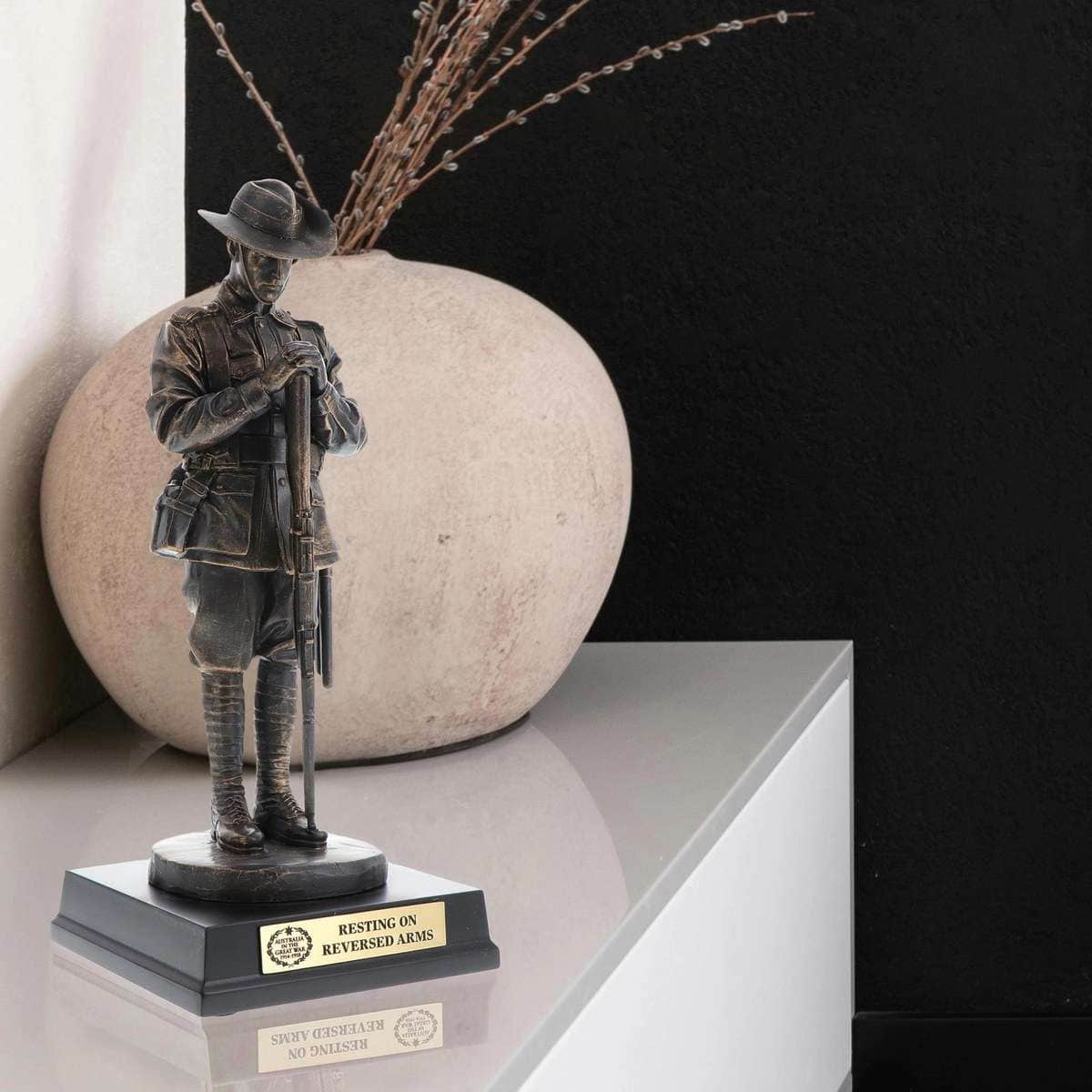
Our listings name the colour of each finish. The Vietnam Digger Figurine is listed as "Antique Gold", while The Walers Mate Light Horse Figurine is listed as "Antique Bronze". Some miniatures are listed simply as "Bronze". The Naked Army UN Peacekeeper listing also refers to the figurine's "hand-finished craftsmanship".
Smooth-On explains how a metal look is brought out in its own process. The steps include lightly abrading with steel wool "until the desired metal shine and luster is attained", patina paints for a patina effect, black shoe polish for "added depth and dimension", and clear semi-gloss spray "To prevent oxidation of the metal". Our listings do not say which of these steps each maker uses.
Our advice: never use metal polish, steel wool or abrasive cloths on a finished figurine. Abrasion is one way a finish like this is created, so it can also change it.
Bases, plates and other features
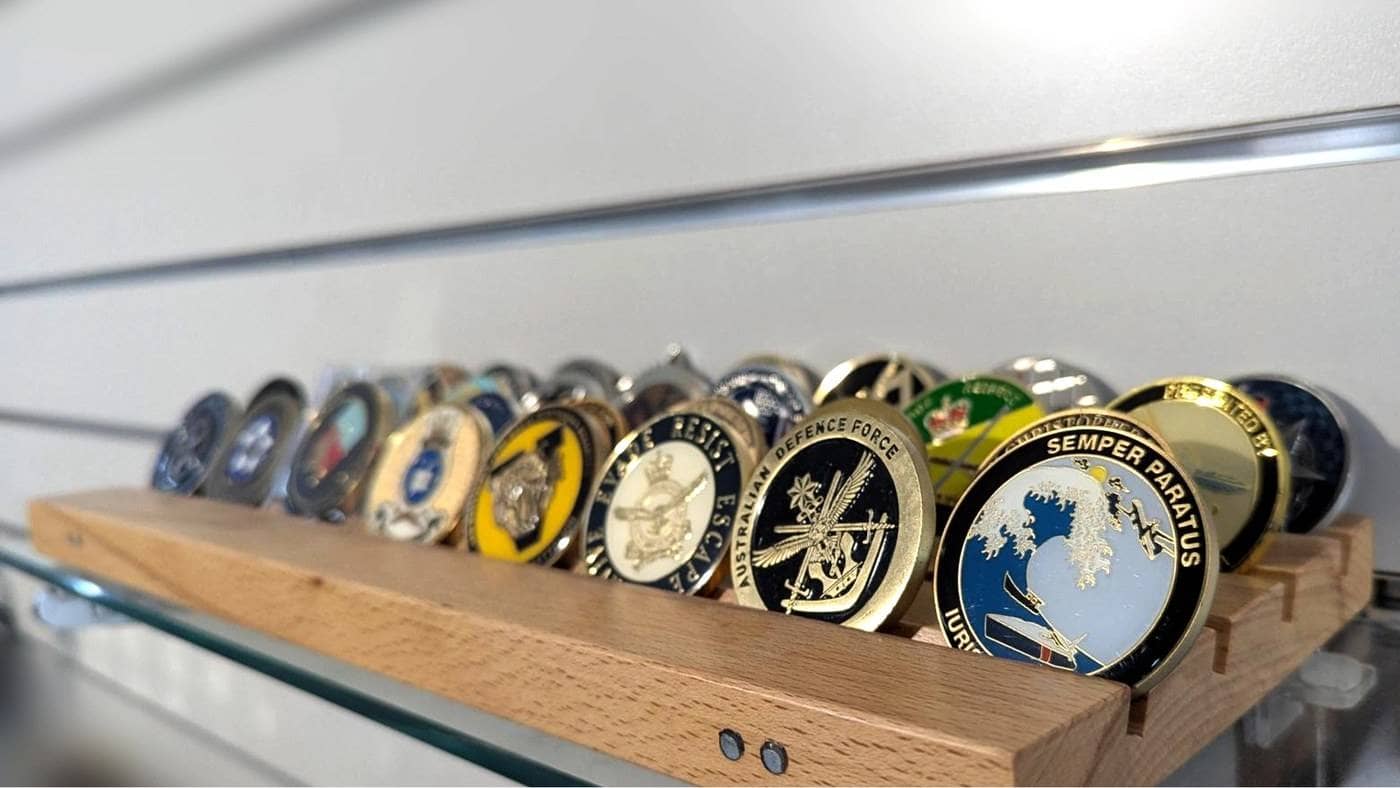
Many military figurines combine the resin body with other parts. The Vietnam Digger Figurine stands approximately 30cm tall including its base and is Limited Edition: 5,000. The Walers Mate listing says each figurine "comes with a numbered certificate of authenticity". The Naked Army UN Peacekeeper listing says its base has space for a 45mm challenge coin.
If you want to raise a piece or add an inscription, our timber Figurine Stand can accommodate a standard 15mm x 60mm inscription plate, according to the listing. The plate is not included. Keep certificates with the original box so the paperwork stays with the piece.
How to dust a figurine safely
Dust is more than a cosmetic problem. The Western Australian Museum says "Dust particles can cause damage by causing physical abrasion", and settled dust can be "very difficult to remove without damaging a fragile or decorated surface". In our view, light, regular dusting is easier on the finish of military figurines than an occasional heavy clean.
The museum recommends natural bristled paintbrushes and says to "only use the bristles of the brush", because a metal ferrule can scratch. Dust can be brushed towards a vacuum nozzle, without the nozzle touching the object. It also notes that very small, fragile or delicate items may not suit this method.
For plastics, CCI advises cleaning "under dry conditions by careful brushing or vacuum cleaning". It also says: "Do not use solvents or even water-based cleaning solutions on rubber and plastics." In our view, for a resin figurine that means no sprays, no wet cloths and no household cleaners.
Light, heat and humidity
CCI says UV light can crack most plastics and resins, and that infrared radiation "heats the surface of objects". Sunlight or intense incandescent lighting can warm surfaces "40°C (Celsius) above ambient, or more". Damage builds up over time: "There is no true recovery possible from faded colours or disintegrated surfaces."
The Australian reCollections guide puts it simply: "Avoid displaying, using and storing items in direct sunlight." CCI's note on plastics advises avoiding "hot lights, proximity to any heat source", and says relative humidity values over 65% should be avoided. A shaded shelf away from heaters, windows and hot lamps is a sensible home for resin figurines.
Handling and moving your figurine
The reCollections guide advises to "use both hands when carrying an object". Its advice on handling ceramics and glass adds: "Never carry more than one object at a time", and "One hand should support the bottom of the object". CCI notes that plastics "are more brittle when they are cold" and recommends well-padded supports for storage, display and handling.
Our advice is to lift military figurines by the base, never by a rifle, hat brim or horse's leg. These are the thinnest parts of a sculpt. Keep the original box and its packing for moving house or storing a piece. Wrap the figurine in clean, soft material before it goes back in the box, so that fine details are cushioned.
Choosing your next piece
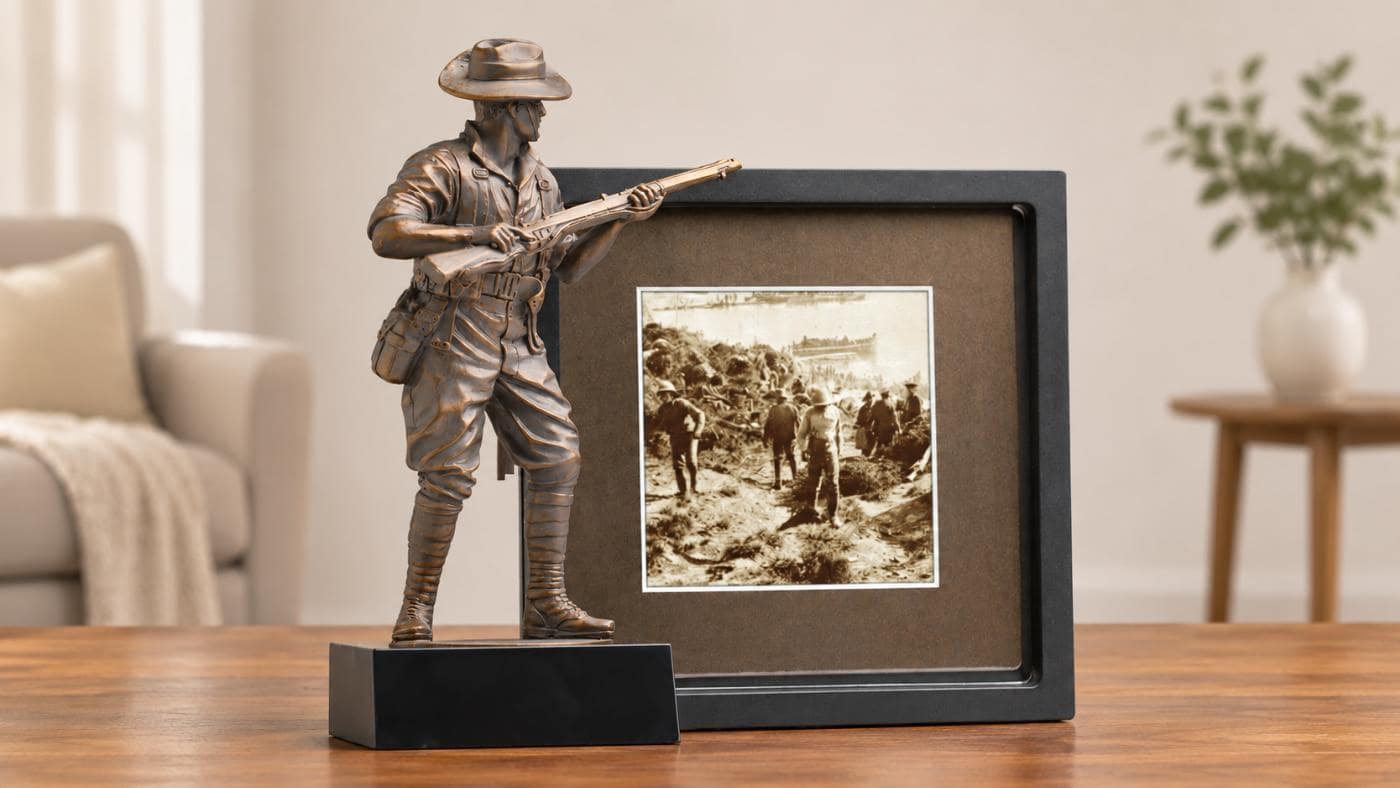
If you are starting a collection of military figurines, read the material and colour lines on each listing first. The Naked Army Australian Lighthorse Trooper, 1915 is described as a 1:6 scale figurine with a resin and cold-cast bronze finish. For a smaller shelf, our miniature military figurines suit desks and bookcases. For ideas, see our top 12 figurines to own right now and our top 5 fan-favourite figurines. Whether you collect army figurines, Light Horse pieces or peacekeeping tributes, a soft brush and a shaded spot will help each one look its best.
Sources
1 Smooth-On | How can I make my casting look like metal? | date not shown | https://www.smooth-on.com/support/faq/149/
2 Canadian Conservation Institute | Care of Objects Made from Rubber and Plastic: CCI Notes 15/1 | modified 3 May 2019 | https://www.canada.ca/en/conservation-institute/services/conservation-preservation-publications/canadian-conservation-institute-notes/care-rubber-plastic.html
3 Canadian Conservation Institute | Agent of Deterioration: Light, Ultraviolet and Infrared | modified 17 May 2018 | https://www.canada.ca/en/conservation-institute/services/agents-deterioration/light.html
4 Western Australian Museum | Dust and Brush Vacuuming (Conservation and Care of Collections) | date not shown | https://manual.museum.wa.gov.au/dust-and-brush-vacuuming
5 Heritage Collections Council (hosted by AICCM) | reCollections: Caring for Collections Across Australia, Damage and Decay: Light and Ultraviolet Radiation | 1998 | https://aiccm.org.au/3_damage_and_decay
6 Heritage Collections Council (hosted by AICCM) | reCollections: Caring for Collections Across Australia, Handling, Transportation, Storage and Display | 1998 | https://aiccm.org.au/yolo__trashed/handling_storage_transport_display
7 Military Shop | Vietnam Digger Figurine | SKU BN50724 | https://militaryshop.com.au/products/vietnam-digger-figurine.html
8 Military Shop | The Walers Mate Light Horse Figurine | SKU BN45627 | https://militaryshop.com.au/products/the-walers-mate-light-horse-figurine.html
9 Military Shop | Naked Army UN Peacekeeper Rwanda 1995 Bronze Figurine | SKU BN13912 | https://militaryshop.com.au/products/naked-army-un-peacekeeper-rwanda-1995-bronze-figurine.html
10 Military Shop | Figurine Stand | SKU BN27396 | https://militaryshop.com.au/products/figurine-stand.html
11 Military Shop | Naked Army Australian Lighthorse Trooper, 1915: Cold-Cast Bronze Figurine | SKU BN35734 | https://militaryshop.com.au/products/naked-army-australian-lighthorse-trooper-1915-cold-cast-bronze-figurine.html