Our Blog
Commemoration and Australian Identity: How to Read a Cultural History Critically
Table of Contents
- How commemoration became part of Australian identity
- Anzac Day: a tradition that changed over time
- War memorials as sources of local identity
- The Anzac legend and Australian identity: the debate
- Whose stories does a history include?
- How to read an Australian cultural history critically
- Commemorating with care at Military Shop
- Sources
- FAQs
Commemoration and Australian identity are closely linked, but how closely is something historians still debate. Charles Bean presented the story of the Australian Imperial Force (AIF) as a basis for national pride and identity. Critics question the idea that Australia was somehow born on 25 April 1915. Reading a cultural history critically means noticing which view an author takes, what evidence they use and what they leave out.
This guide explains how commemoration grew after the First World War and why it became tied to ideas of national identity. It then offers practical questions for reading any history of commemoration and Australian identity with a fair, questioning eye. It does not argue for one side, and it presents each view in the words of its source.
How commemoration became part of Australian identity
The Australian War Memorial began with one man's purpose. After witnessing the Western Front in 1916, Bean was "determined that the sacrifice and contribution of the men of the AIF be remembered and understood in their homeland."
He envisaged the Memorial "with exhibitions of battle relics, photographs, documents, and art." Work began with collecting relics and, in May 1917, establishing the Australian War Records Section. The building was inaugurated on 11 November 1941.
The Memorial itself says Bean presented the AIF's story "as a basis for national pride and identity that resonates to this day." For a reader, that is a useful starting point: the link between commemoration and Australian identity was shaped deliberately, by people with clear aims.
Anzac Day: a tradition that changed over time
Anzac Day "marks the anniversary of the first major military action fought by Australian and New Zealand forces", according to the Australian War Memorial. The first commemorations were held on 25 April 1916, and in London more than 2,000 Australian and New Zealand troops marched through the streets.
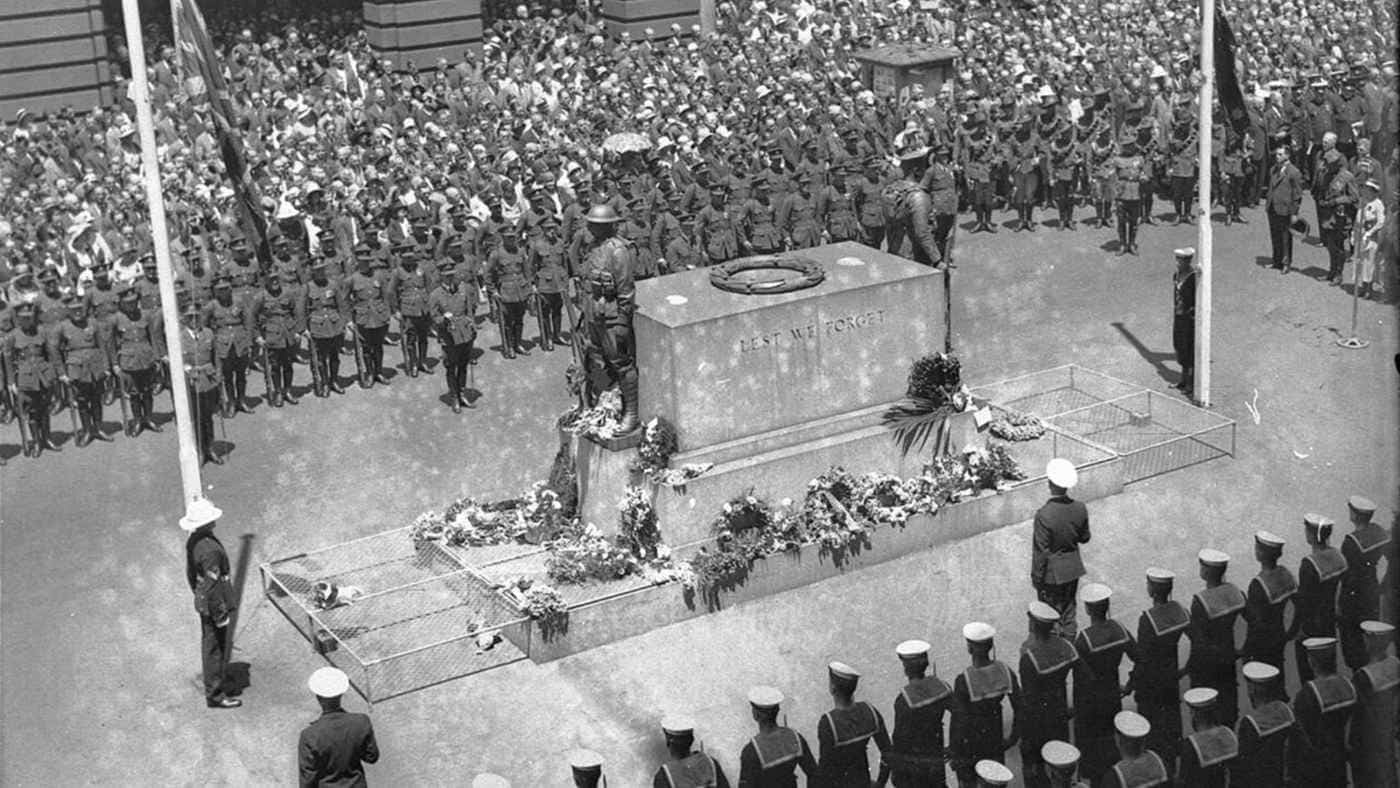
The day's purpose shifted. "For the remaining years of the war Anzac Day was used as an occasion for patriotic rallies and recruiting campaigns." In 1927, for the first time, every state observed some form of public holiday on Anzac Day. A 1928 gathering at the Sydney Cenotaph "is generally regarded as the beginning of organised dawn services."
Later, Anzac Day also commemorated Australians who died in the Second World War, and the Memorial says its meaning has since been broadened further. A good history of Australian identity should make clear which period it is describing. A book written decades ago may describe a very different Anzac Day from the one people attend now, so the publication date matters.
War memorials as sources of local identity
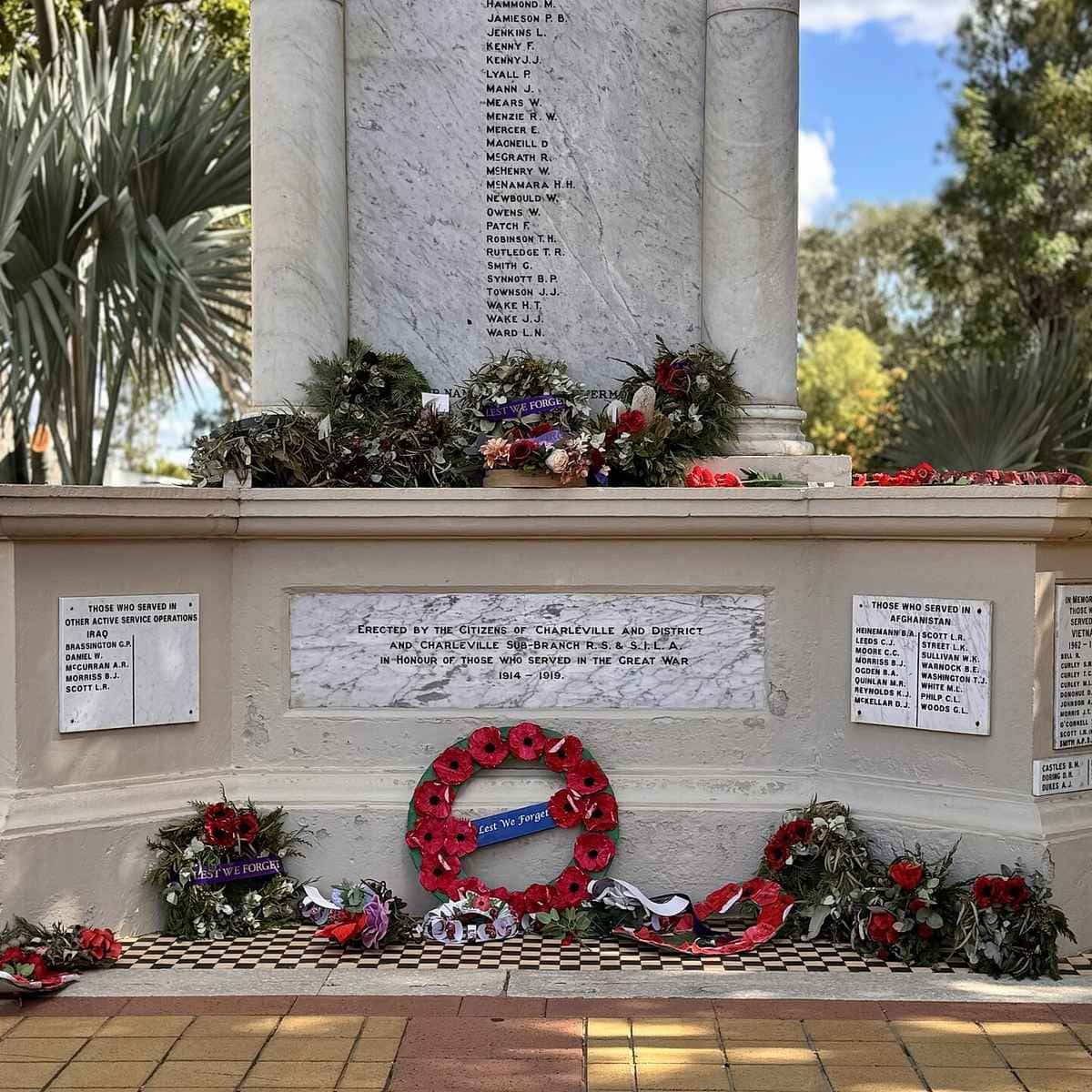
For anyone studying Australian identity, war memorials are some of the most public evidence of how communities saw the war. In the Memorial's article on Australia as "a nation of memorials", historian Dr Meleah Hampton explains that really serious thought about a town's own memorial came after the soldiers returned and the war ended. Funding was local: "There is no pot of money to go to, so it's really the people in the town behind it."
Memorials often became "surrogate graves for soldiers whose bodies were buried in war cemeteries in foreign lands or were missing." More than 90 per cent of local memorials listed names, but the rules varied. Some listed only "those who were born in or enlisted in the town."
The National Museum of Australia encourages readers to "observe, analyse and understand" a local memorial. It asks: "What was in the minds of the community that created it?" It also asks about those who did not enlist: "why did others in the community not go?" And it asks whether a memorial means the same today: "Is it the same as it meant then, or something different to us today?" In our view, reading the names on a local memorial and then checking them against service records is one of the most rewarding ways to begin.
The Anzac legend and Australian identity: the debate
The debate starts with Gallipoli. The DVA Anzac Portal says "The Anzacs on Gallipoli helped shape the Australian story." It lists qualities the legend expresses, including courage, egalitarianism, endurance and mateship.
The Australian War Memorial describes the legend as how Australians think, speak and write of their war experience, adding that this is "not always the same as how they experienced it." It notes that aspects of the legend have been criticised, but says there is "general consensus on what is regarded as the 'Anzac spirit'."
Critics focus on the link with national identity. The Portal quotes historians Henry Reynolds and Marilyn Lake, from their 2010 book What's Wrong with Anzac?: "The key premise of the Anzac legend is that nations and men are made in war." It adds: "The main challenge to the Anzac legend centres on the idea that Australia was somehow born on 25 April 1915."
The Portal sums up the present position plainly: Anzac Day "still unites and divides Australians" as the country continues to debate its history and notions of national identity.
Whose stories does a history include?
Commemoration can widen over time, and histories of it should be read with that in mind. The Australian War Memorial says it is committed to the commemoration of the service of Aboriginal and Torres Strait Islander peoples. On its Centenary page, the Memorial said in 2021 it was producing a list of Indigenous personnel who served in the First World War.
A practical test for any book about Australian identity is whose experiences it includes: soldiers and nurses, the home front, Aboriginal and Torres Strait Islander service, or people who opposed the war. That is our suggestion, not a rule. Military Shop's Indigenous Service collection reflects this wider remembrance. The Indigenous Service Material Poppy Badge is a black poppy honouring the service of Aboriginal and Torres Strait Islander peoples in the Australian Defence Force, the listing says.
How to read an Australian cultural history critically
The National Library of Australia offers simple questions for any source. Who created the work, and what are their qualifications? When was it published, and is it the most up-to-date version? Why was it created? Is the information objective, and does it show all sides of an argument?
Applied to a history of Australian identity and commemoration, we suggest these checks:
- Check the edition and date, and ask what has been published since.
- Separate the legend, as the author describes it, from the evidence of lived experience.
- Look at the notes: does the author use primary sources such as records, letters and newspapers?
- Notice whose voices appear, and whose are missing.
- Compare the book with a history written in a different decade or from a different viewpoint.
None of this means distrusting a book. It means reading it as one informed argument within a long conversation about Australian identity and its cultural history.
Commemorating with care at Military Shop
Commemoration is personal as well as national. Our poppy collection includes badges and keepsakes for Anzac Day and Remembrance Day. The Our Spirit Limited Edition Sands of Gallipoli Lapel Pin contains actual sands from the beaches of Gallipoli, according to the listing (Limited Edition: 1,000).
Remembrance also means caring for those who served. Our article Beyond the Uniform: Supporting Australian Veterans looks at that side of the story.
Sources
1 Australian War Memorial | To Heal the Nation | last updated 11 November 2021 | https://www.awm.gov.au/80th-anniversary/to-heal-the-nation
2 Department of Veterans' Affairs, Anzac Portal | The Anzac legend (cites Henry Reynolds and Marilyn Lake, What's Wrong with Anzac?, 2010, p. 173) | date not shown | https://anzacportal.dva.gov.au/wars-and-missions/ww1/personnel/anzac-legend
3 Australian War Memorial | The Anzac Day Tradition | last updated 6 March 2023 | https://www.awm.gov.au/commemoration/anzac-day/traditions
4 Australian War Memorial | A nation of memorials (Claire Hunter) | 12 December 2018, last updated 30 March 2021 | https://www.awm.gov.au/articles/blog/a-nation-of-memorials
5 National Museum of Australia, Digital Classroom | 4.3 'Reading' your local war memorial | date not shown | https://digital-classroom.nma.gov.au/learning-modules/first-world-war-defining-moments-1914-1918/43-reading-your-local-war-memorial
6 Australian War Memorial | Anzac spirit | last updated 31 October 2023 | https://www.awm.gov.au/encyclopedia/anzac/spirit
7 Australian War Memorial | Indigenous commemoration for the Centenary | last updated 10 March 2021 | https://www.awm.gov.au/1914-1918/indigenous-commemoration
8 National Library of Australia | Information sources | 6 May 2025 | https://www.library.gov.au/learn/digital-classroom/media-and-information-literacy/information-sources
FAQs
How is commemoration linked to Australian identity?
The Australian War Memorial says Charles Bean presented the story of the AIF as a basis for national pride and identity. The DVA Anzac Portal says the Anzacs on Gallipoli helped shape the Australian story, but that Anzac Day still unites and divides Australians.
Why did Charles Bean want an Australian War Memorial?
After witnessing the Western Front in 1916, Bean was determined that the sacrifice and contribution of the men of the AIF be remembered and understood in their homeland. The Memorial building was inaugurated on 11 November 1941.
How has Anzac Day changed over time?
The first commemorations were held on 25 April 1916. For the rest of the war, Anzac Day was used for patriotic rallies and recruiting campaigns. In 1927 every state observed some form of public holiday, and a 1928 gathering at the Sydney Cenotaph is generally regarded as the beginning of organised dawn services. The day later also commemorated Australians who died in the Second World War.
What is the main criticism of the Anzac legend?
The DVA Anzac Portal says the main challenge to the Anzac legend centres on the idea that Australia was somehow born on 25 April 1915. It quotes historians Henry Reynolds and Marilyn Lake, who wrote in What's Wrong with Anzac? (2010) that the legend's key premise is that nations and men are made in war.
Why do Australian towns have so many war memorials?
Local communities planned and paid for them, and really serious thought went into a town's own memorial after the soldiers returned. Memorials often became surrogate graves for soldiers whose bodies were buried in war cemeteries in foreign lands or were missing.
What questions should you ask when reading a local war memorial?
The National Museum of Australia suggests asking what was in the minds of the community that created it, why others in the community did not go to war, and whether the memorial means the same today as it did then.
How do you read a cultural history critically?
The National Library of Australia suggests asking who created the work, when it was published, why it was created and whether it shows all sides of an argument. Also check the edition, separate the legend from lived experience, look at the author's sources and notice whose voices are missing.
Whose stories should a history of commemoration include?
A useful test is whether a book includes soldiers and nurses, the home front, Aboriginal and Torres Strait Islander service and people who opposed the war. The Australian War Memorial said in 2021 it was producing a list of Indigenous personnel who served in the First World War.