Our Blog
Source Analysis: What a Battlefield Photograph, a Memoir and an Official Record Can Tell Us
Table of Contents
- What source analysis means for military history
- What a battlefield photograph can tell us
- When a photograph is not a single moment
- What an official record can tell us
- Reading WW1 service records
- What a memoir or private record can tell us
- Putting WW1 primary sources side by side
- Keeping the record with Military Shop
- Sources
- FAQs
A battlefield photograph, a memoir and an official record each answer a different question. The photograph shows what a camera recorded, or what was arranged for it. A memoir shows how one person remembered events and chose to tell them. An official record shows what an organisation needed to write down at the time. Good source analysis reads all three side by side and asks who made each one, when, and why.
This source analysis guide explains what each type of source can and cannot tell you, using guidance from the National Library of Australia, the Australian War Memorial and the National Archives of Australia. It is written for family historians, students and collectors who want to read First World War material with more confidence.
What source analysis means for military history
The National Library of Australia describes primary sources as "First-hand, original material" and secondary sources as "Interpretation or analysis of primary sources." Its examples of primary sources include personal diaries or journals, photographs and official documents.
The Library suggests simple questions for any source. Who created the work? When was it published, and is it the most up-to-date version? Why was it created? Is the information objective? Those questions sit at the heart of source analysis, whatever the format.
In our view, primary and secondary sources are not a ranking of quality. A primary source can be mistaken or one-sided, and a careful secondary source can bring many primary sources together. The skill is knowing what each one can tell you.
What a battlefield photograph can tell us
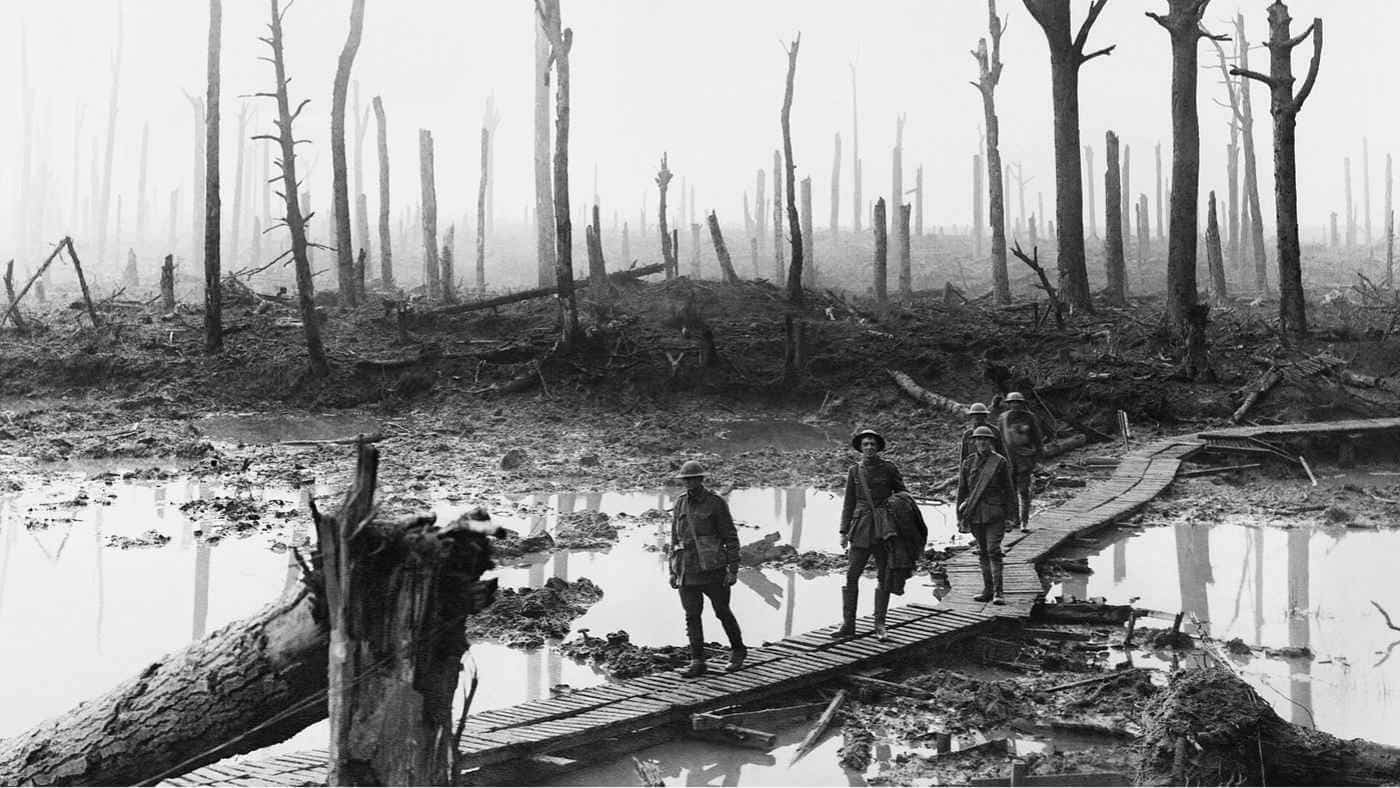
Photographs feel immediate, which is why WW1 photos are so powerful. To Charles Bean, Australia's official historian of the First World War, photographs were "sacred records". The Australian War Memorial explains that Bean valued photography for its documentary role and had little time for staged photographs.
Not every wartime image was what it seemed. Bean knew that the work of British official photographers "often involved staged shots", and he grew concerned at the absence of authentic photographs of Australians. In mid-1917 he commissioned two Australians, Frank Hurley and Hubert Wilkins, as official photographers to the AIF.
Paintings are a different kind of source again: an artist's later interpretation rather than a record made on the day. The Landing Unframed LTD Print is one example, hand signed and numbered by military artist David Rowlands, according to the listing (Limited Edition: 500). Our Anzac Day artworks range shows how artists continue to interpret the war.
When a photograph is not a single moment
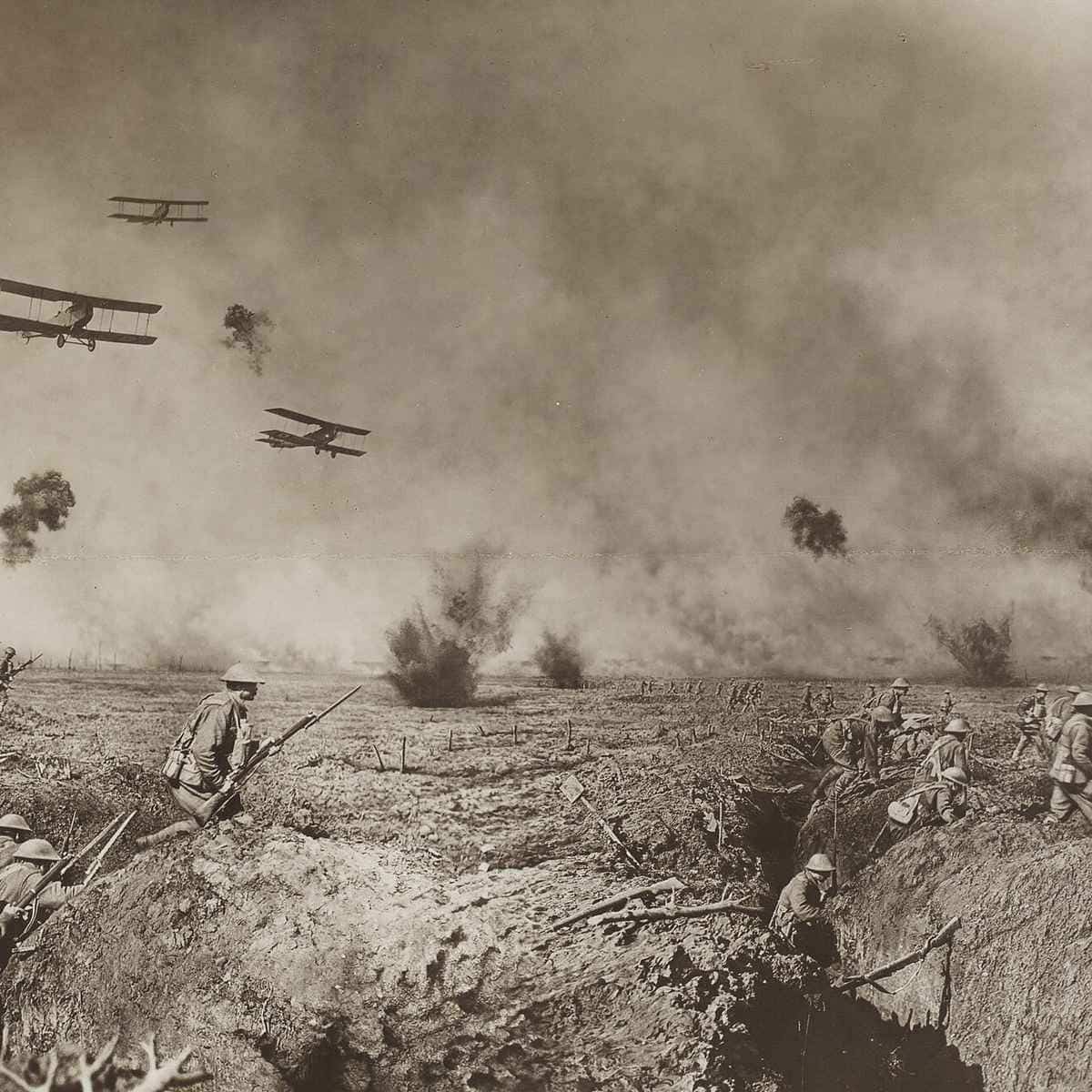
Hurley's work shows why photographs need context. The Memorial says he had soldiers restage actions and events he had missed. Most controversially, he produced composite images that combined fragments from different negatives.
Hurley and Bean had increasingly acrimonious exchanges over his use of composites and the historical reliability of his work. Hurley left the Western Front in November 1917 for the Middle East.
The practical lesson for source analysis is to check the caption, the photographer, the date and the collection record. Ask whether an image could have been posed, combined or cropped. Then look for a written source that confirms what the photograph appears to show.
What an official record can tell us
The Memorial defines official records as records raised by government agencies and calls them "key primary sources for historical studies." It notes that official records do not generally include items created by an individual in a private capacity.
Unit war diaries are a good example. While on active service, Army headquarters, formations and units were required to keep a unit war diary recording their daily activities, and the Memorial's AWM4 series holds the diaries of the Australian Imperial Force (AIF). One stated purpose was "To furnish an accurate record of the operations from which the history of the war could be prepared." The appendices make up the larger part of each diary and may include orders, reports, daily situation reports and accounts of operations.
War diaries have limits, and source analysis should allow for them. The Memorial says their overall quality "can be quite variable", depending on the compilers and their commanding officers. Many originals are extremely fragile, and some are on thin paper or written in pencil. The Memorial decided in 2006 to digitise the series and make it available online. Our earlier guide to unit war diaries for family research has more tips on reading them.
Reading WW1 service records
For individuals, WW1 service records are held by the National Archives of Australia. Its fact sheet says service records "set out the essentials of a person's service in the forces." They commonly contain biographical information supplied on enlistment, such as name, address, next of kin and age, and World War I service records are available to view on RecordSearch.
A service record shows where the system placed a person. It rarely shows what they thought or felt. The fact sheet also notes that World War I Army service records do not contain photographs. That is why a family photograph and a service record often need to be read together. Our guide to service records for family research covers where to start, and our story of Private Harry Dalziel VC and the Battle of Hamel shows how records and accounts come together around one soldier.
What a memoir or private record can tell us
Private records are the personal side of the story. The Memorial describes them as archival collections "containing personal items like diaries and letters, telegrams, scrapbooks and photographs." They give what it calls "a deeply personal insight" into people's experiences.
A memoir is a special case. It is first-hand, but it is usually written after the events, sometimes many years later. In our view, this is why the Library's question about when a source was published matters. A diary written that night and a memoir written decades on can describe the same day quite differently.
When reading a memoir for source analysis, note the dates the author gives and the names that can be checked. Watch for moments where hindsight may shape the story. Then compare key claims with the unit war diary for the same dates.
Putting WW1 primary sources side by side
Reading primary sources together shows where they agree and where they part ways. This summary is our suggested approach to source analysis.
| Source | Strength | Watch for | Check against |
|---|---|---|---|
| Battlefield photograph | Place, people, equipment | Posed, staged or composite images; missing captions | Collection record, war diary |
| Memoir or diary | Personal experience | Memory, hindsight, the writer's purpose | Letters, war diary |
| Official record | Dates, units, orders | Variable quality; what was left out | Private accounts, other units' records |
Official histories are built on top of all three. The Memorial's introduction says Bean directed and edited the First World War official history between 1920 and 1942, and that it focused on the experience of Australians at the front line. It also states plainly: "Bean's history is neither definitive nor flawless." Even an official account is a source to analyse, not a final word.
Keeping the record with Military Shop
Source analysis often starts at home, with a photograph, a letter or a service number. A research notebook helps you track record numbers, dates and questions as you go. The Courage Honour Sacrifice Poppy A5 Lined Notebook is an A5 spiral notebook, according to the listing.
If your research leads back to the First World War, browse our Australia Great War collection for ways to remember the people whose stories you are piecing together.
Sources
1 National Library of Australia | Information sources | 6 May 2025 | https://www.library.gov.au/learn/digital-classroom/media-and-information-literacy/information-sources
2 Australian War Memorial | Captured in colour: rare photographs from the First World War: Australian official photographers | last updated 7 June 2021 | https://www.awm.gov.au/exhibitions/captured/official
3 Australian War Memorial | Frank Hurley (1885 to 1962) | last updated 2 March 2021 | https://www.awm.gov.au/visit/exhibitions/focus/frank-hurley
4 Australian War Memorial | Official records | last updated 31 October 2023 | https://www.awm.gov.au/encyclopedia/official_records
5 Australian War Memorial | Highlight on official records of the First World War: AWM4 Australian Imperial Force Unit War Diaries | 16 April 2015, last updated 30 March 2021 | https://www.awm.gov.au/articles/blog/highlight-official-records-first-world-war-awm4-australian-imperial-force-unit-war
6 National Archives of Australia | World War I and World War II service records (Fact sheet 177) | date not shown | https://www.naa.gov.au/sites/default/files/2020-05/fs-177-world-war-i-and-world-war-ii-service-records.pdf
7 Australian War Memorial | Private records | last updated 23 August 2021 | https://www.awm.gov.au/digital-collection/private-records
8 Australian War Memorial | First World War Official Histories Introduction | last updated 8 December 2020 | https://www.awm.gov.au/official-histories/introduction/first_world_war
FAQs
What is source analysis in history?
Source analysis means asking who created a source, when it was published, why it was created and whether its information is objective. These are the questions the National Library of Australia suggests for any source. For military history, it means reading photographs, memoirs and official records side by side, because each answers a different question.
What is the difference between primary and secondary sources?
The National Library of Australia describes primary sources as first-hand, original material, such as personal diaries or journals, photographs and official documents. Secondary sources are interpretation or analysis of primary sources. They are not a ranking of quality: a primary source can be mistaken or one-sided, and a careful secondary source can bring many primary sources together.
Are WW1 photos always accurate?
Not always. Charles Bean knew that the work of British official photographers often involved staged shots. The Australian War Memorial says Frank Hurley had soldiers restage actions and events he had missed, and produced composite images that combined fragments from different negatives. Check the caption, the photographer, the date and the collection record before relying on an image.
Why did Charles Bean commission Frank Hurley and Hubert Wilkins?
Bean valued photography for its documentary role and grew concerned at the absence of authentic photographs of Australians. In mid-1917 he commissioned Frank Hurley and Hubert Wilkins as official photographers to the AIF.
What is a unit war diary?
A unit war diary is an official record of a unit's daily activities, which Army headquarters, formations and units were required to keep while on active service. The appendices make up the larger part of each diary and may include orders, reports, daily situation reports and accounts of operations. The Australian War Memorial's AWM4 series holds the diaries of the Australian Imperial Force (AIF).
How reliable are unit war diaries?
The Australian War Memorial says their overall quality can be quite variable, depending on the compilers and their commanding officers. Many originals are also extremely fragile, and some are on thin paper or written in pencil.
Where can I find WW1 service records?
WW1 service records are held by the National Archives of Australia and are available to view on RecordSearch. They commonly contain biographical information supplied on enlistment, such as name, address, next of kin and age. World War I Army service records do not contain photographs.
How should I read a war memoir?
A memoir is first-hand, but it is usually written after the events, sometimes many years later. Note the dates the author gives and the names that can be checked, and watch for moments where hindsight may shape the story. Then compare key claims with the unit war diary for the same dates.