


How to Start a Military Memorabilia Collection
Table of Contents
- Choose a Focus for Your Collection
- Learn What You Are Looking At
- Set a Realistic Collecting Budget
- Understand Authenticity and Provenance
- Consider Starting With Medals and Badges
- Explore Australian Military History
- Buy From Reputable Sources
- Catalogue Everything You Collect
- Store Your Collection Properly
- Build the Collection Gradually
- FAQs
Starting a military memorabilia collection does not require a large budget, specialist knowledge or a cabinet full of rare artefacts. Many collections begin with a single medal, badge, photograph, or piece of equipment with a personal or historical connection.
The challenge comes later. Military history covers centuries of conflicts, countries, services and equipment, creating an enormous range of potential collectables. Without a clear direction, it is easy to buy interesting-looking items without understanding their significance, authenticity or value.
A better approach is to start small, choose a subject that genuinely interests you and learn how to identify and care for the items you acquire.
Choose a Focus for Your Collection
The first step is deciding what you want your collection to represent. Trying to cover every conflict, country and branch of service can quickly become expensive and difficult to manage.
A defined collecting theme gives you a much clearer starting point.
Popular approaches include:
A specific conflict or historical period
Australian military history
A particular service branch
Individual regiments, battalions or units
Medals and decorations
Uniforms and insignia
Field equipment and personal items
Photographs, documents and military publications
For example, a collector interested in Australia's involvement in the First World War might focus on World War I memorabilia, including medals, unit badges, color patches, photographs, and service documents.
Another collector could focus on World War Two memorabilia, perhaps concentrating on the equipment or insignia associated with a particular Australian unit.
You can always broaden your collection later. Starting with a defined subject makes it easier to develop specialist knowledge and recognise pieces that genuinely belong in your collection.
Learn What You Are Looking At
Research should come before serious buying.
Spend time examining examples of the items you intend to collect. Learn the terminology, manufacturing methods, markings, and variations associated with your chosen period.
This knowledge is especially useful when dealing with vintage military memorabilia, where genuine period items can exist alongside later reproductions, reissues, and commemorative copies.
Pay attention to details such as:
Maker and manufacturer marks
Dates and contract numbers
Unit or formation insignia
Service numbers
Materials used
Stitching and construction
Hardware and fasteners
Known design variations
Historical references and museum collections can help establish what an authentic item from a particular period should look like.
The more original examples you study, the easier it becomes to spot inconsistencies.
Set a Realistic Collecting Budget
Military memorabilia can range from inexpensive badges and commemorative items to rare medals and historically significant pieces worth considerably more.
New collectors don't need to start at the expensive end of the market.
Set a budget that allows you to buy consistently without making rushed decisions. Remember that collecting costs can extend beyond the purchase price. Proper cases, storage materials, framing, and documentation can all add to the long-term cost.
It is also worth being sceptical of claims that an item is exceptionally rare or valuable. Rarity should be supported by evidence, not simply a seller's description.
A common item with an interesting and well-documented history can be a far more rewarding acquisition than an expensive object with uncertain origins.
 Understand Authenticity and Provenance
Authenticity is one of the most important considerations when buying military collectables.
Provenance refers to the documented history of an item's ownership and origin. Strong provenance can help establish where an object came from and how it relates to a particular person, unit, or event.
When assessing an item, consider the full picture rather than relying on a single characteristic.
Check the Construction
Historical objects were manufactured using materials and techniques appropriate to their period. Examine fabrics, stitching, metalwork, fasteners and other construction details for consistency.
Examine Markings
Maker marks, dates, contract numbers, inspection stamps and unit markings can provide useful clues. Research the marking conventions associated with the particular country and period.
Look at the Wear
Genuine service-used equipment generally develops wear according to how it was handled and used. Abrasion around areas such as cuffs, elbows, closures and buckles can make sense, while perfectly uniform artificial ageing should prompt further questions.
None of these characteristics proves authenticity on its own. Consider them alongside provenance, historical references, and comparable examples.
For expensive or particularly important pieces, seek specialist advice before purchasing.
Consider Starting With Medals and Badges
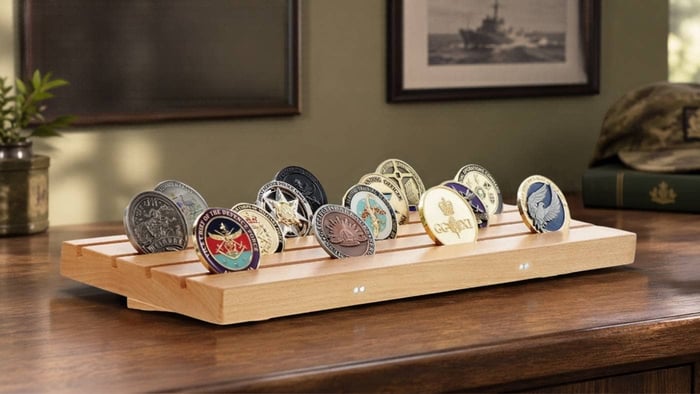
Medals and badges can make practical starting points because they are relatively compact, easy to catalogue and often provide useful clues about military history.
A medal may identify a campaign, service or individual. Badges can reveal a soldier's regiment, corps or unit.
This also makes specialist medal shops useful places for new collectors to learn about different types of medals, ribbons, mounting options and related collectables.
Replicas and commemorative pieces can also belong in a collection. They let collectors represent historical subjects without exposing an original, potentially fragile item to regular handling.
The important thing is to know exactly what you are buying and to distinguish an original from a reproduction.
Explore Australian Military History
Australia has an extensive military history, giving local collectors plenty of opportunities to develop specialised collections.
Australian military memorabilia can encompass material from the First and Second World Wars, Vietnam, peacekeeping operations and more recent Australian Defence Force history.
Collectors may focus on a particular regiment, campaign, or service branch. Others build collections around Australian medals, badges, uniforms or personal documents.
Family history can provide an especially meaningful starting point. A relative's medal group, photograph or service document can lead to further research into their unit, postings and campaigns.
The object itself is only part of the story. Learning who owned it and what they experienced can add much more significance to a collection.
Buy From Reputable Sources
Once you know what you want to collect, take your time finding reliable sources.
Specialist dealers, established retailers, auctions, antique dealers, and collector networks can all provide opportunities to find military items.
For beginners, a reputable seller can also provide useful context about an item's condition, origin, and identification.
Before buying, ask:
Is the item original or a reproduction?
What is known about its provenance?
Has it been repaired or modified?
What is its condition?
Are all components period-correct?
Does the price match comparable examples?
Be cautious about impulse purchases, particularly online. A convincing photograph does not provide enough information to authenticate every item.
Building relationships with knowledgeable sellers and other collectors can be more valuable over time than chasing individual bargains.
Catalogue Everything You Collect
A collection becomes much easier to manage when every item has a record.
Create a simple digital or physical catalogue containing:
Item description
Conflict and period
Service branch
Unit or formation
Manufacturer and markings
Provenance
Purchase date and price
Condition
Storage location
Supporting photographs and documents
Keep receipts, certificates and other documentation with your records.
This is especially important for family pieces. If you know the name of the person who served, their unit, or the circumstances in which an item was passed down, record that information.
Documentation preserves the story as well as the object.
Store Your Collection Properly
Military equipment was designed to survive demanding conditions, but that does not mean old materials can tolerate poor storage indefinitely.
Keep your collection away from excessive moisture, direct sunlight, and major temperature fluctuations. Light can fade textiles, ribbons, and photographs, while damp conditions can encourage mould and corrosion.
Handle metal items carefully and avoid aggressive polishing of historically significant medals or badges. Removing surface material can alter an item's appearance and potentially reduce its historical character.
Support uniforms and other heavy textiles properly rather than leaving them to hang from thin wire hangers. Keep fragile documents and photographs in appropriate archival storage.
The goal is simple: protect the item without unnecessary alteration.
Build the Collection Gradually
You don't need to fill a display cabinet immediately.
As your knowledge develops, your collecting interests will probably become more specific. A general interest in Australian history might eventually lead to a focus on one regiment, campaign or medal series.
This is where military collectables Australia enthusiasts can find the greatest satisfaction. The collection becomes a reflection of a particular area of history rather than simply a group of old objects.
Take time to research purchases, compare examples, and understand the story behind each item. A smaller collection with clear historical connections can be more rewarding than a much larger collection assembled without a plan.
Military memorabilia ultimately connects physical objects with the people and events behind them. Starting carefully, researching what you buy, and preserving the information attached to each piece gives a collection lasting value beyond the objects themselves. For those ready to begin or expand their collection, browse Military Shop's range of military memorabilia and historical collectables.
FAQs
What to do with old military memorabilia?
Start by identifying and documenting the items before you clean, repair, or sell them. Record any names, service numbers, unit markings, dates, and family history connected to each piece. Keep valuable items in a dry, stable environment away from direct sunlight and unnecessary handling. If the collection is no longer wanted, consider passing it to a family member, donating it to a historical organisation or selling it through a reputable specialist.
Is war memorabilia worth anything?
It can be, but value varies considerably between items. Factors such as rarity, age, condition, authenticity, provenance and historical significance all influence what a piece may be worth. A common commemorative item may have limited monetary value, while a rare, genuine medal group with documented service history can be considerably more significant. Research comparable items before assuming an old piece has either high or low value.
What are the most sought-after military antiques?
Highly sought-after military antiques can include rare medals and medal groups, historically significant uniforms, unusual unit insignia, documented battlefield items, scarce weapons-related accessories, and objects with strong provenance. Items associated with notable service members, units, or campaigns can attract particular interest. Demand also changes between collecting fields, so rarity alone does not guarantee that an item will be highly sought after.
Are military antiques good investments?
Military antiques can hold or increase in value, but they should not be treated as a guaranteed investment. Prices depend on collector demand, authenticity, condition, rarity, and provenance, and the market can change over time. New collectors are generally better served by buying items they genuinely value for their historical interest rather than purchasing solely in the expectation of making a profit.
Where can I sell WWII memorabilia?
You can sell Second World War memorabilia through specialist military dealers, established auction houses, militaria marketplaces, antique dealers, and collector networks. Before selling valuable items, document their provenance, condition and identifying marks, and obtain more than one valuation where practical. Specialist buyers may be particularly useful for rare medals, uniforms and items with documented Australian or Allied service histories.